










Pavel Hortlík: The Defense Industry Can Learn Above All from the Automotive Sector’s Supply Chain Management, Logistics, and Production Standardization
An interview with Pavel Hortlík, director of operations at Excalibur Army’s Přelouč facility, built on the main theme of the DEFENCEO conference, “From Cars to Defense” – namely, the question of how the defense industry, the automotive sector, and the government can collaborate. Hortlík emphasized right at the outset that, in the case of Excalibur Army, the connection to the automotive industry is entirely natural. As part of its manufacturing operations, the company has long relied on Tatra chassis platforms, which form one of the cornerstones of its entire product line. That is precisely why, according to him, this is not an abstract topic, but a practical reality upon which defense production often relies.
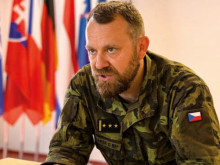
Video: Pavel Hortlík: The defense industry can learn from the automotive industry, particularly in the areas of supply chain management, logistics, and production standardization / CZ DEFENCE
Hortlík identified as the main opportunity the fact that the technologies used in the automotive and defense sectors are not so different as the main opportunity. Although both worlds operate according to different rules, they share a number of technical, manufacturing, and organizational principles. According to him, the defense sector can draw on the automotive industry primarily in the areas of supply chain management, production organization, process standardization, logistics, and innovation. These areas have long been well-developed in the automotive industry and can serve as a significant source of inspiration for defense companies when expanding capacity, streamlining production, and managing larger contracts.
In light of the changing security environment after 2022, Hortlík noted that Excalibur Army is not starting “from scratch.” The company has many years of experience in manufacturing military equipment, which gives it a strong starting position at a time when demand for defense capabilities is growing and nations are once again investing in their armed forces. He identified as key advantages not only manufacturing experience but also the ability to engage in international cooperation, integrate systems, and involve foreign suppliers and know-how providers. According to him, it is precisely this combination of a domestic manufacturing base, technical expertise, and the ability to operate in an international environment that demonstrates Excalibur Army’s value to both the Czech and European defense sectors.
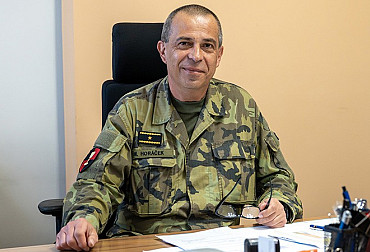
Self-sufficiency and supply chain security were also key topics of the discussion. Hortlík emphasized that, from the perspective of the defense industry, it is crucial to maintain control over as much of its own capacity as possible while also drawing on secure and reliable sources. At the same time, he does not see a fundamental need to strictly separate the Czech and European dimensions – what matters, in his view, is that suppliers come from a trustworthy and secure environment. In-house capabilities are the safest option, but building reliable sourcing relationships within secure countries is equally important.
As a cautionary example, he cited the chip crisis, which has significantly impacted the automotive industry in recent years and exposed the vulnerability of global supply chains. In the defense sector, similar disruptions could be even more severe. This is not merely a matter of economic or logistical problems caused by external circumstances, but also of the possibility of intentional restrictions on access to key raw materials or components. In this context, Hortlík mentioned sensitive raw materials and components that are often found only in a limited number of countries. He therefore identified secure sourcing as one of the decisive factors for the future success of the defense industry.
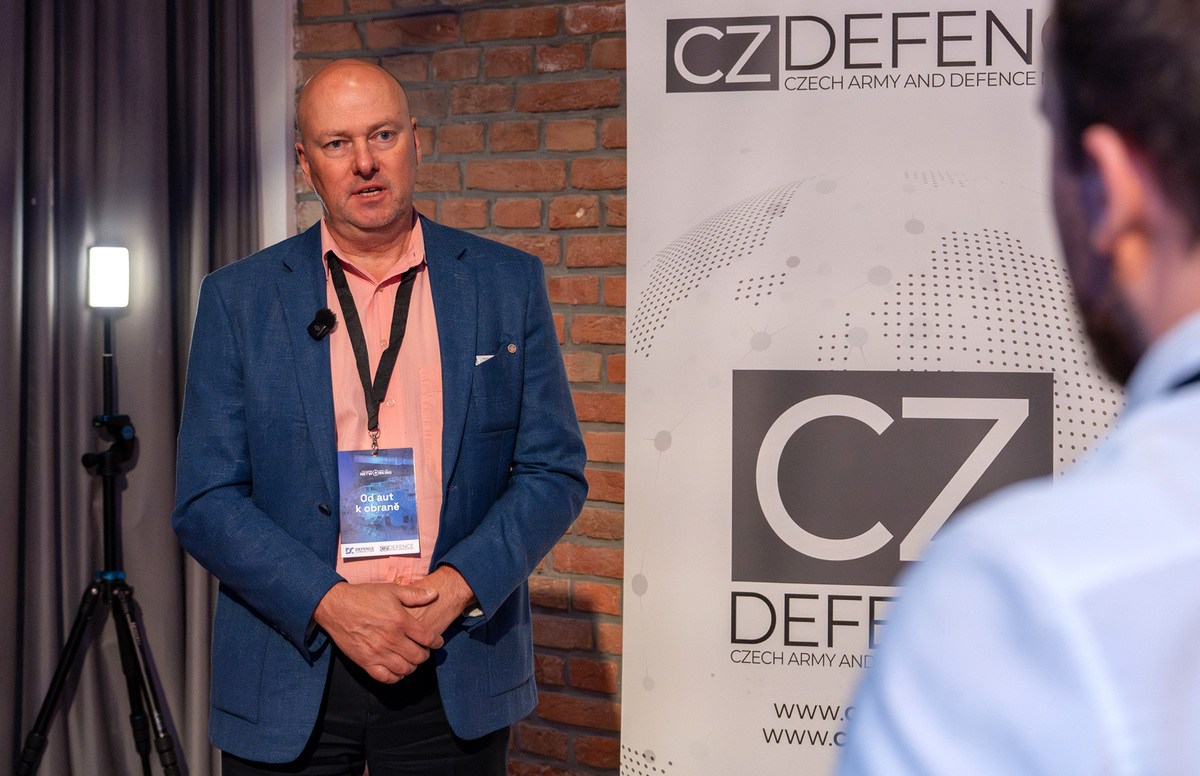
The interview also revealed that Hortlík does not view the integration of the automotive and defense sectors as a one-sided process in which automotive companies would simply start manufacturing for the military. According to him, what is more important is the transfer of specific capabilities and best practices. The defense sector can benefit from the automotive industry primarily through sophisticated supply chain management, production logistics, and standardization of work processes. According to Hortlík, these areas are still in their infancy in the defense industry, which is precisely why the automotive sector’s contribution here could be very significant.
Overall, the interview showed that Excalibur Army views the convergence of the automotive and defense industries as a long-term opportunity, not as a short-term response to the current crisis in the European automotive sector. The key to success will be the ability to leverage the best of both worlds: adopting efficiency, standardization, logistics management, and supplier relationships from the automotive sector, while the defense industry must continue to build on robustness, reliability, secure sourcing, and the ability to integrate complex military systems. In this sense, according to Hortlík, there is considerable potential between the two sectors that can strengthen not only individual companies but also the overall resilience of the Czech and European defense-industrial base.