











Sanctions Aren’t Working? Russian Munitions Contain Chinese Engines, Japanese Batteries, and American Processors
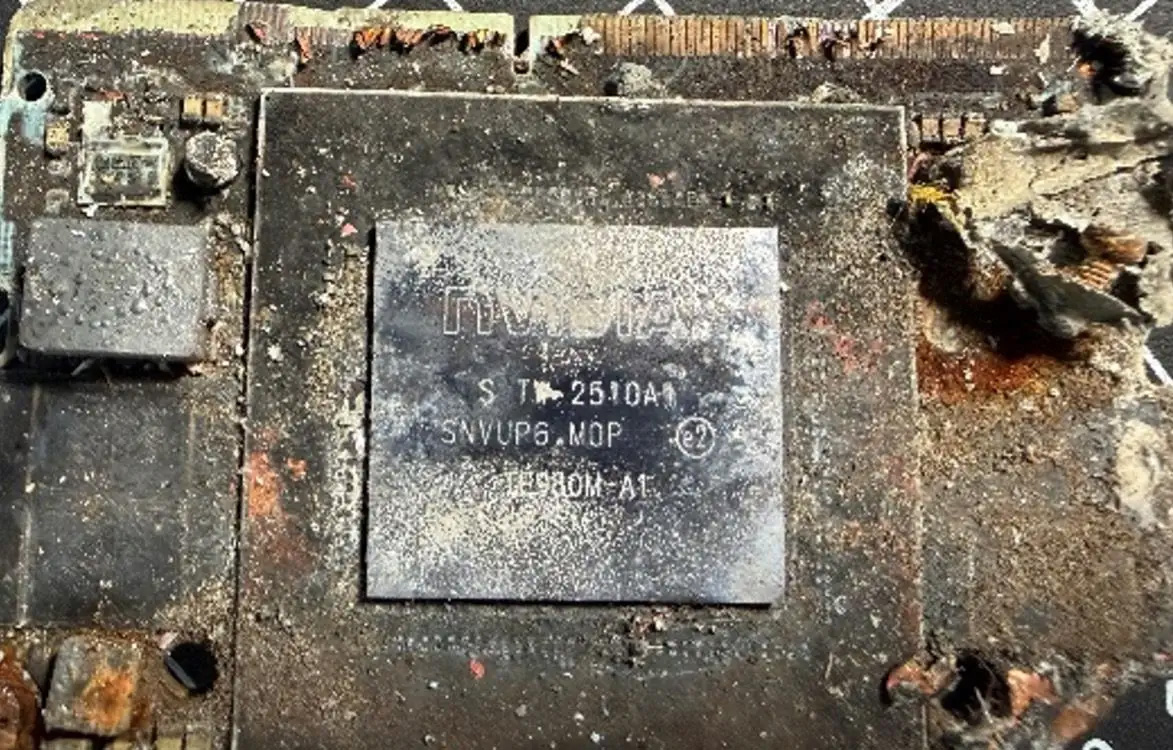
The wreckage of the Banderol missile shot down over the Kyiv region contains a Chinese jet engine, a Japanese battery, and American electronics. The S-71 Monochrom missile, meanwhile, contains an Nvidia Jetson Orin chip, originally designed for civilian robotics and artificial intelligence. The serial number – once a mundane technical detail for service and logistics – is now becoming the key to uncovering how the supply chains of dozens of Western companies have become intertwined with the Russian war machine, whether knowingly or unknowingly. The Ukrainian side has counted 35,000 foreign components in weapons used against Kyiv in the last six months alone, turning individual cases into a systemic problem. The question of who bears responsibility for this situation and how to stop it is thus becoming one of the most sensitive issues in contemporary geopolitics.
Analyses of Russian weapons reveal extensive use of foreign electronics, navigation components, sensors, computing modules, batteries, and propulsion systems. A two-year study by the Ukrainian military intelligence agency HUR shows that the Russian defense industry’s dependence on foreign high-tech components persists. Components from American, Japanese, Chinese, European, and other manufacturers have been found in the systems examined. Among the identified components are, for example, radar components in Geran-2 drones, a Chinese camera in Geran-4 drones, and components of the Kinjal missile’s active radar seeker.
The latest analyses have revealed a Jetson Orin computing module from the U.S.-based company NVIDIA – which can be used for data processing and artificial intelligence applications – in the new air-launched S-71 Monochrom missile. The Banderol, also known as the S8000, demonstrates the latest integration of foreign technologies (a Chinese jet engine, a Japanese battery, and predominantly American electronic components) into low-cost attack munitions. Russia deploys this jet-powered munition, manufactured by Kronstadt, primarily from Orion drones. The Banderol reaches speeds of over 500 km/h with a range of up to 500 km. It can carry a 114-kilogram warhead containing up to 50 kg of explosives. Its design combines relatively low production costs (estimated at 42,500 to 127,500 euros, compared to 685,000 euros per guided missile) with performance parameters that require the use of the most powerful air defense systems.

The same principle is evident across other Russian systems. The Ukrainian side reports that over the past six months, Russia has used 5,700 drones, 280 ballistic missiles, 340 cruise missiles, 36 Zircon hypersonic missiles, five Kinzhal missiles, and one Oreshnik ballistic missile against Kyiv and the Kyiv region. It has identified 35,000 foreign components in these weapons. Foreign electronics therefore represent a systemic element of Russia’s military production, not isolated cases.
At the same time, the technical trail provides a basis for further action. The serial number, component type, manufacturer, and distribution channel can link a specific Russian weapon to a supply chain outside Russia. The Ukrainian approach therefore moves from analyzing wreckage and captured systems to identifying specific foreign-made products. For export control and sanctions policy, each newly identified component thus represents both technical information about a Russian weapon and a lead to its international distribution network.
Russia’s strategy for circumventing sanctions is based on a simple economic calculation: the cost of establishing a new trade channel may remain significantly lower than the value of the component to the Russian military-industrial complex. Sanctions therefore increase the price and complexity of procurement, but at the same time create opportunities for intermediaries, brokers, and companies in countries outside the sanctions coalition. Although the supply chain becomes longer, adding additional markups and increasing transaction costs, Moscow retains access to the technologies needed for war production. Even placing a company on Western sanctions lists merely complicates purchases and raises transaction costs, but it still fails to cut off all trade in non-Western countries. A similar mechanism operates in the financial sector. The more Western and non-Western banks and financial institutions restrict transactions related to Russia, the more complex the payment infrastructure intermediaries must create.
The economic logic of sanctions, however, requires continuous adaptation. The sanctions regime must increase the costs of circumvention faster than companies can create new trade routes. From this perspective, sanctions work better as a mechanism of long-term attrition than as an immediate obstacle. The effectiveness of trade restrictions thus depends less on the sheer number of sanctioned items and more on the ability to continuously identify new intermediaries, financial channels, and problematic countries. The harmonization of measures at the international level plays a very important role.
The sanctions themselves merely establish the rules of the game. Their true power grows when specific information about Russian weapons is transformed into political and commercial pressure on manufacturers, distributors, and the governments of third countries. Ukraine is therefore gradually developing its own mechanism of influence based on identifying foreign components, their serial numbers, and subsequently sharing this information with governments, manufacturers, and investigative authorities. “Our approach – which our allies are beginning to understand – is not merely about providing a list of components. We provide them along with specific serial numbers,” said Vladyslav Vlasyuk, advisor and presidential envoy for sanctions policy in Ukraine. “These are specific, documented examples of components manufactured by your companies in your countries. We’re saying: we have the serial numbers; investigate this and stop it.”
Western manufacturers may now be informed that a specific product or part of theirs has ended up inside a Russian missile or drone. In such a case, it is no longer merely a general warning about the risk of reexport. The focus is now on a specific serial number, commercial documentation, the distributor, the end customer, and the product’s path from the manufacturer to the Russian military-industrial complex. This creates pressure on manufacturers and distributors to scrutinize their own supply chains. Furthermore, the relevant government agencies may launch investigations, tighten export controls, or impose sanctions. Finally, reputational and commercial pressure comes into play. A company whose products repeatedly appear in Russian weapons must expect greater scrutiny from banks, insurance companies, business partners, and regulatory authorities. Sanctions policy thus shifts from an abstract ban to direct action against a specific link in the supply chain.
If a Western manufacturer responds, that specific supply channel will be shut down. If there is no response, Ukraine gains a basis for further diplomatic pressure, regulatory intervention, or sanctions. Vladyslav Vlasjuk summarized this principle as a shared responsibility of governments and manufacturers: “We believe that governments and manufacturers can and must do more. Especially governments that are among our allies and support us.” At the same time, this presents a new practical challenge for European and American companies: to track their own products beyond the first customer and assess the risk of re-export based on the actual behavior of their business partners.
This development has direct implications for the Czech defense industry. The Czech Republic is expanding its production capacity in the areas of ammunition, ground equipment, aviation systems, electronics, and unmanned aerial vehicles. As exports grow, so does the number of distributors, subcontractors, and third countries involved in supply chains. Companies therefore need to integrate export controls, sanctions screening, and technical knowledge of their own products. Tracking serial numbers, verifying end users, monitoring high-risk countries, and the ability to quickly investigate suspicious re-exports can simultaneously protect Czech companies from regulatory and reputational risks.
A component’s serial number – once a purely technical piece of data for logistics and service – has now taken on a dimension that manufacturers could hardly have foreseen years ago. The trail leading from a specific part to its manufacturer and country of origin is becoming a tool for controlling supply chains and a means of exerting influence on the Ukrainian battlefield. Export controls, sanctions regimes, and efforts to trace the origin of components in downed drones or missiles turn this into a geopolitical weapon in the hands of governments, which can use it to pressure both allies and adversaries without resorting to direct military confrontation. Consequently, all manufacturers of components and products needed to maintain combat capability in the conflict are inevitably drawn into this mechanism, regardless of whether they chose this role for themselves. A company manufacturing chips, bearings, or optics could find itself overnight at the center of a diplomatic dispute between Washington, Kyiv, Beijing, and Moscow – simply because of a serial number stamped on a component it never intended to send to the front lines.