















They Will Patrol NATO’s Seas and Skies. Will the Czech Army Also Acquire Large MALE Drones in the Future?
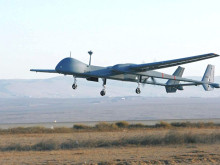
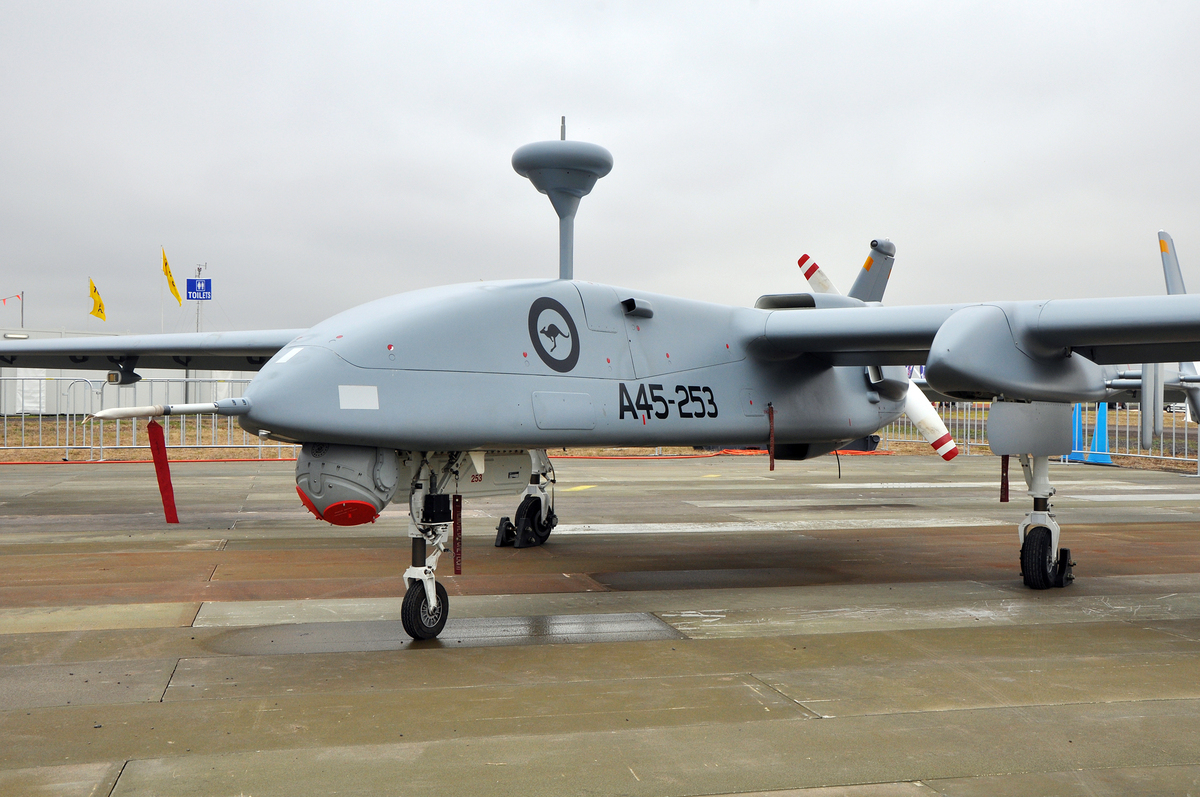
On September 29, a Heron TP unmanned aerial vehicle flew over Denmark. This German drone, piloted from and taking off from a base in Schleswig, flew over the Jutland Peninsula as part of a bilateral exercise. At first glance, this seemingly routine event may offer a glimpse into the future of NATO’s drone defense.
Denmark is one of NATO’s most important members – not because of its military strength, but because of the territory it encompasses. The Kingdom of Denmark also includes Greenland and the Faroe Islands. In both cases, this entails control over and defense of the adjacent maritime areas. At the same time, Denmark serves as a strategically important “plug” for the Baltic Sea.
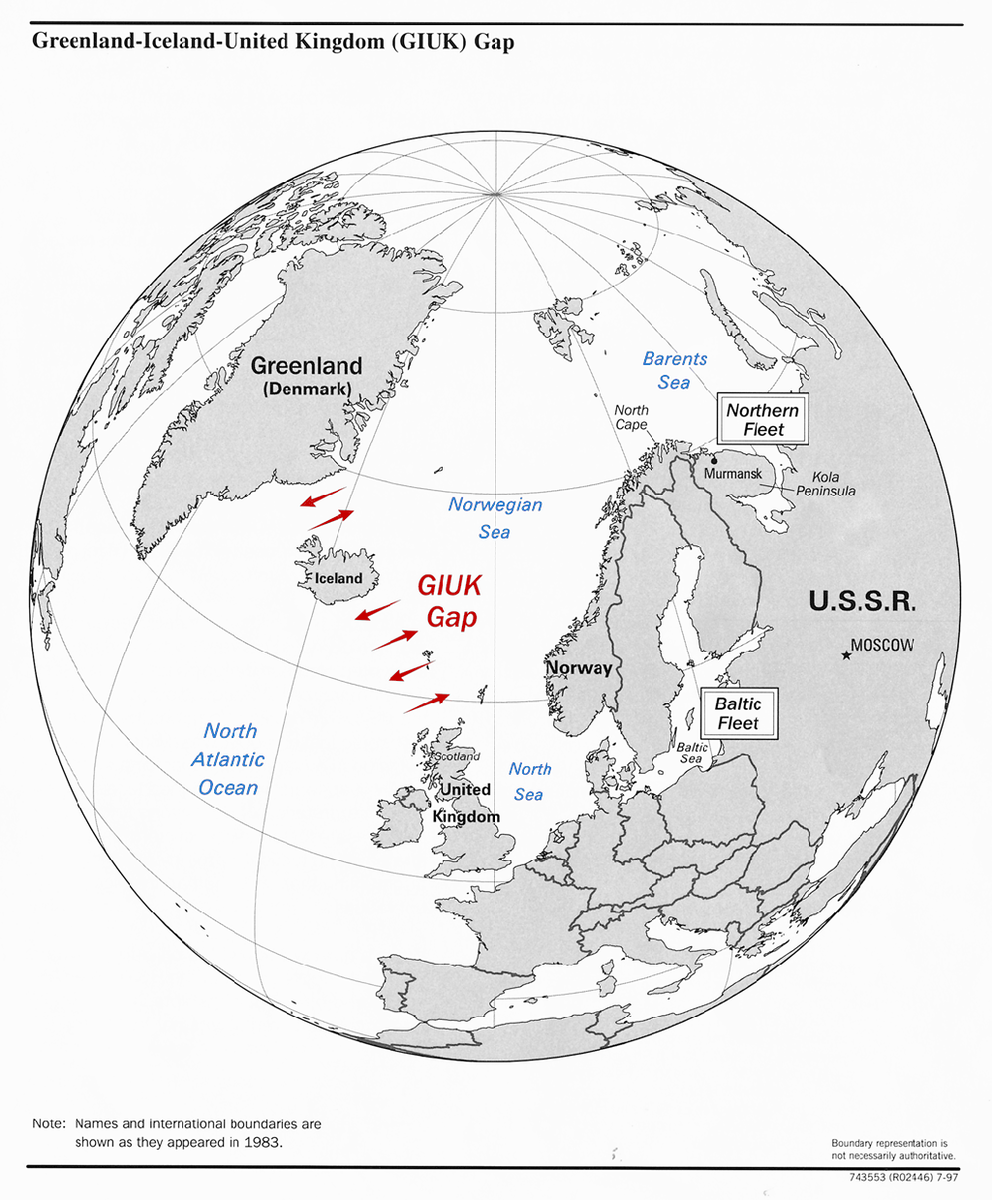
Together with Iceland and the United Kingdom, the Faroe Islands and Greenland form the so-called GIUK Line. This is one of the most strategically important maritime passages in the North Atlantic. Any Russian submarine departing from its northern bases – such as Murmansk – must pass through this line when carrying out operational missions in the Atlantic. Following Russia’s invasion of Ukraine in 2022, Russian submarine activity in the region has reached levels comparable to those during the Cold War, making Denmark an absolutely crucial player in monitoring the area.

Denmark has long relied on satellite imagery, patrol boats, and older Bombardier Challenger 604 aircraft to monitor this area. However, due to Russia’s increasing activity, these patrols are becoming increasingly costly.
Since 2022, there has been rapid development in unmanned technologies, and Denmark has decided to utilize MALE (Medium-Altitude Long-Endurance) drones as the future backbone of its reconnaissance efforts, as well as other naval operations. In July 2025, Denmark signed a contract to purchase four MQ-9B SkyGuardian drones from the American company General Atomics. In addition, it will acquire three certified ground control stations from which pilots will operate their drones.
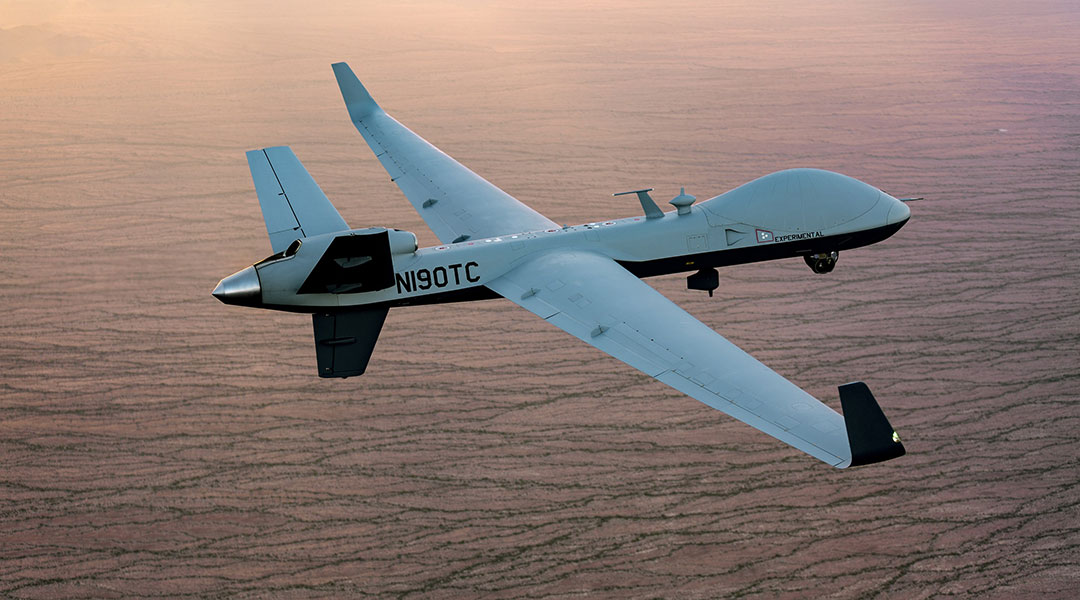
Denmark is acquiring these assets to ensure long-term surveillance, reconnaissance, and protection across vast areas of the Arctic, Greenland, the Atlantic, and the Baltic Sea. In this regard, drones are intended to be a less costly and more efficient alternative to traditional aerial surveillance. Entire reconnaissance missions will be controlled by operators safely from the ground via remote control stations, and the drone itself can remain airborne for more than 30 hours at a time, which will significantly increase efficiency.
In this regard, the flight of the German Heron TP drone is part of Denmark’s preparations for taking delivery of its new unmanned aerial vehicles, with delivery expected in 2028. The Heron operated at an altitude of approximately 7,000 meters above ground level, and its objective was to verify whether a military drone could operate safely in Denmark’s non-segregated civil airspace, which it shares with commercial aircraft. Safety procedures were successfully verified, and the exercise thus fulfilled its purpose.
The government in Copenhagen procured the MQ-9B SkyGuardian through the NSPA (NATO Support and Procurement Agency), which allows member countries to share the costs of maintenance, training, and logistics with other European operators. The United Kingdom and Poland, for example, have also acquired similar drones.
To enable them to carry out missions in cold regions and over vast expanses of ocean, Denmark is having them equipped with a specialized maritime package from the SeaGuardian variant. This version is currently the world’s first unmanned aerial vehicle capable of tracking and targeting objects both on the sea surface and deep below it, enabling it to participate in anti-submarine warfare. By utilizing the SkyGuardian with SeaGuardian technologies, Denmark gains an exceptional platform not only for its own needs but also for monitoring and deterring Russian submarines.
The unmanned aerial vehicle can operate and collect data in multiple environments simultaneously. It monitors airspace, the sea surface, and the space beneath it. During combat operations, it is capable of sharing the collected information in real time in coordination with the navy, which also speeds up the process of evaluating that data. The drone is also adapted to harsh Arctic conditions, as it is equipped with an advanced anti-icing system.
The Czech Republic and MALE Drones
The Czech Army does not currently possess MALE drones – that is, larger drones capable of operating at medium altitudes with long endurance – and it does not appear to be considering their purchase at this time. Acquiring such a drone could significantly transform reconnaissance and intelligence-gathering capabilities on the battlefield. At the same time, in addition to reconnaissance, MALE drones are also capable of striking ground targets.

In the past, it seemed that our military would indeed move in this direction. In early 2023, the Czech Republic was close to purchasing a MALE drone from the Israeli state-owned company IAI. The model in question was the Heron 1. It would have enabled the Czech Armed Forces to conduct long-range reconnaissance thanks to a range of around 1,000 km and an endurance of 30 to 40 hours in the air. Since the Czech Armed Forces had not yet possessed drones with similar capabilities, the Heron 1 would, with a bit of exaggeration, have represented a leap into the 21st century for the Czech Armed Forces.
However, the Czech Armed Forces ultimately concluded that a CZK 2.7 billion investment in three Heron 1 drones would be a mistake. Based on experiences from the war in Ukraine, where smaller tactical unmanned aerial vehicles have proven most effective on the actual battlefield, the army decided to opt for smaller drones in greater quantities.
It is not yet clear whether this was the right decision. Of course, the AČR operates on a limited budget, and the funds saved can be used to support projects that are currently of greater tactical importance, whether that be the establishment of a heavy mechanized brigade or the modernization of the Air Force through the purchase of 24 American F-35 Lightning II aircraft.
It should be noted, however, that NATO expects a gradual increase in defense spending. Two percent of GDP will no longer be sufficient in this regard, and alliance member states should exceed 3 percent in the future and, ideally, approach 5 percent in defense spending. If the Czech Republic were to actually move in this direction, the Czech Armed Forces could have the funds available to purchase modern MALE drones, which, incidentally, it has not completely ruled out; it has simply chosen a different path for the time being.
Of course, the Czech Republic has different security needs than Denmark, for which the MQ-9B SkyGuardian is one of the highest priorities due to the need to monitor vast maritime zones. That does not mean, however, that this unmanned aircraft has nothing to offer. For example, it was designed to be compatible with the F-35 Lightning II fighter jet. This cooperation is intended to take place in a real combat environment, which could be of interest to the Czech Armed Forces in the future.
The MQ-9B is capable of collecting large amounts of information under real-world conditions and sharing it directly with F-35 pilots. After all, modern pilots are not expected merely to fly an aircraft; rather, the ability to analyze and access as much accurate information as possible plays a crucial role on the modern battlefield. Lockheed Martin, the manufacturer of the F-35, describes its aircraft as the “quarterback” in the collaboration between manned and unmanned aircraft.
A joint Danish-German test flight of the Heron TP drone, as well as Denmark’s plans to use MQ-9B aircraft for maritime surveillance, clearly demonstrate the Alliance’s assumption that MALE-class unmanned systems will play a key role on the modern battlefield.
This raises the question of whether the Czech Armed Forces should rely exclusively on small drones and ignore large MALE drones. Neighboring Poland has taken a different path: it has ordered three MQ-9B SkyGuardian systems along with two control stations and expects delivery in the first quarter of 2027.