






Warrant Officer Vítězslav Kalousek: Perseverance and Teamwork Were Key to Success at Noble Skywave
More than 617,000 kilometers of established connections, communications with 17 countries around the world, and the farthest connection reaching all the way to New Zealand. The Czech team CZ1 – Wave Riders ranked among the top 20 percent of participants in the international communications exercise Noble Skywave 2026. However, the exercise organized by the Canadian Armed Forces is not merely a competition in establishing radio contact. It also tests the ability of military specialists to maintain communications under challenging conditions, when modern satellite and data systems may fail. Warrant Officer Vítězslav Kalousek from the Agency for Communication and Information Systems (AKIS) spoke about the experiences of Czech communications specialists, the use of shortwave communications on the modern battlefield, technical challenges, and the importance of teamwork.
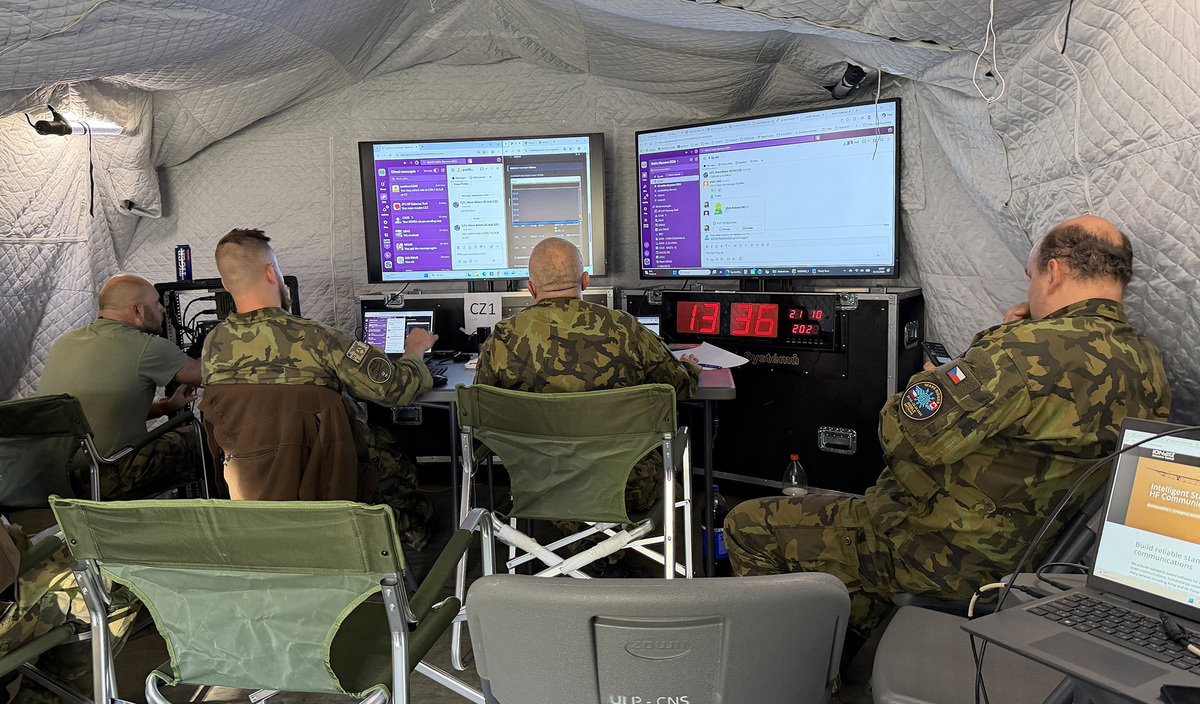
The Noble Skywave international exercise is one of the major events focused on testing the capabilities of military communications specialists. Organized by the Canadian Armed Forces, the exercise challenges participants over a 48-hour period to test long-distance shortwave communication capabilities, technical equipment, operators’ expertise, and the ability to collaborate under time pressure. This year’s edition featured 260 evaluated stations. The Czech team CZ1 – Wave Riders placed 51st overall, ranked 10th out of 35 stations in Europe, and took fifth place among 11 European teams in the 150- to 400-watt power category. The Czech soldiers managed to establish 103 contacts with 70 stations in 17 countries around the world. The total distance of the contacts reached 617,889 kilometers, with the farthest counterpart station located in New Zealand, 18,032 kilometers away. Approximately 55 percent of the traffic consisted of voice communications, and the remaining 45 percent was data transmission. “The Noble Skywave exercise is one of the most prestigious friendly competitions among allied military operators in the shortwave band (3–30 MHz). During the exercise, operators test their equipment, technical skills, and ability to work as a team. The exercise demonstrates whether we can transmit voice and data over hundreds and thousands of kilometers simply by having radio waves reflect off the ionosphere high in the atmosphere,” explains Warrant Officer Vítězslav Kalousek. According to him, the result achieved represents a significant success, especially given the geographical distribution of the participants. The Czech team from AKIS CNS participated in the competition for the second time and, unlike many foreign teams, had to overcome considerable distances. According to Kalousek, approximately 85 percent of the stations are located on the American continent, which means that European participants must establish connections over a distance of at least 5,000 kilometers.
However, the significance of the exercise extends beyond the competition results themselves. On today’s battlefield, where satellite communication systems, data networks, and digitized command-and-control systems are becoming increasingly prevalent, shortwave communication remains an important alternative. Its main advantage is the ability to secure long-distance communication without relying on satellite infrastructure or terrestrial communication networks. “Shortwave communication has recently been experiencing something of a renaissance in tactical communications because it is irreplaceable in many situations. While it is not designed to transmit large volumes of data, it can still convey basic information about a unit and its needs, even in an emergency,” Kalousek points out. According to him, modern data waveforms have largely replaced the previously used Morse code and supplement voice communications in situations where voice transmission is hampered by interference or adverse conditions. Shortwave radio waves can propagate in several ways. In addition to reflection from the ionosphere, they can travel along the Earth’s surface or via so-called vertical reflection (NVIS), which enables communication even in rugged terrain. This makes it possible to bridge distances and obstacles that can no longer be overcome by conventional very short and ultrashort wave means. However, successful long-distance communication requires much more than just a high-quality radio station. Crucial factors include knowledge of radio wave propagation, the correct selection of frequencies and antenna systems, the operators’ experience, and the ability to adapt to changing conditions. “No radio operator needs to be Superman, capable of handling everything on their own. It is, above all, a team effort involving a group of specialists, where everyone contributes their part to the puzzle,” emphasizes Kalousek. He explains that an operator must be able to predict when suitable conditions for a connection in the desired direction will arise, select the correct frequency, and choose the appropriate antenna. They must also be able to detect a weak signal in an environment filled with noise and interference.

The state of the ionosphere plays a significant role, as it is primarily influenced by solar radiation. Conditions for radio wave propagation thus change throughout the day and over the course of the year. “That’s why sometimes just tens of watts are enough to reach New Zealand, while at other times even hundreds won’t help. It all comes down to the combination of the antenna, the state of the ionosphere, and the selected mode of operation,” notes the Czech communications specialist. During the exercise, the Czech team used an L3Harris AN/PRC-160 radio with a 400-watt amplifier and 3G ALE technology, which enables automated connection establishment. However, according to Kalousek, automation alone does not mean that modern technology can replace the operator’s expertise. “But one shouldn’t get the impression that automatic connection establishment will handle everything for the operator. Even with 3G ALE, the operator must enter the frequency into the radio,” he points out. The radio then evaluates the success rate of individual frequencies and, based on the information obtained, is able to select suitable channels for subsequent connections. However, if the operator selects the wrong set of frequencies, the automated system will not establish a connection. To achieve better results, Czech soldiers also received assistance from colleagues in the special forces, who loaned them a 400-watt transmitter and a T2FD broadband antenna. This antenna is particularly well-suited for 3G ALE operations thanks to its ability to utilize a wide frequency range without the need for retuning.
Kalousek points out that the Central European environment is relatively heavily interfered with in terms of radio operations, and the standard power of 150 watts may not be sufficient for long-distance communication. For shorter distances, however – up to approximately 500 kilometers – this power is entirely sufficient. In some situations, a connection can even be established with a power output of just a few dozen watts and a simple dipole antenna. According to him, further improvements could be achieved by using higher-quality directional antenna systems, such as logarithmic-periodic antennas.
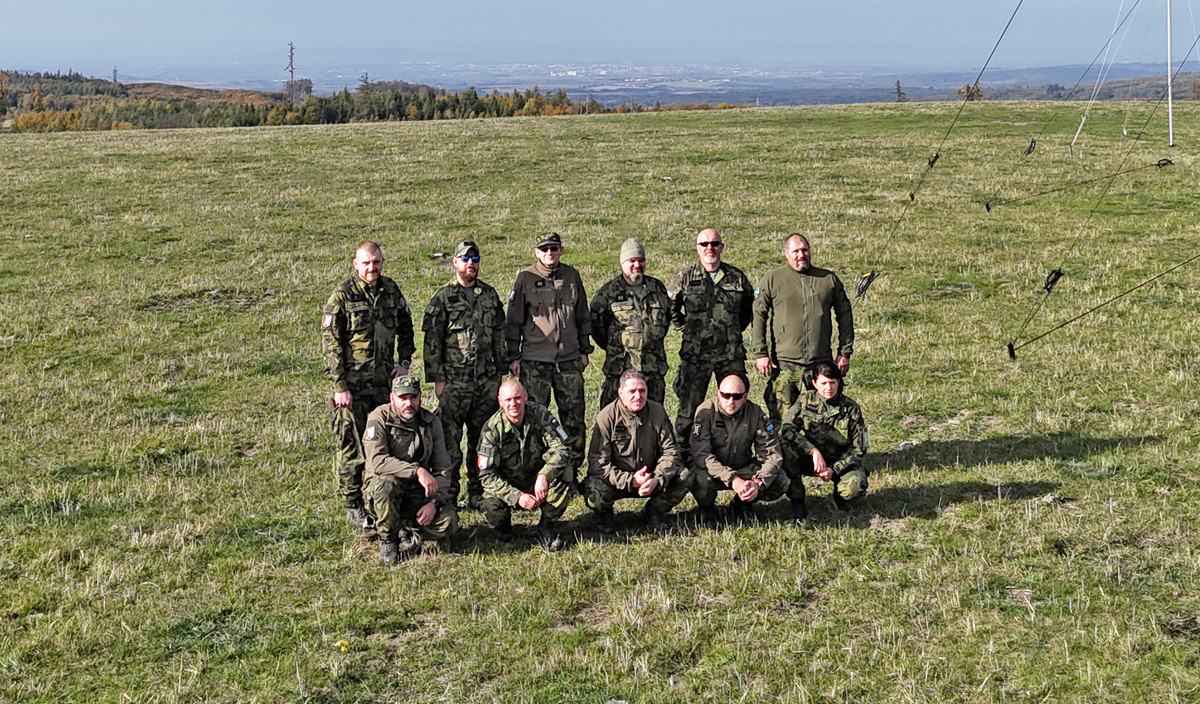
The exercise itself also placed a considerable physical and mental strain on the participants. The Czech team consisted of eleven soldiers who, in addition to operating the radios, had to set up a field station, provide power, heat the tents, and handle other logistical support. As a result, they worked practically without sleep for the first 36 hours. “Those 36 hours are no exaggeration. It stems from the size of the team: there were eleven of us, including colleagues who didn’t directly operate the radio stations but were responsible for setting up the facilities, preparing meals, running the generators, and heating the tents,” Kalousek explains. One of the lessons learned for future years, therefore, will be the need to expand the team not only with operators but also with support staff, so that shifts and rest periods can be better organized.
One of the most challenging moments came during the competition phase, for which the team had prepared an Inverted L antenna. One of the members had built it in advance, and it made its debut at the exercise. However, when the relevant competition discipline began at 4:00 a.m. on Wednesday, the Czech team was unable to establish any connections. “We could hear the other stations, but they couldn’t hear us. We were faced with the dilemma of whether we had installed something incorrectly or whether the ionosphere simply wasn’t in a usable condition,” recalls Kalousek. After about four hours of unsuccessful attempts, however, conditions suddenly changed, and connections began to increase gradually. It was through this antenna that the Czech team ultimately made nearly all of its longest-distance connections. Another complication arose during the final contest challenge, which required a mode of operation that could not be easily implemented on the AN/PRC-160 radio they were using with their existing software. The solution ultimately came through improvisation and collaboration with other specialists. Colleagues at the barracks prepared older AN/PRC-150 radios, and one team member – who had come from the 22nd Helicopter Air Base – set up the necessary software environment on a virtual machine. “We succeeded only thanks to absolute determination. In the end, success was determined by patience, the ability to improvise, and, above all, the fact that the team didn’t give up even when things looked hopeless,” Kalousek emphasizes.
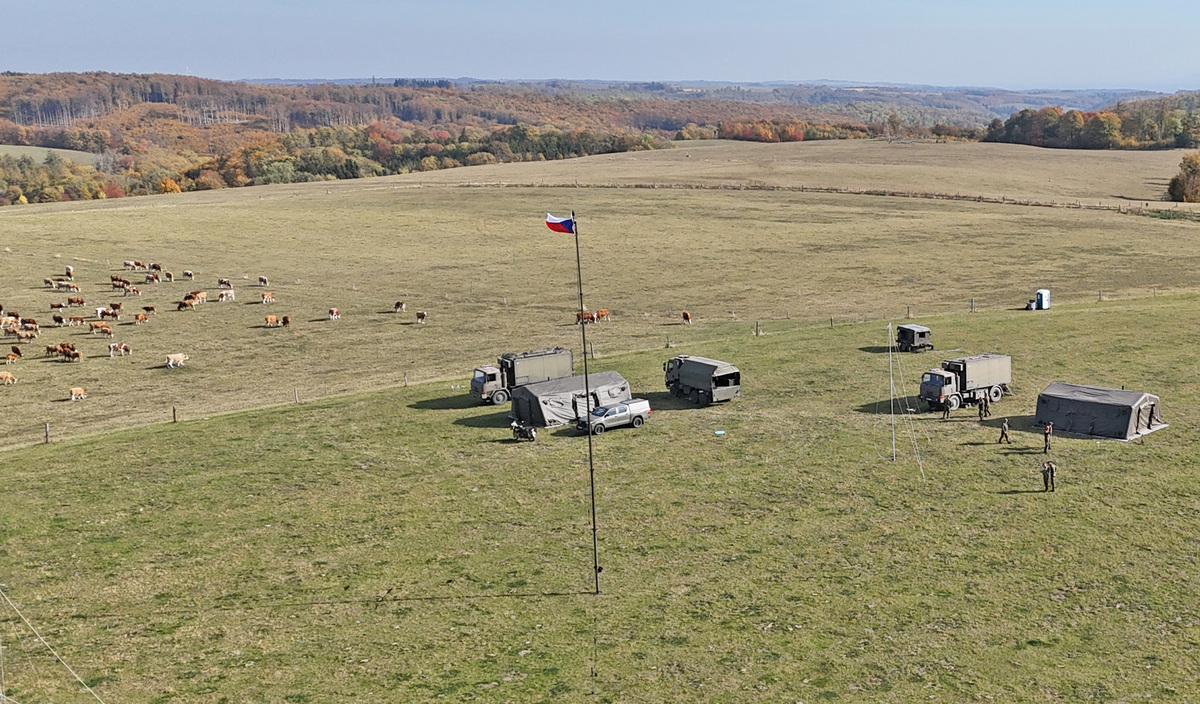
Cooperation between individual military units and allied nations was also an important part of Noble Skywave. The Czech team consisted of members from various sections of the CNSaRTSVŘ AKIS, supplemented by two new recruits. Soldiers from the DCM-Bravo unit, which is part of the Alliance’s 3rd NATO Signal Battalion based in Bydgoszcz, Poland, also participated in the competition for the first time. While the Wave Riders team operated from a field station in a meadow near the village of Slavkov – a location chosen primarily for its suitable conditions for antenna installation and minimal electromagnetic interference – members of DCM-Bravo participated in the competition from their barracks. Both groups remained in contact throughout the exercise and continuously exchanged experiences. “This is practical experience for interoperability: signalers from different armies work on the same frequencies, follow the same procedures, and use similar equipment, verifying that they can establish communication even without satellites,” explains Kalousek. The ability to maintain communication when primary communication means are limited or lost is one of the fundamental requirements for modern military units. In the NATO environment, the PACE concept is therefore used, which provides for primary, alternative, backup, and emergency communications. Shortwave communication represents one of the important backup capabilities within this concept. According to Kalousek, shortwave radios are part of a number of army facilities, including the modernized KOVS facilities, which enable communication over distances throughout Europe. “Our signalers are undoubtedly prepared to establish the required connections. However, this is not a matter for a single radio station or individual, but for the entire system of Czech Armed Forces communications assets and the entire communications community,” he notes.
The exercise also provided an opportunity to compare the capabilities and approaches of individual foreign teams. The top spots are regularly taken by units that have long-term experience, stable staffing, and high-quality technical infrastructure. Permanent stations equipped with large antenna systems or a geographic location near the sea or ocean – which can improve radio wave propagation conditions – also represent a significant advantage. Kalousek points out, however, that the competition result alone cannot be considered an unambiguous measure of the quality of military communications specialists. The decisive factor is a combination of technology, experience, the location of the station, natural conditions, and the chosen tactics. Moreover, during the competition, the Czech team demonstrated that it also has something to offer its foreign colleagues. For example, one of its members used the Slack communication platform to help the South Korean team configure their radio station so that they could fully participate in the competition event.
For the Czech soldiers, therefore, Noble Skywave was not only an opportunity to compare their own capabilities with those of other allied units, but above all to gain experience for the further training and development of the signals corps. The exercise highlighted the importance of well-trained operators, appropriate technical support, sufficient staffing, and the ability to handle non-standard situations. “I consider the experience of building teamwork to be the most valuable. A team’s ability to face extreme challenges together is a fundamental pillar. Add to that the ability to improvise and master communications technology perfectly, even in non-standard situations,” Kalousek summarizes. According to him, the knowledge gained can help guide further training for both individuals and entire teams, while also increasing military specialists’ interest in this type of activity. Competitive motivation and pride in belonging to the communications community also play a significant role. Looking ahead, Private Kalousek would therefore like to see broader participation by the Czech Army in similar events. His ambition is for at least five Czech teams to participate in next year’s Noble Skywave. At the same time, he is proposing the idea of organizing a similar communications exercise with competitive elements in a European setting as well.
The results of this year’s competition thus confirm not only the professional skills of Czech communications specialists but, above all, the importance of their mutual cooperation. At a time when modern warfare is increasingly reliant on sophisticated technologies, the human factor – including expertise, experience, and the ability to adapt to unexpected circumstances – remains decisive. Noble Skywave 2026 also served as a reminder that even traditional shortwave communications have an irreplaceable role on the modern battlefield.