
















Brig. Gen. Jan Farlík: We Understand That the Global Situation Calls for a Change in Approach
The University of Defense is entering the 2026/2027 academic year with a growing number of students, new degree programs, and, above all, a commitment to significantly expand its cooperation with the military, other universities, the defense industry, and international partners. In the latest episode of the CZ DEFENCE podcast, Brigadier General Jan Farlík, Rector and Commander of the University of Defense, spoke about these topics. The discussion also touched on the shortage of students in technical fields, robotics, drones, artificial intelligence, and quantum technologies, as well as how quickly military education must adapt to lessons learned from current conflicts.
Video: Brig. Gen. Jan Farlík: We understand that the global situation calls for a change in approach / CZ DEFENCE
According to Brigadier General Jan Farlík, one of the most significant changes the University of Defense has been undergoing recently is a gradual move away from a certain institutional insularity. In his view, a military university cannot operate solely within the Ministry of Defense if it is to respond to rapid technological changes, new security threats, and the need to enhance the Czech Republic’s defense capabilities. “Until now, we have been a very insular institution. We operated more or less solely within the Ministry. Now we understand that the global situation calls for a slight change in approach, and we are striving to establish cooperation with as many entities or organizations as possible that can help not only us but, of course, the state in improving our defense capabilities,” Farlík said. He mentioned both public and private universities, broader cooperation with members of the Association of the Defense and Security Industry, and new contacts with leading foreign institutions. According to him, this is not a one-time change but a long-term trend. “We decided that there is no point in completely closing ourselves off,” stated the rector-commander of the University of Defense.
However, the university’s primary mission remains the training of a sufficient number of qualified officers and other specialists for the Czech Armed Forces. In this regard, the numbers show a gradual increase. According to Farlík, approximately 385 students enrolled for the current academic year. Last year there were 374, and the year before that, 361. The overall trend is therefore positive, but the situation is not the same across all specializations. Certain technical fields, in particular, remain critical. “In some specializations, in certain areas of expertise, we have been struggling for a long time. This is not unique to the University of Defense and the Army; it is a general trend. Specifically, this concerns electrical engineering fields,” the general noted. It is precisely from this foundation in electrical engineering that specializations vital to a modern military emerge, such as electronic warfare or certain areas of cybersecurity. According to Farlík, current trends are so serious that the university is preparing changes for the upcoming academic year designed to help address the situation. Even cooperation with civilian technical schools will not solve the problem on its own. According to Farlík, these schools, too, are facing a shortage of high school graduates who want to study traditional electrical engineering. The University of Defense is therefore considering not only more intensive cooperation but also new forms of study and joint study programs. The existing model of military medicine could serve as inspiration. “If the ministry gives us the go-ahead, we want to try various forms of joint study programs,” Farlík said. According to him, the resulting programs need not benefit only the military. They could also strengthen public administration, crisis management, and the country’s overall defense capabilities.

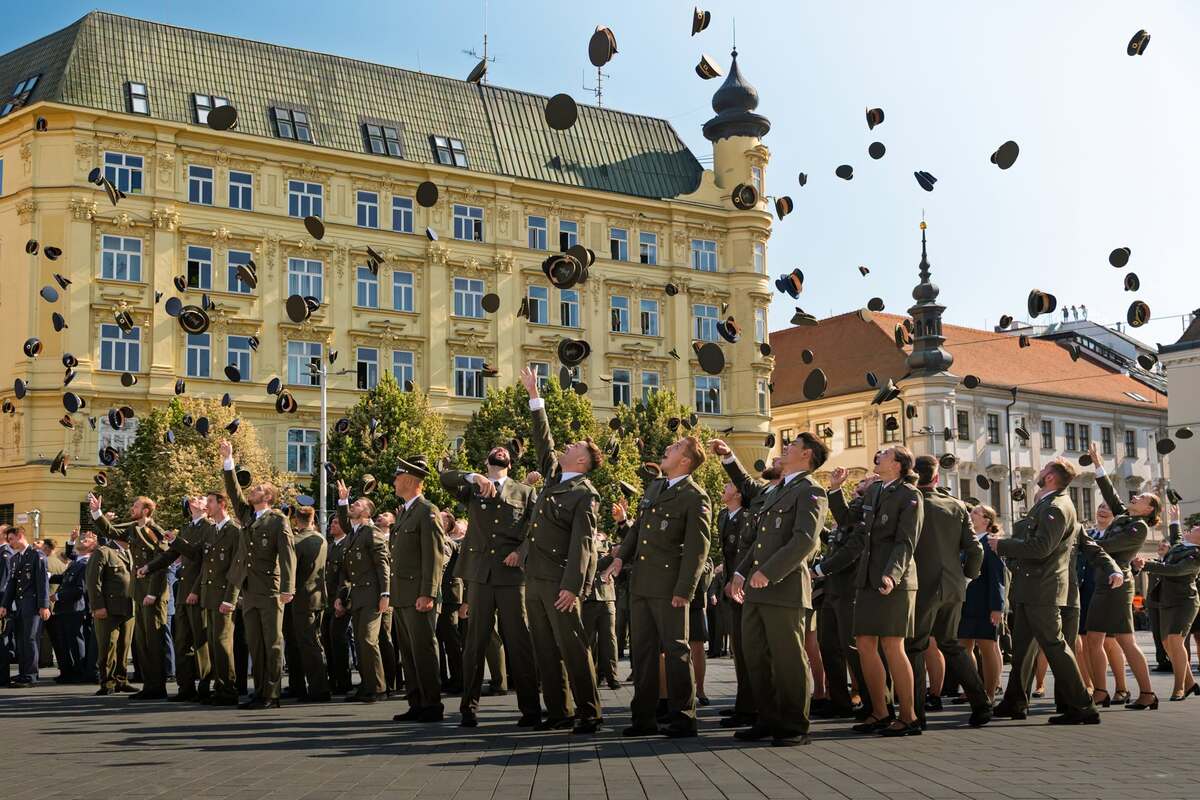
An increase in the number of students does not automatically mean that the number of faculty members must grow at the same rate. According to Farlík, the university must maintain teams of experts even for specializations with only a few students. “If you have expertise specific to the military and want to maintain that expertise at a certain level of quality, then you need a team of experts – whether they’re doctors, associate professors, or professors – who uphold that specialization, possess historical knowledge, have the most up-to-date insights, and combine and apply them together. And it doesn’t matter whether you have two students or ten or twenty,” he explained. There is significant interest, for example, in the Faculty of Military Leadership and command programs. The situation at the Faculty of Military Medicine remains stable. According to the general, the Faculty of Military Technology is much more volatile. Alongside problematic electrical engineering specializations, there are fields with significantly higher interest, such as geography, meteorology, and cybersecurity. One of the challenges that arises during the admissions process is the varying levels of mathematics proficiency among high school graduates. Farlík noted that the University of Defense is facing a similar situation in this regard as other universities. Students arrive with widely varying levels of knowledge, and the university strives to bring them up to the required level during their first year through an orientation period and mentoring.
A significant part of the University of Defense’s future lies in a new suite of study programs known as 2026+. This time, the university did not merely decide to extend or make minor adjustments to existing programs but has prepared a more significant overhaul. The reasons for this include legislative changes as well as, above all, technological developments and lessons learned from current conflicts. “Tactical principles are changing, and the way technology is used on the battlefield is changing. We are all analyzing these issues and striving to incorporate them into our curriculum as quickly as possible,” said Farlík. The development of the new programs therefore took place over roughly two years in close collaboration with the army and the heads of individual academic departments. According to him, the university was very thorough in determining what the Czech Armed Forces actually need from future graduates. “There is a noticeable trend toward the use of modern technologies across the board,” the rector noted. At the same time, the teaching method itself is changing. The purely lecture-based model is giving way to practical training and greater student exposure to real military environments. Students at the University of Defense participate in short-term internships, military exercises, and activities in overseas operations. In this context, Farlík particularly praised the cooperation with the Operations Command, which has made it possible to send larger numbers of students to these activities. The new programs are also designed to be more flexible in meeting the specific needs of the army. For certain fields of study, the plan is for a broader foundation to be supplemented in the final phase of study by a more specialized track focused on the graduate’s future military assignment. This will enable the military to more precisely define the type of specialist it needs, and the university will provide the corresponding specialized knowledge during the final part of the student’s studies.
Another key issue is the relationship between the University of Defense and civilian universities. Farlík does not view them as competitors. The military can and does recruit graduates from civilian universities, but there is a fundamental difference between their education and the training of a career military officer. “Our graduates view the military as their lifelong career; the overwhelming majority want to remain in the military for the duration of their careers, they want to command, and they want career advancement,” said Farlík. In addition to their own area of expertise, military students must also master the fundamentals of a military career – knowledge of how the military operates, international law, NATO issues, and the application of their expertise in military operations. This naturally limits the time that can be devoted to purely technical specialization. According to the general, the new study programs are intended to at least partially bridge this gap. At the same time, the university is exploring new ways to recruit students from the civilian sector as well. An amendment to the Higher Education Act allows for transfers between study programs; however, the situation is more complex for military studies due to basic military training and other specialized courses. The university has therefore submitted proposals for several possible approaches to the Ministry of Defense. These include joint programs such as double degrees or the possible reinstatement of military master’s programs, which graduates of bachelor’s programs at civilian universities could enter, for example. According to Farlík, however, it will first be necessary to assess the legislative conditions.
Another interesting project could be the planned collaboration between the University of Defense, the University of West Bohemia, and the Police Academy. This would not be a military program, but rather a civilian degree program focused on crisis management and national defense capabilities. Graduates could find employment in the state administration, local governments, or other institutions involved in crisis response. The preliminary plan calls for using the University of West Bohemia’s campus in Karlovy Vary, with part of the program taking place at the Police Academy and the University of Defense. Students would thus gain an overview of the coordination between civilian crisis management, the Czech Police, the integrated rescue system, and the military. However, according to Farlík, the project is still in the conceptual phase. “I believe the state generally has a severe shortage of experts in this field,” he noted, describing the creation of other similar specializations as highly beneficial.
Military robotics is a separate field. The University of Defense already has a Department of Military Robotics with its own specialization and students. However, Farlík does not view robotics in isolation. “It’s not the absolute cornerstone. It’s one of many, because robotics isn’t just one important specialization that has recently emerged. It’s also AI, it’s quantum computing, and it’s other fields,” he said. Current graduates of military robotics primarily serve as specialists. According to Farlík, the future organizational structure of robotic capabilities within the Czech Armed Forces has not yet been definitively established. Experimentation, testing, and finding ways to integrate new capabilities into existing units therefore play an important role. According to him, robotics will not function on its own, but primarily as a tool designed to assist infantry, ground, or air units. Working with specific modern technology is, according to Farlík, absolutely essential for a military academy. “It’s a necessity. It’s not just important – it’s vital,” he emphasized. According to him, while not every future commander needs to understand the design of individual systems in detail, they must know how to use them, what they can offer, and where their risks and limitations lie. For example, the university has a student team focused on drone design and FPV flying. The students have their own training space and also participate in international competitions. At the same time, drones are being integrated directly into military training. “They’re learning to operate them within a unit and to defend against them – what to do when confronted by an enemy drone and so on,” Farlík explained.

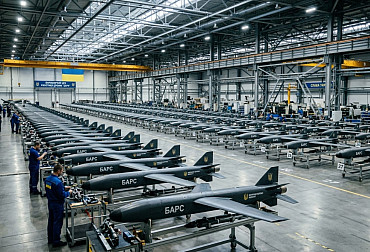

The field of artificial intelligence is evolving even faster than robotics. According to its rector, the University of Defense does not prohibit students from using it. However, the condition is that students must be able to explain and defend their results in a professional manner. “We have no problem with artificial intelligence when students use it, but they must be able to justify and defend it professionally – and, of course, without looking at their cell phones or smart glasses,” said Farlík. According to him, the military needs a small group of top specialists who will also understand the underlying algorithms, be able to evaluate the results, and develop countermeasures. However, a much broader group of people must have a basic understanding of the subject. “Overall, I think every soldier and officer should know what artificial intelligence is capable of, how to recognize, for example, attempts at manipulation, deepfakes, or fake news, and learn from them,” said the general. At the same time, the rapid pace of AI development means that the curriculum cannot be set in stone for several years. According to Farlík, syllabi are therefore designed so that the latest findings can be continuously incorporated into individual modules. “These topics are defined in such a way that each year we can include the most cutting-edge developments in this field,” the general explained. At the same time, the university is developing its own internal chatbot to help students navigate the university’s internal environment and documents. Farlík is convinced that the institution already has experts capable not only of using AI but also of implementing it in a military environment. However, the ability to recognize the security and other risks associated with these tools remains essential.
Another area of technological development is quantum technology. According to Farlík, the University of Defense’s involvement in the quantum innovation ecosystem is primarily intended to help train a sufficient number of experts and seek practical applications of quantum technologies in various military fields. As an example, he cited the field of protection against weapons of mass destruction, where quantum computing could, in the future, assist – for instance – in the search for new molecules or compounds usable for defense purposes. According to him, the University of Defense is among the institutions with a significant number of students and faculty members who are already engaged in this field.
And what exactly does the role of “rector-commander” entail? Unlike ordinary universities, a military university has, in addition to its academic structure, a clearly defined chain of command. “That ‘commander’ part has its advantages. Definitely,” Farlík noted. In critical situations, he explained, the same jurisdictional conflicts that can arise at civilian universities do not occur here. “We have a chain of command; we have a command structure, and if the minister or the military issues a request or gives an order, we all carry it out.” The rector’s role, on the other hand, is not very different from that at civilian universities – it includes overseeing the university’s operations, securing projects, opening up new opportunities, and communicating with the public and the professional community.
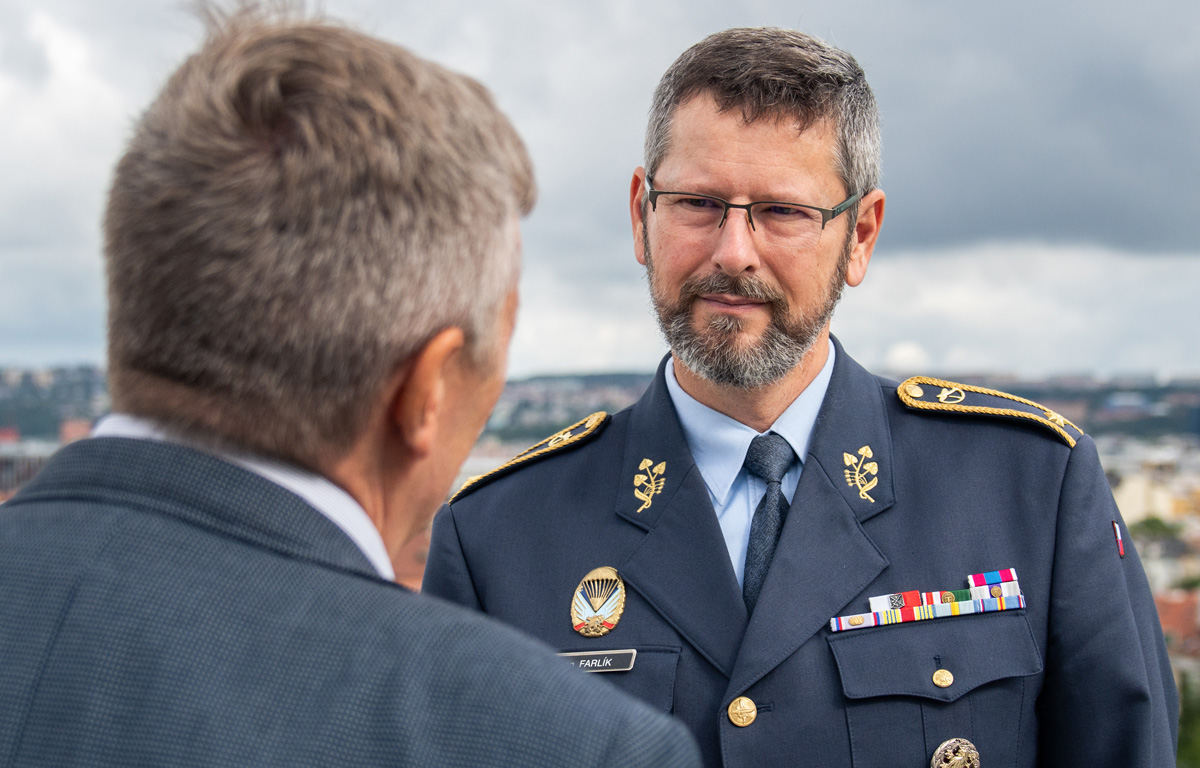
In an interview with Brigadier General Jan Farlík, you’ll also learn that the University of Defense today faces more than just the task of increasing the number of graduates for the growing Czech Armed Forces. A far more complex challenge is preparing officers and specialists for an environment that is changing technologically much faster than traditional educational cycles. Robotics, autonomous systems, drones, artificial intelligence, and quantum technologies are thus gradually becoming a natural part of military education. Equally important, however, is the university’s ability to collaborate with the military, the civilian academic community, government agencies, and industry, and to continuously incorporate new knowledge into its curriculum. It is precisely this openness to the outside world and greater flexibility in education that may be one of the ways to prepare future commanders for conflicts and security challenges whose nature we can only partially predict today. If you’d like to learn more, watch the full interview at the beginning of this article.