






Brig. Gen. Zdeněk Mikula: Modernization Must Not Overshadow What Matters Most – People Are the Heart of the Brigade
After four years, Brigadier General Zdeněk Mikula stepped down as commander of the 7th Mechanized Brigade, the main strike force of the Czech Army. His tenure was primarily focused on preparing the “7th” for one of the largest modernization efforts in its history – the transition to Leopard 2 tanks, the introduction of CV90 tracked infantry fighting vehicles, and adapting training to the demands of the modern battlefield. In an interview with CZ DEFENCE, General Mikula assesses how far the brigade has come over the past four years, what the war in Ukraine has revealed, where he still sees the greatest challenges, and in what condition he is handing over the brigade to his successor, Colonel Miroslav Vybíhal.
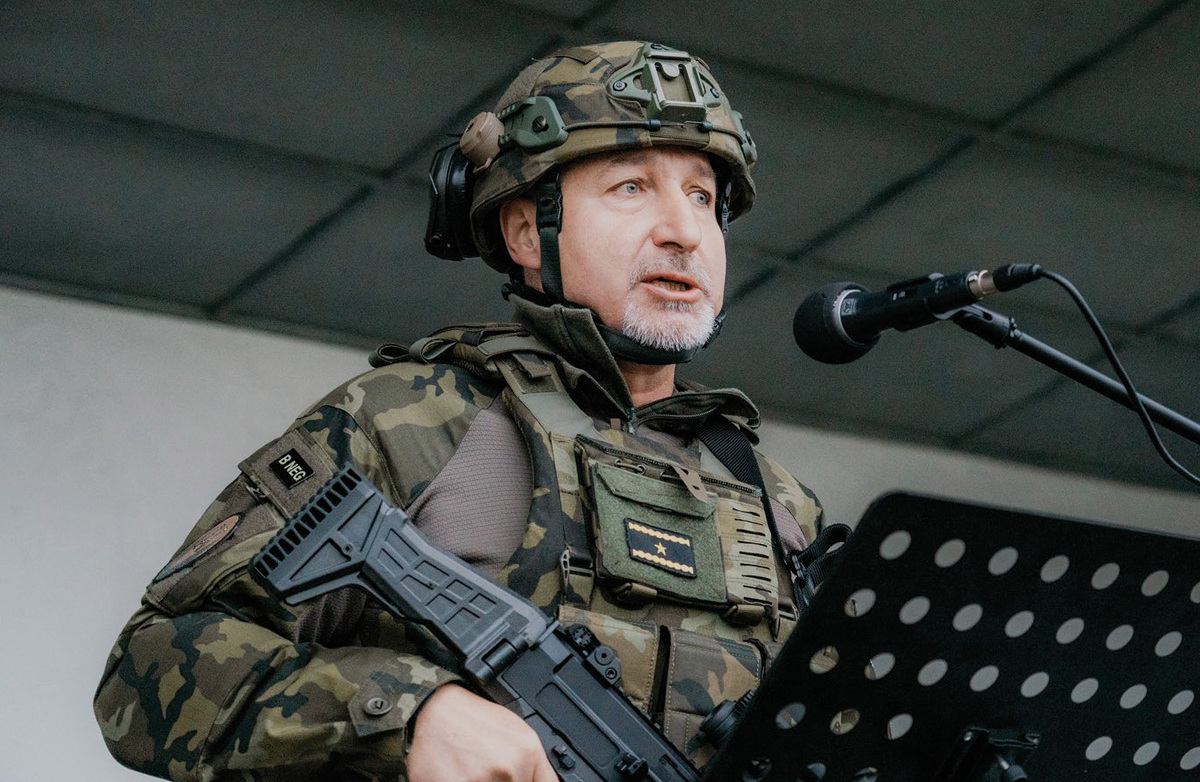
When you took command of the 7th Mechanized Brigade in August 2022, your main task was to prepare it for a major modernization. In what condition are you now handing it over to your successor after four years?
I am handing over the brigade as a unit that has come significantly closer to the model of a modern heavy brigade over the past four years. Such a sweeping transformation cannot be completed in a single term. What matters, however, is that the brigade has a clearly defined direction, an experienced command staff, projects already underway, and soldiers who understand the purpose of the changes. I also consider it important that it has preserved its culture, managed to respond to new trends on the battlefield and to the transformation of the next generation of soldiers, while at the same time not compromising on the Czech Armed Forces’ target standards.
Which moment during your four years as commander do you consider the most important, and what are you personally most proud of?
There were several such moments. I consider it most important that the brigade managed to maintain a high level of training and deployability while simultaneously preparing for a fundamental technological and organizational change. Adapting to the new NATO force model was key, as confirmed by the combat readiness assessments of the individual battalions and the final evaluation of the brigade headquarters. I am especially proud of the people – the commanders, staff, and soldiers of the units – who managed routine tasks, Alliance commitments, training, and preparation for new equipment. That is not something to be taken for granted.
Were you able to achieve all the goals you set for yourself when you took office, or is there anything left that you still need to complete?
When I took office, I knew that the main task would be to prepare the brigade for modernization, not to complete it within a single term. At the same time, it was necessary to maintain its ability to carry out missions within the Czech Republic as well as its NATO commitments as the core of the 7th Brigade Task Force. In this sense, we succeeded in achieving a substantial portion of the goals: establishing processes, beginning personnel preparation, launching training and organizational changes, and moving the brigade closer to its desired form. Further development will be needed, particularly in infrastructure, logistics, personnel stability, and full mastery of new equipment. I view this as a natural part of command continuity.
Your term in office was marked by preparations for the arrival of the Leopard 2A4 tanks, the future Leopard 2A8s, and the CV90 tracked infantry fighting vehicles. Which of these projects represented – or still represents – the most challenging change for the brigade?
The most challenging aspect is not the replacement of the equipment itself, but the shift in the mindset of soldiers, commanders, and staff. This task cuts across all modernization projects. For us, the Leopard 2A4 meant a rapid transition to a Western tank platform and our first practical experience with a new approach to training, maintenance, and logistics. The Leopard 2A8 will bring another qualitative leap forward. In terms of scope, however, the CV90 represents the most complex change, as it will affect a broader spectrum of units, tactics, maintenance, training, and the day-to-day operations of mechanized battalions. It is not just about a new vehicle, but about a different way of conducting combat. We must therefore view all these projects as a single entity designed to create a synergistic effect on the battlefield.

To what extent has the arrival of the Leopard 2A4 tanks changed the capabilities of the 73rd Tank Battalion, and what lessons learned from their deployment can be applied to the Leopard 2A8s?
The arrival of the Leopard 2A4s has significantly enhanced the capabilities of the 73rd Tank Battalion, not only technically but also mentally. The soldiers gained experience with Western systems of training, maintenance, and cooperation with partners. At the same time, it became clear how important it is to have specialists, logistics, spare parts, technical support, and a clear training plan in place. From this perspective, close cooperation with the German Bundeswehr was indispensable, particularly in organizing training, establishing organizational structures, and setting up logistical procedures. These experiences will be exceptionally valuable for the introduction of the Leopard 2A8 tanks.
What will the addition of the new, modern Leopard 2A8 tanks to the brigade’s arsenal mean for the brigade?
The Leopard 2A8 will significantly enhance the brigade’s ability to conduct high-intensity combat. It will provide greater firepower, protection, situational awareness, and interoperability with allies using similar platforms. At the same time, it will place greater demands on the entire system – from crew training to logistics to infrastructure. I therefore view a modern tank not merely as equipment on the battlefield, but as a capability that must be supported by people, processes, supply, and maintenance.

The brigade’s first units are already preparing for the arrival of the CV90 vehicles and are also gaining experience through cooperation with foreign operators of this platform. In your opinion, what will be needed during their deployment so that the brigade can truly make full use of the new capabilities of these tracked IFVs?
With the CV90, it will be crucial for the brigade not only to take delivery of the new equipment but also to master a new way of using it. It will be necessary to invest in specialists, language and technical training, simulators, logistics, and tactical thinking. The experience of foreign users is very valuable because it will help us in the beginning; however, we must subsequently adapt it to our own conditions. If we want to make full use of the CV90’s capabilities, the training of squads, platoons, companies, and battalions must change – not just the practical skills of the crews. Cooperation with VeV-VA will be essential in training crews and technical personnel, followed by a transition to standard training as personnel rotate normally. It will be equally important to create conditions that allow crews and specialists to remain in these positions for longer periods. Such capabilities cannot be built without motivating personnel and without high-quality human resources management.
Modernization isn’t just a matter of tanks and combat vehicles. Which support capabilities – such as logistics, engineering support, air defense, artillery, or reconnaissance – do you consider to be the greatest challenge facing our sole heavy brigade today?
I wouldn’t want to single out one specific area as the sole weak link, because the heavy brigade functions as a system, and its strength depends on the balance of all its components. If we are acquiring modern tanks and combat vehicles, we must devote equal attention to combat support and combat logistics. Artillery is undergoing a major modernization to meet NATO standards, which significantly enhances the capabilities of the 7th Brigade Task Force. At the same time, we still lack self-propelled mortars, certain engineering capabilities for crossing water obstacles, and specific transport capacities. Experience from Ukraine clearly shows that a state-of-the-art platform alone is not enough. What matters is the ability to keep it in the fight, protect it, resupply it, and effectively integrate it into the overall force.
To what extent is the current infrastructure in Přáslavice, Hranice, Bučovice, and other garrisons prepared for the operation of significantly heavier and technologically more sophisticated equipment?
Infrastructure is an area that needs to catch up with modernization. New equipment is heavier, technologically more complex, and places greater demands on garages, workshops, handling areas, security, energy systems, and training facilities. A number of measures are already being prepared or implemented at individual garrisons. However, it is fair to say that infrastructure will remain one of the decisive factors in the success of the entire modernization effort for several more years. Without adequate facilities, it is impossible to maintain a high level of combat readiness in the long term. The same applies to soldiers’ work and living quarters, both in terms of capacity and standards.
In your opinion, is the greater challenge for our military acquiring new equipment, or recruiting and retaining enough soldiers who will be capable of operating it?
Both aspects are major challenges, but in the long term, I consider the personnel side to be more demanding. Procuring equipment is a matter of financial resources, available production capacity, and the ability to precisely define requirements; it is also complicated by the need to reach consensus across the Czech Armed Forces and the complexity of the procurement process. However, it takes years to train an experienced commander, technician, or specialist. That is why we must strike a balance between the army’s needs and the soldiers’ expectations. A modern army needs motivated people, a stable workforce, effective training, and a clear career path. Without these, the mere purchase of new equipment will not create the required capabilities.
How has the brigade’s training evolved during your four years in command in response to lessons learned from the war in Ukraine, particularly with regard to the use of drones, electronic warfare, camouflage, and protection against precision-guided munitions?
I view the lessons from the war in Ukraine on two levels. The first concerns Russia’s political objectives and the evolution of the conflict from the initial maneuver phase to today’s war of attrition. From this perspective, trench warfare, for example, is an important but only partial aspect. The second level relates to technologies, weapon systems, and their use on the battlefield. Today, this is more transparent, faster, and far more dangerous for units that are unable to camouflage themselves, disperse, quickly change positions, and protect themselves against drones and precision fire. We are therefore increasingly incorporating drone operations, counter-drone measures, camouflage, deception, electronic warfare, dispersed command, and the ability to operate with disrupted communications into our training. A concrete example is our command posts, which we have significantly streamlined so that they can move more quickly, disperse and conceal themselves more effectively, and simultaneously reduce their thermal and electromagnetic signatures. This year, we are therefore conducting a series of exercises aimed at mastering this new concept at both the staff level and among the brigade’s command units.
At the end of 2025, the 7th Mechanized Brigade successfully completed an Alliance assessment and demonstrated its ability to conduct high-intensity operations. What was the most challenging aspect of the certification, and where, conversely, did the brigade’s greatest strength become apparent?
The most challenging aspect was coordinating the activities of the staff, subordinate maneuver battalions, and combat support and combat service support elements in an environment that closely resembled high-intensity operations. In this simulated operation, we operated under the command of the Multinational Division Northeast (MND-NE), with which the 7th Mechanized Brigade has long cooperated and for which it is designated within the NFM framework. The exercise confirmed a high degree of interoperability based on interconnected command and control systems as well as on the ability of commanders and staff to operate in an allied environment. Certification tests not only individuals or communication systems, but the entire system’s ability to plan, make decisions, conduct combat operations, and respond to evolving situations. The brigade’s greatest strength was evident in the professionalism of its personnel, the cohesion of its command, and its ability to find solutions even under pressure. This is a value that no equipment alone can replace.
The Czech Army refers to the 7th Mechanized Brigade as its main strike force. In your opinion, does its current staffing, equipment, and support reflect this status, or is this status primarily a target to be achieved?
The 7th Mechanized Brigade is indeed the main strike force of the Czech Army. However, its current state should be viewed as a transitional phase on the path to becoming a fully-fledged heavy brigade in accordance with NATO standards. So far, we have compensated for outdated combat equipment through extraordinary effort and the dedication of our personnel. It is precisely these individuals who have long been the foundation of the “7th” culture, thanks to which we have been able to recruit new soldiers and retain the brigade’s experienced core. The established modernization system and the support of the Czech Armed Forces command give me confidence that the brigade will achieve the required capabilities.
What advice would you give to your successor, Colonel Miroslav Vybíhal, who will oversee the completion of the brigade’s modernization and rearmament?
Above all, I would wish him strong nerves, a good team, and enough time to spend with the soldiers. Modernization will be challenging, but it must not overshadow what is essential – the brigade is made up of people. I would recommend that he maintain continuity, rely on experienced commanders, and change established procedures where new technology requires it. Colonel Vybíhal knows the brigade well, and I am convinced that he has everything it takes to successfully lead it through the next phase.
Related