















Combating FPV Drones with a Standard Assault Rifle: Fiocchi and CSG Unveil a New Generation of Anti-Drone Ammunition
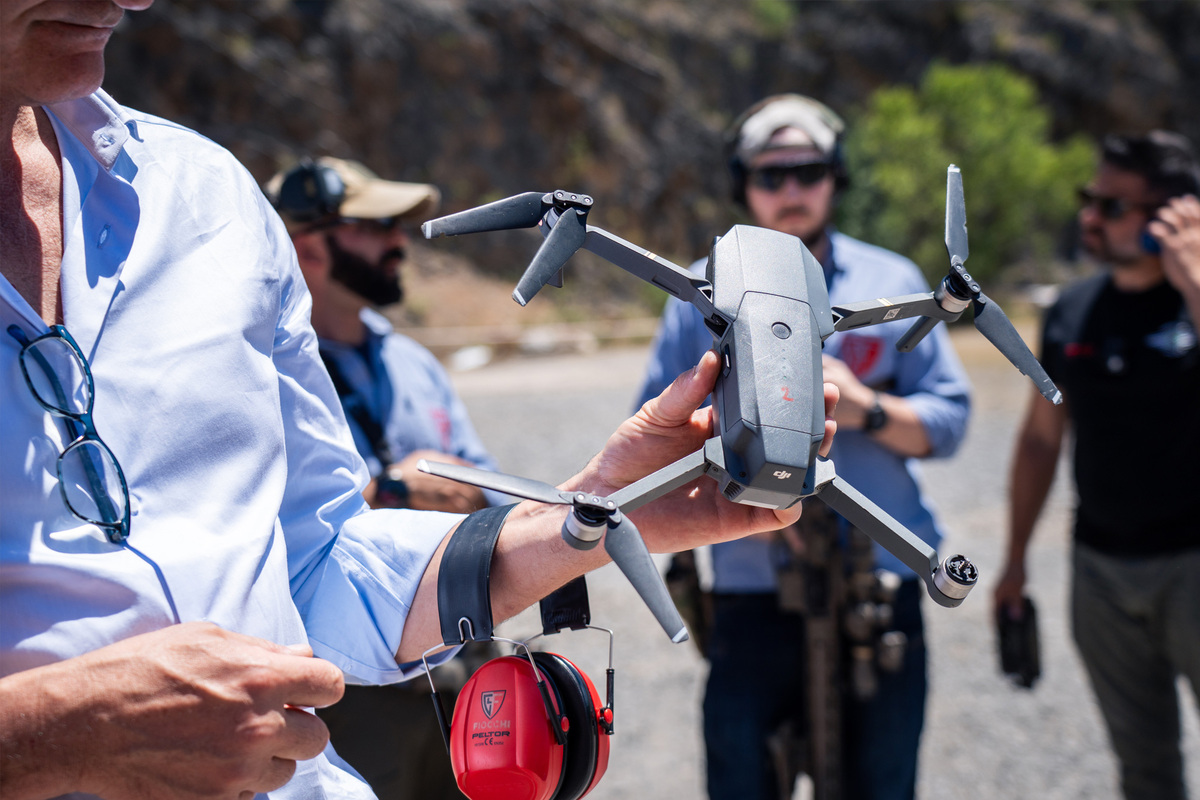
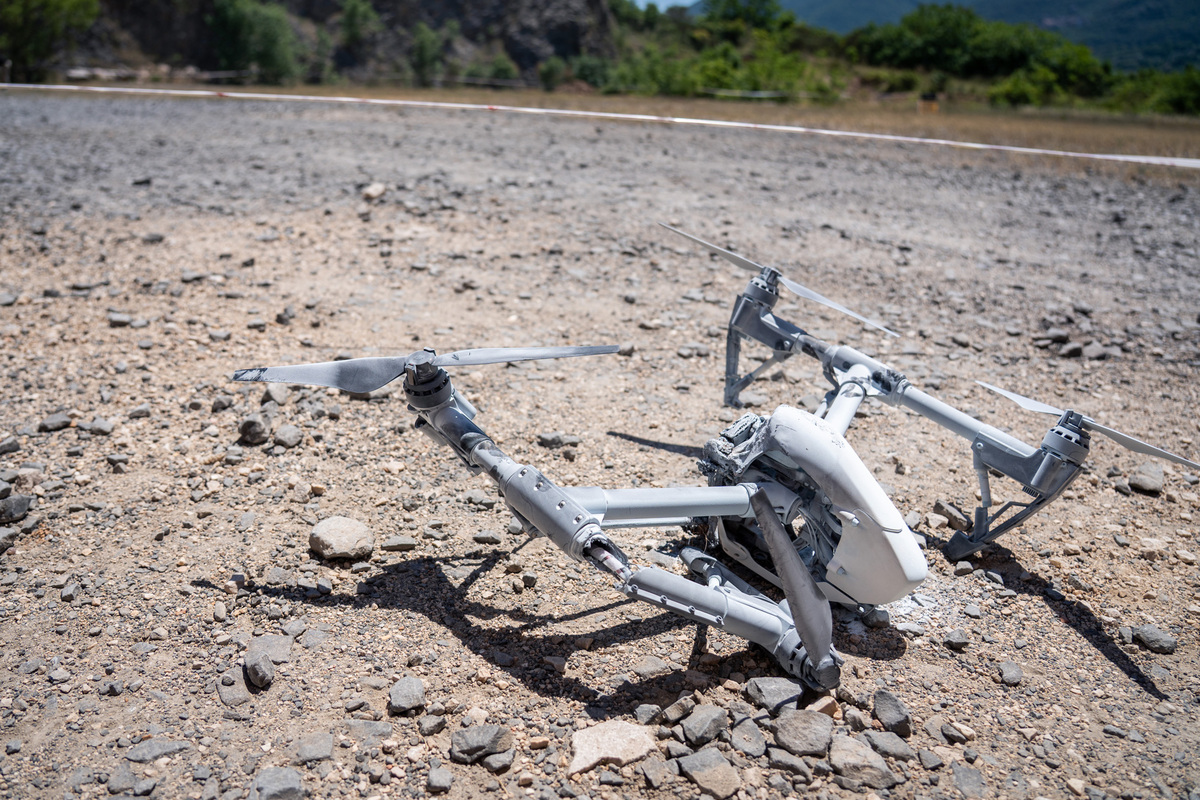
The widespread deployment of FPV drones is changing the nature of the battlefield and forcing armies to find new ways to protect their soldiers. The Italian company Fiocchi, part of the CSG Group, has therefore developed special anti-drone ammunition designed for standard assault rifles. During a presentation in Italy, the company demonstrated the ammunition’s effectiveness against real-world targets and provided an overview of the development process, which was carried out in collaboration with end users and CSG Group companies, as well as based on lessons learned from modern conflicts.
Video: Combating FPV Drones with a Standard Assault Rifle: Fiocchi and CSG Unveil a New Generation of Anti-Drone Ammunition / CZ DEFENCE
The visit to Fiocchi took place as part of the celebrations marking the company’s 150th anniversary. Although the anniversary commemorated the extraordinary history of one of Europe’s oldest ammunition manufacturers, the attention of industry experts was focused primarily on the future. That future lies in a new generation of anti-drone ammunition designed for standard infantry weapons. While just a few years ago, protection against small unmanned aerial vehicles was primarily associated with specialized systems, Fiocchi has introduced a solution that can be immediately integrated into existing infantry equipment – without new weapons, without complex logistical changes, and without major adjustments to training.
Drones Have Changed the Game
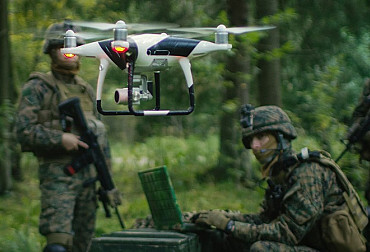
One of the most significant lessons from the conflict in Ukraine is that small unmanned aerial vehicles have fundamentally transformed the battlefield. Inexpensive commercial platforms modified for military use now carry out reconnaissance missions, direct artillery fire, and – with increasing frequency – launch direct attacks on individual soldiers or light equipment. FPV drones represent a special category. Operators control them via real-time camera feed, and thanks to their high speed and maneuverability, they can penetrate all the way to the target with an explosive payload. “We have clearly seen that the nature of warfare is changing. Everyone knows what is happening today in Ukraine and Eastern Europe. Users and operators on the ground must face new challenges and new threats. In the past, warfare was man-to-man. Now it is becoming more of a battle between people and drones,” said Stefano Micheletti, Fiocchi’s Director of Defense and Security, during the presentation. According to him, it was precisely the requirements of end users that sparked the entire project. “We received a lot of feedback from end users who were asking for products capable of countering this new threat,” Micheletti added.
Initial considerations, however, were headed in a different direction. The company’s technical director, Costantino Fiocchi, explained that the developers originally drew on the principles of sport and hunting shooting. “At the beginning, we believed that a shotgun shell would be a better system, as it is a natural countermeasure against very fast-moving targets. Based on that, we developed good shotgun shells for this application,” he said. It was only after consulting with military users that it became clear they needed something else. “The military wanted ammunition that could be used with the same service weapon that soldiers already have. They didn’t want to carry additional weapons, and that was completely understandable. It was precisely this need that gave rise to the original idea,” Fiocchi explained. This led to a concept that combines the simplicity of standard infantry equipment with the principle of shotgun fire.
The developers set several basic requirements. The new ammunition had to be distributable to all soldiers, could not require a weapon change, and was intended to serve as a final layer of protection against small UAVs. “We didn’t want just one soldier to be able to protect himself. We wanted all soldiers on the ground to have the ability to protect themselves against these threats,” Micheletti said. He added that this is not a replacement for specialized air defense systems. “We’re talking about ranges from approximately 70 meters down to ten or fifteen meters. It really is the very last layer of protection for a soldier or operator on the ground,” he said. It is precisely at these ranges that FPV drones can pose the greatest threat.
How the New Missile Works
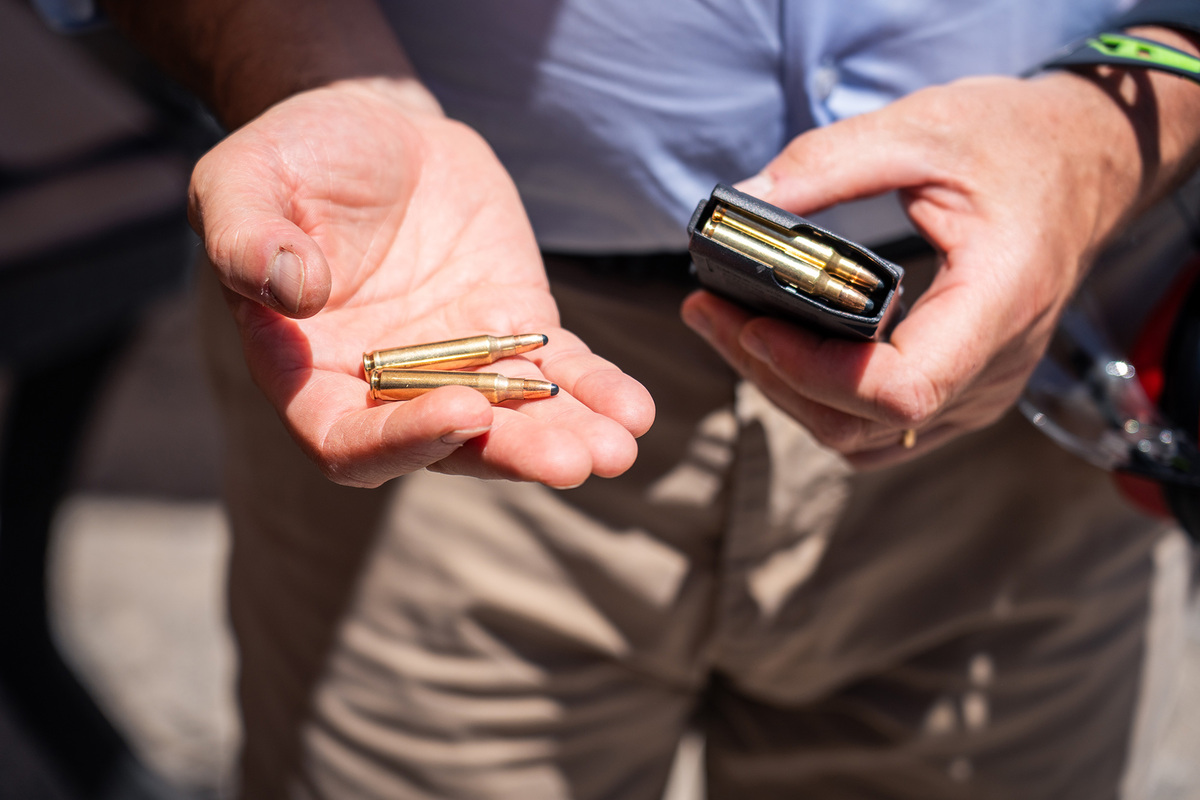
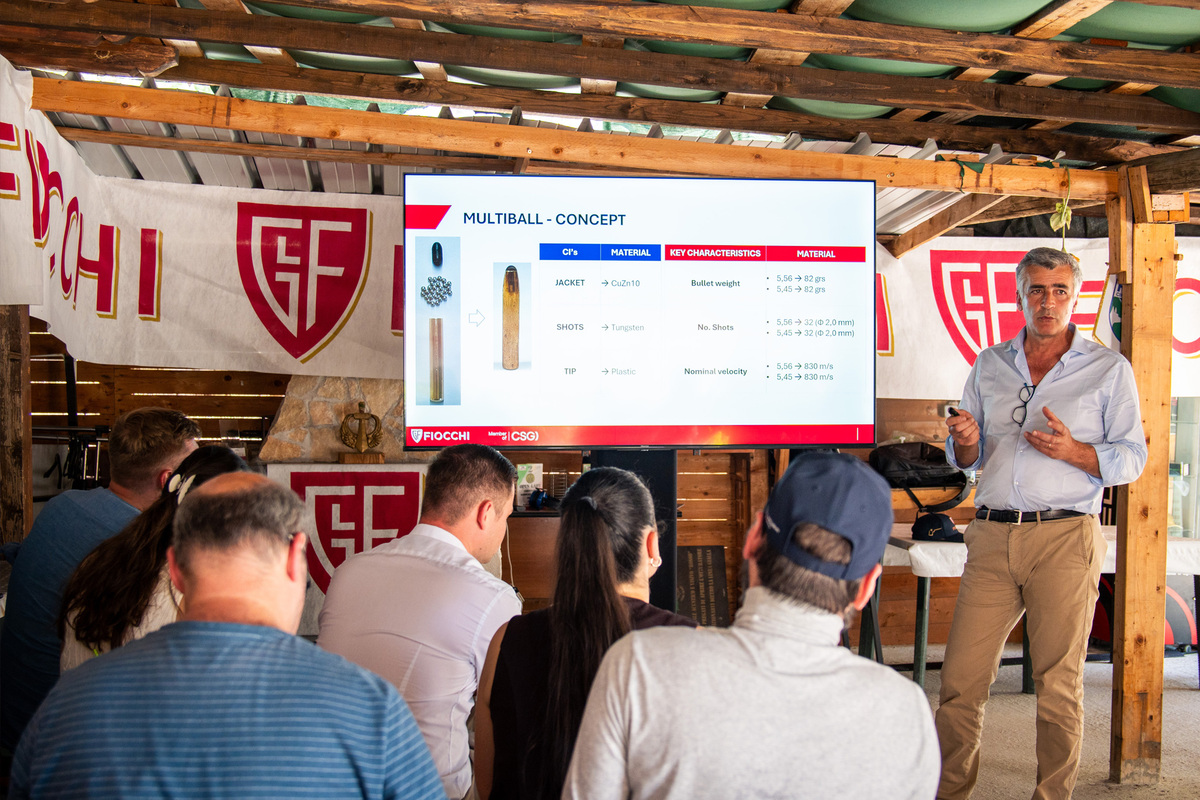
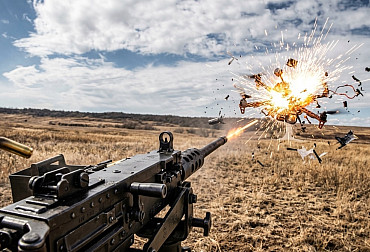
On the outside, the new round resembles standard 5.56 × 45 mm NATO ammunition. The key difference, however, lies inside the projectile. “The big difference is that the round does not contain a single projectile. It is a round containing shot. When it leaves the barrel, it opens up and creates a spread similar to that of a shotgun shell,” explained Costantino Fiocchi. The design of the projectile presented an extraordinary technological challenge. “With a conventional round, you have to manufacture a casing that won’t break or open. In this case, we needed a casing that, on the contrary, would open and release the shot. This completely turns bullet manufacturing technology on its head,” he noted. Almost immediately after leaving the barrel, the jacket opens and the individual projectiles disperse. “It’s important for the bullet to open right behind the barrel, because the tungsten pellets are very hard and must not come into contact with the barrel. Otherwise, they would damage it,” explained the technical director. During the subsequent discussion, he added: “We don’t want to risk it failing to open and acting as a single projectile. That’s why it opens immediately after leaving the barrel. This solution is designed for engagements at very close range, especially in urban environments.”
Why Tungsten?
The developers opted for tungsten pellets. The reason was their high density and ability to maintain sufficient effectiveness even at small sizes. “We needed small pellets that would retain their energy over a greater distance. Tungsten is exceptionally well-suited for this purpose,” said Fiocchi. According to him, the density of the tungsten used is approximately 30 percent higher than that of lead. “This means it can retain its energy significantly longer,” he added. At the same time, however, he acknowledged that tungsten is one of the main cost drivers. “The price difference is quite significant today. But users understand that this is the difference between zero chance and a chance to save a life. That’s why they’re willing to pay more for such a solution,” he said. Fiocchi is therefore also working on alternative materials. “We’ve had very positive results, but it’s still too early to talk about them,” he noted.
Same Rifle, Different Magazine
One of the biggest advantages of the new solution is how easy it is to implement. “A soldier simply removes the standard magazine and inserts the magazine containing this ammunition. There’s absolutely no problem with that,” said Costantino Fiocchi. Testing was conducted with a variety of different weapons. “The weapon remains the same. We tested its functionality with many different weapons without any problems. Automatic reloading works reliably with any 5.56 mm assault rifle,” he said. However, training will require some adjustment. “It’s one thing to shoot at a stationary target and another to shoot at a fast-moving target. Appropriate training must be conducted for this purpose,” he noted.

The demonstration at the shooting range was not merely a marketing showcase. According to company representatives, the product is undergoing military testing conducted in collaboration with the Italian armed forces. Micheletti stated that the declared effective range is based on specific tests.
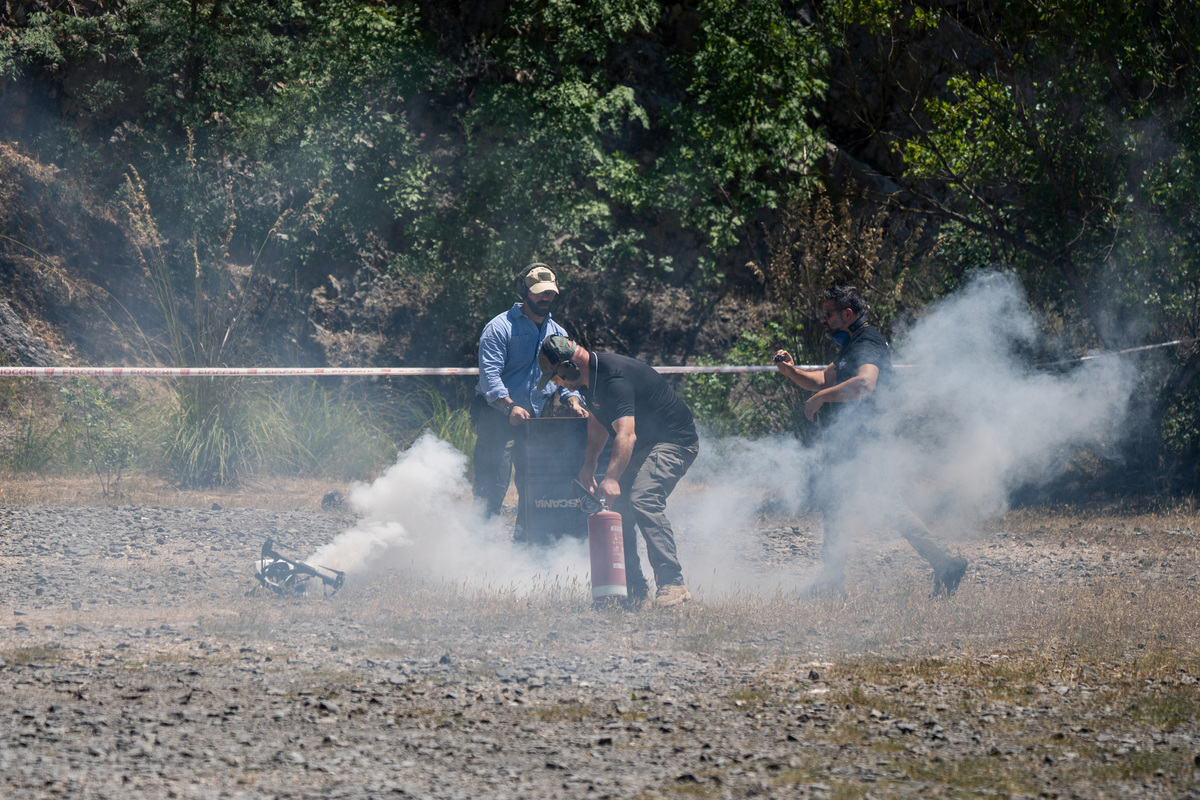
“We conducted military trials with the Italian Ministry of Defense and the Italian Armed Forces,” he said. Costantino Fiocchi then confirmed: “Special forces have already tested this ammunition. That is why the first order we received came from the Italian Army.”
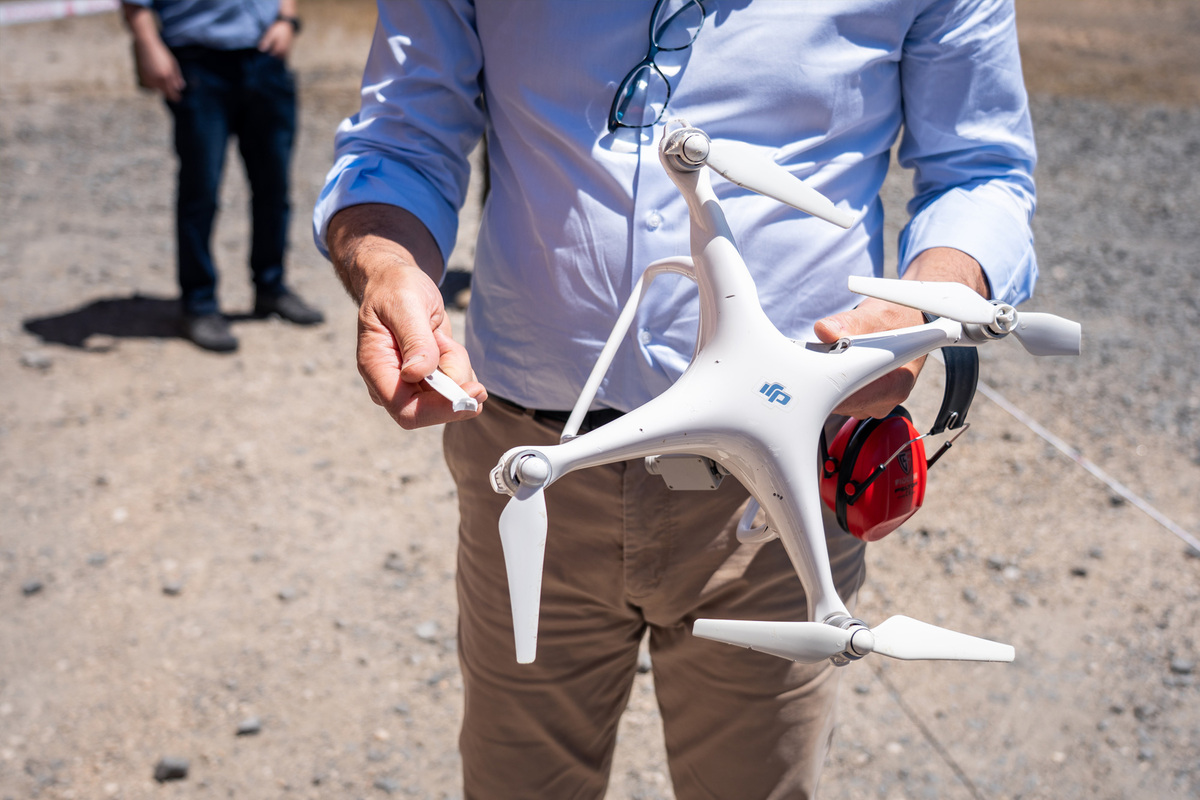
In addition to the Italian customer, the company has also received inquiries from other NATO countries. “We have received many inquiries from various NATO countries. However, most of them want to test the product themselves first,” he added.
The Result of Collaboration Within CSG
Fiocchi was not the only company involved in the development. As mentioned during the presentation, the experience of end users and collaboration within the CSG group played a significant role. Micheletti noted that insights from Excalibur International were utilized in defining the requirements. It was precisely this collaboration between manufacturers, sales teams, and users that made it possible to shorten the development time and respond quickly to feedback from the battlefield.
David Chour, Vice Chairman of the Board of Directors and CEO of CSG, emphasized the importance of Fiocchi to the Czech CSG Group in an interview with CZ DEFENCE. “Fiocchi was a landmark investment for CSG. Through it, we essentially entered the global market. It was our first investment in the hundreds of millions of euros and a truly pivotal step in our history,” he said. According to him, the significance of this acquisition extends far beyond the Italian market itself. “In my opinion, without Fiocchi we would not have been able to acquire Kinetic, and without Kinetic, the IPO would have been more difficult as well. Fiocchi was truly our first step into the global arena,” said Chour. CSG is now seeking to leverage Fiocchi’s presence in Italy to promote other products as well. “Fiocchi is a long-standing supplier to the Italian military, and of course we’re trying to take advantage of this situation to gain a foothold with other products as well,” he said.

Lessons learned from Ukraine are now being applied to virtually all areas of the defense industry. The same is true for ammunition. “We see what’s happening in the war in Ukraine. Those small drones are really attacking light vehicles and infantry, and there’s practically no effective defense against them,” said David Chour. That is precisely why he considers Fiocchi’s new product to be exceptionally promising. “What our colleagues at Fiocchi managed to develop in just a few months could truly be an effective defense. We believe we’ll make a name for ourselves worldwide with this product,” he added. According to Chour, however, this is nothing new in a historical context. “Military knowledge and combat experience are invaluable in the development of ammunition or equipment. This was true in ancient Rome, in the Middle Ages, and it will remain true a thousand years from now,” he concluded.
A Strategic Partnership with a European Dimension
Italian Defense Minister Guido Crosetto also praised the significance of the partnership between Fiocchi and CSG. “Fiocchi represents 150 years of history, and throughout those 150 years, it has been the primary supplier of small-caliber ammunition to the Italian armed forces. CSG’s investment in Fiocchi will ensure that this remains the case for another 150 years,” Crosetto said. The minister also hinted at possibilities for further Czech-Italian cooperation. “We have also signed a protocol with Slovakia and the Czech Republic to expand this cooperation not only in the field of ammunition but also in the area of larger-caliber artillery, which we consider a great opportunity for both Italy and CSG,” the minister said.

Fiocchi’s new anti-drone ammunition does not represent a revolution in the form of a sophisticated electronic system or another layer of expensive air defense. Its strength lies in its simplicity. It uses a standard service rifle, requires only a magazine change, and gives soldiers the ability to respond to a threat that was practically nonexistent just a few years ago. It is precisely this ability to translate battlefield insights into rapidly deployable industrial solutions that may be one of the decisive factors in the future competitiveness of the European defense industry. The Fiocchi and CSG project demonstrates that the path from identifying an operational need to a mass-produced product can be significantly shorter than was customary in the past. And if the expectations of both manufacturers and early adopters are confirmed, this ammunition could become one of the first truly widespread last-line-of-defense tools against FPV drones at the individual soldier level.
Related