













Four Years of War in Ukraine Have Changed Europe, but the Biggest Change Is Yet to Come
From the defense of Kyiv through a war of attrition to negotiations on security guarantees: the conflict shows that Ukraine’s postwar security will not be merely a Ukrainian issue, but a test of the future defense architecture of all of Europe. The war in Ukraine has entered its fifth year, and its evolution reveals something more fundamental than a mere shift in the situation on the battlefield. Since February 2022, the very logic of the conflict has gradually changed. What began as an initial Russian attempt to achieve a swift military victory has evolved into a protracted war of attrition, followed by a technological and industrial contest, and ultimately an increasingly intense struggle over the shape of a future peace. The years 2025 and 2026 brought renewed negotiations, discussions on territorial issues, security guarantees, a European military presence, and Ukraine’s further integration into the European Union. Four years of war have thus led to a paradoxical conclusion: a potential cessation of hostilities may not mean the end of the security crisis. For Europe, on the contrary, it may mark the beginning of a significantly more challenging period of deterrence, rearmament, and long-term defence planning.
Introductory Summary
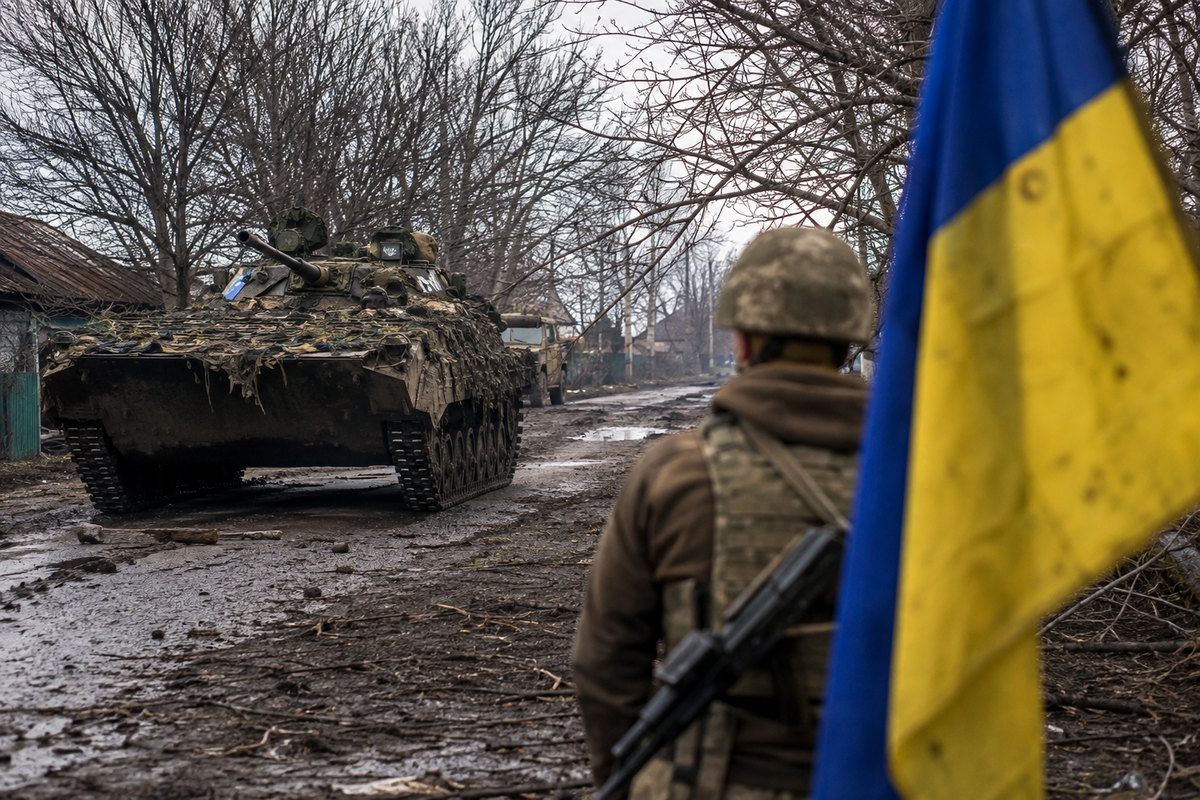
The timeline of the war in Ukraine from February 2022 to June 2026 illustrates the conflict’s gradual evolution through several interconnected phases. The first months of the war disproved the assumption of a rapid Russian military victory. Even the initial Russian advance on Kyiv was slowed by Ukrainian resistance, coupled with logistical and technical problems, and Moscow subsequently shifted its primary focus toward the Donbas. At the same time, a fundamental political transformation of the European security environment took place: Finland and Sweden decided to apply for NATO membership, and support for Ukraine began to take on a more long-term and institutionalized form.
The second phase revealed the limitations of the European defense model established after the end of the Cold War. Support for Ukraine began to deplete European stockpiles, and the war once again raised questions about the ability of European states to wage a long-term, high-intensity conflict. As early as late 2022, European institutions were openly warning that aid to Ukraine had exposed insufficient stockpiles and a lack of critical military capabilities.
The third phase brought about the gradual internationalization and technological escalation of the conflict. The war ceased to be merely a clash between Russia and Ukraine. Russia deepened its military ties with other actors, while Western support for Kyiv shifted from lighter systems to tanks, air defense, precision-guided weapons, and other sophisticated capabilities. At the same time, it became increasingly clear that the conflict would be protracted.
Starting in 2024, another element was added: the effort to use military pressure to create conditions for future negotiations. The Ukrainian operation on Russian territory in August 2024 was linked by the Ukrainian side, among other things, to an effort to bring Moscow to the negotiating table. At the same time, NATO further institutionalized its support for Ukraine at the Washington summit.
By 2025, the focus had shifted more significantly toward diplomacy. U.S. proposals for a ceasefire, talks between Washington, Moscow, and Kyiv, and a European “Coalition of the Willing” emerged. Nevertheless, several rounds of talks failed to produce a major breakthrough, and differences on issues of territory, security guarantees, and ceasefire conditions persisted.
In early 2026, this process entered a new phase. In January, the first trilateral talks between Ukraine, Russia, and the United States took place since the start of the full-scale invasion. Security guarantees for Ukraine gradually became the focus of the negotiations, while the territorial issue remained unresolved. Further rounds of talks continued in February in Abu Dhabi and Geneva.
This is precisely where the main analytical conclusion lies. The conflict is gradually shifting from the question of “how to enable Ukraine to continue its defense” to the substantially broader question of “how to create a postwar security arrangement that would prevent Russia from merely suspending the conflict, rebuilding its forces, and subsequently restarting it.”
For the Czech Republic (and the Czech Armed Forces), this means that a potential ceasefire should not be interpreted as a signal to slow down modernization. On the contrary, it may create a period during which it will be necessary to intensively replenish stockpiles, expand industrial capacity, build air defense capabilities, prepare reserves, and finalize the capabilities needed for NATO’s collective defense.
Key Takeaways
1. The First Lesson of War: A Plan for a Quick Victory Can Turn into a Long War in a Matter of Weeks
The Russian invasion, which began on February 24, 2022, was from the outset much broader in scope than the previous conflict in eastern Ukraine. Russian forces entered the country from Russia, Belarus, and occupied Crimea, and during the first few days, fighting also took place over access routes to Kyiv. However, even the initial phase revealed the difference between numerical and technological superiority on paper and the ability to effectively utilize that strength in a large-scale joint operation. A British assessment cited in a parliamentary briefing as early as March 3, 2022, attributed the slowdown in the advance on Kyiv to intense Ukrainian resistance, technical malfunctions, and transportation and supply problems.
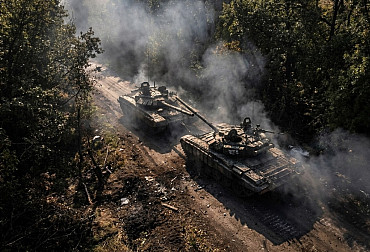
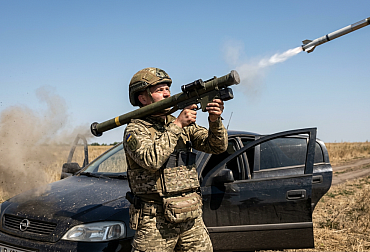
It was precisely the first months of the war that provided one of the most important lessons for European armies. Military strength is not merely the sum of brigades, tanks, and aircraft. It is the ability to move units, resupply them, repair equipment, maintain command, and simultaneously adapt the operational plan based on the enemy’s response.
This experience also has direct implications for the Armed Forces of the Czech Republic (AČR) and Czech society as a whole. The ongoing modernization of the Czech Armed Forces cannot be interpreted merely as the replacement of old platforms with new ones. A tank, combat vehicle, or aircraft only represents an effective military capability when there is adequate personnel, ammunition, logistics, maintenance, infrastructure, reconnaissance, and a command system in place.
Thus, even in the early stages of the conflict, Ukraine served as a reminder of a principle that European armies have partially sidelined after decades of expeditionary operations: high-intensity war is not waged by a platform. It is waged by a system.
2. The War Quickly Exposed a European Problem That Cannot Be Solved by Higher Budgets Alone
The second major shift occurred when short-term aid to Ukraine turned into long-term support for a country at war. Europe gradually provided increasingly sophisticated systems while realizing that its own stockpiles had been built up for an entirely different security model.
At the end of 2022, the then-EU High Representative Josep Borrell articulated this reality very candidly: the supply of weapons to Ukraine revealed the depletion of European military stockpiles and, at the same time, the existence of critical shortcomings in the capabilities needed to defend the European continent. That was the moment when the war in Ukraine ceased to be merely a test of the Ukrainian armed forces. It also became a test of the European defense industry.
A protracted war requires ammunition, spare parts, production lines, repairs, skilled workers, and stable access to raw materials. At the same time, the consumption of materials occurs on a different time scale than that of traditional European acquisitions. A weapons system may take ten years to develop, but a stockpile of ammunition can be depleted within a few weeks during an intense conflict.
From the Czech Republic’s perspective, this point is particularly significant. The country has a long industrial tradition in the fields of ammunition, ground systems, radar, and military electronics. War therefore increases the value of the Czech defense industry not only economically but also strategically.
More important than the mere growth in defense spending will be the question of whether the capacity is being built that can also be utilized during a protracted conflict. What will be decisive is not only the ability to purchase equipment, but also to repair, replenish, modernize, and manufacture it in sufficient quantities.
3. Ukraine has changed more than just the nature of warfare. It has reshaped the European security landscape
One of the greatest strategic paradoxes of the Russian invasion is its impact on NATO. Russia has long portrayed the Alliance’s expansion as a security threat, but the invasion itself significantly accelerated Finland and Sweden’s decisions to abandon their previous approach to military neutrality and non-alignment.
As early as May 2022, Finland’s political leadership endorsed an immediate application for NATO membership, and the Swedish government subsequently confirmed the same intention. The accession protocols for both countries were signed in July of that year, and after completing the ratification process, Sweden became the Alliance’s 32nd member in March 2024. The strategic significance of this change extends beyond the number of NATO members. The accession of both Nordic countries fundamentally alters the defense geography of Northern Europe, the Baltic region, and access to Russia’s borders.
As a result, the war has created the exact opposite of the security environment that Moscow had publicly sought. NATO is larger, its eastern and northern flanks have gained greater strategic depth, and European states have significantly reassessed their defense priorities.
For the Czech Republic, this leads to a broader conclusion. The security of Central Europe can no longer be planned solely within national borders. The Czech Republic’s infrastructure, logistics, and military capabilities are part of the area in which, during a potential Alliance operation, troops will be moved between the western and eastern flanks. The defense of the Czech Republic thus increasingly also means the ability to support the defense of Poland, Slovakia, the Baltic states, and other allies.
4. Starting in 2024, the war has become a battle for negotiating leverage
The third and fourth years of the conflict brought about a change that is exceptionally significant in the long term. Military operations began to be increasingly and openly linked to future negotiating positions. This was well demonstrated by the Ukrainian operation on Russian territory launched on August 6, 2024. According to a Ukrainian official cited in a British parliamentary study, one of its purposes was to bring Russia to the negotiating table.
The war thus entered a phase in which military and diplomatic tools are increasingly intertwined. Control of territory, the ability to strike strategic targets, or to hold a certain section of the front line no longer have only immediate operational significance. They also generate political capital for potential negotiations. This relationship between the battlefield and diplomacy will become increasingly significant as actual negotiations draw nearer.
The war in Ukraine underscores a simple fact: peace negotiations do not begin the moment the war ends. They are the next phase of the war, waged by other means and from positions established by previous military developments.
5. The year 2025 marked a return to diplomacy, not the arrival of peace
The inauguration of Donald Trump’s second administration in January 2025 significantly increased the intensity of diplomatic activity. The United States supported a proposal for a 30-day ceasefire, Washington resumed direct communication with Moscow, and several rounds of talks took place between the U.S., Ukraine, and Russia.
In March 2025, the United States and Ukraine endorsed a proposal for a 30-day ceasefire; Washington resumed sharing intelligence with Kyiv; and subsequent U.S.-Russian talks led to discussions about a limited ceasefire concerning energy infrastructure and the Black Sea. However, the terms and interpretation of individual commitments remained contentious.
In May 2025, the first direct Russian-Ukrainian talks since March 2022 took place in Istanbul. They lasted less than two hours, however, and the only concrete outcome was a prisoner exchange. The second round in June also failed to produce a major breakthrough.
This highlights the fundamental problem of the current phase of the conflict. The existence of a diplomatic process is not the same as a convergence of the warring parties’ strategic goals. Negotiations can continue for months while the war rages on. Diplomatic activity, therefore, is not in itself an indicator of imminent peace.
6. In 2026, the key issue shifts: it is no longer just about a ceasefire, but about what comes after it
The beginning of 2026 brought a qualitative change. In January, the first known trilateral talks between high-level representatives of Ukraine, Russia, and the United States since the start of the invasion took place in Abu Dhabi. Prior to the talks, President Zelenskyy stated that the terms of the security guarantees had been finalized, while the territorial issue remained unresolved. The next round of talks took place in early February, and the third round was held in Geneva on February 17.
The very fact that the debate is focused on security guarantees is crucial. A ceasefire, in and of itself, does not solve the problem of European security. If it merely halted fighting along a certain line without establishing a credible deterrence system, it could become nothing more than an operational pause allowing both sides to replenish their forces.
British Prime Minister Keir Starmer articulated this concern very openly in February 2026, stating that Russia would also use any peace to accelerate its rearmament and that Europe must be capable of deterring further aggression. During the same period, President Zelenskyy called for long-term U.S. security guarantees.
Furthermore, in December 2025, discussions regarding the negotiated settlement included support for the Ukrainian armed forces and the possibility of a European multinational force on Ukrainian territory. This changes the nature of the European debate. The question is no longer merely: How can we stop the current war? But above all: How can we prevent the next one?
7. Europe is gradually transforming from a supporter of Ukraine into a guarantor of its own security
Developments in 2025 and the first half of 2026 reveal yet another significant trend: the gradual “Europeanization” of responsibility for Ukraine’s security. Following political disputes between Washington and Kyiv in early 2025, European countries began to develop their own coordination mechanisms more intensively. The London summit in March 2025 led to the creation and strengthening of the so-called Coalition of the Willing, and at the same time, the possibility of a European military presence within the framework of a potential postwar arrangement began to be discussed more openly.
In 2026, the European Union further advanced not only Ukraine’s financial but also its political integration. European institutions approved a package worth 90 billion euros for the period 2026–2027, and on June 15, the first formal accession talks began in the core negotiating cluster. Two days later, the G7 nations declared a further strengthening of Ukraine’s air defense and increased pressure on Russia’s war economy.
Ukraine’s security integration can thus proceed gradually even without immediate NATO membership. Through European institutions, long-term financing, military guarantees, training, and the ever-deeper integration of the Ukrainian armed forces with Western structures, a new type of relationship is emerging. And it is precisely this architecture that may be one of Europe’s main security issues in the coming decade.
Impact on the Czech Republic and NATO
From the Czech perspective, the biggest mistake would be to view a potential ceasefire as the end of an extraordinary security period. The opposite may well be true. A potential cessation of hostilities would usher in a period of intensive military regeneration on both sides. Russia could replenish its personnel, modernize its equipment, restock ammunition, and evaluate the lessons learned during the war. Ukraine and its allies would have to do the same.
For NATO, this could mark the beginning of a period in which deterrence would have to rely not on the conduct of active warfare, but on convincing Moscow that any further conflict would yield no strategic gain.
The Czech Republic must therefore use the coming years to develop the capabilities that the war in Ukraine has shown to be critical. These include, above all, a multi-layered air defense system, sufficient ammunition stocks, heavy ground forces, electronic warfare, unmanned systems, secure command and control, logistics, and the ability to support allied forces moving through Czech territory.
Industrial readiness will be equally important. Four years of conflict have clearly shown that industrial capacity is not merely an economic category. In a high-intensity war, it is a military capability.
Finally, it will be necessary to address the human factor. The modernization of the Czech Armed Forces will take place at the same time that the military will need more soldiers, technicians, information technology specialists, unmanned systems operators, and active reservists. Without sufficient personnel, the growing amount of equipment may become more of an organizational problem than a force multiplier.
Overall Assessment
The four years of war in Ukraine cannot be reduced to a chronology of battles, arms deliveries, and diplomatic negotiations. When viewed as a whole, the conflict reveals a deeper transformation. The year 2022 highlighted the importance of resilience, logistics, and a state’s ability to survive the first strike. The subsequent period exposed Europe’s insufficient stockpiles and the limitations of the defense industry. The years 2023 and 2024 brought technological adaptation, the ongoing internationalization of the conflict, and an ever-stronger link between military operations and future negotiating positions. The year 2025 saw a revival of diplomacy. And the year 2026 raises the most difficult question of all: what should a security system look like that can survive peace itself?
It is precisely this question that must form the basis of future Czech defense planning. The Czech Republic should therefore proceed on the basis of several principles. The modernization of the Czech Armed Forces must not slow down, even in the event of a ceasefire. On the contrary, periods without active warfare should be used to achieve operational capabilities with new equipment as quickly as possible. Ammunition and spare parts stocks must be planned according to the demands of a long-term conflict, not merely for peacetime training. The defense industry must be viewed as part of the state’s military readiness, and investment in its production capacities as a form of strategic resilience.
At the same time, we must take into account the growing importance of the Czech Republic as a logistics hub for NATO. The mobility of allied forces, the protection of transportation hubs, air defense, host nation support, and the resilience of critical infrastructure will be at least as important as the ability to deploy our own combat units.
Finally, Czech security policy must stop equating peace with a return to the pre-war normal. For if the timeline of the conflict from February 2022 to mid-2026 demonstrates anything, it is above all the fact that the European security environment has already undergone a structural change. Finland and Sweden’s accession to NATO, long-term European funding for Ukraine, the expansion of defense capabilities, discussions on security guarantees, and Ukraine’s ongoing European integration are not temporary reactions to a single war. They are the foundations of the continent’s new security architecture.
A potential ceasefire will therefore not be the moment when Europe can begin to invest less in defense. It will be the moment that reveals whether Europe has truly learned from the past four years. Because the next phase of European security may not be decided on the Ukrainian battlefield. It may be decided by how well Europe is prepared for the day after.