













From Makeshift Helipads to Police Coordination: MCT Teams Put Their Skills to the Test at Hradčany Airport
Five days of intensive training, during which members of the transport security units under the Military Transport Department proved they can handle any challenge. For the MCTs – Movement Control Teams – a perfect knowledge of railways and ports alone is not enough. They have recently expanded their capabilities to include guiding helicopters to makeshift landing areas and, in cooperation with the Czech Police, have trained in the smooth management of traffic in live conditions. The former Hradčany military airfield in Ralsko served as the ideal base for this comprehensive training.

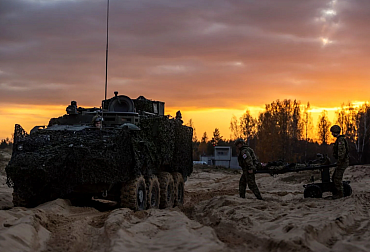
MCT units are experts in coordinating military movements and play a key role in the transit of Alliance forces through our territory. However, the current operational environment requires these specialists to be 100 percent versatile and completely self-sufficient. “During this comprehensive training, soldiers therefore had to cope not only with new tasks but also with their own safety, as part of the exercise they guarded and provided full security for their own logistics camp. This ability to protect their own base formed the foundation for carrying out other tactical tasks,” comments Captain Veronika Libichová of the Logistics Agency.

It is precisely the ability to operate independently in unfamiliar terrain that opens the door to more advanced military transport operations, including close cooperation with the air force. “Experience, for example from deployments in Afghanistan, clearly shows that the ability to flexibly provide air transport is crucial in crisis situations,” added Libichová. Soldiers from the Military Transport Division therefore significantly expanded their scope of operations this time to include coordination with the Air Force, and during training they strictly followed the catalog of aviation operations, which allowed them to immediately apply theoretical procedures to real-world situations directly in the field.
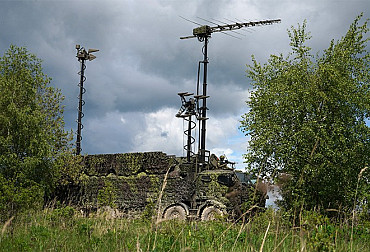
In practice, they successfully implemented procedures for selecting and assessing suitable landing sites, where commanders independently evaluated the terrain and identified safe locations for landing equipment. This also included guiding helicopters to makeshift helipads using signals in field conditions and, last but not least, strict adherence to safety rules when boarding and disembarking from the Mi-17 helicopter, which ensured perfect coordination between the MCT teams and the aircraft crew.

Why Hradčany?
The choice of the former military airfield in the Kokořín region was no accident, as it has the third-longest runway (approximately 2,800 meters) in the Czech Republic after Ruzyně and Mošnov and offers unique transportation infrastructure, including the widest runway in the country at 90 meters. Despite the organizational and procedural challenges of the entire process, after more than half a year, we were finally able to reach an agreement with the Liberec Region and make full use of this training area. This allowed soldiers to test the potential of this site in practice; alongside locations such as Mošnov and Líně, it is proving to be a very promising area for support from the host country. Local tenants and private owners – most of whom are involved in recreational aviation at the airport – also had to give their consent for the training to take place, and they appreciated this brief return of the soldiers.
The training also included ongoing reconnaissance of the location and its evaluation for subsequent practical use. One example is the Bezděz railway station, which, with its 200-meter length, allows for the loading of a large amount of equipment directly onto the tracks – a feature that is unparalleled in the Czech Republic.

Greater Powers in Transportation and Cooperation with the Czech Police
An important pillar of the exercise was strengthening ties with the Czech Republic’s Traffic Police. Coordinating military movements requires perfect synchronization not only with the Military Police but also with the state police. The soldiers first practiced the correct signals and traffic coordination in the safe environment of the airport before moving on to live-action traffic control drills in real-world traffic conditions in Mnichovo Hradiště.
The ambition for the future is to enshrine these experiences in legislation. The goal is for MCT personnel to gain greater legal authority in traffic control – for example, the legal right to use light bars or to mark MCT vehicles with blue flashing lights.
Field Durability Test
The training also included a tactical exercise focused on managing crisis situations in field conditions. The soldiers completed an intensive survival course, during which they crossed water obstacles and built emergency shelters. The MCT teams thus demonstrated their readiness to operate even in hostile environments and without logistical support.
Related