










If you're prepared, you won't be caught off guard: Railway Administration and State Material Reserves Administration armored recovery vehicles train together in Milovice
Rescue tanks from the Fire and Rescue Service of the Railway Administration and the State Material Reserves Administration jointly participated in a training exercise at the former Milovice military training area. The exercise not only tested the skills of drivers and operators of heavy tracked vehicles, but also demonstrated the importance of cooperation among various state agencies in preparing for emergencies and crisis situations. Transportation Minister Ivan Bednárik and Pavel Švagr, Chairman of the State Material Reserves Administration, attended the event.
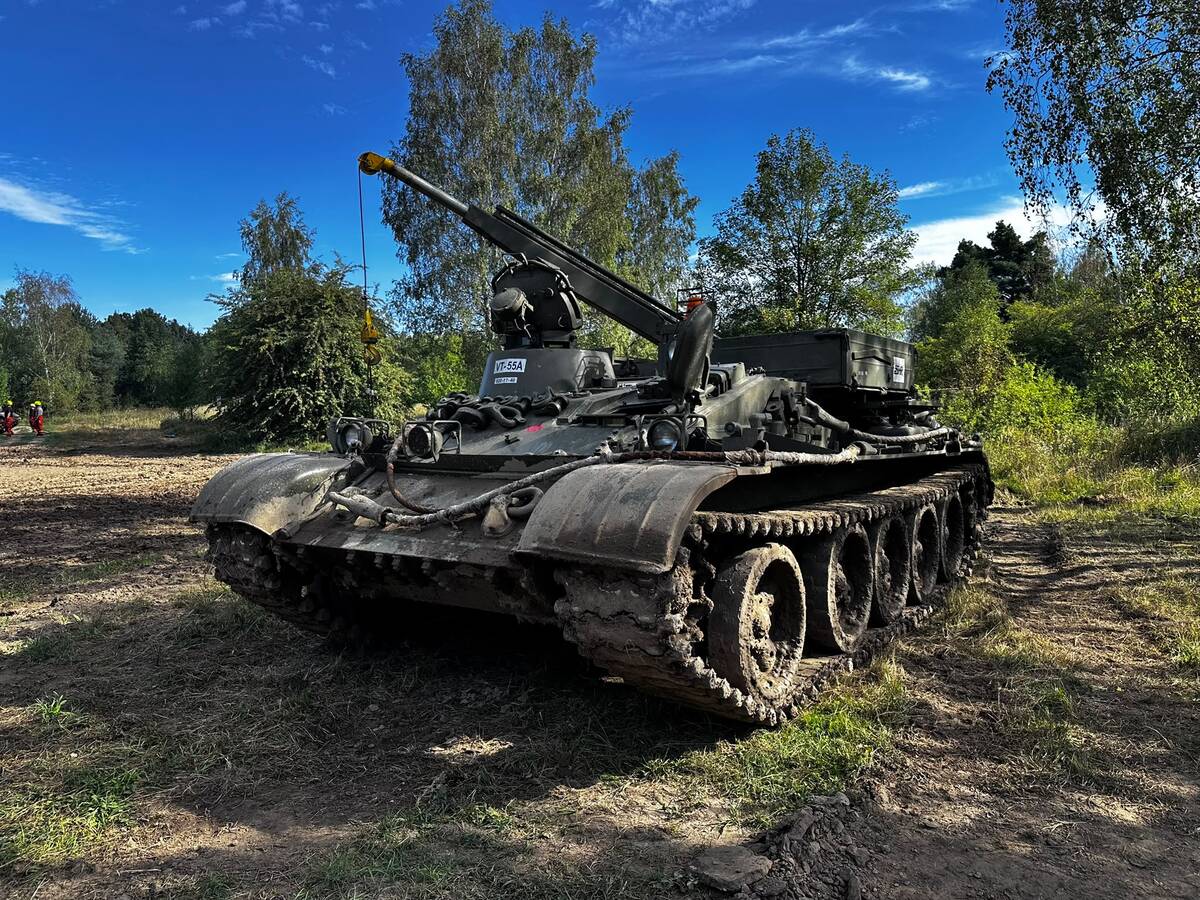
The former military training area in Milovice was once again used for training with heavy tracked vehicles. The Railway Administration Fire and Rescue Service regularly conducts training here to improve the skills of rescue tank drivers, but this year’s session brought an important new development. The State Material Reserves Administration (SSHR) joined the railway firefighters with its VT-55 recovery tanks.
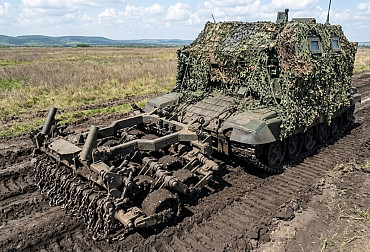
The primary purpose of the multi-day training is to maintain the professional competence of the specialists who drive and operate heavy tracked vehicles. The Railway Administration Fire and Rescue Service has four VT-72B rescue tanks, which are stationed at bases in Prague, České Budějovice, Havlíčkův Brod, and Přerov. Crews take turns during the training, and alongside experienced drivers, new specialists are also being trained here. Military instructors from Vyškov also participate in their training. “We must maintain the professional competence of our tank drivers, and to that end, we organize these training days, during which all tank drivers take turns participating, and new drivers receive training,” explained Jan Blecha, director of the Railway Administration’s Fire and Rescue Service, to CZ DEFENCE.
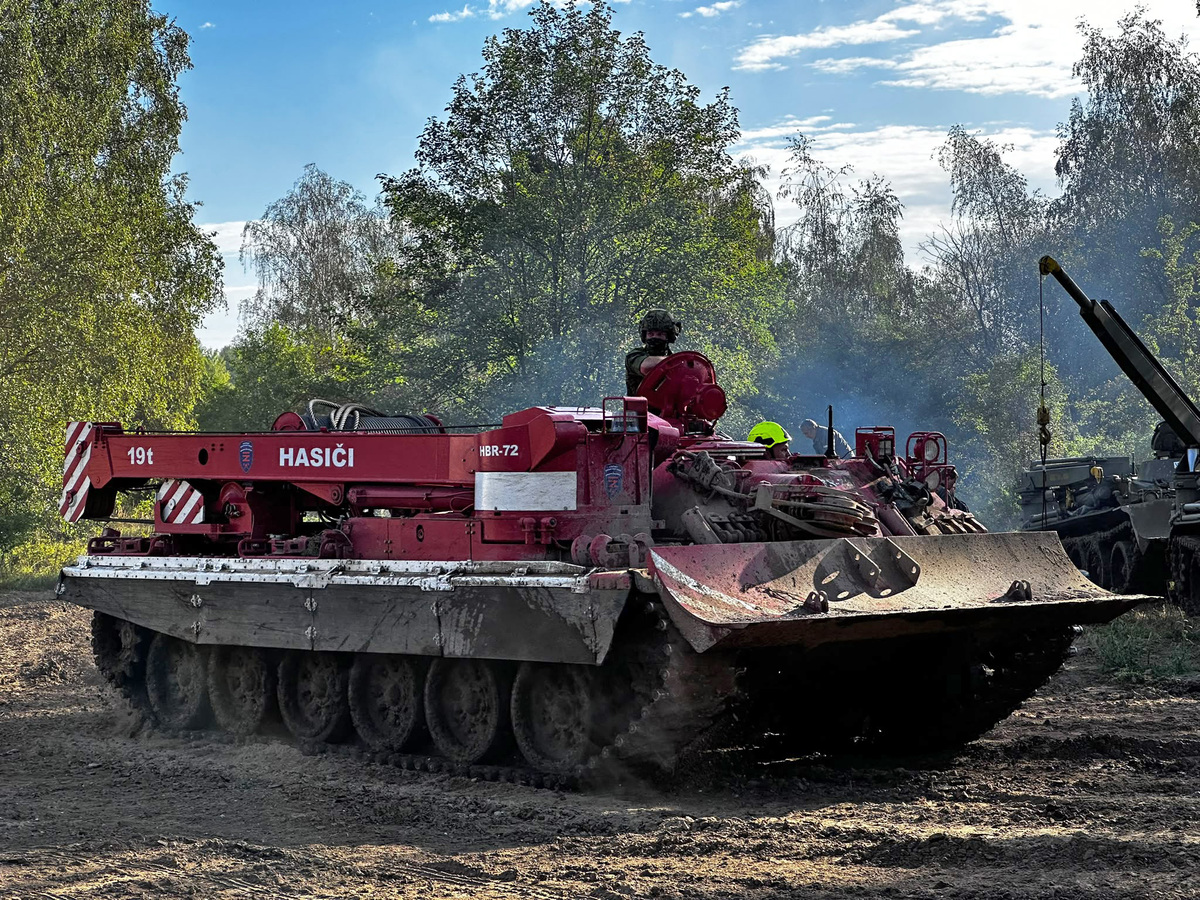
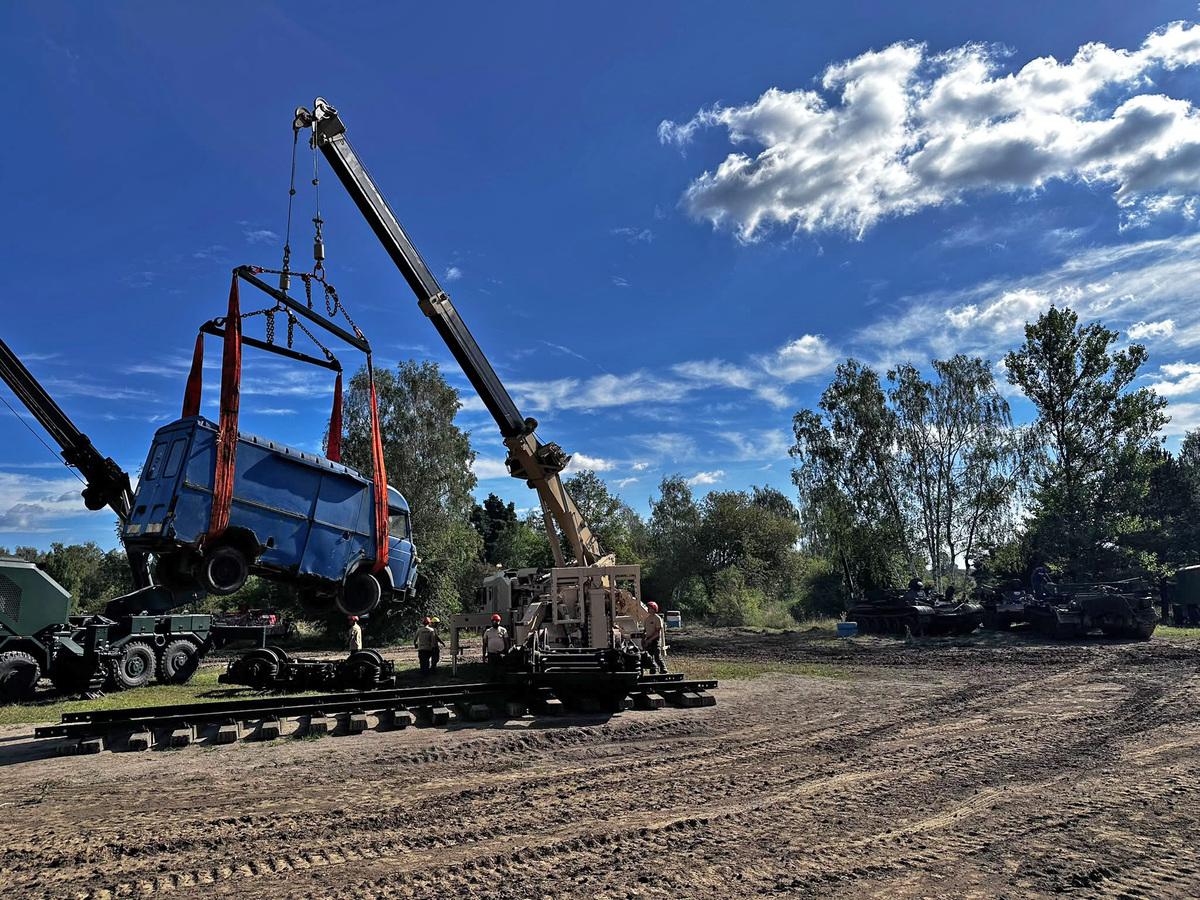
The training is divided into several practical sections. Drivers practice maneuvering in difficult terrain, driving between obstacles, navigating uneven terrain and water obstacles, and passing through narrow spaces. Other stations focus on the use of the main winch, pulleys, and simulated recovery of stranded vehicles. Training also includes operating a crane and one of the most challenging tasks—loading a heavy tracked vehicle onto a flatbed trailer. This year’s program also included reconnaissance and monitoring of the area using drones. The training sessions in Milovice have long followed a similar format. The Railway Administration states that it is here that drivers learn to operate tanks under challenging conditions and perform practical recovery operations. Heavy machinery is primarily intended for recovering derailed rail vehicles, removing obstacles from tracks, and conducting operations in hard-to-reach terrain.
Despite its age, the VT-72B offers capabilities that are difficult to replicate with standard wheeled equipment. The main winch has a pulling force of 300 kN—approximately 30 metric tons—and when pulleys are used, this can reach up to 900 kN, which corresponds to approximately 90 metric tons. The crane can lift loads weighing up to 19 metric tons, and the cargo platform can transport four metric tons of material over rough terrain. For railway firefighters, therefore, it is not a historical curiosity but a work tool that can be irreplaceable during a serious emergency. “When they’re needed, we routinely deploy them on the railroad. Given that we work with truly very heavy loads there, unfortunately, every once in a while a situation arises where we need to use these tanks. There is currently no adequate, full-fledged replacement for these tanks,” Blecha told CZ DEFENCE. According to him, another advantage of the older design is its relative technical simplicity. “We do a lot of things ourselves; we don’t need any external suppliers. And because we do it ourselves, the guys are very proficient with this equipment—they know it well and can operate it effectively,” Blecha explained.
This year’s Milovice exercise, however, was particularly interesting due to the collaboration between the Railway Administration and the State Material Reserves Administration. The SSHR participated in the training with two VT-55 rescue tanks. In an interview with CZ DEFENCE, SSHR Chairman Pavel Švagr emphasized that despite its age, the equipment in the state reserves is ready for immediate deployment. “Our recovery equipment, which we see here at the exercise, is in absolutely perfect condition. We conduct regular inspections and overhauls on it. The last inspection and overhaul took place last year, and its technical condition is truly excellent,” said Švagr. In the event of an emergency, he noted, the equipment can serve as a reinforcement for the integrated rescue system and is also available to the Czech Army if needed. At the same time, however, he acknowledged that it will be necessary to consider modernization in the future. In Milovice, it was possible to compare traditional tracked vehicles with more modern rescue equipment. The program also included a presentation of equipment from Excalibur Army, designed primarily for military use but also applicable in the civilian rescue sector. “Today’s modern equipment looks a little different, and I would welcome innovation in this area. It’s a matter of funding and the requirements for new equipment,” said Švagr. According to him, modern equipment can primarily lead to faster and safer operations and better accessibility in the field.
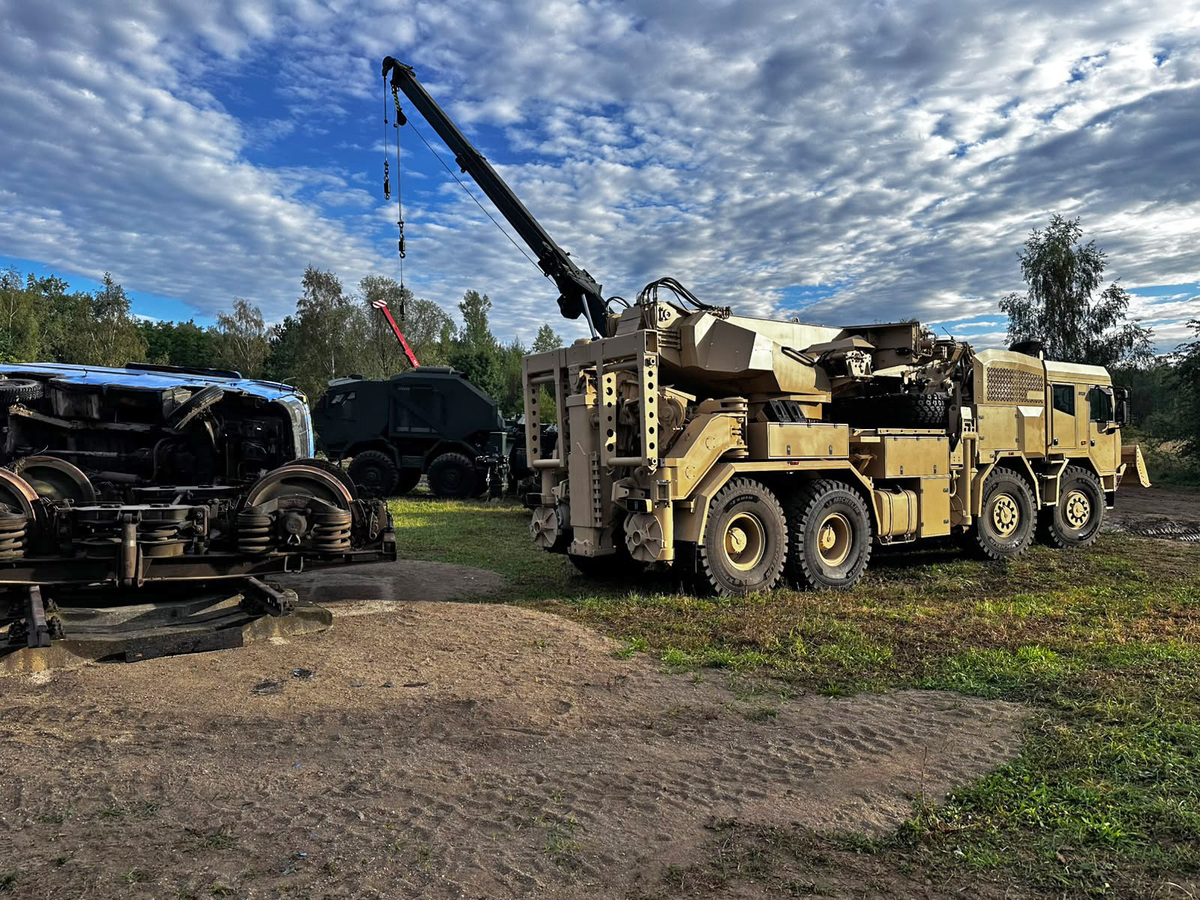
The SSHR chairman also drew attention to the broader issue of crisis preparedness. According to him, the need to invest in the state’s reserves and capabilities typically comes to the forefront during crises, while interest wanes as time passes. “State material reserves are of interest to politicians primarily when a crisis is underway. And the further we are from a crisis, the more politicians forget that we must constantly keep in mind the Czech Republic’s preparedness for a wide variety of potential crisis situations,” Švagr noted. In addition to security threats, he mentioned floods, torrential rains, and large-scale industrial accidents. “Those who are prepared are not caught off guard,” he added. This very sentence aptly captures the purpose of such exercises. The equipment stored and maintained in the national reserves is only truly meaningful if there are trained personnel capable of deploying it and if the various institutions know how to cooperate in a crisis situation. “Coordination, cooperation, discussion, and participation in these kinds of activities are very important. You have to be grounded in reality; you have to see current trends; you have to see the equipment; you have to discuss things with the people involved; and you also have to realize that the current situation is different from what it was twenty years ago,” Pavel Švagr told CZ DEFENCE.
Transport Minister Ivan Bednárik also participated in the training exercise. His presence also opened up a broader discussion on the role of transportation in the security and defense capabilities of the Czech Republic. Rail infrastructure does not serve only civilian transport; when necessary, it must also facilitate the movement of military equipment and support for allied forces. In an interview with CZ DEFENCE, Bednárik highlighted a specific problem that is becoming increasingly pressing as the Czech Army modernizes—the ability to transport new heavy military equipment via the Czech rail network. “Today, the Czech Republic does not have railcars capable of carrying new tanks and equipment, because the railcars available in the Czech Republic are designed for 50-metric-ton tanks, not 70-metric-ton ones,” the minister noted. According to him, the Czech Republic must therefore borrow the necessary railcars from abroad to transport the Czech Army’s heavy equipment. “If the army is already purchasing heavy equipment, it should also have a solution in place for transporting it to training exercises. Driving a tank of that width and weight on roads is very complicated,” said Bednárik.
Transport infrastructure and the ability to move heavy equipment thus represent an important component of the state’s defense capabilities and the Czech Republic’s ability to serve as a host country for allied forces. In this context, Bednárik highlighted European programs focused on dual-use infrastructure and strategic transport corridors. As a specific example, he cited the D11 highway, which is also significant for military movements in the north-south direction. The Railway Administration’s recovery equipment is not used exclusively on the railways. “If you look at operations outside the rail network, roughly 20 percent of our heavy equipment’s activity is dedicated to other entities within the integrated rescue system. And I hope it won’t have to do more than that. But this exercise is precisely about ensuring they are prepared,” said the Minister of Transportation.
The Milovice training exercise thus demonstrated that the state’s ability to respond to an emergency does not rely solely on the acquisition of modern equipment. Equally important are regular training, professionally trained crews, and cooperation among institutions that may be called upon to work together during an actual emergency response. The VT-55 and VT-72B recovery tanks are, by design, technology from the last century. However, their capabilities remain useful in operations where standard equipment is insufficient. At the same time, they provide an opportunity to seek out more modern replacements and new recovery methods. The exercise in Milovice was thus not merely a demonstration of the power of tracked vehicles weighing several dozen metric tons. Above all, it served as a reminder that equipment stored in state reserves or kept on standby at emergency response bases only has real value when trained personnel are able to use it quickly and safely.