















Is Mandatory Military Service Making a Comeback? If So, Most of Europe Is Asking the Wrong Question
Across Europe, a debate that was considered taboo just a few years ago is resurfacing. From Germany to Poland to the Nordic countries, there is increasing discussion about various forms of military service, building up reserve forces, and better preparing the population for crisis situations. Russia’s aggression against Ukraine, growing pressure on defense budgets, and the worsening personnel situation in European armies are leading politicians and military personnel alike to seek new solutions. However, the public debate often veers off course or is itself divided. The key question and challenge, however, is not whether to introduce “military service,” but what type of armed forces Europe will need in the security environment of the 21st century, and at the same time, what role society itself should play in it.
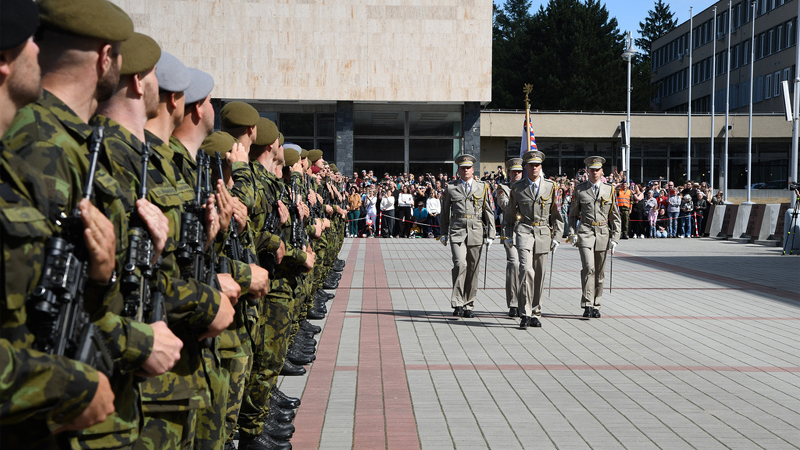
Just a few years ago, it seemed that the issue of mandatory military service was a thing of the past. After the end of the Cold War, European armies underwent extensive professionalization, force reductions, and a transformation toward smaller, more technologically advanced, and expeditionary-oriented forces. War was perceived as a distant phenomenon taking place outside the European continent. The primary tasks of the armed forces shifted toward foreign missions, stabilization operations, and the fight against terrorism. While the defense of one’s own territory was never formally removed from strategic documents, it gradually receded into the background in practical planning and political culture. Russia’s invasion of Ukraine in February 2022 shattered this assumption.
After more than three years of intense conflict, it has become clear that modern warfare is not merely a clash of technologies, but also a clash of capabilities, industry, logistics, and human resources. Ukraine and Russia have gradually mobilized hundreds of thousands of soldiers. Casualties on both sides have reached levels that most European planners could not have even imagined just a few years ago. At the same time, the conflict demonstrates that even a highly modern war still requires a vast number of people – not only on the front lines, but also in logistics, maintenance, healthcare, infrastructure protection, cybersecurity, and industrial production. And this is precisely where the debate over military service and society-wide duties and responsibilities is resurfacing.
Many European countries are beginning to realize that professional armies alone may not be capable of managing high-intensity conflicts in the long term. Starting in 2026, Germany will gradually introduce a new model of military service inspired by the Scandinavian countries. Poland is building a massive system of voluntary military training while simultaneously strengthening its own army to become one of the largest conventional forces in Europe. Sweden and Norway reinstated selective conscription several years ago, and Finland has never abandoned the idea that national defense is a matter for society as a whole, not just professional soldiers. Nevertheless, it seems that the public debate is often misguided. The question is not whether to introduce conscription. The question is: “Why, for what type of threat, to what extent, and with what goal?”
We must realize that every country finds itself in a different strategic environment and prioritizes threats accordingly. Finland shares a border with Russia that is more than 1,300 kilometers long. Estonia has a smaller population than Prague and cannot afford to waste time in the early days of a potential conflict. Poland serves as a key logistical hub for the defense of NATO’s eastern flank and, at the same time, has deeply ingrained historical experience with pressure from great powers. The Baltic states must plan for rapid mobilization and immediate resilience. Western European countries, on the other hand, are often primarily focused on rebuilding capabilities that they have systematically reduced over decades. It is therefore logical that their needs differ. A universal European model does not exist and will not exist.
It is also true that mandatory service alone does not guarantee greater defense capability. History offers plenty of examples of mass armies that were unable to fight effectively. The number of people in uniform alone does not create military strength. What matters most are training, organization, the quality of leadership, logistical support, interoperability, morale, and a unit’s ability to sustain itself in combat over the long term. Conversely, some professional forces have achieved extraordinary results precisely because of the high quality of their training, discipline, and ability to operate in complex environments. Furthermore, Ukraine demonstrates that the future lies neither purely in mass armies nor exclusively in elite professional units. A combination of both approaches is becoming crucial.
Modern warfare requires the ability to rapidly mobilize reserves, replenish losses, protect critical infrastructure, and simultaneously conduct technologically demanding operations. It requires a professional core capable of operating complex weapon systems, but also a broad base of people who can reinforce the nation’s defense in the event of a crisis. It requires active reserves, territorial forces, a prepared industrial base, functional logistics, medical capabilities, and a resilient population. In such an environment, a new model of defense is emerging, based on the integration of a professional army, a reserve system, the civilian sector, and a prepared society.
A Call for Europe
This is precisely where Europe’s greatest challenge lies. Many politicians still discuss war from the perspective of the 1980s. The debate boils down to whether young people will spend a few months in barracks. But today’s security reality is far more complex. More important than military service itself is building a reserve system, the capacity for crisis mobilization, logistical support, infrastructure protection, public preparedness, and the state’s ability to quickly transition from normal operations to crisis mode. General Karel Řehka has repeatedly drawn attention to this fact. In his view, the Czech Republic will not be able to fulfill its NATO commitments without a significant increase in personnel capacity. At the same time, however, he points out that a return to compulsory military service in the form familiar from the past is not a realistic solution. This leads to a much more fundamental question: what should civic preparedness look like in the 21st century?
If we take a critical look at this, Europe today is grappling with a personnel problem that we can actually view as a symptom of a deeper issue. After decades of peace, most societies have gradually distanced themselves from security issues. Defense was seen as a task for professionals. Soldiers protected the state; citizens went about their lives. Security became a service provided by the state, not a responsibility shared by society. However, in an environment marked by the return of power politics, this model is reaching its limits.
It is therefore necessary to reintroduce into society the fundamental discourse that security is not merely the function of the military. It is the function of society as a whole. If there are not enough reservists, technicians, medical personnel, logistics specialists, critical infrastructure workers, cybersecurity experts, and citizens capable of handling crisis situations, no military will be able to function in the long term. Conscription, therefore, must not be viewed as a nostalgic return to the past. It must be part of a broader discussion about societal resilience, the state’s mobilization capacity, and citizens’ relationship to their own security.
This does not mean that Europe should return to the old model of mandatory basic service. Rather, it means that a debate must be opened on new forms of service to the state. These could include short-term intensive training, voluntary military training, a selective model, the expansion of active reserves, civil-military training, crisis courses for the general public, or a combination of military and non-military service. What matters is not that every citizen spend a year in the barracks. What matters is that the state have a sufficiently broad and functional base of people who know what to do in the event of a crisis and who can be involved in the country’s defense and resilience according to their abilities.
This is precisely where the Czech debate must move forward. In the Czech context, the term “military service” still evokes strong emotions. For some members of the public, it is associated with the idea of wasted time, hazing, inefficiency, and the army of the former regime. For others, however, it symbolizes discipline, order, and an education in responsibility. Yet neither of these images, on its own, is sufficient. If the debate on military service is to be meaningful, it must move beyond both nostalgia and caricatures. It must be based on the real needs of today’s defense.
What Does This Mean for the Czech Republic?
The Czech Republic is in a unique position. We are not a frontline NATO country. At the same time, however, we serve as a key transit and logistics hub for the movement of allied forces eastward. In the event of a crisis, therefore, our role would not be passive. On the contrary. We would be expected to ensure military mobility, protect critical infrastructure, secure logistics hubs, support allied forces, and simultaneously deploy our own units. The Czech Republic would not be a safe haven outside the conflict. It would be part of the Alliance’s operational area, the effectiveness of which would directly influence NATO’s ability to defend its eastern flank.
This is precisely why the Czech debate should move beyond ideological disputes over “war or no war.” Instead, we should discuss how to build a functional reserve system, how to prepare citizens for crisis situations, how to increase the number of active reservists, how to integrate defense with the civilian sector, how to strengthen the role of schools, local governments, and critical infrastructure, and how to create a truly resilient society. This debate should also include the question of whether the current model of active reserves is commensurate with the scale of the threats we face, and whether the state is capable of rapidly expanding the personnel base of the armed forces if necessary.
Furthermore, the Czech Republic is grappling with a long-standing personnel problem within its professional army. If the Czech Armed Forces are to meet new Alliance capability goals in the future, it will not be possible to rely solely on gradual recruitment of a few hundred people per year. Modern technology alone is not enough. Aircraft, combat vehicles, air defense, logistics systems, and cyber capabilities all require personnel. Without them, modernization could turn into a technically impressive but personnel-unsustainable project. And it is precisely here that the issue of military service, reserves, and civil preparedness becomes part of a broader debate on the future of Czech defense.
It must be said, critically, that current Czech politics has not yet addressed this debate with sufficient courage. Security is still often discussed in terms of budgets, procurement, and alliance commitments. Less is said about who will actually operate the new capabilities, who will protect the infrastructure, who will handle logistics, and what role ordinary citizens are expected to play in a crisis. Yet the war in Ukraine shows that states do not survive solely thanks to their armies. They survive thanks to a society that understands the purpose of defense and is willing to bear its costs.
The biggest mistake, therefore, would be to narrow the entire discussion down to the question of whether to reinstate mandatory military service. Such a debate will inevitably be polarizing and will likely lead nowhere. It is far more important to ask how to build a system that integrates a professional army, active reserves, the civilian sector, education, and the population’s crisis preparedness into a single, functional whole. That is the real challenge of the 21st century.
Future conflicts will not be decided by armies alone. They will be decided by entire nations – by their industry, infrastructure, technology, logistics, healthcare, education, and social cohesion. Conscription may be returning to the European debate. But if we view it merely as a return of young people to the barracks, we will miss the essence of the problem. In reality, something deeper is returning: the awareness that security cannot be taken for granted and that national defense does not begin with a mobilization order. It begins much earlier – within society itself.
Related