













Purchasing Military Equipment Is Just the Beginning: The Strategic Importance of Maintenance
As the conflict in Eastern Europe demonstrates, modern warfare does not rely solely on tactical sophistication and technological superiority. It is also a severe test of logistical resilience and industrial capacity deep in the rear. Acquiring a state-of-the-art weapons system is undoubtedly a significant asset, but it represents only the tip of the iceberg. The true combat value of military equipment also depends on the ability to restore it to full operational status as quickly as possible in the event of damage or wear and tear. The availability of spare parts, repair capabilities, and the involvement of domestic industry thus become factors just as important as firepower or the level of armor protection.
Moreover, modern military equipment does not serve for just a few years. Its design life is typically in the range of several decades. The acquisition of such complex systems therefore requires a completely different approach to financing and planning from the government and the Ministry of Defense than is the case with ordinary commercial products. Even at the time of purchase, it is necessary to factor in long-term maintenance, repairs, upgrades, and, above all, the assurance of a continuous supply of spare parts. It is precisely these items that can account for a significant portion of the total costs associated with operating modern military equipment over the course of decades.
One of the fundamental analytical tools is life cycle cost (LCC), which is part of a broader perspective on the total cost of ownership (TCO) of a system. This approach encompasses expenses associated with the entire life cycle of a given system – from its acquisition through operation and maintenance to upgrades and decommissioning. The difference between the purchase price and the actual long-term operating costs can be so significant that it often comes as a surprise to the layperson.
This is where a certain paradox arises. The purchase price itself is the aspect of an acquisition that receives the most attention from politicians and the media, yet it may represent only a fraction of the total costs associated with operating the system. When selecting new equipment, therefore, a simple yet inexorable logic applies: any savings achieved during the initial purchase at the expense of future reliability, compatibility, or the availability of service support can prove significantly more costly in the long run. This will manifest not only in higher maintenance costs but also in reduced equipment availability and, in extreme cases, an unacceptable decline in combat readiness.
The true significance of life-cycle costs becomes fully apparent when the military transitions from routine peacetime operations to a state of heightened readiness or, indeed, a state of war. It is precisely then that the core of the entire problem comes to light. The nominal number of pieces of equipment listed in the tables is, in fact, largely irrelevant if it does not correspond to the number of vehicles that can actually be deployed at a critical moment. The discrepancy between the numbers on paper and the equipment actually available can be alarming in armed forces that have been neglected and underfunded for a long time.
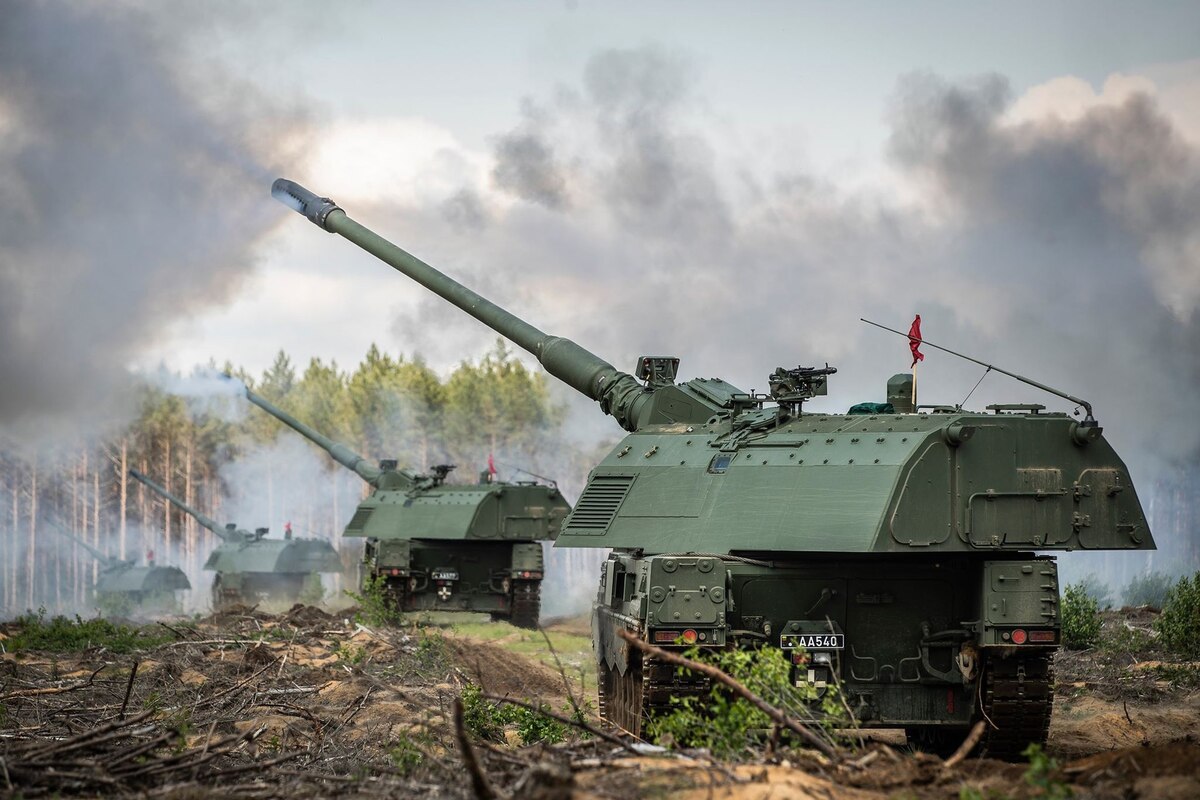
A practical example is the German Bundeswehr. In December 2022, information leaked from the German Ministry of Defense highlighted a significant discrepancy between the nominal and actual status of its artillery. According to available data, the Bundeswehr was supposed to have 105 PzH 2000 self-propelled howitzers at its disposal. In reality, only 73 were available, and approximately half of that number – 36 howitzers – were on operational standby. Germany was thus able to deploy only about one-third of its authorized strength at that time. The German case clearly illustrates how the state of maintenance and logistical support can affect the combat readiness of an entire army.
At the same time, the conflict in Ukraine has become an unprecedented testing ground for Western weapons systems under the conditions of an exceptionally intense war of attrition. It has revealed a fundamental difference between the anticipated normal wear and tear and the actual strain to which equipment is subjected during prolonged combat deployment.
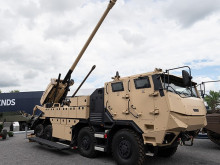
The PzH 2000 howitzers serve as another example. While design and operational assumptions accounted for a significantly lower rate of fire, the reality of the Ukrainian battlefield proved far more demanding. In an effort to counter Russian artillery superiority, Ukrainian crews used the howitzers with extraordinary intensity, and at certain times, individual howitzers were deployed at a rate of fire significantly exceeding normal peacetime operational assumptions. Such deployment led to rapid wear and tear on the barrel and subsequently placed considerable pressure on logistical support.
When a component with a limited service life exhausts its capacity within a few weeks or months instead of several years, the originally planned supply chains are disrupted. Production capacities and spare parts inventories designed for peacetime operations may not be able to keep up with a consumption rate that is several times higher. It is precisely here that it becomes clear that logistics is not merely a support function of the military, but one of the prerequisites for its long-term functioning.
It is evident from the examples above that the issue of spare parts availability and domestic industrial capacity is gradually shifting from a purely economic plane to the realm of national security. The domestic industrial base is not merely a source of employment or tax revenue. In the event of a large-scale conflict, it can constitute critical security infrastructure.
After the end of the Cold War, the global defense industry’s supply chains largely adopted certain principles of commercial management, including the “just-in-time” logistics model. Its goal is to minimize the costs associated with stockpiling inventory and maintaining unused production capacity. However, the current security situation reveals the limitations of this approach. In an environment of prolonged conflict, it may be more advantageous to abandon some of these principles and shift from the “just-in-time” philosophy to a “just-in-case” approach – that is, maintaining larger inventories and available production capacity. At the same time, however, it is necessary to take into account that building such excess capacity and extensive stockpiles represents a significant financial burden in peacetime, requiring a rational balance between security risks and realistic budgetary constraints.
In this context, the Czech Armed Forces are undergoing one of the largest and most financially demanding modernization processes in their modern history. After years of gradual neglect, a transition to modern, Western-standard technologies is taking place. However, as the examples cited above show, simply purchasing dozens or hundreds of pieces of modern equipment does not guarantee success in a potential conflict.
A positive aspect of the current modernization efforts is therefore the emphasis on involving the domestic defense industry and ensuring support throughout the entire life cycle of the acquired systems. In its major acquisitions, the Ministry of Defense is increasingly requiring extensive involvement of Czech companies and industrial cooperation. The goal here is not merely economic benefit for Czech firms or support for domestic GDP. An equally important outcome is the development of our own production and service capabilities and the preservation of the necessary know-how. It is precisely these capabilities that can determine, in a crisis situation, whether it will be possible to keep the equipment operational in the long term. Nevertheless, it is important to recognize the real limits of this effort, as even domestic defense contractors remain, to a certain extent, inevitably dependent on global supplies of key raw materials, microchips, and advanced technologies.
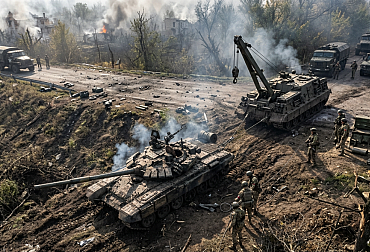
Current events thus demonstrate once again that victory in modern attrition wars does not depend solely on the initial purchase of state-of-the-art weapons systems. Equally important is the ability to maintain these systems in a combat-ready condition over the long term and, in the event of damage, to return them to service as quickly as possible. As experience from Ukraine shows, a lack of spare parts and maintenance capabilities can have far-reaching consequences and, in some cases, paralyze part of the armed forces more effectively than enemy fire itself.
This is precisely why, from a security perspective, the involvement of Czech industry in the ongoing modernization of the Czech Armed Forces is significant. Czech companies are not merely economic partners of the military. They can represent an important part of the national rear and one of the pillars of the state’s strategic resilience, on which the actual combat capability of the armed forces will depend in times of crisis. However, building this national infrastructure must not take place in isolation; rather, it must be fully compatible with and closely integrated into allied logistics networks within NATO.