













The coalition of the willing without illusions: Central Europe and the limits of the possible
The coalition of the willing was formed as a political and military-strategic response to the limitations of established security organizations in the transatlantic space. In a situation where NATO is reluctant to take on the formal role of security guarantor for Ukraine due to the risk of direct confrontation with Russia, and the European Union is hampered by slow decision-making processes and internal contradictions, this format represents an attempt at a pragmatic solution. It will enable a smaller group of states that are politically willing and at least partially able to bear the risk to act more quickly and in a more targeted manner. The fundamental question of what specifically it can realistically offer Ukraine and what role the Czech Republic plays in it remains a subject of debate.
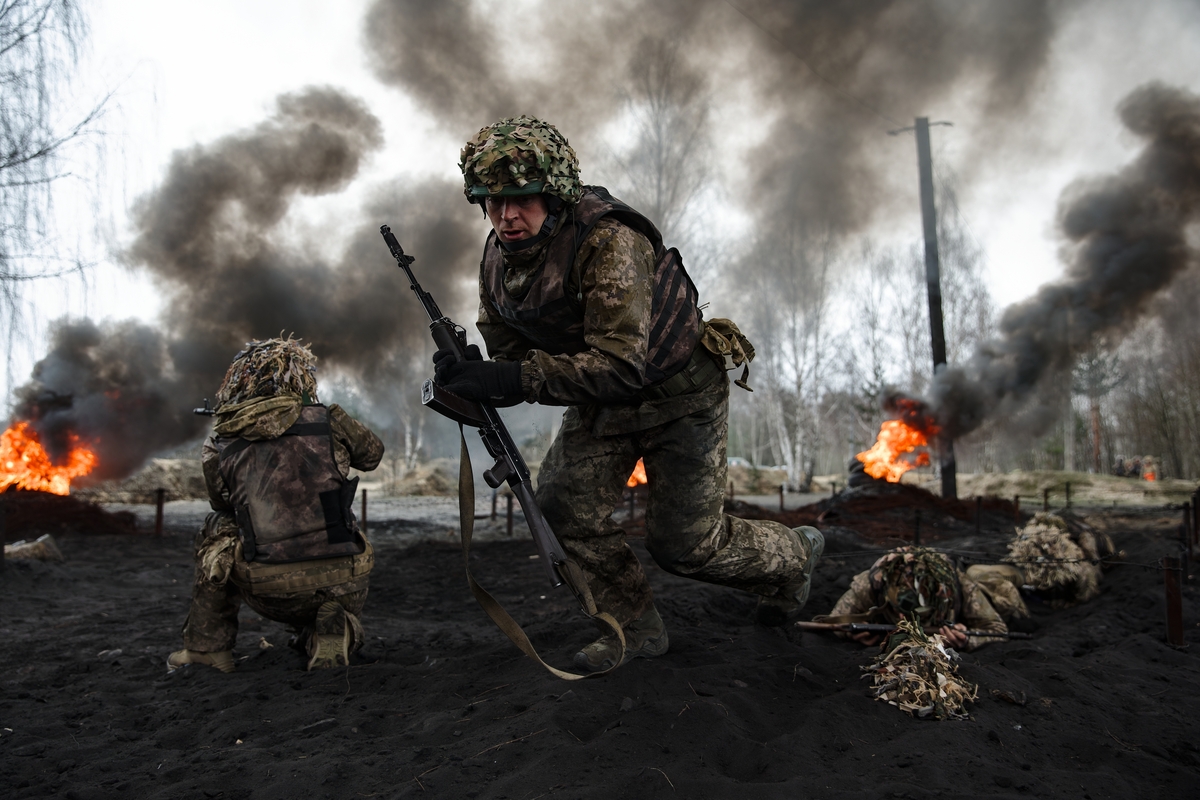
From a military perspective, the debate on the coalition of the willing focuses on the Multinational Force Ukraine (MFU) initiative, i.e., a multinational force that will be deployed after a ceasefire or peace agreement is reached in Ukraine. All the governments involved refuse to deploy troops in active conflict with Russia. The coalition is therefore not a tool for winning the war, but rather for "securing" it after the fighting has stopped. This in itself significantly limits its deterrent value, but at the same time defines the realistic framework within which European states want to operate.
According to the Norwegian think tank NUPI (Norwegian Institute of International Affairs), the most likely scenario is that the coalition of the willing will combine several activities. The first is airspace, in particular expanded airspace surveillance and elements of layered air defense to protect western Ukraine and critical infrastructure from missile and drone attacks. The second is the maritime dimension in the Black Sea, focused on mine clearance, protection of sea lanes, and securing export corridors. The third, and probably least controversial, is support for the regeneration of Ukrainian ground forces through training, logistics, repairs, and replenishment of equipment, both in neighboring countries and, if necessary, in western Ukraine. It is this combination that represents the real benefit of the coalition. Not in massive combat power, but in a long-term increase in Ukraine's ability to defend itself.
Germany's role in this format is controversial. After initial hesitation, Berlin gradually emerged as Ukraine's second largest individual donor in absolute terms, although in terms of GDP its support remains significantly lower than that of a number of smaller countries. In November 2025, the German government increased its planned military support for Ukraine for 2026 from €8.5 billion to €11.5 billion, thanks to a constitutional reform in 2025 that exempted defense spending from the debt brake. This move underscored Germany's willingness to bear the financial burden of long-term support for Ukraine.
Domestic political support for aid to Ukraine remains relatively stable in Germany. The mainstream democratic parties agree on continuing support, despite occasional disputes over specific weapon systems, typically Taurus cruise missiles. The far-right AfD and post-communist Die Linke oppose military aid. A simple parliamentary majority would suffice for the German government to deploy troops, but politically Berlin would likely seek a broader consensus, including the support of the opposition Die Grüne. The governing coalition also emphasizes that any mission would require US cooperation in the areas of reconnaissance, air defense, and strategic command.
Domestic public opinion also plays an important role, leaving little room for maneuver in political decision-making. According to a survey conducted by the Civey Institute last summer, the majority of the German public is opposed to the possible participation of the Bundeswehr in a peacekeeping mission in Ukraine. Fifty-one percent of respondents reject the involvement of the German armed forces, with 42% even considering it a clearly wrong move. This result confirms that even in an environment of relatively stable support for financial and material aid to Ukraine, direct military engagement remains a highly sensitive political issue that the Berlin government cannot ignore. Moreover, the German armed forces are heavily engaged in fulfilling alliance plans, especially on NATO's eastern flank, where they are building a permanent military base in Lithuania.
The Bundeswehr is also facing a tense personnel situation. Although a peacetime troop strength of 203,000 soldiers has been planned since 2017, actual numbers have ranged between only 180,000 and 184,000 over the past five years, according to NUPI data. This is well below the level that would be required by a dramatically deteriorating security environment and growing alliance commitments (in which case the Germans are counting on 260,000 soldiers). These limits fundamentally restrict Berlin's ability to translate its financial and political weight into direct military action within the coalition of the willing. Berlin is aware that its decision can act as a trigger or, conversely, a brake for other states. Active German involvement will encourage the involvement of other hesitant partners, while German restraint provides them with an alibi. In this sense, Germany plays the role of a silent regulator of the ambitions of the entire coalition of the willing.
Poland is a somewhat different case. During the war, Warsaw has emerged as one of the leaders in international support for Ukraine. There is a strong consensus across Polish society that Kyiv is the defender of the entire collective West, based on Poland's historical experience with Russian occupation. In relative terms, Poland is one of Ukraine's most generous supporters. Between January 2022 and April 2025, it provided approximately US$4 billion in military aid and another US$1.5 billion in financial and humanitarian assistance. At the same time, it is one of the most vocal advocates of Ukraine's membership in the European Union and NATO.
This consistent support for Ukraine goes hand in hand with a massive strengthening of its own defense. In 2025, Poland increased its defense spending to almost 5% of GDP, placing it among the absolute leaders within the North Atlantic Alliance. From this perspective, Warsaw's involvement in the coalition of the willing and the preparations for the MFU seem like a natural continuation of Polish foreign policy. Nevertheless, Poland has very clearly drawn a red line when it comes to sending combat troops to Ukrainian territory. The reasons are not only military, but also historical and political: fears of escalation, sensitive historical issues, and strong public opposition to the deployment of "Polish soldiers" in Ukraine. This issue has also become a tool of sharp political polarization. President Karol Nawrocki, associated with the main opposition party PiS, has repeatedly accused the government of intending to send "Polish boys" to Ukraine and has publicly promised to block such a move. Given the need for presidential approval and the opposition of the second strongest opposition party, Konfederacja, Donald Tusk's centrist-liberal government is hardly in a position to push through direct military involvement. According to a survey by the Polish institute CBOS, the overwhelming majority of the Polish public (68% of respondents) is opposed to the participation of Polish soldiers in a peacekeeping mission in Ukraine.
The Czech Republic's position is the most problematic and also the least predictable. In the early years of the war, Prague built a reputation as a visible and proactive supporter of Ukraine, thanks in particular to its timely deliveries of heavy equipment and the ammunition initiative. However, this phase ended after the autumn elections and the change of government. The new coalition of ANO, Motorists, and SPD, sensitive to a divided public and pressure from populist partners, tends to avoid steps that could be perceived as escalatory. In the context of the coalition of the willing, this means that Czech participation remains largely formal and planning-oriented. The deployment of troops to Ukraine is politically highly unlikely, even in the event of a ceasefire. The limitations are not only political but also military. The Czech army is struggling with a long-term shortage of personnel, is participating in alliance missions in Slovakia and the Baltic states, and its ability to send additional larger ground forces without jeopardizing its collective defense commitments remains very limited.
Domestic public opinion significantly limits the scope for political maneuvering in this regard. In a CVVM survey conducted in October and November 2025, roughly two-fifths of respondents (41%) supported sending Czech soldiers on a peacekeeping mission, while almost half (48%) opposed the move. Even more pronounced opposition was expressed to the idea of combat deployment, with approximately three-quarters of respondents opposed, of which 34% were somewhat opposed and 41% strongly opposed. Only 16% of the public would support this option.
At the same time, however, it cannot be completely ruled out that the Czech position may change during the electoral term. In his contribution to NUPI, Vojtěch Bahenský from the Institute of International Relations speculates on possible political shifts and domestic political dynamics. With the exception of the current coalition partners, the Motorists and the SPD, the parliamentary parties refused to cooperate with the ANO movement before and after the elections, but their position may change over time. This could lead either to the formation of a new government format during the electoral term or at least to a weakening of the dominant ruling party's dependence on the strongly Ukraine-skeptical SPD. In such a scenario, there would be limited but real scope for Czech policy to shift towards more active support for Ukraine. The Czech Republic thus faces a dilemma within the coalition of the willing: either to accept the role of a low-profile supporter or to risk domestic political conflict due to more visible involvement.
Overall, the coalition of the willing represents a symptom of a deeper transformation of the European security architecture, in which the ambitions of European strategic autonomy clash with the political, personnel, and social limitations of individual states. An analysis of the roles of Germany, Poland, and the Czech Republic shows that the main barrier to European action is no longer finance or the technological level, but the ability to translate declared solidarity into geopolitically risky decisions. Germany is able to provide massive financial and political support to Ukraine, but remains militarily cautious due to exhausted capacities, alliance commitments, and skeptical public opinion. Poland, on the other hand, is a country with exceptionally strong political motivation and a willingness to bear the costs, but its ambitions are hampered by domestic political polarization. The Czech Republic illustrates the instability of smaller states, where foreign policy reputation can quickly come into conflict with domestic political reality and public opinion. The coalition of the willing is thus essentially a coalition of the politically possible, not a militarily optimal solution. Its real strength may not lie in the number of troops it can deploy, but in the political courage to maintain unity, predictability, and credibility. If Europe fails this test, the coalition of the willing will remain only a transitional format with limited impact. If it succeeds, however, it may become the seed of a new European geopolitical role: less bound by internal disputes and unwritten ethical norms, but all the more prepared for the reality of a predatory international environment.