















Air Marshal: The Military Police Security Escort
The titles “Air Marshal” and “Military Police Security Escort” essentially represent similar roles. The main difference is that the term “Air Marshal” is internationally recognized and used primarily in civil aviation, whereas the term “Military Police Security Escort” is used by the Military Police in the Czech Republic. This is because Military Police officers perform a broader range of duties than Air Marshals do.
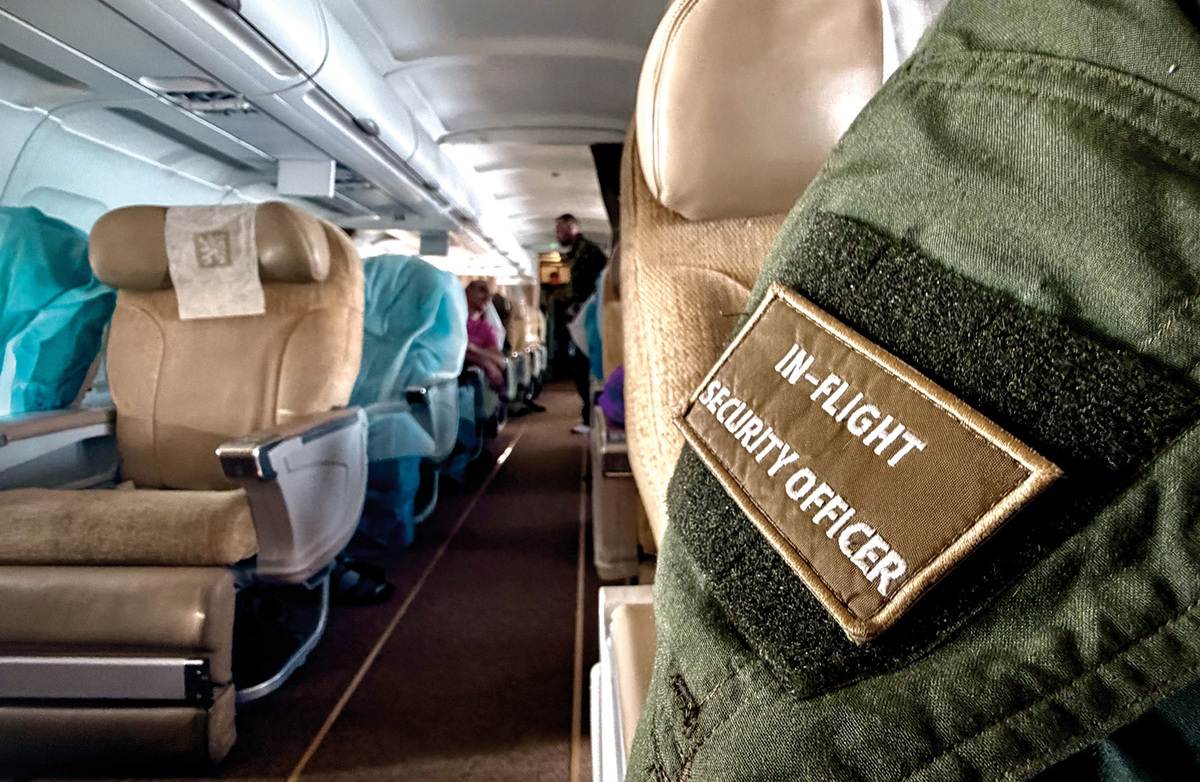
The duties of a Military Police Security Escort (hereinafter “BDVP”), who is exclusively a member of the Escort Division of the Security Service Headquarters, are legally established in Act No. 300/2013 Coll. on the Military Police. Furthermore, they are governed by Binding Directive No. 40 of the Chief of the Military Police and, of course, by international conventions and agreements governing civil air transport. The term itself refers to a specialist trained to provide security for military aircraft, primarily those bound for high-risk destinations. Unlike the Czech Police, BDVP officers are generally in uniform at all times while on duty and are responsible for the safety and security of the aircraft, crew, passengers, and cargo – including sensitive materials – while also being responsible for conducting security screening of passengers and cargo abroad, which they perform independently or in cooperation with the relevant authorities at international airports.
There is no comparable capability or specialization within the structure of the Armed Forces. Only a small number of BDVP personnel possess this capability. These specialists undergo regular certified training valid for six months to two years in accordance with the requirements of the National Security Program for Civil Aviation (hereinafter “NBPCL”) and the Civil Aviation Authority (hereinafter “ÚCL”).
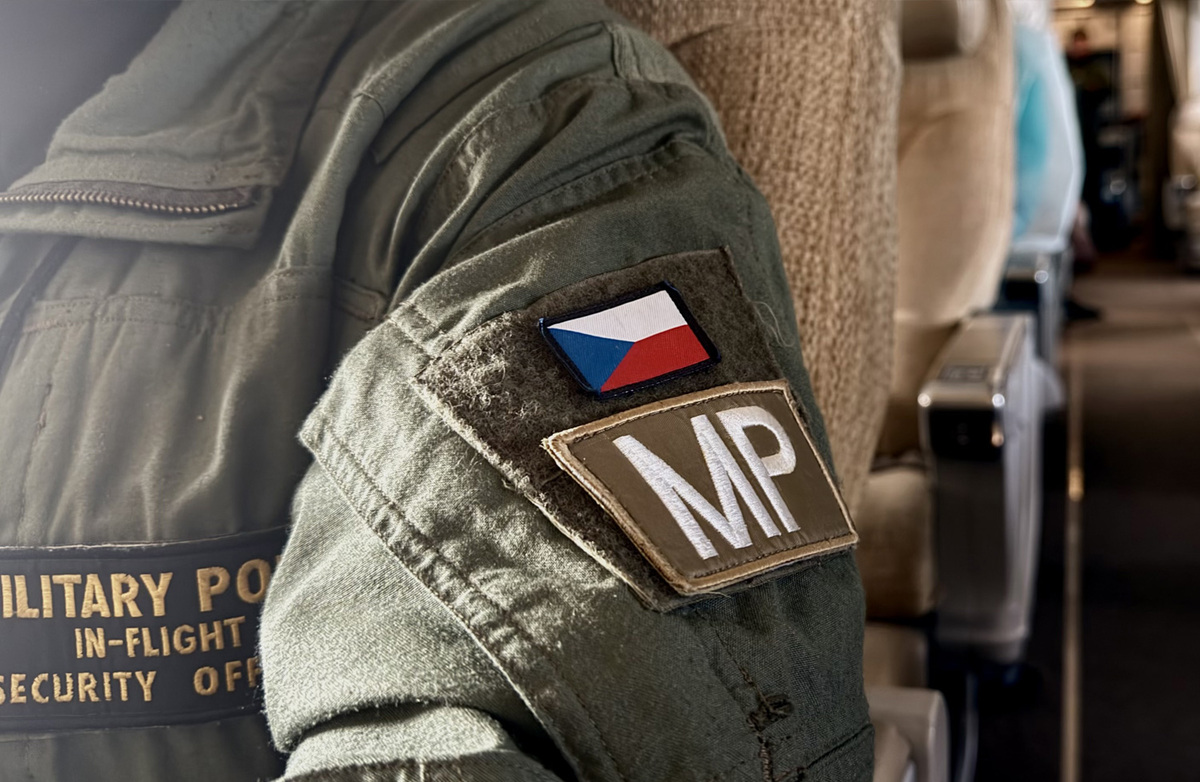
BDVP personnel are primarily deployed on flights to areas that are unstable from a security standpoint, are designated as high-risk, or where there is a threat of a rapid deterioration of the situation. The Czech Armed Forces’ aircraft are also used, among other things, to evacuate citizens of the Czech Republic – or citizens of other countries, as directed by the Czech government – from destinations where the security situation has deteriorated sharply. Examples include recent evacuation flights from the Middle East following military operations in Iran, as well as evacuation flights from Kabul Airport in Afghanistan. In carrying out these tasks, the BDVP has demonstrated its ability to operate effectively even under exceptionally demanding and security-unstable conditions. For these reasons, these military police officers are an integral part of the state’s security system.
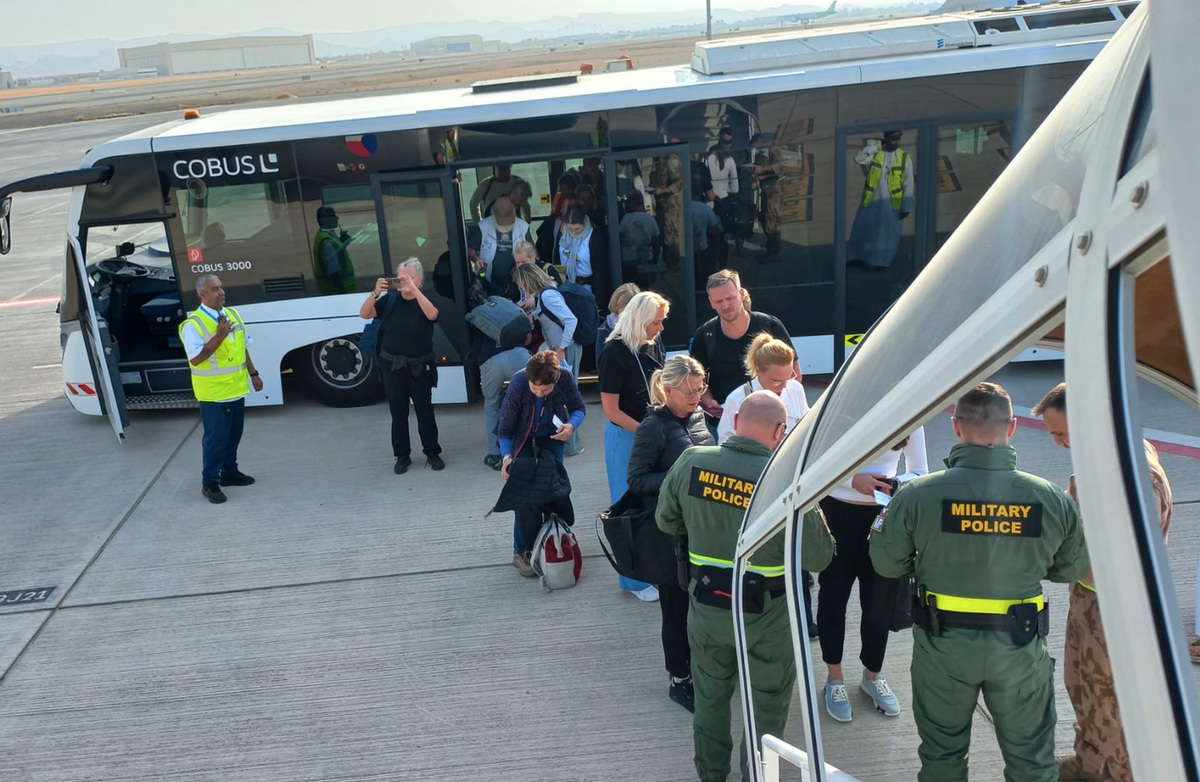
Situations that may require the deployment of the BDVP can vary significantly. In general, deployments are carried out based on orders from the Minister of Defense and the Chief of the General Staff of the Czech Armed Forces. These orders are then processed by the Operations Command and forwarded to the 24th Air Transport Base in Praha-Kbely, with which the BDVP works closely. These primarily involve troop rotations, the aforementioned evacuation or repatriation flights, the transport of special-purpose materials, the transport of high-risk individuals, and, in justified cases, the protection of special government aircraft during trips by senior Czech officials.
In connection with the activities and capabilities of the Military Police security escort, we asked several members of this specialized unit for a brief interview:
What types of transports or missions/overseas operations tend to be the most sensitive from a security perspective?
Each area has its own specific characteristics and requirements. Generally speaking, threats can come from both outside and inside. As an example of an external threat, we can cite flights carried out in the Iraq region using a Casa C-295 M aircraft. The aircraft flew over territories held by hostile forces; in the event of an unscheduled landing or an accident, the Military Police security escort, in cooperation with the crew, would have to ensure the safety of the aircraft as well as the transported materials and personnel. In the event of an internal threat, the situation could escalate directly on board. For example, due to an unruly passenger who could endanger the safety of the flight, passengers, and cargo. That is precisely why one of our main tasks is to detect prohibited items in a timely manner and ensure safety before every flight, regardless of the conditions or environment in which we operate.
How does the Military Police collaborate with the Czech Army and other agencies when planning such flights?
As previously mentioned, the BDVP works closely with representatives of the Operations Command, representatives of the 24th Air Transport Base in Praha-Kbely, and other entities. The foundation of everything is the information that is crucial for planning each flight. Whether it involves troop rotations or the transport of special-purpose materials. I would like to note here that the cooperation functions at a very high level, mainly thanks to the professionalism and personal approach of representatives from the aforementioned units. The precise execution of the assigned task is the shared goal of all units involved.
What requirements must a member assigned to this specialization meet?
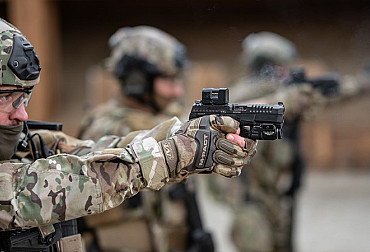
The requirements that a BDVP member must meet include, above all, excellent physical and mental condition and resilience, independence and decisiveness in handling both routine and non-routine situations. Another important criterion in selecting new BDVP members is good language skills and the ability to communicate effectively. Every member of this specialization holds a SECRET-level security clearance. They must also be proficient in close-quarters combat, be an excellent marksman, a well-rounded and experienced military police officer, and a team player. All current BDVP members are involved in the selection of new candidates, who are recruited from among members of the Escort Division.
How demanding is the mental and physical training required for duty in the confined space of an aircraft?
The entire Escort Division devotes significant effort to physical and mental training. The division operates nationwide, and when it is not carrying out one of its assigned tasks, its members train in specific skills on a regular basis. Because the training is the same for everyone, any BDVP officer can be deployed to protect and escort a protected person. In addition to routine training within the unit, BDVP officers also undergo specialized training. One example is training conducted in cooperation with members of the Czech Police (PČR) that focuses on combat in the confined space of an aircraft. However, this training is not limited to combat alone; significant attention is also devoted to medical training. Regular theoretical and practical training sessions based on current legislation, which are provided by external instructors, constitute a separate category. Every BDVP member must reliably identify prohibited items that anyone might attempt to bring on board an aircraft, whether in their luggage or on their person. This does not always involve intentional smuggling but can also result from mere ignorance – which could nevertheless jeopardize flight safety – such as in the case of lithium batteries one of the highest-risk categories in air travel.
What types of simulated scenarios do officers prepare for during training?
The simulated scenarios practiced are based on our instructors’ experience and respond to current security requirements. Among other things, these requirements are continuously discussed with representatives of the 24th Air Transport Base in Praha-Kbely and are based on their needs.
How does training for interventions on board an aircraft differ from standard police training?
Training for interventions on board an aircraft generally differs from standard police training in that it is conducted in a confined space and in other aspects that we will not disclose to avoid revealing our tactical procedures.
How important is communication with the crew and the aircraft commander?
As the saying goes, “No communication, no command,” which is why we have radios that allow us to communicate with the aircraft captain or, in the case of a helicopter, the pilot. Our communication takes place in real time, both during flight and while carrying out tasks on the tarmac with the aircraft’s engines running. Thanks to this communication, we can immediately alert the flight engineers in the event of a threat and bring them back into the aircraft from the tarmac.
Can you cite specific situations where the presence of an armed escort significantly contributed to flight safety?
Among the flights that received media attention are the evacuation from Kabul, the flight to Venezuela to rescue the imprisoned Czech citizen Jan Darmovzal and other EU citizens, and the evacuation from the Middle East. The BDVP did an excellent job on all of these flights. BDVP officers are deployed on a wide variety of flights, each of which is unique. In any case, the presence of the BDVP is a significant asset to the safety of the crew, passengers, and the aircraft. You can never predict in advance what passengers might try to bring onto the aircraft (there has even been a case where a foreign coalition soldier arrived at check-in with a grenade...). BDVP officers ensure that security procedures are followed in third-world countries just as they are in the Czech Republic, and that security is maintained to the greatest extent possible in accordance with international standards.
What are the most common security threats facing air travel today?
Every threat evolves over time; today, the greatest threat to an aircraft – aside from a bomb attack – is electronics, particularly large batteries and power banks. For this reason, more and more restrictions and regulations are being introduced every year regarding battery capacity, and the conditions for transport are becoming stricter. If a power bank or similar device short-circuits and catches fire at an altitude of 10 km, the crew has very limited time to resolve the crisis.
Is there any cooperation with foreign partners within NATO in this area?
We work closely with security escorts from the Military Police of the Slovak Republic, with whom we regularly conduct joint exercises. Thanks to our many years of experience, our colleagues from Slovakia gain valuable practical experience, as this type of activity is still relatively new for them. We are establishing ties with other countries through overseas operations and international exercises.
Do you draw inspiration from the experiences of foreign militaries? Do you conduct joint training exercises?
As previously mentioned, we conduct regular exercises with the Slovak Armed Forces. We also participate in other international exercises with other countries, such as ETAP-C. It’s important to realize that the BDVP operates worldwide wherever Czech Armed Forces aircraft fly. We carry out our missions in both Nordic and tropical regions, at international airports and on paved airstrips in Third World countries. We work day and night and in all weather conditions. We prepare for all of this and adapt our equipment and supplies to fulfill our mission. We are the only unit within the Military Police and the Armed Forces that possesses this capability and is authorized to carry it out. Why is this important for the state? We protect the crew, passengers, cargo, and, last but not least, the aircraft itself – which, as we all know, is no small investment.
In closing, I’d like to take this opportunity to invite anyone interested to apply for the selection process, which takes place twice a year. You have the chance to join the only unit that performs specific tasks – including the protection and escort of foreign delegations within the Czech Republic – as well as carrying out BDVP missions in various parts of the world.