











Individual Gear and Equipment as a Key Determinant of the Quality and Quantity of the Armed Forces
At first glance, this is a topic that seems of little importance and is often overlooked by the media and the general public. This is how one might summarize the category of military equipment commonly referred to as an individual’s gear or equipment. But is it right that this aspect of the armed forces’ development is often sidelined in terms of public interest and broader debate?
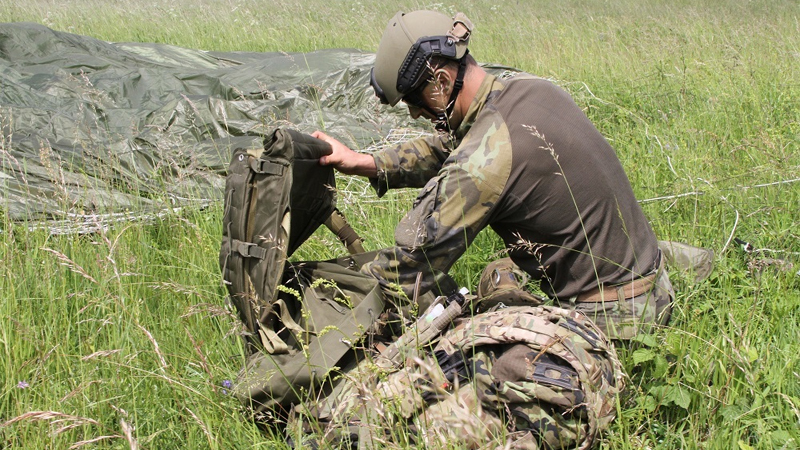
Is it even worth mentioning?
The general term, sometimes also defined as a soldier’s equipment, refers to the totality of all gear components and supplies that a member of a given army’s armed forces, colloquially speaking, “is issued” for the performance of their duties. Given the lower acquisition costs and – at first (and mistaken) glance – the perceived lesser importance of this equipment compared to, for example, main battle tanks, air defense missile systems, or fifth-generation aircraft, this field is accorded less weight, importance, and thus less attention in both expert and public discourse.
Certainly, a uniform, a duffel bag, a mess kit, a sleeping pad, a field shovel, or perhaps a personal radio do not seem as significant to the general public as major combat equipment. They don’t have the same ring to them, media buzz, or price tag. As a result, they carry less weight in debates and decision-making within expert circles – and also among those responsible for leadership. However, the importance of this personal gear as a whole is at least as significant as that of an infantry fighting vehicle or a tank.
“A Soldier’s Second Skin”
A uniform (and other equipment) is a soldier’s second skin. This lesser-known proverb reflects a centuries-old reality of military life. Personal equipment and gear are the closest things to every member of the military who spends time in the field, whether they are part of combat forces, combat support forces, or combat service support. These items accompany them throughout their service. At the same time, they are what the public most frequently encounters; based on the quality and condition of this equipment, the public forms an opinion about the overall state and readiness of the armed forces tasked with protecting them. Furthermore, they are among the first things a new soldier handles during basic training and upon reporting to a unit.
These are not minor or insignificant points – quite the contrary. They represent a key aspect of military service, influencing recruitment and retention of personnel, the prestige of the armed forces, and their overall combat effectiveness, including their mobilization potential.
This includes appropriate ballistic protection equipment, such as vests in various sizes with modular design to fit a wide range of body types (including women’s) and be adjustable according to tactical requirements or duty assignments. Comfortable ballistic helmets that place as little strain as possible on the wearer and can be worn comfortably even for extended periods. It should also include a system of field backpacks in various sizes, featuring a back panel system, modularity, and ample accessories, designed to be durable and compatible with ballistic vests. Field shovels, reloading accessories, smartphones or tablets for situational awareness and combat command, compact sleeping pads, comfortable footwear, functional uniforms with knee and elbow protection, modern night-vision devices, personal radios, electronic hearing protection, eye protection, binoculars including thermal imaging, squad camouflage gear (an important aspect in the age of drones), tactical gloves, functional underwear, winter gear, rain gear, and much more. The quality and availability of this equipment determine how effectively (and under what conditions and for how long) a unit can operate in the field, whether it consists of paratroopers, mechanized infantry, a logistics unit, or a territorial defense battalion.
Unfortunately, the Czech Armed Forces still have significant gaps in many of these categories, despite the gradual positive developments of recent years. Yet these are not complicated or particularly costly items. On the contrary. Even so, it often takes just as long – if not longer – to put a new piece of uniform or equipment out to bid and introduce it into service as it does to introduce major combat equipment. This has a negative impact on the satisfaction of serving soldiers, as it remains common for them to purchase gear and equipment using their own funds – expenses that, when added up, represent a significant burden for each individual.
Just as with combat equipment, individual gear and equipment must be developed comprehensively as a mutually compatible system. The military may have the most modern armaments, from F-35 aircraft to Leopard 2A8 tanks, but if the soldier – the individual who is present in all branches and types of troops and is the true backbone of the military
– is not well-equipped and outfitted (and likewise armed), our forces will not reach their full potential, and as part of the overall modernization of our forces, we will lag behind our Western partners despite the procurement of new technology.