














Challenges and Prospects of the European Defense Industry in a Time of Transformation Discussed at the Bavarian Representation in Prague
The Representative Office of the Free State of Bavaria in the Czech Republic organized a conference titled “The European Defense Industry in a Period of Transformation,” which included a meeting of representatives from Bavarian and Czech companies in the defense industry. Speakers in the panel discussion emphasized that the European defense industry currently faces a high degree of regulation and planning uncertainty and must be able to adapt to ongoing changes, particularly in the technological sphere. The fragmentation of the defense industry also remains a persistent problem.

At the very start of the conference, Peter Reuss, the German ambassador to Prague, delivered a brief speech in which he made several important remarks, thereby setting the stage for the subsequent discussion among the other speakers. Reuss noted that in today’s security environment, time is the most important factor, and the ability to respond appropriately and adapt to a changing environment plays a decisive role. The nature of warfare is changing rapidly, largely due to technology, as evidenced by the course of the war in Ukraine, where the use of drones has significantly altered the conflict. The imperative for Europe is to adapt to these changes. For Europe to be able to do so, he argued, it must ensure that the European defense industry is scalable, competitive, and integrated – rather than fragmented into individual national markets.
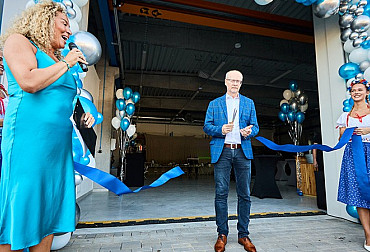
In his keynote address, Günther Oettinger, former European Commissioner and former Prime Minister of Baden-Württemberg, provided more concrete details regarding this challenge. According to him, Europe must take on greater responsibility for its own defense. He noted that although European countries have a significantly larger population and greater economic power than Russia, the development of their defense capabilities is hampered by the persistent fragmentation of European defense production, which leads to duplication in manufacturing and, consequently, to the inefficient use of limited funds. This is vividly illustrated by the fact that European nations use up to six times as many different types of major weapons systems as the United States.

Oettinger called for the gradual establishment of a European defense union, which is, in fact, also one of the defense priorities of the current President of the European Commission. According to him, European countries must therefore strive for deeper coordination and integration of the European defense industry – from research and development through production, logistics, and repair capabilities to procurement itself. Joint research, standardization, and joint and coordinated procurement of defense products could yield significant savings and enhance the competitiveness of European manufacturers.
However, the former European Commissioner and state premier criticized the EU’s current regulatory approach, which he said has complicated defense companies’ access to capital through sustainable finance rules. He emphasized that the defense sector must be viewed as a legitimate part of the European economy, in which private banks, investment funds, and institutional investors can invest under the same conditions as in other industrial sectors. Mobilizing private capital is precisely what the EU is currently striving to achieve, as evidenced by its current initiatives.
He also emphasized that European defense capabilities will not depend solely on traditional defense companies, but also on the involvement of companies from the automotive, engineering, chemical, information technology, and energy sectors in defense supply chains. He sees great potential, in particular, in dual-use technologies, which find applications in both the civilian and military spheres.
In conclusion, Oettinger returned to the German ambassador’s observation, noting the rapid development of autonomous systems, robotics, and unmanned aerial vehicles, which are fundamentally transforming the nature of conflicts. European countries must therefore significantly increase their investment in research and innovation in order to maintain their technological sovereignty and avoid dependence on competitors from China or other authoritarian countries.
The highlight of the program was a panel discussion featuring a diverse and international group of participants. The panel included representatives from academia, government, interest groups, industry, and the financial sector from Germany, the Czech Republic, and Slovakia. Participants in the debate included René Harun from the Czech-German Chamber of Commerce and Industry; Jan Sechter, Deputy Minister of Industry and Trade of the Czech Republic; Professor Diane Robers from EBS University of Business and Law; Michal Homza from the German company Helsing, which specializes in the development and production of autonomous systems; Thomas Stahl from Deutsche Bank; and, last but not least, Dennis Bernitz from Airbus Helicopters Deutschland. The debate was moderated by Hana Scharffová of Czech Television.

One of the main conclusions that can be drawn from the panel discussion concerns the identification of the challenges and obstacles facing the European defense industry. The first such obstacle is the regulatory environment. For example, Bernitz noted that it is difficult for European defense manufacturers to compete on the European market against many non-European arms manufacturers who are not subject to such strict regulations. However, the defense industry is also affected by financial sector regulations. Speaking on behalf of the financial sector, Stahl pointed out that the financial sector in Europe is overregulated, contrasting this with the situation in the U.S. Professor Robers agreed with this view, saying: “It is not beneficial to regulate those who finance us.”
However, another significant factor is the (un)willingness of European banks to finance the defense sector. Although, according to Stahl, banks are now more open to financing the defense industry, many of them still avoid providing loans for military projects, even though the European Commission clarified in the summer of 2025 that the defense sector is compatible with the so-called sustainable finance framework and should not be broadly excluded from private-sector investment activities. The problem of banks’ reluctance does not concern only the defense sector as such, but also certain industries linked to it. According to Stahl, the AI sector, for example, is difficult for commercial banks to finance.
The panelists also pointed out that all defense contractors are grappling with the issue of planning certainty – companies lack sufficiently predictable information about future demand, contracts, and financing, and are therefore hesitant to invest in expanding production capacity. However, only the contracting authority – that is, the state – can provide this certainty. Conversely, the current security situation requires companies to be able to respond flexibly and gradually increase production when necessary, Homza emphasized, thereby once again highlighting the need for scalability. “We must let go of the idea that we can plan everything,” Deputy Minister Sechter stressed.
Issues related to flexibility and the ability to adapt to change continued to be raised during the debate. In this regard, the key factor is the ability to adapt to technological trends and the demands that technology places on modern warfare. “It will be difficult to win the wars of tomorrow with the weapons of yesterday,” summarized Homza, who is involved in the development and production of “the weapons of tomorrow” at the Munich-based company Helsing. In this context, Deputy Sechter noted that the defense industry can no longer rely solely on traditional industrial expertise but must collaborate closely with other sectors, such as AI and quantum technologies.
Closely linked to adapting to ongoing changes is the need to accelerate decision-making itself, with time becoming a key factor, as Ambassador Reuss had previously noted. While Russia has shifted to a war economy, Europe, according to the speakers, is still reacting too slowly. The view was expressed that it is necessary to shift from “process-oriented thinking” to faster decision-making and implementation.
The panel also discussed the role of external actors in the context of Europe’s technological sovereignty. Bernitz argued that European countries should not purchase products from abroad that they are capable of manufacturing themselves in Europe. When it is necessary to purchase from outside Europe, attention must be paid to the security of supply chains.
During the conference, Senator Pavel Fischer also took the floor from the audience, steering the debate toward China.
He stated that, in his opinion, China poses the greatest challenge to the EU. He warned that, in the face of China, we can no longer rely on market liberalism. On the contrary, he argued, the EU’s single market must be rigorously protected. “We must defend ourselves. China is a steamroller that is running us over,” he concluded. Deputy Sechter responded by saying that Europe should, above all, be much more proactive toward China and questioned the current European approach to Chinese technology, which he characterized as an effort to “decouple” from Chinese technology. “We should take a different approach to China in the area of technology,” he suggested.
After the conference, the CZ DEFENCE editorial team had the opportunity to speak briefly with the Deputy Minister of Industry and Trade, during which Sechter outlined what a European approach to China should entail: “We’re afraid, so we came up with ‘decoupling’ and ‘de-risking’ (a European policy based on reducing the risks of trade with China – editor’s note). But fear is a poor guide. We need to pay closer attention to what’s happening in China, because otherwise we’ll miss out on certain developments. We shouldn’t overestimate China or be overly afraid of it.”
“To do that, we need scientists, young people, and mutual exchange – in short, we must not be afraid. Here, people are afraid to even say the word ‘China,’” Sechter continued. “That’s what the intelligence services are here for – to safeguard national security – that is, to ensure nothing nefarious is happening in connection with China.”
A key message – the need to listen and learn – ran like a thread through the entire conference program. However, it took on different meanings in the remarks of individual speakers. Deputy Minister Sechter highlighted the importance of the government and defense contractors listening more closely to each other’s needs. Professor Robers presented a similar argument, adding that the defense sector is governed by mechanisms different from those of the free market, and that entrepreneurs must continually adapt to this reality. But the defense sector also has something to learn. At the start of the conference, it was argued that Europe should draw inspiration from the principles of rapid innovation familiar from the business world. According to the speakers, Europe should also learn from its partners, such as Ukraine. According to Bernitz, everything that will be produced tomorrow is being defined in Ukraine today. Deputy Sechter also urged the audience to listen to and learn from Ukraine: “After all, Ukraine listened to us and learned from us for a long time, which is why Ukrainians are so successful today,” he concluded.
In conclusion, we asked Deputy Sechter how he would assess the benefits and significance of the event that had just taken place. “A tremendous amount of work went into organizing this seminar, because it brings together Czech companies that have been collaborating with Bavarian firms for years. A good example is the Czech company Pramacom, which has a long-standing partnership with Airbus. Our contribution, therefore, consisted of spending several months inviting companies that are already collaborating or exploring potential partnerships. It’s important to note that the Bavarians, in turn, brought their very best companies to the table. A wide range of companies was represented here – from large ones like KNDS and Airbus to small and medium-sized enterprises. If the Bavarians invite them to Prague, we feel honored that they aren’t doing so somewhere else and that they’re counting on us technologically for the future as well.”
“Our cooperation with Bavaria is working very well, especially in the aviation and space sectors,” said Deputy Sechter, assessing the cross-border collaboration, before going on to discuss what meetings between Bavarian and Czech companies should look like in the near future: “But we need to go deeper now, into specialized industry meetings. It should look like this: let’s say, for example, the space sector – we’ll invite ten to twelve companies together and prepare them as soon as possible so that they qualify for European programs. Our goal is for these companies to be ready not only to submit joint bids but also to develop and collaborate across borders.”