














Col. Daverný: We Haven’t Reached Our Target State—The Main Problem with Air Defense Today Is Capacity
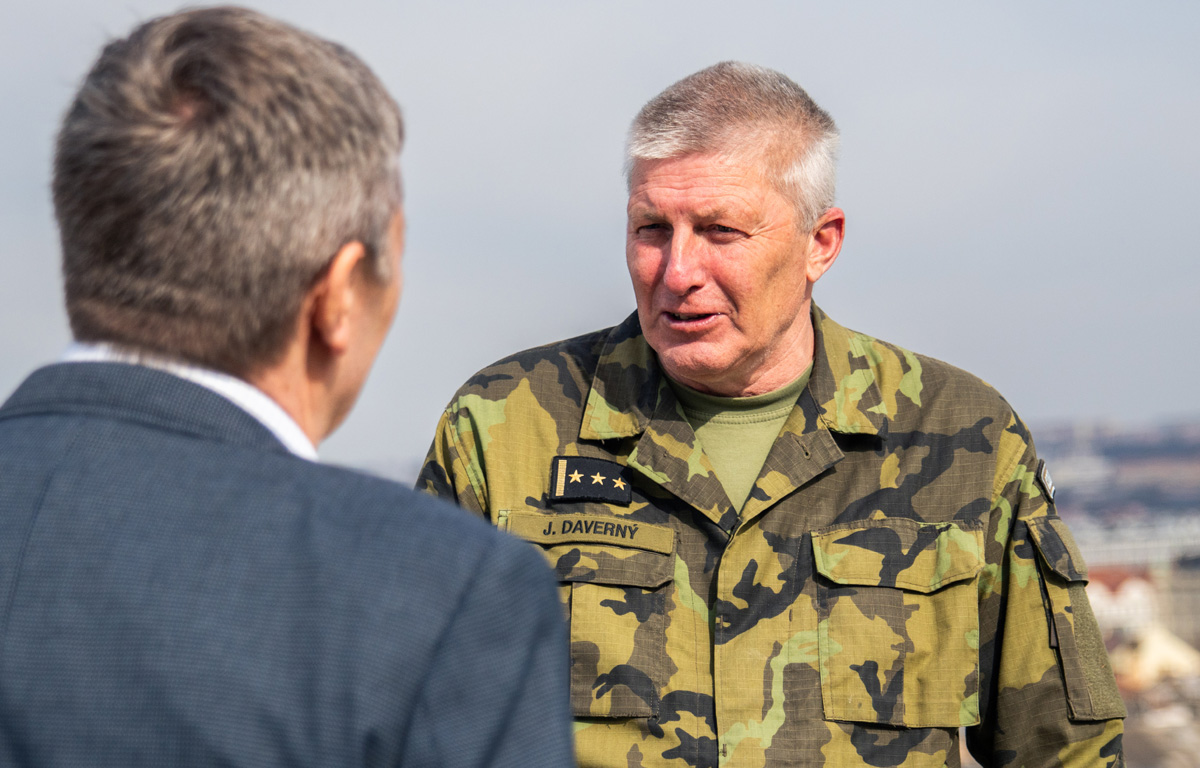
The Czech Army’s ground-based air defense has undergone a significant transformation in recent years—from replacing outdated Soviet equipment to introducing modern systems suited to the nature of contemporary conflicts. However, as Colonel Jaroslav Daverný, commander of the 25th Anti-Aircraft Missile Regiment, points out in an interview for the program CZ DIALOGUES, achieving full operational capabilities is still a long way off: “We are far from our target state.” According to him, the key limitation is not so much the technology as the capacity of the entire system.
Video: Col. Daverný: We haven’t reached our target state. The main problem with air defense today is capacity / CZ DEFENCE
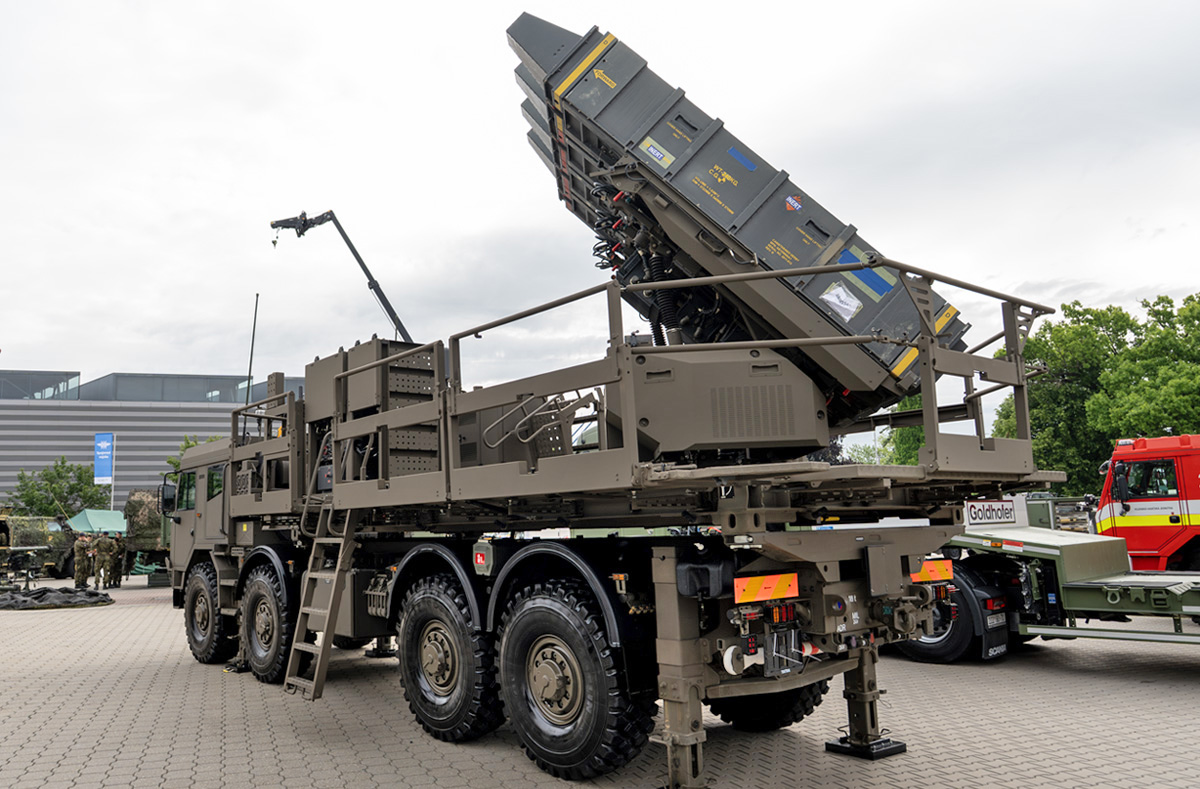
According to Col. Daverný, the military has successfully upgraded its very short-range systems, and the introduction of the new Israeli SPYDER system—which is set to replace the Soviet-era KUB system currently in use—is also a significant step. “We’ve replaced the old systems we had. That’s a positive development,” he notes. At the same time, however, he points out that modernization isn’t limited to the weapon systems themselves. He sees significant room for improvement in air defense command and control, whose conceptual framework, he says, dates back roughly to 2005. “I think some changes will still be necessary there. How to improve it, how to simplify it, speed it up, and increase capacity,” says the commander of the 25th Anti-Aircraft Missile Regiment.
Capacity, he says, is one of the biggest problems today. While current and newly deployed systems are capable of destroying aircraft, cruise missiles, and larger unmanned aerial vehicles, the fundamental question remains: how many of these systems does the army have at its disposal, where can they be deployed, and what are the missile stockpiles? “I think we need to keep working on this. We’re simply nowhere near our target state,” emphasizes Colonel Daverný.
The deployment of the SPYDER system is currently still in the field testing phase. According to him, these tests involve not only verifying the system’s combat capabilities but also practical issues of transport and deployment. “For example, we spent two weeks at Libavá, where we used both drones and the Air Force to demonstrate what the system is capable of,” Daverný describes. The tests also cover logistical details, such as loading the system onto rail cars. “It seems like a simple thing, but it’s not that simple either,” adds the colonel. The system is expected to be put into service after the tests are completed, although the situation is complicated by security developments in the Middle East, which are affecting cooperation with the Israeli manufacturer Rafael.
According to Col. Daverný, mobility plays a major role in today’s air defense. This applies to both larger systems and very short-range assets. In this context, he also mentioned the training of the 25th Anti-Aircraft Regiment in the mountainous terrain of the Krkonoše Mountains, where soldiers practiced moving RBS-70 systems and air surveillance equipment into hard-to-reach terrain. “The Czech Republic is surrounded by mountains, and not every place is accessible by car. You simply have to reach the state border on foot,” he explains. According to him, the exercise demonstrated not only the importance of teamwork but also the need for suitable equipment to move equipment under difficult conditions.
In the interview, Col. Daverný also commented on discussions regarding the further expansion of air defense capabilities, including long-range systems. He emphasized that public debate is often overly simplified. “A long-range system means it can fly farther than 50 kilometers, or that we are capable of shooting down an aircraft beyond 50 kilometers. SPYDER, as the system we have acquired, has this capability,” he notes. At the same time, he points out that a system’s capabilities cannot be assessed solely based on the type of missile used, but rather on the entire set of components—namely, the radar, fire control system, and specific configuration.
He identifies defense against drones and loitering munitions as one of the greatest challenges of the present day. He admits, however, that current capabilities would be insufficient against a massive attack by these means. “I can’t imagine that if fifty drones or loitering munitions were waiting in the sky, the system could handle it. The density of these targets is enormous today, and our stockpiles would probably never be enough,” Daverný says candidly, while also noting that when seeking a suitable solution, it is necessary to distinguish between protecting maneuvering units and protecting stationary objects such as cities, bases, or critical infrastructure.
When it comes to protecting mobile units, he sees value in systems such as the Skyranger, while for protecting fixed installations, laser systems are increasingly being discussed today. However, Col. Daverný does not view the situation in such simple terms. “When someone says it costs one dollar per shot, that sounds great, but it may turn out that after a hundred shots, the entire system will need to be replaced,” he points out, noting that the effectiveness of laser systems in Czech conditions is also affected by the weather.
According to him, building a multi-layered air defense system is absolutely essential. Experience from Israel, Ukraine, and other conflicts shows that the ideal scenario occurs when a target can be struck multiple times using various means. “Everyone agrees that the ideal scenario is when they have the ability to fire on a target at least three times, and if possible, using different systems. That is why we need layered defense,” he explains. According to him, the Czech Republic currently possesses only some layers of this defense, while it lacks, for example, capabilities against ballistic missiles.
When asked what threats are most relevant to the Czech Republic, the commander of the 25th Anti-Aircraft Missile Regiment answers unequivocally: “Unfortunately, it’s everything that can fly those 1,200 kilometers from somewhere in Russia.” He identifies ballistic missiles, larger drones with a range of over 1,000 kilometers, and cruise missiles as the most likely threats. Conversely, he considers the conventional deployment of manned aircraft at high altitudes against Czech territory to be less likely.
Colonel Daverný also confirms that the Czech air defense system is interoperable with NATO systems and is part of the Alliance’s shared situational awareness of the airspace. According to him, data sharing and integration into Alliance structures are functioning, although the actual guidance of missiles remains dependent on the organic sensors of specific systems. The transition from Soviet technology to Western systems, he notes, is not a major problem from a personnel standpoint. Younger soldiers adapt quickly to the new technology, while experienced personnel bring important operational expertise. “The hardest part is changing the mindset regarding how to use it tactically,” Daverný remarks.
He also considers the partnership with the University of Defense to be crucial, as it assists in training specialized personnel and conducting analytical studies. According to him, the development of air defense relies not only on current combat experience, but also on simulations, calculations, and long-term planning.
At the conclusion of this interview, we hear that the main obstacle to the further development of air defense is not just technology, but above all the pace of decision-making. “We need to make a decision today. Even production takes time. If a decision isn’t made, we won’t make it onto the production list, we won’t be able to draw up a contract, we won’t be able to do anything. Then we can work on concepts,” concludes Colonel Jaroslav Daverný, commander of the 25th Anti-Aircraft Missile Regiment.
If you want to learn more, including a more detailed look at the future structure of air defense and specific acquisition plans, watch the full interview at the beginning of this article.