














The modernization of engineering equipment must not be overshadowed by the purchase of tanks and IFVs
The Czech Armed Forces have had all 42 Leopard 2A4 tanks at their disposal for some time now. The first of a total of 246 CV90 MK IV infantry fighting vehicles are expected to be delivered this year. Furthermore, in just two years, in 2028, the first units of the brand-new Leopard 2A8 tanks are expected to be delivered, with a total of 77 tanks in various specialized versions. Acquiring this new equipment will help the Czech Armed Forces phase out their outdated Soviet-era equipment and will also assist the Czech Republic in fulfilling its NATO commitment to establish a heavy brigade. In the shadow of these large and undoubtedly important modernization projects, there remains a whole range of less attractive but no less important issues. One such issue is the bridge equipment of the engineering corps. With new equipment for the engineering corps comes a new problem. The new equipment is significantly heavier than the previous one, which means that support equipment, particularly in the form of bridge systems, must also be taken into account.
The ability to move heavy equipment is a key capability of any army. It enables rapid response, which is becoming increasingly important as warning times grow shorter. The need to cross waterways is a critical factor in the movement of heavy equipment. Modern systems, however, are significantly heavier than their predecessors and far exceed the capabilities of the equipment currently available to the Czech Armed Forces (CAF). This topic, however, does not resonate as much in public debate due to the more media-friendly aspects of CAF modernization. This topic should, however, be given more attention and not remain confined solely to military and expert circles.
The Czech Army currently has two bridge systems at its disposal: AM-50 bridge vehicles and pontoon bridge sets, or PMS. Both of these systems originally date back to the Cold War era. It must be acknowledged that, in their time, these were world-class bridge systems that fully met the demands of the era. Today, however, they are obsolete pieces of equipment that have become a weakness in the mobility of the entire army.
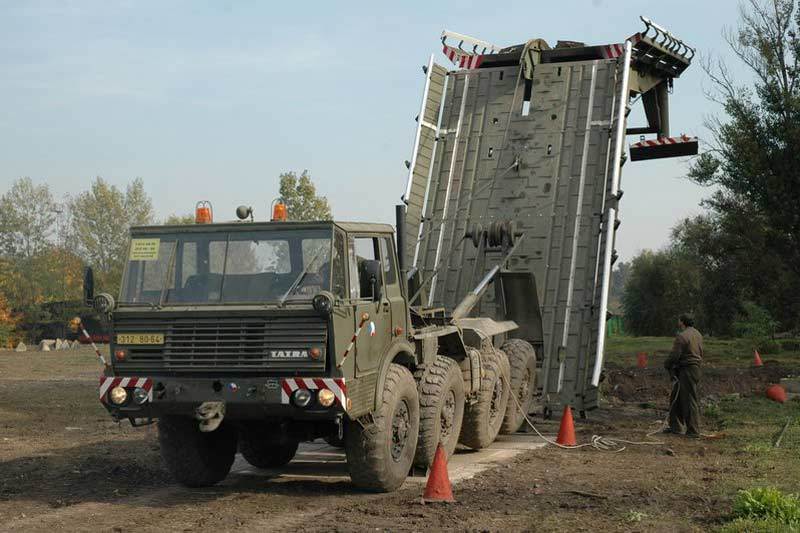
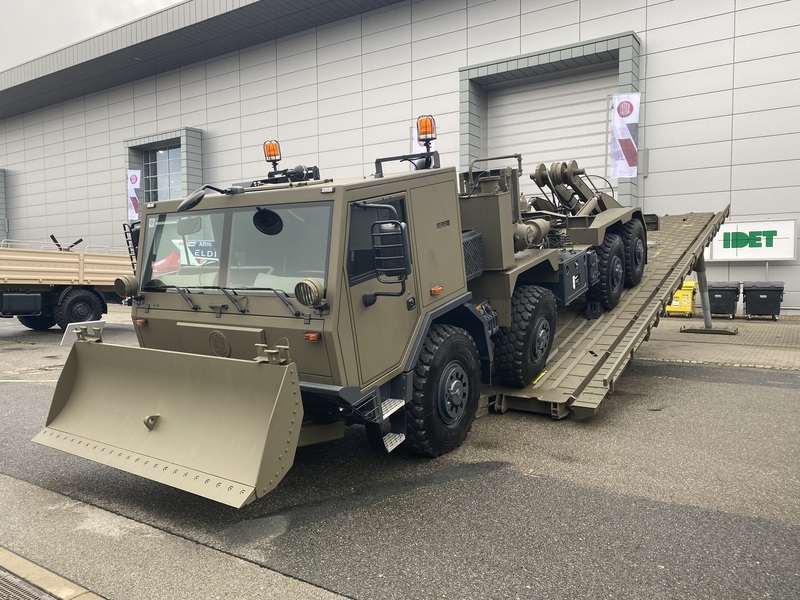
The first version of the AM-50 bridge-laying vehicle is based on the Tatra T-813 8x8 chassis. Newer versions use the Tatra T-815 8x8 chassis. Development of this vehicle began in 1968, and it entered service in 1975. The system operates on the so-called scissor principle, which allows it to be connected to other bridge sections to form a single, longer bridge. The AM-50 itself is capable of bridging obstacles 10 to 12.5 meters wide and 2 to 6 meters deep. This bridge system also features the ability to deflate tires when driving in muddy terrain and even has a built-in filtration and ventilation system to protect the crew from radiation contamination.
However, the vehicle is apparently not ready for modern conflict. The bridge deployment mechanism is not very automated and requires the crew to expose themselves significantly. Based on experience from the war in Ukraine, this can have fatal consequences, especially on the modern battlefield, where precision fire is conducted even at long ranges and the threat of drones is ever-present. Another problem with this vehicle is its load capacity, which is a maximum of 50 tons—a capacity that is completely insufficient for the requirements of a heavy brigade. When looking at the AM-50, one cannot overlook the physical age of this system. According to 2024 audits by the Supreme Audit Office (SAO), the average age of these systems is 45 years, which is undoubtedly older than most of the soldiers currently operating them. Furthermore, at the time of the audit, all vehicles were 21 to 29 years past their service life, a fact also evidenced by their high failure rate. The NKÚ reports that at the time of the audit, 8 out of 10 of these systems were temporarily inoperable. Such a failure rate demonstrates that, when needed, the engineering corps is unable to provide a response of sufficient quality.
To cross wider waterways and other aquatic obstacles, the Czech Armed Forces also have a PMS pontoon bridge system. The system works by connecting floating segments (pontoons) together. Like the AM-50, the PMS system is mounted on Tatra T-813 8x8 and T-815 8x8 chassis. The maximum length of a single PMS assembly is 382 meters with a load capacity of 20 tons. As the length is reduced, the load capacity increases. For example, at a length of 227 meters, the pontoon bridge’s load capacity rises to 60 tons.
The load-bearing limits of these pontoon bridges also pose a critical problem. According to data, the load-bearing capacity of the bridges ranges from 20 to 60 tons, with a capacity of up to 80 tons also possible. However, under the dynamic conditions of modern conflict and other crisis scenarios involving the bridge, transporting equipment heavier than the maximum 60 tons appears quite risky. The PMS has a history similar to that of the AM-50. It was introduced into service in the 1970s. Given the age of this system, it can be stated that, like the aforementioned AM-50, it does not meet the requirements for protecting soldiers on the modern battlefield.
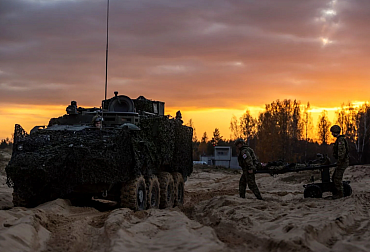
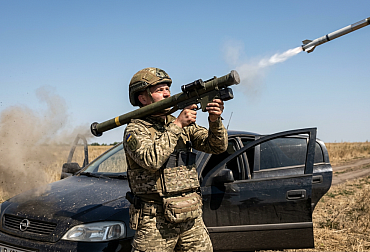
A closer examination of the Czech Armed Forces’ bridge-laying equipment reveals that load-bearing capacity will pose a problem in the future. This problem stems primarily from changes in the design of modern systems. During the Cold War, Soviet design focused primarily on a low tank silhouette. The reason was an effort to achieve the greatest possible mass production and mobility of tanks. This resulted in lower weight. This is still evident in the T-72M4 CZ tank currently used by the Czech Army, which weighs around 48 tons. Western designs, on the other hand, prioritize a higher level of crew protection, which is currently proving crucial, particularly due to the conflict in Ukraine. These design trends are evident across all mechanized infantry systems.
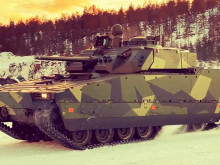
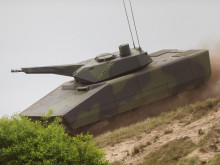
If we look at the weight of modern Leopard 2A8 tanks, we can see that it ranges from 63 to 67 tons. Even the older Leopard 2A4 version weighs around 62 tons. Thus, older tanks based on Soviet designs are significantly lighter, a fact also evident in the T-72M4 CZ tanks. To illustrate this, the same trend can be observed with infantry fighting vehicles. While the old BVP-2, which the Czech Armed Forces still use, weighs around 14 tons, the new CV90 MK IV system weighs between 35 and 37 tons. These figures indicate that the new equipment poses a problem for the aforementioned bridge systems. In this regard, it is also important to note that, as part of NATO’s strategic plans, the Czech Republic is required to provide so-called Host Nation Support, whereby the country must be prepared to host and facilitate the movement of allied forces.
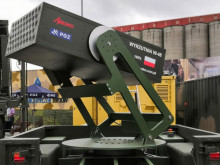
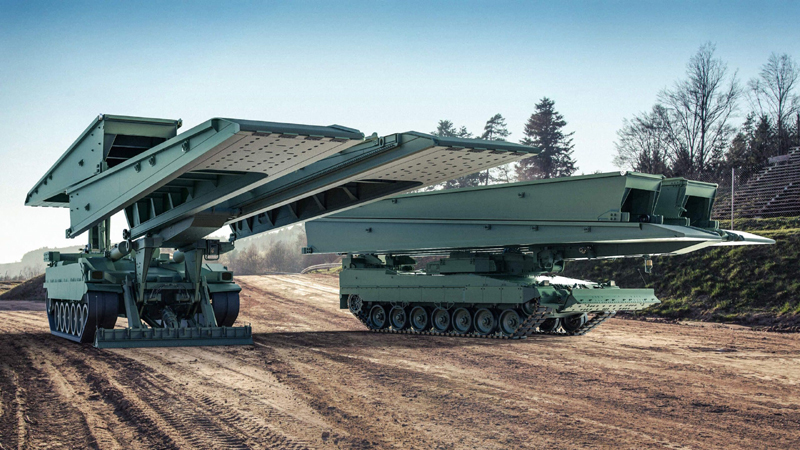
In view of the upcoming delivery of new equipment, it is necessary to finalize and select new bridge systems as quickly as possible. The procurement of 77 new Leopard 2A8 tanks also includes bridge-laying variants. In this case, it is the Leguan, which is based on the Leopard 2 chassis. This system can span obstacles up to 24 meters wide with a load capacity of up to 72 tons. The vehicle itself has a crew of only two, and deploying the bridge requires only one person, who does not need to leave the vehicle thanks to the automated process. Because the Leguan is based on the Leopard 2, maintenance logistics will be easier for the Czech Armed Forces. Another suitable option for modernizing the Czech Armed Forces’ bridge equipment appears to be the AM-70 EX system from the Czech company Excalibur Army. The AM-70 EX is a modernized version of the AM-50. This vehicle carries a 13.5-meter-long scissor-type bridge system with a load capacity of 63 tons, making it suitable for Leopard 2A4 tanks and the new CV90 MK IV. The vehicle also allows for full cabin armor. This system offers at least a partial solution to the problem of transporting heavy equipment. The IRB (Improved Ribbon Bridge) platform appears to be the most suitable replacement for the PMS. This system is offered by CSG, which collaborates with GDELS. The entire system is designed as a kit capable of being transported by any hook-lift truck. The system can build a bridge up to 100 meters long, and the load capacity for tracked vehicles is up to 72 tons, which easily meets all current requirements.
In conclusion, it can be stated that the need to modernize bridge-laying equipment is not merely a matter of replacing old equipment with new, but is a critically strategic issue to which the Czech Republic has committed itself. New bridge systems are a critical necessity for the deployment of heavy equipment. Current systems are clearly insufficient, especially for the new Leopard 2A8 tanks, which are significantly heavier. Bridge systems are a critical component of the mobility of the Czech Armed Forces, as well as that of potential NATO allies. New bridge systems are therefore a necessity for the entire Czech Republic, not just the Engineer Corps. If we assume that 3.5% of GDP will be allocated to defense by 2035 and a commitment of at least 3% of GDP by 2030, then the tender process and subsequent purchase of new bridge systems could be feasible. However, the budget does not align with this plan, and the future of defense funding in the Czech Republic once again appears uncertain. Nevertheless, the current Minister of Defense, Jaromír Zůna, has confirmed his determination to meet the 2035 deadline; however, the actual funding will reportedly depend on the new concept for the Czech Army. This, in turn, hinges on the priority that bridge technology itself will hold in the new concept and on the political decisions of the current government.