













General Miloslav Lafek: Deterrence is more important today than defense itself. But the Czech Republic has been caught off guard
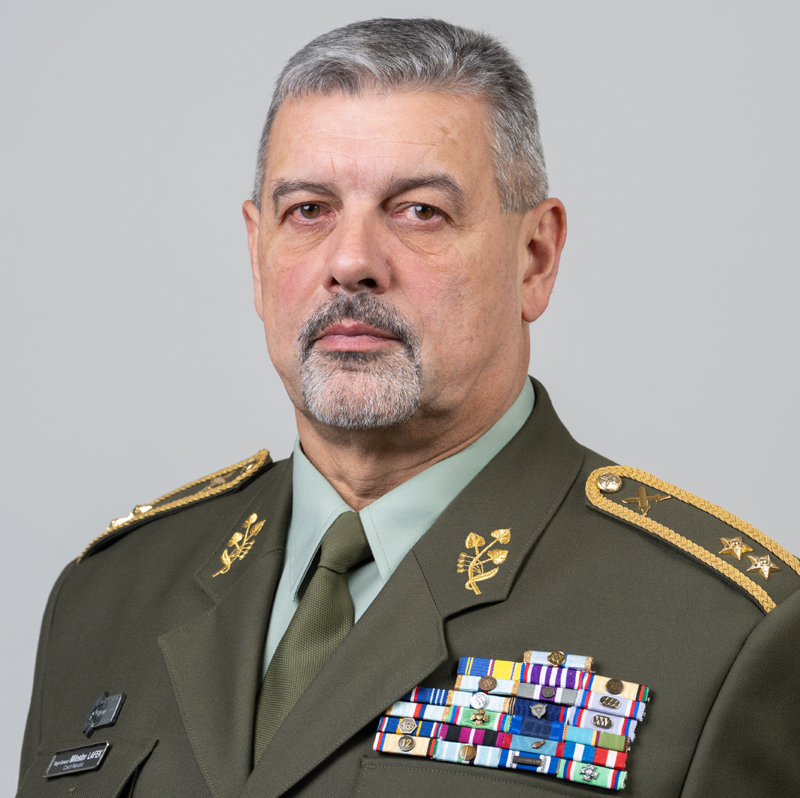
The security environment in Europe has changed fundamentally, and the warning time for a potential conflict has shortened dramatically. NATO is returning to its core mission – collective defense – and the Czech Republic faces the critical question of whether it is prepared for this scenario. We discussed this with the Deputy Chief of the General Staff – Inspector of the Czech Armed Forces, Major General Miloslav Lafek.
General, when we look at the current security situation – what kind of environment is the Czech Republic facing today?
The Czech Republic currently finds itself in a very unfavorable and unpredictable security situation. For four years now, a war has been raging on European soil between two nations: aggressive Russia on one side and Ukraine, the victim of aggression, on the other. The risk of an attack on NATO member states has also increased. The conflict in Ukraine has clearly shown that the use of military force as a tool to achieve political goals is back. The fundamental problem is that our warning time has been dramatically reduced. Previously, it was assumed that we had 10 to 15 years to prepare for a potential conflict. Today, we are talking more in terms of weeks or months. And that fundamentally changes the way we must think about preparing and ensuring our own defense in the context of collective defense.

NATO has changed significantly in recent years. What do you think is the main change?
After years during which NATO dealt primarily with crises outside its territory, the Alliance – in light of developments in the security situation, particularly in Europe – has returned to its core mission: collective defense. A concept of deterrence and defense was developed to ensure the Alliance’s own defense and security. The goal is not merely to be able to respond to a military conflict, but above all to prevent such a conflict by deterring a potential adversary from acting on its intentions – in other words, to ensure that the conflict never begins. This requires possessing the capabilities and implementing a range of measures that the adversary perceives as sufficiently strong and credible. And this applies not only to the military, but to the entire Alliance system and individual member states.
When you talk about deterrence – what exactly do you mean by that?
Deterrence is the ability and willingness of the Alliance and individual nations to deter a potential adversary from aggression by making the adversary perceive the costs and risks of an attack as unacceptable in relation to the expected benefits. The goal of deterrence is not to wage war, but to prevent it from breaking out. Deterrence can also be understood as a combination of military, political, and economic measures.

So what scenarios might arise specifically for the Czech Republic?
With regard to potential military threats to the Czech Republic, it is necessary to refer to NATO’s current assessment, which identifies two main threats: Russia and terrorism. Individual defense plans have been developed for these scenarios, which also include the Czech Republic, both in terms of its geographical location and the demands placed on it and its armed forces.
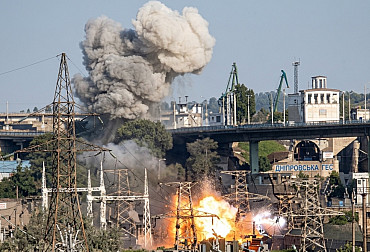
Czech territory would most likely not be a direct combat zone in the initial phase. However, this does not mean that the conflict would not affect us. We must, for example, prepare to fulfill our allied commitments regarding collective defense, which entails deploying our units to operations outside the country’s territory, ensuring massive support from allied forces on our own territory, and, under national command, ensuring the defense and security of our own territory. From the perspective of potential threats, we must account for the direct and indirect impacts of a possible military conflict, such as missile and air strikes on critical infrastructure – including disruptions to energy facilities and key communications and transportation infrastructure – cyberattacks, potential sabotage, terrorist attacks, disinformation, and more. Our goal is to resolve any potential conflict through our active participation where it arises, thereby preventing the need to address it at our borders or within our territory.
Does that mean the Czech Republic would essentially serve as a support base?
Based on experience from current military conflicts and the range of individual weapon systems, it is no longer possible to clearly define where the combat zone ends and the rear area begins. Nevertheless, we assume that the Czech Republic would serve as a transit and support country. We would have to ensure the movement of troops, their accommodation, supply, medical support, and other related requirements.
At the same time, however, we must ensure that the state functions – that the economy runs, that services function, that the protection and safety of the population are ensured, and that basic necessities are provided.
In your lecture, you were quite critical of the Czech Republic’s preparedness. In what specific areas are we falling short?
From a military perspective, the armed forces are still grappling with the long-standing shortfall in building the capabilities required of us by the Alliance and which we also need to secure our territory. Re-equipping the army with modern weapon systems and technology is a complex and lengthy process that does not correspond to the current security situation, i.e., the urgency of this development. The army still lacks personnel, even though a number of measures have been adopted in the area of personnel and recruitment itself. We have a problem with the reserves. The active reserve is also being built up at a slow pace and is only partially capable of supplementing the capabilities required to ensure defense. Another problem is the creation and use of so-called mandatory reserves. Current legislation does not allow for their creation, or rather their training and use in peacetime. Here, extensive work awaits us to amend defense legislation, which does not meet current requirements and was created for a completely different security situation.
I see further problems in the lengthy procurement processes in the area of defense. Our country has not yet sufficiently evaluated the lessons learned from the conflict in Ukraine, not only from the military’s perspective but from that of the entire state. It is necessary to reassess the overall approach – the so-called society-wide or government-wide approach – to defense, including the integrated defense system. The much-discussed level of funding allocated to the military, or rather to defense, is a separate issue altogether. The military has defined needs for implementing projects in all areas, but due to the availability of funds, their implementation is only partial, and many of them are being postponed, which naturally leads to increased costs, and the military does not possess all the capabilities necessary for operational use. Many tasks still lie ahead of us.
You also mentioned the concept of “total defense.” What does that mean in practice?
A whole-of-society approach to defense is a concept of national defense in which all sectors of society – not just the armed forces – systematically and coordinately contribute to ensuring deterrence, preparing for defense, defending the territory, and maintaining the state’s essential functions. This approach encompasses the state administration, local government, the armed forces, other security forces, the integrated rescue system, the economy, the private and non-governmental sectors, and citizens.
How significant is the role of so-called hybrid operations today?
Hybrid operations can be characterized as the coordinated and sustained use of both military and non-military instruments of power by a potential adversary, with the aim of undermining our security and defense capabilities, the stability of the state, and its decision-making capacity – without a formal declaration of war and, as a rule, below the threshold of armed conflict. In the defense sector, hybrid operations are primarily aimed at disrupting the functioning of the state’s defense system, its deterrence capabilities, defense preparations, and command structures, as well as at undermining social cohesion and resilience.
So what should the Czech Republic do in the coming years?
If I had to answer that quickly, from my perspective I would focus on the following areas:
- To assess the conflict in Ukraine from a broad perspective – including, for example, the functioning of the state, industry, civil protection, military aspects, and others – and to apply these lessons to the development of the Czech Republic’s security and defense system.
- Accelerate the modernization of the military, including procurement processes
- Modernize the integrated defense system based on a society-wide approach
- Begin conducting realistic tests of the national emergency response system to prepare for large-scale crises affecting the entire country
- Involve industry and society in preparing for a military crisis
And above all – stop thinking we have time. We don’t.
General, there is a lot of talk these days about Russia testing NATO’s limits. Do you see it the same way?
This isn’t just about military activities, but a whole range of actions – from hybrid operations and cyberattacks to testing individual countries’ responses, as we see on a daily basis. Russia is systematically testing how far it can go without triggering a unified response from the Alliance. And every weak or delayed response pushes that boundary further. Russia’s testing of NATO is a systematic, predominantly non-kinetic, and low-threshold activity aimed at verifying NATO’s response capabilities, cohesion, decision-making processes, and the credibility of its deterrence, without formally crossing the threshold of an armed attack under Article 5 of the Washington Treaty.
From your perspective, is there a real risk of conflict between NATO and Russia?
Yes, a NATO–Russia conflict is considered a possibility, but neither NATO nor Russia is currently seeking to provoke one intentionally; nevertheless, it cannot be ruled out. A real threat – namely, an attack by Russia on a member state – does exist. The problem is that the conflict may not begin in the traditional way. It could involve a gradual escalation – hybrid operations, border incidents, acts of sabotage. And suddenly we’ll find ourselves in a situation where it will be very difficult to say where the line between peace and war lies.
How do you view NATO’s unity? You mentioned that it cannot be taken for granted.
Unity is the foundation. Without it, deterrence and collective defense do not work. If an adversary sees that Alliance nations differ in their approach, policies, or willingness to invest in defense, it perceives this as a weakness. And in geopolitics, weaknesses are always tested. Unfortunately, we see today that this unity is not as strong as it should be.
In your opinion, how serious of a problem is the underfunding of defense in Europe?
This is a critical issue. Defense is not something that can be caught up on overnight. Building capabilities takes years – sometimes even decades. And if we put off investing, we create a deficit that is very difficult to make up for later. Moreover, defense is not just about technology, but also about people, logistics, and supplies. And it is precisely in these areas that we have significant shortcomings.
You also mentioned the staffing issue. Is that one of the biggest weaknesses today?
Yes. Technology is important, but without people, it is useless. The Czech Army is currently understaffed. And this is not just our problem – most European armies are facing a similar situation. If we want to be able to fulfill our commitments to NATO and ensure our own security and defense, we must address not only recruitment, but also motivation and retention. This involves not only their entry into the professional army, active reserves, or mandatory reserve training, but also the involvement of citizens in national defense, for example through voluntary military training and preparation for crisis situations.
In your opinion, what would a conflict mean for the average citizen of the Czech Republic?
The conflict would not be confined to the combat zone; it would likely also have an impact on the territory of the Czech Republic. This involves the potential deployment or support of allied forces on Czech territory, as well as the potential conduct of military operations, sabotage, and terrorist attacks by the enemy on our territory, including targeted attacks on military infrastructure, facilities critical to national defense, critical national infrastructure, industry, transportation infrastructure, and the conduct of disinformation campaigns, etc. The impacts would likely be felt on a daily basis: power outages, transportation restrictions, shortages of certain commodities, restrictions on the basic needs of the population, and heightened security measures, including restrictions on movement. And this is precisely what society must be prepared for – not only mentally, but also practically.
To sum it up – what is the Czech Republic’s biggest weakness today?
Our greatest weakness is that we still haven’t fully come to terms with reality. We feel that we are far removed from the conflict. But both geographically and strategically, we are part of it. If we don’t change our mindset and start acting more quickly, reality may catch up with us before we’re ready.