













Command Assembly 2026: Army warns of threats and calls for stable support for defense
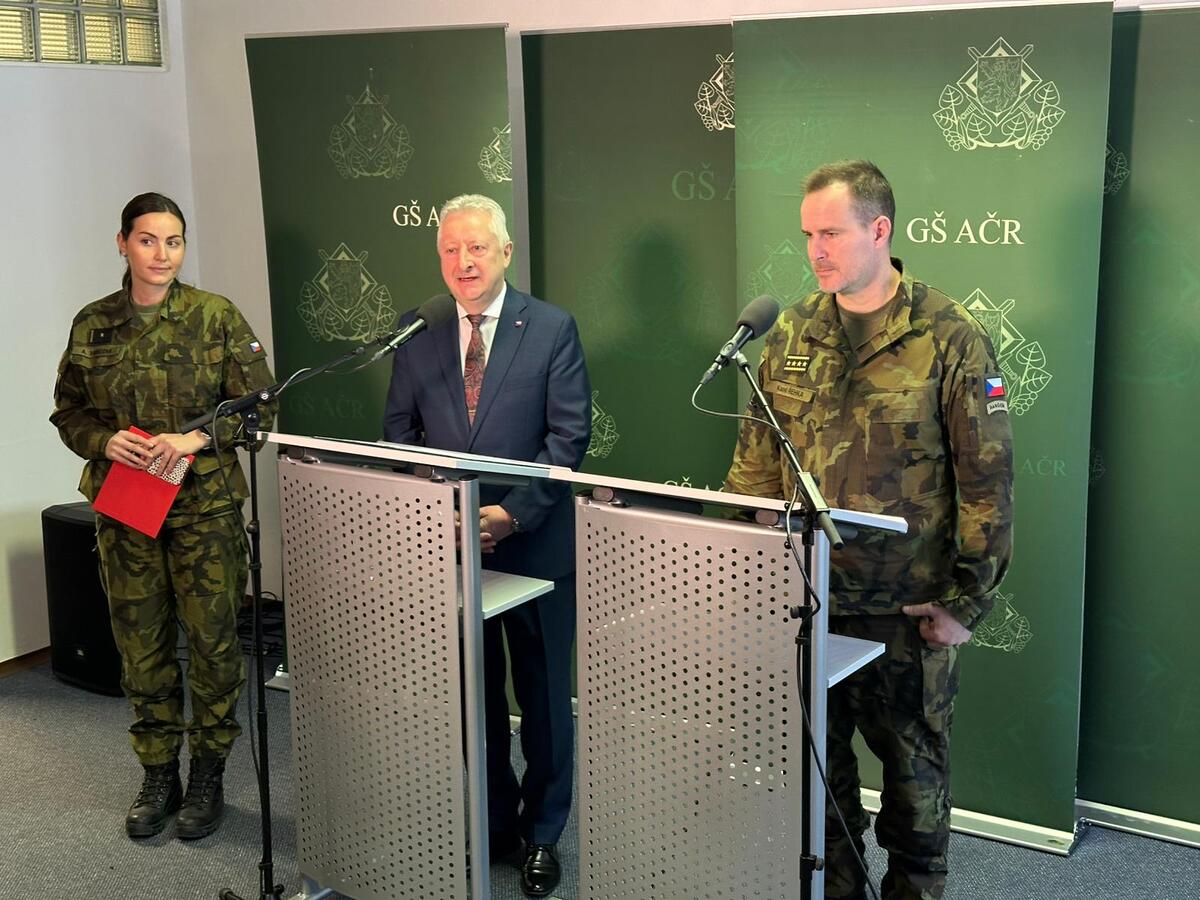
Yesterday, the leadership of the Czech Armed Forces, headed by General Karel Řehka, gathered at the regular command meeting of the Chief of the General Staff of the Czech Armed Forces. The meeting, which was also attended by Deputy Prime Minister and Minister of Defense Jaromír Zůna and other guests, was devoted to evaluating the tasks of 2025, but above all to looking at the security situation and the future direction of the Czech Armed Forces. Both General Řehka and Minister of Defense Zůna agreed that the era of carefree security is over and that national defense requires long-term political consensus, stable financing, and a realistic concept for developing capabilities.
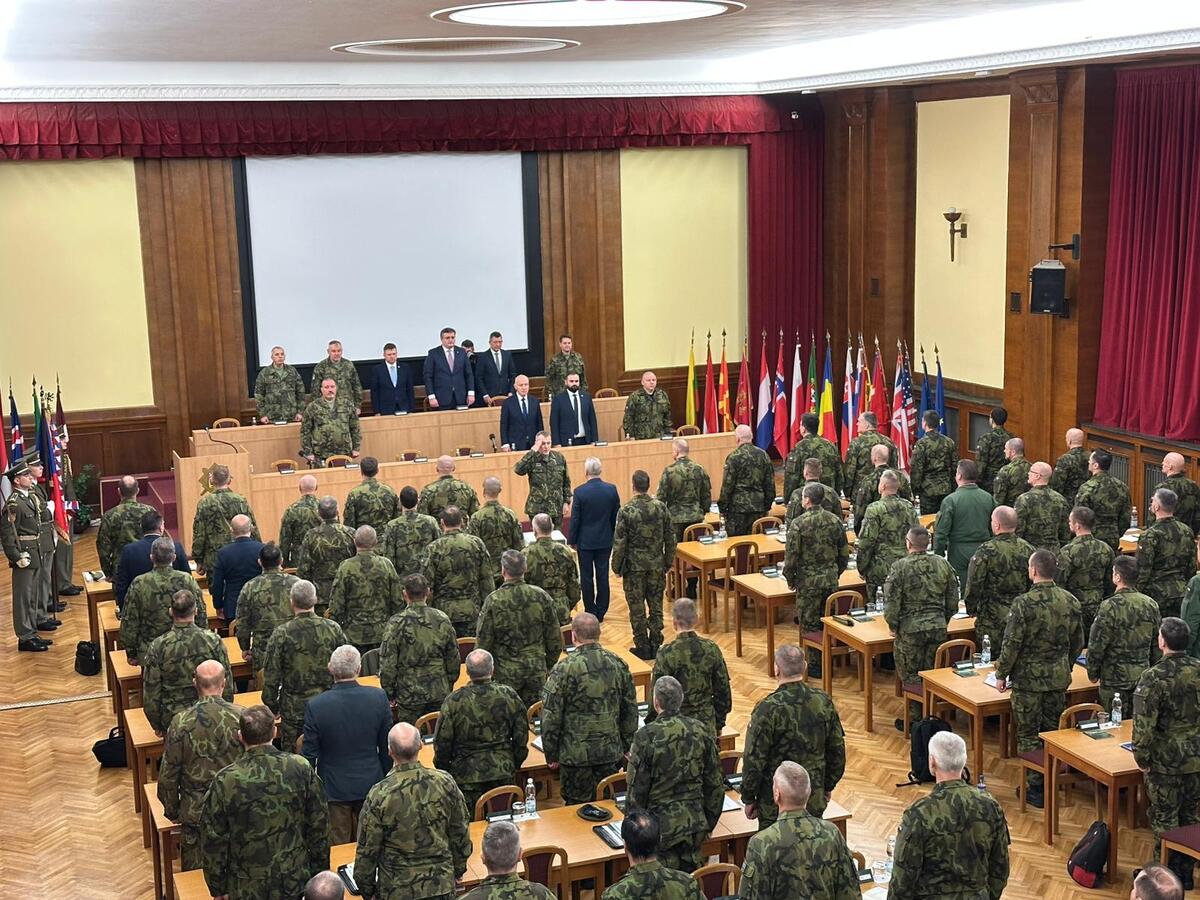
General Karel Řehka: Being a soldier is not a job, it is a service and a mission
"The year 2025 was once again a very intense one for the army. In a complex security situation, we carried out a number of important tasks for the benefit of our country's defense," Řehka said at the beginning of his speech, recalling that the army tested defense plans, mobilization procedures, command post functionality, and the digitization of command and control systems, while continuing to modernize and stabilize its personnel.
According to the Chief of the General Staff, it is crucial that everything is geared towards a single goal – combat readiness. "Everything we emphasized last year is related to combat readiness, the preparedness of the army, and the country's defense capabilities. That is my highest priority and goal," he emphasized. Řehka spoke at length about the role of the individual in the army. He reminded the audience that real strength does not come from generals, but from soldiers at the lowest levels of command. "Our army is based on privates and corporals in mechanized squads, on sergeants and warrant officers, on squad, platoon, and company commanders, on pilots and squadron and flight commanders. These are the ones who prepare for battle and, when the time comes, fight and bleed," he said. He also strongly emphasized the moral dimension of service. "Being a soldier is not a job, it is a service and a mission. At the same time, it is a great privilege and a great honor," he said, recalling that every soldier swears an oath that he is willing to give his life to defend his country.
The Chief of the General Staff openly described the security reality. “We live in a world that is not safe. This is not scaremongering; it is a statement of fact,” he said. He identified Russia’s aggressive policy as the greatest and most urgent threat. “The aggressive policy of today’s Russia will, in the foreseeable future, constitute the most direct and urgent threat to the citizens of the Czech Republic and to the security of the entire European continent,” he emphasized, adding that Moscow’s objective is to restrict the right of Czech citizens to decide their own future. “Russia is attacking our freedom and sovereignty,” he said.. Řehka pointed out that Alliance assessments show a significant delay in Czech capabilities. "In our key capabilities, which we contribute to defense plans, we are lagging behind by about six to ten years," he said. According to him, this is a consequence of long-term neglect of defense and accumulated internal debt. At the same time, he emphasized that the army has changed its approach in recent years. "The era of carefree optimism and the illusion that security comes for free is over. The Army of the Czech Republic has stopped pretending that everything is fine and has begun to prepare for the worst-case scenario," he said.
Regarding the modernization of our army, Řehka stated that public funds are not being wasted. "The billions that the modernization has cost our fellow citizens have not been spent on toys for soldiers. They have been invested in deterrence and defense, in our future prosperity and security," said the Chief of the General Staff, who concluded by calling on commanders to be honest with their superiors and political leaders and to have the courage to point out risks.
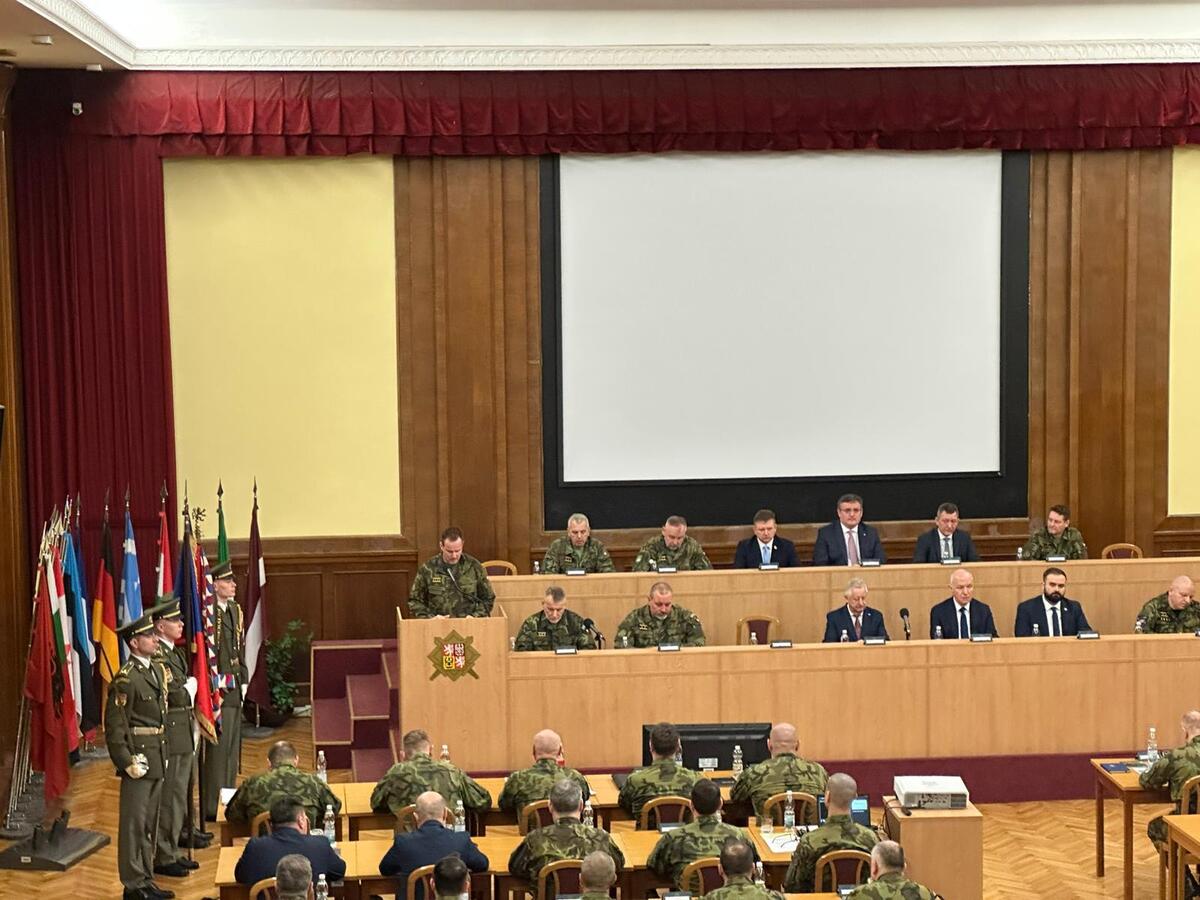
Czech Minister of Defense Jaromír Zůna: National defense cannot be built on illusions or political gestures
In his speech, Minister of Defense Jaromír Zůna first thanked the army for completing the tasks of the 2025 training year and praised the work of soldiers at home and on foreign missions. He emphasized that national defense is one of the government's key priorities and that it must be approached comprehensively – from legislation and conceptual management to personnel, infrastructure, and modern weaponry. "National defense cannot be built on illusions or political gestures. Concepts, measures, and statements must be matched by results," he said. He criticized the practice of first adopting higher-level concepts without a solid foundation at lower levels. According to him, it is necessary to create concepts "from the bottom up" and restore balance to the process of building the army, even if this temporarily means seeking purely national approaches.
Zůna also commented on financing. "Our government is convinced that national security is not measured in percentages of GDP, but in actual defense capabilities," he emphasized. According to him, the years 2027 to 2031 will be decisive, when the main efforts are expected to focus on meeting capability targets, replenishing the army with competent and motivated personnel, and improving the quality of life of soldiers. The minister also outlined technological priorities. Robotic, automated, and software-defined systems, the digitization of command and control, and the modernization of communications infrastructure will play an important role. At the same time, he called for practical steps that will lead to a rapid and realistic strengthening of the army's combat value.
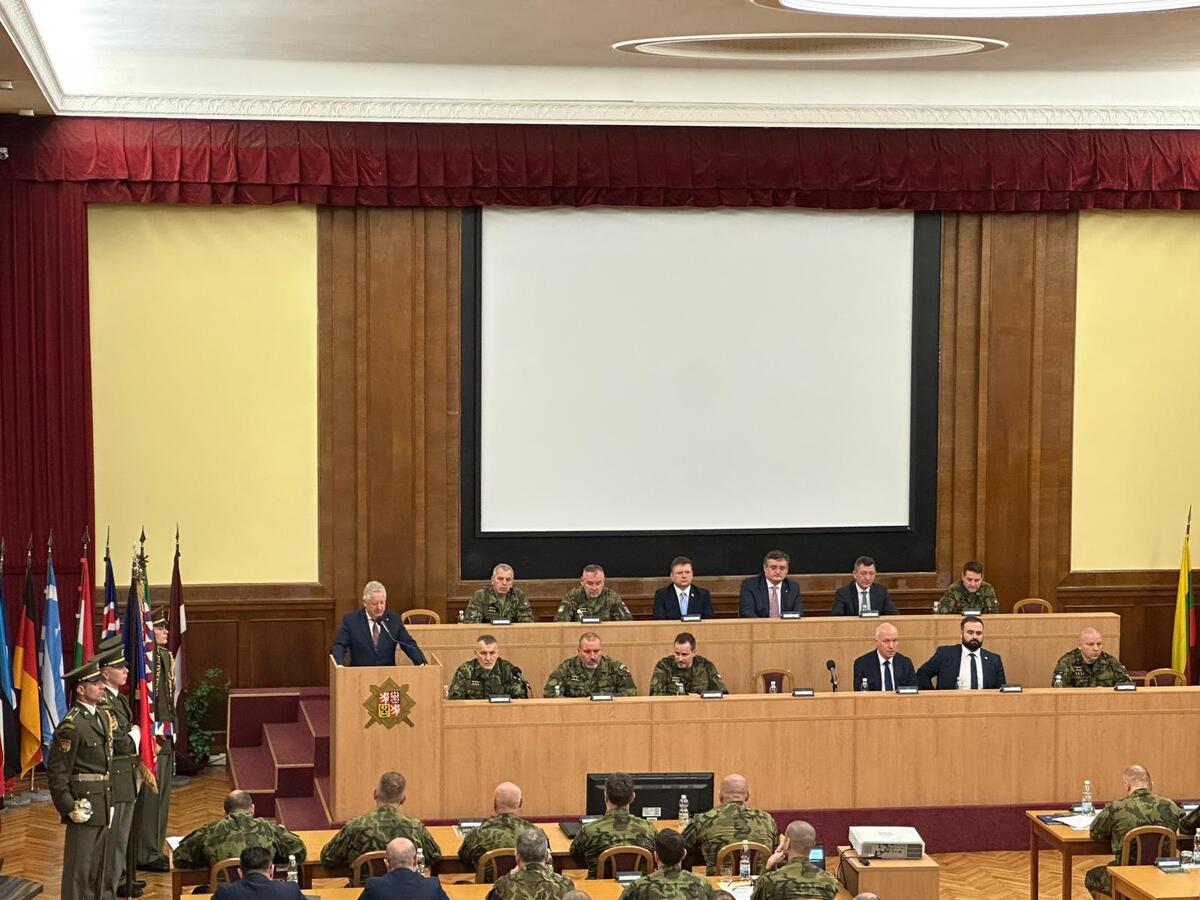
During the subsequent press conference, Defense Minister Jaromír Zůna described the commanders' meeting as one of the most important events of the Czech Army's training year. He said that commanders traditionally expect the evaluation to be reflected in the activities of their units and facilities. He thanked the army for fulfilling its tasks in 2025 and congratulated it on its successful operations at home and abroad. The Chief of the General Staff of the Czech Armed Forces, General Karel Řehka, then reminded those present that commanders' meetings are held twice a year. The autumn meeting focuses on tasks for the following year, while the meeting at the beginning of the year serves primarily to evaluate the fulfillment of tasks for the past period. He briefly summarized that the main focus of the army's activities in 2025 was to prepare for the defense of the Czech Republic and to increase the readiness, accessibility, and sustainability of units.
Our editorial team asked the Chief of the General Staff the following question: In your speech, you stated that we are lagging behind by approximately six to ten years in terms of the key capabilities that the Czech Republic contributes to the Alliance's defense plans. At the same time, you have said in the past that defense spending should approach three percent of GDP in the future. How and within what time frame do you think it is realistically possible to catch up and achieve the Alliance's Capability Targets?
"The budget is, of course, a highly political matter. Whatever the political decision may be, we must adapt our planning to that decision. That is how it has always been, how it is now, and how it will always be, and that is how it should be. As far as the Alliance's capability development goals are concerned, the assessment team did not say that we are behind schedule across the entire Capability Targets 2025 framework, but in those key capabilities that we contribute to defense plans, namely in two brigade task forces and some other elements, the delay is estimated to be approximately six to ten years. This does not mean that we are not contributing to defense plans. It means that we do not have everything we should have in these capabilities. As for building Capability Targets 2025, we have conducted an analysis, the results of which have already been made public. Leaving aside the numbers of soldiers, reserves, and personnel issues, the technology and modernization expenditures alone amount to approximately CZK 750 billion above the 2% of GDP budget level baseline. In other words, this means either roughly 3% of GDP over ten years or a gradual increase in funding. In the past, the army based its plans on the previous government's mandate, which set out a gradual increase of 0.2 percentage points per year to 3% of GDP by 2030. If the political decision is different, it will be different. We will have to reevaluate our priorities and adapt. At the same time, it must be said that the Alliance's capability development goals are not the only ones that the army must build. There are also capabilities that are a national responsibility—such as territorial protection, air defense, and other areas. In reality, we would need the amount to be even higher. If the government decides to take the path of not looking primarily at percentages of GDP, but instead setting specific requirements for each year, we will adapt to that. However, what is absolutely critical is the predictability of the budget. Defense planning cannot be done with fluctuations from year to year. This always results in gaps in capabilities, unfinished projects, and problems that the Czech Army is still struggling with today – precisely because it did not have predictable funding in past decades," General Řehka told CZ DEFENCE.
We also approached Minister of Defense Jaromír Zůna with the following question: Minister, this May will see an adjustment to the Concept of the Development of the Czech Armed Forces, while at the same time the ministry's budget is heading towards two percent of GDP. How do you think these new assumptions will be reconciled and reflected in the actual development of the army's capabilities?
"When it comes to the budget, my many years of experience have shown me that the military has always prioritized budget predictability over the current nominal amount of the budget, because that is the only way to plan and build capabilities in the long term. If we look at the period from 2014 to 2022, for example, the defense budget has increased by almost 100%. At the same time, however, we knew in advance that there would be an increase of approximately ten percent each year. This made it possible to launch a whole range of projects based on long-term framework agreements, including options, which are now coming to an end, and the material has thus entered the army in recent years. That is why, when we talk about defense funding, it is not a race in terms of GDP percentages. What matters is the combat value of the army and the capabilities we gain in building it. This is the approach I advocate and will always support. As for the Concept of the Development of the Czech Armed Forces and the task of revising it, this is a very challenging matter, especially in the current security environment and geopolitical developments. It is reasonable to align the development of this concept with the preparation of the state budget, i.e., to put both processes in the same time frame so that they fit together. The aim is to ensure that the arguments in the budget negotiations are factually sound and that we do not find ourselves in a situation where we have to stop, restrict, or change the parameters of projects that are already underway. Budget forecasting is indeed essential for any conceptual considerations about the future of the Czech Armed Forces," the Minister of Defense told our editorial team.