













Defence Minister Jaromír Zůna: The army will not be replenished solely through recruitment
Public confidence in national defence, the Czech Army's real readiness for high-intensity conflict, and the ability to translate a record budget into concrete combat capabilities. In an open interview, Minister of Defence Jaromír Zůna talks about where the army really stands today, what capabilities it needs to develop as a priority, why it is necessary to reevaluate the priorities of the acquisition process, and how he wants to stabilize personnel. He also outlines his vision of the Czech Republic's role in NATO, the importance of the domestic defence industry, and a key message to soldiers.
Video: Interview with Minister of Defence Jaromír Zůna / CZ DEFENCE
Minister, the war in Ukraine has dramatically changed the security environment in Europe. How has this fact changed perceptions or thinking about the structure and overall readiness of our army?
Every conflict that has taken place historically, especially in our region, which has such a long tradition of military art and thinking, has always had an impact. Above all, on thinking about army building, military art, personnel training, and the like. The Ukrainian conflict, of course, brings a whole range of new insights. But let's look at it realistically, we have to distinguish between principles and purposes. We must never allow ourselves to be carried away by a one-sided view, a one-sided assessment, because we have been through this many times in the past. It is always necessary to distinguish between permanent principles and temporary purposes, which may be of exceptional importance in a given situation but do not contribute much to the strategic outlook.
Let's look at this from the perspective of practical experience in modern military conflicts. The strategic concepts of the 1990s favored small, light, mobile, and easily deployable units designed to operate in modern-type conflicts in geographically distant regions. In one of my first publications in 2002, I stated that this purpose was perceived as marginal in the strategic and conceptual outlooks of modern armies. In reality, the future of army development was heading in the opposite direction. That is, the development of heavy mechanized battalions with firepower and the ability to maneuver with fire and movement. Let's look at what the requirements are today. It was no coincidence that the then Chief of the General Staff, Aleš Opata, correctly stated in his speech at the army command meeting that there is no army of computers on the Ukrainian border, but rather artillery, tanks, mechanized units, and the like.
Another example is the mission in Afghanistan. At the time, there was talk that this was what the future of modern warfare would look like. A photograph of a special forces soldier on horseback with a terminal for guiding precision munitions to targets went viral around the world. At the time, I studied these conflicts extensively and came to the conclusion, which I published in 2006, that the experience from this specific mission would not bring anything new to the theory of warfare and operational art. Let's take a look today and see who remembers it on a conceptual level.
Let's look at the issue of expeditionary operations in general, regardless of their political format, which has significantly influenced conceptual thinking within NATO in the past. Based on the Istanbul criteria of 2008, member states were evaluated primarily on the basis of the contribution, deployment, and sustainability of national armies in these operations. This was also how the content of our conceptual and strategic documents was conceived at the time. Perhaps legitimately at the time, but nevertheless mistakenly. In my dissertation, however, I had already come to the conclusion that the topic had been exhausted on a theoretical, conceptual, and content level.
For us, therefore, crises and conflicts in which modern armies were deployed on a large scale should always have been the main source of lessons for the conceptual development of the army. We would probably be better off today.
So, are the principles of army building the key to proper development?
The principles of army development must always be upheld. In recent years, there has been much talk about how we have neglected something in our development, that we have neglected to fund the army, that we have neglected defence. It wasn't that simple. The army has always fulfilled its political mandate. At the same time, however, there has been a clash of opinions between different schools of thought on army development for three decades. There are about four of them. Let us mention two that are relevant to this issue. The first said that in the new world after the end of the Cold War, it would be crucial to build armies primarily for expeditionary use. Let us see how this developed. At the time of our accession to the Alliance, operations within 1,500 kilometers and 2,500 kilometers of NATO member states' territories were being considered. Subsequently, the European Union suggested that member states should have military capabilities enabling them to operate at a distance of 6,000 kilometers. There were already voices in the Czech Republic saying that it should not be in our interest to resolve crises that are a legacy of the colonial era. This limit was subsequently abandoned, and NATO gradually adopted the requirement for the deployability of armies with almost no geographical restrictions. Even the aforementioned long-term vision of the Ministry of Defence from 2008 spoke of the need for selected civilian employees to be ready for deployment in foreign operations, if necessary. In addition, representatives of the second school of army development were of the opinion that, at that time, the expeditionary use of the army would probably be the most visible way of utilizing it. However, the essence and strategy of army development cannot be subordinated to this specific purpose, as the nature of the security environment was considered temporary. The army must therefore be built in principle for its main purpose, namely the defence and security of the country, as stated in Article 3 of the Washington Treaty. Unfortunately, in recent decades, the views of the first "school" have prevailed, which in its extreme views did not even consider the existence of military schools. I was one of the representatives of the second school, which took a more balanced view of everything.
Is fulfilling Article 3 of the Washington Treaty a priority for you?
Definitely. Article 3 clearly states that each state is obliged to ensure its own defence first and foremost. Article 5 then deals with collective defence. However, we have long placed greater emphasis on fulfilling the alliance's capability-building objectives than on our own defence needs.
The government's policy statement reverses this approach. First and foremost, we must ensure the defence of the Czech Republic and allocate forces and resources from this capacity to collective defence. This is a fundamental change in logic.
The problem I pointed out years ago is that the resources allocated to defence are often barely sufficient to meet alliance goals. At the same time, the state's security needs, both external and internal, are increasing. The Czech Republic's political and military ambitions are exceptionally high, and we must align them with the real possibilities of the economy and available resources, including human resources.
There are other things that need to be said. There is the state budget, then there is the requirement for further modernization of the Czech Armed Forces, there are modernization projects that are already underway, and then there are projects that should be underway as part of the Czech Armed Forces Development Concept. And there is also the requirement to revise the KVAČR due to the security situation. How can we make sense of all this? How will you ensure that the army maintains the active combat value it needs?
Several things have come together here. We have new alliance commitments that emerged from the Hague Summit. There are also new criteria of 5% of total defence and security spending. At the same time, there are security needs arising from developments in the security environment and the risks that arise from this and need to be covered. And there are some urgent requirements, as I mentioned. All of this must be brought together. This year, the Concept of Development of the Czech Armed Forces must be amended. It is amended every five years. It will be a concept for the period until 2040. But it must already provide solutions to current needs. It is very complicated, and let's be honest, our country has only one option, because we are talking about the development of the Czech Army in the socio-economic conditions of our state. Then we are also talking about the long-term outlook for defence, which must be developed this year. It should specify the direction of development of our strategic security culture. It is not just a matter of rewriting texts from other strategic documents of the Czech Republic and, where applicable, from the Alliance into new documents. That is not how it works. We must go further and open up a whole range of fundamental issues to which our country must find answers.
When we look at these concepts from 2015, the first editions stated explicitly that the primary objective of the Czech Armed Forces Development Concept was to fulfill NATO's capability development goals. This is completely reversed logic compared to the current security needs of our country. That is why, in the government's policy statement, we talk about building overall forces, where ground, air, territorial, and other forces, including various types of reserves, are built as a single organic whole. In the past, the practice of building preferred components of the army was often promoted. Now that is changing, and that is a good thing. Suffice it to recall the discussion about what unit to build in Rakovník. There were various options: an engineering battalion, a mechanized battalion, and so on. I proposed building a host nation support battalion. The need for such a unit was evident, and it was also an achievable goal at the time. Similarly, I proposed starting the development of territorial forces. In both cases, the then Chief of the General Staff, Gen. Josef Bečvář, made a factual and correct decision. What may have seemed like a good idea at the time turned out to be a visionary measure. This is exactly the kind of thinking we need when creating new conceptual documents.
Are capabilities that were neglected in the past coming back to the fore – such as air defence or countering drones?
As I say with some exaggeration, it is not about the future of the army, but about a neglected past. The first comprehensive document on the future of autonomous systems on the battlefield and conceptual considerations in this area was received by the army command as early as 2002. Everything I had the opportunity to observe and work on at that time can now be seen on the battlefield. And this is only the beginning. As I mentioned earlier, every ten years, progress in military technology is equivalent to that of the past hundred years. However, the implementation phase did not take place in our country in the past because other criteria and political tasks prevailed in the development of the army. I have already mentioned one of them, namely building the expeditionary character of our army. Our defence industry also suffered as a result at the time. Anyone who doesn't believe this should take a look at today's reality.
Air defence is an absolute priority today. However, its restoration is not a matter of months. For complex systems, we are talking about delivery times of four to six years, including integration. This only confirms the need for long-term strategic thinking.
Personnel – this has long been a huge issue. When we discussed the personnel situation some time ago, you cited some data from your time in the army. Is there a recipe for filling the army more quickly? There is talk of conscription and its return. There is talk, let's say, of voluntary service. There are various activities such as voluntary military training. Is all this heading in the right direction?
That would be a topic for a separate interview, because it is a very broad issue. First and foremost, the army is replenished with personnel through the process of development, not recruitment. Recruitment is only one of the supporting processes. I have probably just stated a revolutionary thesis in our domestic public discourse. However, it is common knowledge found in textbooks. The basis for this is the solution to the equation of purpose-type-size of the army, which I have repeated ad nauseam. But I will keep repeating it as long as I encounter resistance and hysterical cries about urgency and reliance on an extensive concept of army development. If someone is unable to bring conceptual thinking about army building to a qualitative shift three times, I will certainly not entrust it to them a fourth time. The purpose is determined by law, and it is up to politicians, the government, and society to decide what purpose they want the armed forces to serve. This determines the type of army, which can be professional, conscripted, militia, a combination of these systems, and, of course, a sophisticated system of mobilization as a basic means of deterrence on the part of a state that has only conventional military power at its disposal.
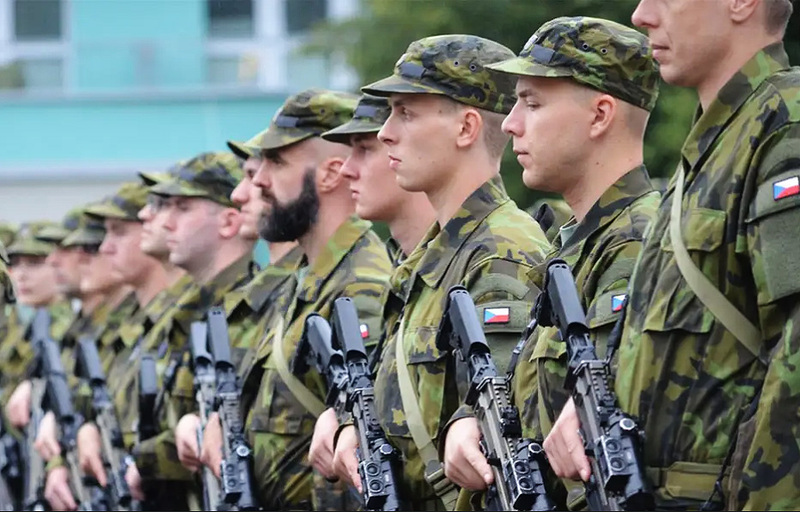
If anyone today argues for the need to reintroduce compulsory military service, they must be aware of a number of things. First and foremost, from the perspective of economic theory, the building of armies has always been considered a form of tax that is unevenly distributed across society. This is one of the reasons why discussion of this topic is so sensitive in society and is directly linked to the concept of costs. It would mean developing a model of a conscription army for the conditions of a market economy and the complex socio-economic conditions of our country. In this respect, we have no modern historical experience to draw on. And even a soldier in basic military service would not be free under these conditions. For army logistics, military healthcare, and acquisition processes, it would be a revolution to which everything would have to submit. A person who is called up for military service does not wait for the outcome of the acquisition, but demands comprehensive security on the day of enlistment. Finally, I would like to point out that the potential of the professional Czech Armed Forces is far from exhausted.
In France, I noticed that volunteers will receive €1,000 per month.
This is precisely a reflection of the economic conditions of the state, which are diametrically different today than they were 40 or 50 years ago. If the wrong model of development is chosen, if I set the wrong parameters for the army that I am building strategically, it will also affect the process of replenishing the army with personnel. I deliberately do not say recruits, because the army is replenished with military personnel of various categories. The possible transition to a professional army has been discussed in our country since 1993. At that time, a model counting on 42,000 professionals was published. The stated size of the army dominated conceptual considerations until the Czech Republic joined NATO. This was also the vision of the army of the then Chief of the General Staff, General Jiří Šedivý. For years, I was either an observer or often a participant in processes dealing with the issue of professionalizing the army. Over the years, there were more of them than is commonly known. What is important is that when the decision to build a professional army was made in 2002, this step was supported by extensive scientific and analytical work. A group of very talented people worked on it, who were able to come up with theoretical outputs and models whose accuracy is still astonishing today.
In 2008, based on this theory, my colleagues and I published a projection that 350 to 450 students would enroll at the University of Defence each year, with the number gradually declining over time. This caused an uproar, and I was accused of undermining the University of Defence with my published article. In 2025, it was announced that 367 students had enrolled at the university. This shows that it is not about recruits, but about building the army. It is not a set of requirements, wishes, or playing the odds, but a hard calculation of reality. This will determine how the army will be replenished with personnel. At that time, I proposed to the Chief of the General Staff the establishment of an officer training course at the Military Academy in Vyškov for graduates of civilian universities. This was also intended for warrant officers and non-commissioned officers who had completed their university education and decided to transfer to the officer corps. General Picek immediately approved the project. As a result, between 2008 and 2025, the army was supplemented by 4,062 officers in this way and 3,490 officers through studies at the University of Defence. Let's try to imagine what the situation would have been like if the direct recruitment and officer training course project had not been approved at that time.
Let's move on to the Czech defence industry. At the beginning of your term as minister, you began visiting key companies. How important do you think defence industry companies are for the modernization of the Czech Armed Forces?
This is absolutely crucial. I think that our view of the Czech defence industry is completely changing in terms of the Czech Republic's security needs, and in a positive sense. Opinions have changed over the years. In the past, I used to say allegorically that we were supposed to know about each other, but we weren't allowed to get close to each other. I even remember how we were banned from participating in the IDET trade fair. That was almost absurd, because these trade fairs are organized for a specific segment of the professional community, whether domestic or foreign. I always went to them, and when someone happened to ask me whether we were allowed to or not, I always said: when I was studying in the United States, they taught us something different. During our studies, we visited all the big companies that produced for the global market. And there, we often discussed how to deal with communication. And they always told us, we tried everything, but the only thing that works is transparent, open communication. I have always been in favor of setting up these communication channels.
Given developments in the security environment and the ambitions of the Czech Republic, the European Union, and NATO, it is necessary to view the defence and security industry as part of the state's security system and to deepen the symbiosis of all its components with the defence industry. This is also important because 90% of our defence and security industry's production is destined for export. Our companies are very successful globally and naturally need references. As far as state-owned enterprises are concerned, we are pleased that they are prospering and will be in the black in 2025. However, immediately after I took office, it was necessary to make some fundamental decisions to resolve long-standing issues. This was achieved, and in my opinion, it is a success.
We have opened a number of topics, each of which deserves a separate discussion. However, I will return to the soldiers and the conditions under which they serve in the Czech Armed Forces. The draft budget includes amounts for the construction of army real estate. Are these apartments?
That's right. In the government's policy statement, you will find a thesis on improving the living conditions and services of soldiers. This issue is also included in that. This is where the development since 1990 is changing. Over the last thirty years, we have privatized the housing stock and transferred responsibility to soldiers, with the introduction of a housing allowance in 2002 as part of the professionalization process. This was intended to create conditions for soldiers to be mobile and, wherever their career took them, to be able to take out a mortgage and buy their own home. If they wanted to move their family somewhere else, they could sell their property, buy another one elsewhere, and so on. We went down this path. Today, there is a demand to revitalize the housing stock in selected garrisons to a certain extent. We have a plan in place, which currently involves more than three billion crowns to be invested in the housing stock in the coming period.
The priority locations are Jince, Vyškov, Hradec Králové, Brno, Rakovník, Prague, Lázně Bohdaneč, and Žatec. This will involve the construction of new apartments and apartment buildings in cooperation with the municipalities. It also includes the construction of new dormitories, hostels, and similar facilities under our own management. We are cooperating with local governments and want to tackle a number of projects through joint investments. We have a plan in place for 2026 to 2030. Personally, I would like to see a greater share of housing construction, but we will have to see how the financial resources develop. In any case, this is one of our priorities and it is also a priority for the government. The year 2026 is, in a way, a transitional year. For us, the critical period is 2027 to 2031. There, we need the trend of increasing defence spending to be continuous so that we can implement, for example, housing construction plans, where we want to make greater use of European funds that are becoming available.