


Defense Readiness Goes Beyond the Military: What the Czech Defense Industry Needs from the Government
In recent years, the Czech Republic has been significantly increasing its defense spending, modernizing the Czech Armed Forces, and simultaneously preparing a comprehensive review of crisis, defense, and related legislation. However, in addition to the state’s powers, the functioning of mobilization, military mobility, and the speed of acquisitions, there is another fundamental question: what role should the Czech defense industry play in the new national defense system? It is not enough to simply create an army prepared for high-intensity conflict and legislation that allows it to respond quickly. If the Czech Republic is to cope with a prolonged crisis or war, its industrial base must also be prepared.
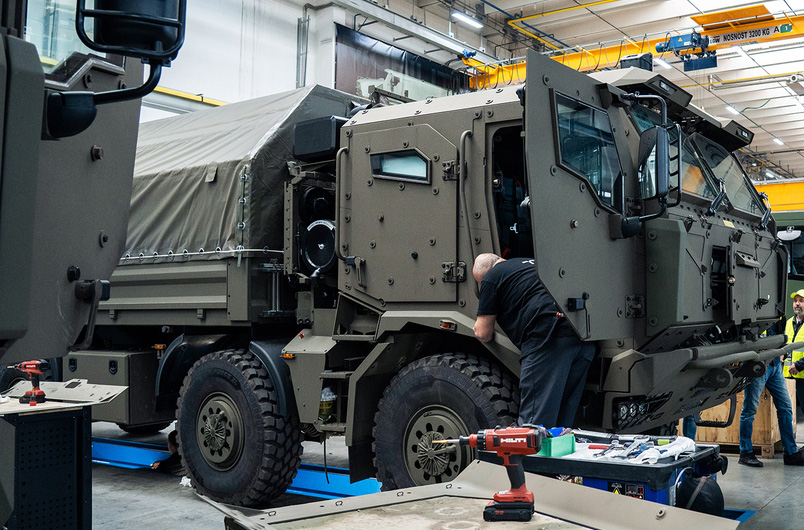
This does not mean that the state should automatically purchase from Czech companies simply because they are Czech. Such a principle would be too simplistic and, in the context of public procurement, would also conflict with competition rules and European law. The attached legal analysis therefore correctly points out that a supplier’s domestic origin cannot, in and of itself, justify giving it preferential treatment. At the same time, however, it notes that in the case of strategic acquisitions, it is legitimate and necessary to assess the security of the supply chain, the availability of ammunition and spare parts, the ability to perform repairs in the Czech Republic, access to technical data, and the capacity to increase production in times of crisis.
It is precisely here that the foundation for a future relationship between the state and the Czech defense industry can be found. This is not primarily about supporting specific companies. It is about maintaining the capabilities that the state will need in the event of a crisis.
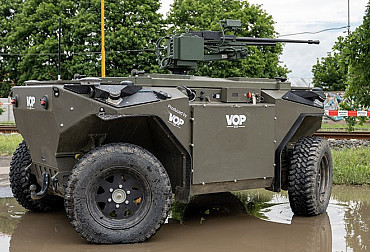
It’s Not About a Company’s Czech “Passport,” but About the Capabilities That Stay in the Czech Republic
When involving Czech industry in defense contracts, it is therefore necessary to monitor both the extent of domestic participation and its actual security benefits. For a major weapons system, in addition to the share of the contract value, it is crucial, for example, whether Czech companies will be able to repair, modernize, and maintain it in operation, and whether there will be qualified personnel, stocks of critical spare parts, and the necessary technical documentation. Equally important is the question of which parts of the production chain the state will actually have under its control in the event of a crisis.
Even domestic production alone does not eliminate dependence on foreign supplies of critical components. The state therefore needs to support the resilience of Czech companies’ supply chains and, in the case of foreign acquisitions, ensure technology transfer and the involvement of domestic industry in production and servicing. The involvement of Czech industry must therefore also be evaluated based on the strategic industrial capabilities it creates and maintains within the Czech Republic. Depending on the nature of the capability, this category may include manufacturing, repairs, servicing, modernization, the production of critical components, access to technical data, material stockpiles, or the ability to rapidly increase production.
This approach also aligns with the evolving relationship between NATO and industry. The Alliance’s new Strategy for Industry-NATO Cooperation from 2026 emphasizes the timely involvement of industry in capability development, long-term predictability of demand, resilient supply chains, the ability to scale up production, and the integration of development, experimentation, and acquisition.
Above All, Industry Needs Predictability from the Government
From the perspective of the companies themselves, one of the key requirements is long-term predictability. “A production hall, an ammunition production line, a research center, or a team of top-notch engineers cannot be established the moment the government issues a public contract. A company must invest years in advance. If the government expects production capacity several times greater to be available during a crisis, the industry must know in advance – at least in broad terms – what capabilities the armed forces will need,” says Milan Kašík, secretary of the Defense Industry Section of the Czech Chamber of Commerce.

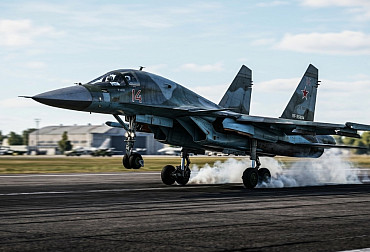

The foundation is a long-term signal of demand, which allows companies to plan their investments. For strategic capabilities, this signal can be followed by specific contractual commitments from the government. The government can tell the industry, for example: “Over the next ten years, we will need significantly more air and anti-drone defense systems, unmanned systems, electronic warfare systems, certain categories of ammunition, autonomous logistics, and sensors.” The company will then decide for itself whether to invest and whether to compete for future contracts.
NATO is introducing a similar principle, planning to publish an aggregated “demand signal” derived from the needs of the alliance’s defense planning. Its purpose is precisely to enable the industry to plan investments and production capacities over the long term.
The Defense Industry Section of the Czech Chamber of Commerce is calling for a similar approach for the 2026–2027 period: a national strategy for the development of the defense industry, rules for reserving production capacity, and a predictable environment that will enable companies to make long-term investments.
If the Government Demands Capacity, It Must Be Willing to Pay to Maintain It – Predictability Alone Is Not Enough
“From an economic standpoint, it is unreasonable to expect a private company to maintain extensive unused production capacity at its own expense over the long term simply in case the state might need it someday. If the Czech Republic considers a certain level of production capacity to be part of its defense capabilities, one possible solution is to pay for the reservation of that production capacity,” Kašík points out.
The attached legal analysis also explores this principle. It notes that the Act on Economic Measures for States of Emergency provides for the preservation of production capabilities and compensation for the preparation of mobilization supplies, but at the same time suggests examining whether the current system sufficiently covers the flexible scaling up of ongoing production, as well as the availability of personnel and subcontractors.
For example, a company would produce a certain number of units of a product in peacetime. However, the state would contractually reserve the company’s capacity to increase production several-fold within three or six months. It would pay for this readiness. Such a contract, however, must have clear reciprocal obligations: specific capacity, an activation deadline, necessary material reserves, personnel availability, and regular verification. This would therefore not be a subsidy to a selected company, but rather a “purchase of readiness.” The Defense Industry Section of the Czech Chamber of Commerce is also calling for the reservation of production and services, and the same topic was raised during a parliamentary seminar on the revision of crisis legislation. The state needs a comprehensive map of Czech industry. However, it can only reserve capabilities that the state is aware of.
The Czech Republic therefore needs a much deeper understanding of its own industrial base than just a list of holders of licenses for foreign trade in military equipment. For every capability important to defense, it should know the entire supply chain.
Where is the final product manufactured? Where do the electronic components come from? Where is the energy-related material produced? Which raw materials are critical? What is the level of dependence on transportation, electricity, or gas? Which workers are irreplaceable? How quickly can capacity be increased? Which subcontractor represents a single point of failure? It is precisely this last question that may be decisive.
A production line may be located in the Czech Republic, but if it is unusable without a single imported component, its true resilience is limited. This does not mean that the country must manufacture all components domestically. The Czech Republic is not and will not be industrially self-sufficient. However, it needs to consciously manage its strategic dependencies. For some products, it will be appropriate to maintain production capacity directly in the Czech Republic; for others, it should be secured within the European Union or NATO alliance; and for still others, a broader global supply chain may be acceptable.
The Czech Defense Industry Must Be Part of Crisis Planning
Another need of the industry is a clearly defined role within the state’s defense system. “If companies are to carry out specific tasks in a crisis situation, they cannot be informed of them only after the crisis has begun,” Milan Kašík clearly states. The Chamber of Commerce’s Defense Industry Section therefore calls for the integration of companies into crisis planning even in peacetime, including consultations and, where appropriate, joint exercises with government agencies and security forces. At the same time, it proposes clearly defining the industry’s obligations to the state and a system of compensation for fulfilling them. Such cooperation should be mutual. The state may require a company to maintain certain stockpiles, production capacity, facility security, or the ability to ramp up production in a crisis.
However, the company needs to know who will provide it with energy, transportation, or strategic raw materials in a crisis situation, and how its personnel will be managed. It is precisely here that two legitimate interests of the state may conflict. A highly qualified employee of a defense contractor may also be a soldier in the active reserve or a person subject to mobilization duties. In some cases, it may be more important for the country’s defense to keep that person on the production line than to call them up for other duties. Such conflicts must also be resolved in advance.
The Military and Industry Must Be Able to Communicate Effectively
A very specific need of the industry is more direct contact with the end user. This is especially true for new technologies. A company developing a drone, an anti-drone system, a robotic vehicle, or an electronic warfare system needs feedback from the soldier who will be using the system. Conversely, the soldier needs the opportunity to tell the designer: the product is too heavy, difficult to operate, does not work in a jammed environment, or requires a different communication interface.
It is precisely this collaboration that the Chamber of Commerce’s Defense Industry Section explicitly lists among its priorities: it calls for rules enabling direct communication between companies and users, the development, testing, and validation of technologies, and the ability to use military facilities and training areas. This ties in very closely with the attached legal analysis. It distinguishes between standard system acquisition and experimental procurement of a limited series, which can be tested directly with a military unit.
However, the key is to create the entire chain: military problem → technological challenge → prototype → unit testing → feedback → modification → further testing → decision on implementation.
Without the final link, experimentation is not sufficiently effective.
Successful Experiments Must Lead to Procurement
The Czech environment could therefore benefit from a clear national mechanism similar to NATO’s “Front Door for Industry.” In 2026, NATO announced a platform intended to serve as a single point of entry for companies seeking opportunities for collaboration, testing, experimentation, and future contracts. At the same time, the Alliance explicitly states that there must be a credible transition path between successful testing and the procurement of technology.
The Czech version does not have to replicate the Alliance’s model. However, the principle is applicable: a company must know where to turn with its technology. At the same time, the military needs a clear process for evaluating a proposal, determining who will decide on its testing, and where the tests will take place. And if a solution demonstrates military value, the legal options for subsequent procurement must be known in advance. This can be particularly crucial for startups and small technology companies, which generally cannot afford to wait several years between the completion of a prototype and their first significant order.
Defense Innovation Needs More Than Funding – It Needs Customers
Research, development, and innovation present a separate challenge. Government support for development only makes sense if there is also a mechanism in place to bring promising technology to the end user. Otherwise, a situation may arise where the government funds a research project, the prototype is successfully completed, but the military never actually tests or deploys it. The industry therefore needs not only grants but also the opportunity for validation, certification, and subsequent scaling up of production.
The Chamber of Commerce’s Defense Industry Section is calling for a reform of state support for defense research and innovation, an increase in funding, and improved capacity for Czech companies to access European funds. The importance of these programs is growing. The European EDIP program now has 1.5 billion euros at its disposal; the work program approved in March 2026 allocated over 700 million euros to strengthening production capacities, and separate instruments are also designated for startups and small and medium-sized enterprises.
The state’s role, therefore, is not merely to provide its own subsidies. It can help companies navigate European and alliance-level instruments, form international consortia, and align Czech technological capabilities with the needs of the Czech Armed Forces and allies.
The Defense Industry Needs Access to Capital
However, production capacity is not built solely with public funds. The defense industry also needs bank financing, insurance, export credits, and private capital.
Therefore, among the priorities of the Chamber of Commerce’s Defense Industry Section is to build on the improvements already made in defense companies’ access to both public and private financing and to continue removing remaining barriers, particularly for smaller firms. This includes utilizing the tools of the National Development Bank, the Czech Export Bank, and EGAP, as well as further opening up European financial instruments to defense projects. From the government’s perspective, the stability of the rules is particularly important here. Investments in a production line yield returns over a period of many years. If a company does not know whether political, regulatory, or financial conditions will change significantly within two years, it will invest more cautiously. Predictability is therefore, in and of itself, one of the tools of industrial policy.
Defense Exports Are Not a Secondary Concern
The Czech defense industry is also exceptionally export-oriented. When the Ministry of Industry and Trade (MPO) took over the industrial cooperation agenda from the Ministry of Defense, it noted that approximately 90 percent of its production is destined for foreign markets. This leads to an important conclusion. “Czech manufacturing capacity cannot be sustained solely through orders from the Czech Armed Forces. Exports are an economic prerequisite for companies to maintain production lines, personnel, and R&D capabilities – which the Czech government can also utilize in a crisis,” says Kašík, Secretary of the Defense Industry Section.
The industry is therefore calling on the government to provide effective export support, faster licensing processes, intergovernmental G2G tools, and assistance in joining international programs. These demands are explicitly included in the priorities of the Chamber of Commerce’s Defense Industry Section for 2026–2027. However, this is not just about the economy. Successful exports increase production volumes and can reduce unit costs, finance development, and maintain capacities that domestic demand alone could not sustain.
The Defense Industry Needs a Reliable Government Partner
Following the transfer of part of the defense industry’s responsibilities to the Ministry of Industry and Trade (MPO), another important question arises: Who actually represents the state in its relations with industry in specific areas? Today, the MPO provides support for the defense industry and facilitates its integration with the economy, exports, and European industrial programs. The Ministry of Defense remains the customer and the body responsible for defense policy, while the Czech Armed Forces (AČR) define military requirements. The administration of state material reserves plays a crucial role in economic measures for crisis situations.
This model can only function if the responsibilities are clearly defined. A company must know where to turn with a new technology: who handles mobilization deliveries, who manages the reservation of production capacity, who facilitates industrial cooperation on strategic acquisitions, and who will assist with European projects. One of the industry’s demands is therefore not only more state support but, above all, a coordinated state.
Partnership Must Be a Two-Way Street
Integrating industry into the defense system naturally also entails obligations for the companies themselves. If the government begins paying for reserved capacity, it must have the right to verify that such capacity actually exists.
If a company is designated as strategic, it must be possible to verify its ownership structure, critical subcontractors, protection of sensitive information, physical and cybersecurity, and its actual ability to continue production during a crisis – to an extent commensurate with its role in national defense and in the protection of commercially sensitive data. A company granted access to plans for future military capabilities must adhere to the appropriate security protocols.
And state support for the domestic industrial base cannot mean shielding companies from competition or guaranteeing sales regardless of price and quality. Reciprocity is key. The state needs a reliable industry. Industry needs a reliable state.
What Does the Czech Defense Industry Need from the Government?
Based on a legal analysis, the publicly stated priorities of the Chamber of Commerce’s Defense Industry Section, and current developments within NATO and the EU, the following key topics for further discussion can be summarized:
1. Predictability of future demand – long-term information on the capabilities the state will need to build.
2. A clear national industrial strategy – what the state wants to maintain domestically and why.
3. Long-term contractual relationships and the reservation of production capacity, if needed for crisis scenarios.
4. Maximum involvement of the Czech defense industry in strategic acquisitions, with clearly defined benefits for security of supply, technology transfer, and life-cycle support provided by Czech companies.
5. More direct contact with the Czech Armed Forces (AČR) during the development and testing of new technologies.
6. Access to military testing ranges and users under clear and equitable rules.
7. A fast track from a successful experiment to acquisition.
8. Stronger and more predictable support for research, development, and innovation.
9. Assistance in accessing European and NATO financial instruments.
10. Availability of financing, banking services, insurance, and export credits.
11. A functional G2G mechanism and effective export support.
12. Fast and predictable licensing processes.
13. Involvement in crisis and mobilization planning even during peacetime.
14. Addressing critical raw materials, components, and supply chain dependencies.
15. Clear rules regarding the workforce essential for defense production during crises.
16. A clear division of responsibilities among the Ministry of Defense, the Czech Armed Forces, the Ministry of Industry and Trade, the State Security and Civil Protection Agency, and other institutions.
17. Stable regulations that will enable companies to invest over a horizon of ten years or more.
A system structured in this way would represent a change in the current relationship. The Czech defense industry would no longer be merely a market that the Ministry of Defense turns to when it wants to make a purchase. It would become one of the planned capabilities of the state’s defense system.
However, this also means that it must be possible to precisely define what the state expects from a specific industrial capability, how much it is willing to pay to maintain it, and how it will monitor its readiness.
A previously published legal analysis correctly concludes that if the state expects the Czech defense industry to increase production during a crisis, it must create the conditions for the necessary production capacity to exist even before the crisis breaks out.
The same principle can be extended to the entire relationship between the state, the military, and industry. “One cannot demand wartime readiness from the industry solely through peacetime orders. If the industry is to be a true pillar of the state’s defense, it must know what is expected of it, it must have the economic conditions necessary to maintain those capabilities, and it must be involved in planning, development, and testing even before a crisis arises,” concludes Milan Kašík, Secretary of the Defense Industry Section. In return, the state can legitimately demand specific, measurable, and regularly verified readiness. It is precisely this mutual commitment that could be one of the main outcomes of the upcoming review of the Czech defense system.