
















Extremism in a New Era: Online Radicalization Is Reshaping Czech Security
Extremism in the Czech Republic is changing. Traditional organized groups are receding into the background, and security attention is increasingly shifting toward the online radicalization of young people, decentralized communities, and individuals fascinated by violence. The Ministry of the Interior’s 2025 Annual Report shows that the greatest security challenge is no longer merely ideology, but rather the difficult-to-detect process of radicalization in the digital environment.

The Ministry of the Interior’s 2025 Annual Report confirms that the traditional far-right and far-left extremist scenes in the Czech Republic have been weakening over the long term. However, security attention is shifting toward new forms of radicalization, which arise primarily in the digital environment and whose common denominator may not be a coherent ideology, but rather a fascination with violence, anti-establishment attitudes, or a deep distrust of the state. At the same time, the Ministry of the Interior points out that a significant portion of these communities consists of adolescents and minors.
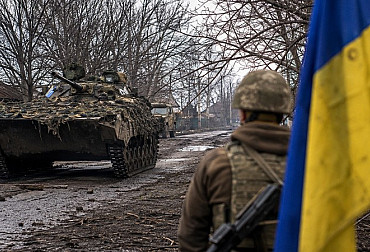
According to the report, law enforcement agencies are increasingly encountering decentralized online communities whose members share violent content, statements from perpetrators of attacks, or instructions for committing acts of violence. In some cases, ideological motivation takes a back seat, and the glorification of violence itself becomes the main unifying factor. Foreign scholarly literature often refers to this phenomenon as nihilistic violence or extremism; however, the Czech Ministry of the Interior’s annual report does not classify it as a separate category of extremism.
The biggest change in recent years is the fact that extremism can no longer be assessed solely according to traditional ideological categories. While just ten years ago, organized right-wing or left-wing extremist groups posed the main security risk, today’s security environment is significantly more diverse and difficult to predict.
The Ministry of the Interior notes that, in addition to communities linked to right-wing extremism, groups inspired by radical Islamism were also identified in 2025. Some of their activities have led to criminal prosecution for supporting and promoting terrorism or planning acts of violence. At the same time, online communities have been identified whose members openly share footage of attacks, statements by perpetrators, or instructions for acts of violence, without their actions being based on a unified ideology.
It is precisely this transformation that poses a major challenge for security agencies. Traditional extremist organizations had clearly identifiable leaders, structures, and public activities. Today’s online communities operate in a decentralized manner, rapidly switch communication platforms, and their members often act anonymously. Early identification of individuals posing a risk is therefore significantly more complex.
Furthermore, developments in the Czech Republic are in line with broader European trends. In its EU Terrorism Situation and Trend Report 2025, Europol highlights, Europol highlights the growing significance of online radicalization, lone actors, and small, decentralized groups, whose motivations tend to be diverse and often combine multiple ideological currents or personal frustrations. European security services are therefore devoting increasing attention to the process of radicalization itself, rather than just a specific ideology.
At the same time, it is important to maintain the proper context. Although the nature of security threats is changing, this does not automatically mean an increase in extremist crime. According to police statistics, 127 hate crimes were recorded in 2025, representing a decrease from the previous year. However, the annual report notes that the statistics alone do not reveal the extent of latent crime or changes in the methods of radicalization.
The evolution of extremism poses a broader security challenge than it may seem at first glance. Traditional security policy has long been based on the assumption that the greatest risk comes from organized extremist groups with clear structures and ideologies. Current developments, however, show that security attention is increasingly shifting toward individuals and small online communities whose radicalization takes place primarily in the digital environment.
At the same time, the Ministry of the Interior notes that extremist actors are increasingly using content created with artificial intelligence or modern digital tools. These can facilitate the production of propaganda, manipulative content, or recruitment materials. In the future, we can therefore expect a further shift of extremist activities to the online environment, which will place greater demands on prevention, digital literacy, and the ability of security agencies to identify emerging risks in a timely manner.

The Ministry of the Interior’s annual report does more than just provide an overview of extremist activities over the past year. Above all, it shows that the Czech security landscape is undergoing a significant transformation.
Security focus is increasingly shifting from traditional organized extremist groups to individuals and small, decentralized communities, whose radicalization occurs primarily online and may be motivated by a combination of ideology, personal frustrations, or a fascination with violence. It is precisely this unpredictability that poses one of the greatest challenges for security agencies.
The Czech Republic is no exception. Security services across Europe are currently observing similar trends. The future of the fight against extremism will therefore depend not only on the work of the police and intelligence services, but increasingly also on the ability of the state, schools, families, and technology companies to recognize the process of radicalization in a timely manner and to strengthen society’s resilience against violent extremism.