














Jakub Karas: Drone technology is changing in a matter of weeks. The military and industry must work together virtually around the clock

Over the past few years, unmanned systems have fundamentally changed the nature of the modern battlefield. It is no longer just a matter of individual aerial vehicles designed for reconnaissance or strikes. Drones are becoming part of a vast digital environment, connecting sensors, communication networks, electronic warfare elements, and increasingly advanced automation and artificial intelligence. According to Jakub Karas, president of the Alliance for the Unmanned Aerial Vehicle Industry (UAVA), director of UAS, and co-founder of UpVision, one of the greatest challenges is the speed at which the entire industry is changing. For the Czech Armed Forces and the domestic defense industry, this means moving away from the traditional model of one-time equipment purchases and establishing a system of long-term cooperation that will allow technologies to be continuously tested, modified, and put into practice.
Video: Jakub Karas: Drones evolve within a matter of weeks. The military and industry must collaborate virtually around the clock / CZ DEFENCE
“The biggest change is in speed. Today, it’s no longer just a standalone drone, but a technology that must be constantly updated, whether in terms of software or hardware. It’s really about how quickly it can adapt to current conditions and needs,” says Jakub Karas. According to him, on the modern battlefield, the necessary changes take place within weeks, sometimes even days. Moreover, development is not a one-sided process. Every innovation triggers a response from the adversary and subsequent further adaptation, for example, in the field of electronic warfare. “It’s a never-ending process, especially on the battlefield, where days or weeks really make a difference,” Karas points out. Ukraine remains the main testing ground for this development, where unmanned systems are being deployed on an unprecedented scale, and at the same time, both the tactics of their use and the technology itself are changing very rapidly. However, according to Karas, developments in the Middle East also confirm the importance of drones and defenses against them. “It is becoming clear that these systems cannot be underestimated and that air defense – which is very closely related to them – must be developed and constantly adapted specifically to drone technologies.”
Another important change is the fact that drones can no longer be viewed in isolation. “A drone is not just a single, standalone technology or device. It has sensors, is connected to a network, and you need to evaluate situational awareness based on these sensors and communicate with other drones,” explains Karas. Systems in which multiple assets operate simultaneously – whether controlled from a ground station or operating with a higher degree of automation – are becoming increasingly important. According to him, the value of the platform itself therefore increases significantly only when it is integrated into a broader information and communication environment. According to Karas, the Czech Army should also reflect this principle. He considers the notion that the solution to current needs is simply to purchase a large number of drones and store them in warehouses to be mistaken. “It’s not about buying thousands or hundreds of drones and then keeping them in a warehouse somewhere. That’s nonsense in a way, because we’re seeing right now in Ukraine that drones are constantly evolving. The moment we let something sit for a year, it can essentially become unusable,” he points out. According to him, it is far more important to establish close ties between the military, industry, research institutions, and universities, while also collaborating with foreign partners in the European Union and NATO. Furthermore, drones should not be concentrated solely in a few specialized units. “It shouldn’t be segregated into a single unit or a single company. Drones for a wide variety of purposes – whether for reconnaissance, target elimination, or situational awareness – should be integrated throughout the entire military,” says Karas.
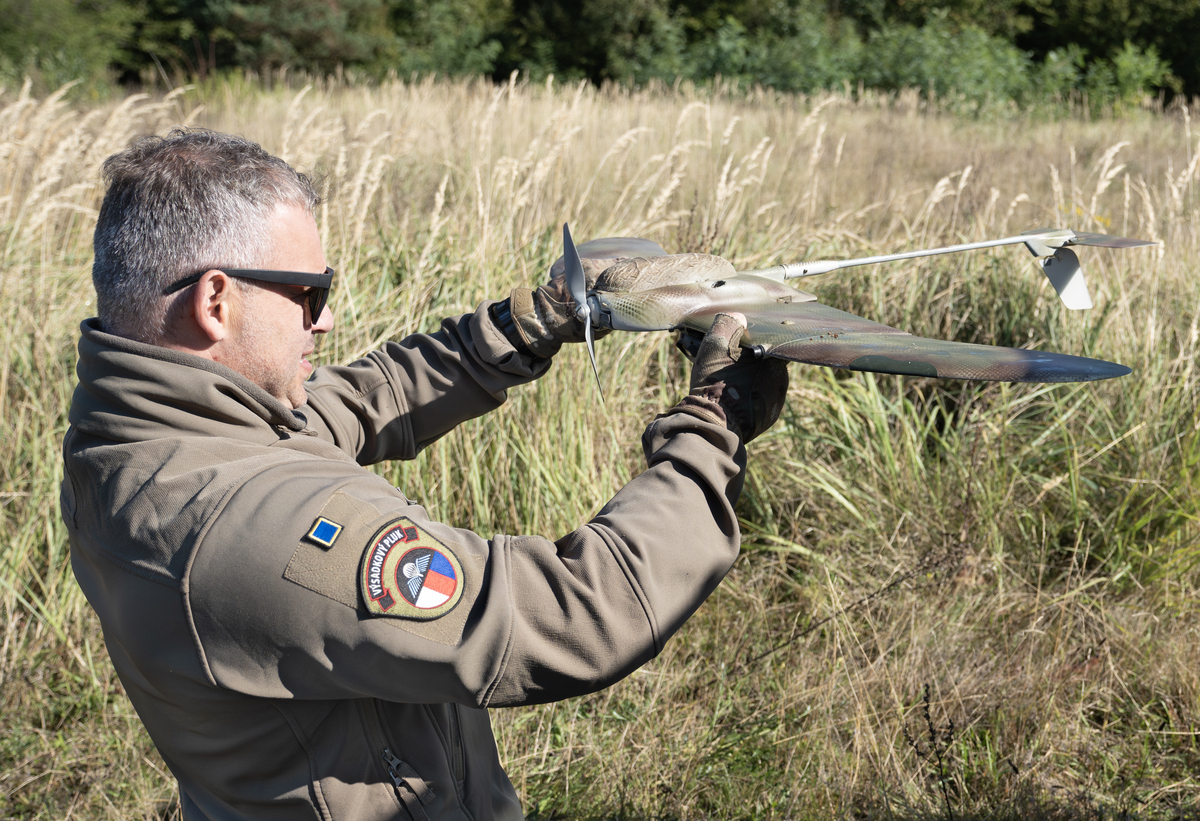
He considers the Czech drone industry to be highly competitive. According to him, the Czech Republic does not need to strive for complete domestic production of all categories of unmanned systems. It is much more important to identify the areas in which the domestic industry has a technological advantage. “The Czech industry is at the cutting edge in the field of drones. Of course, we cannot assume that we can build every drone entirely in the Czech Republic. However, we can be highly competitive in a number of components, including critical parts,” says Karas. He cites, for example, engines, propellers, other components, software, and autonomy technologies. On the other hand, a weakness lies in the ability to transition from a high-quality prototype to mass production. While Czech companies are capable of producing tens or hundreds of technologically advanced units, the war in Ukraine has revealed an entirely different scale. “In Ukraine, a single company can produce, say, 250,000 drones per month. That’s a scale we’re currently unable to achieve in Europe,” Karas points out. At the same time, however, he points out a fundamental difference – Ukraine is a country at war, while European nations operate within the framework of standard legislation and traditional procurement processes. Therefore, he argues, the goal should be to find a middle ground between these two extremes and significantly accelerate both procurement and cooperation between the military and industry.
Karas considers traditional procurement mechanisms to be one of the biggest problems. According to him, procedures designed, for example, for the procurement of large weapon platforms cannot simply be applied to drones, whose life cycle and mode of use are entirely different. “For training alone, we have to expect that we might destroy between one hundred and one thousand drones in a week. If we want to be at the forefront of both drone defense and drone operations, we have to approach this with a different mindset,” explains Karas. According to him, the military needs a large number of resources just for training alone and, at the same time, must maintain contact with industry so that systems can be continuously adapted. Otherwise, there is a risk that technology which formally met procurement requirements will not be able to function in a real-world environment. “We need to stay constantly in touch with what’s needed on the battlefield so that we aren’t surprised later when our drones start falling out of the sky within the first few minutes,” says Karas.
Another strategic issue is the supply chain. A large portion of current drones use components sourced from China, which creates a critical dependency in the event of a crisis. “The moment borders close, we may find that we have several drones but are unable to replace critical components,” Karas warns. According to him, Europe has historically placed too much emphasis on price in its decision-making and has gradually lost some of its own industrial capabilities. It is therefore now necessary to build production capacity for strategic components directly in the Czech Republic or at least within the European Union. Strategic autonomy, according to Karas, does not mean that every country has to manufacture absolutely everything. “We need to approach this in layers. I would start with the nation-state, which should define what constitutes strategic components and in which areas it has strengths. For other strategic components, its closest partners and neighbors can help,” he explains. He therefore attributes an important role to industrial cooperation within the EU and NATO, as well as to programs focused on innovation and support for technology startups. According to him, small companies are often the source of the fastest innovations.
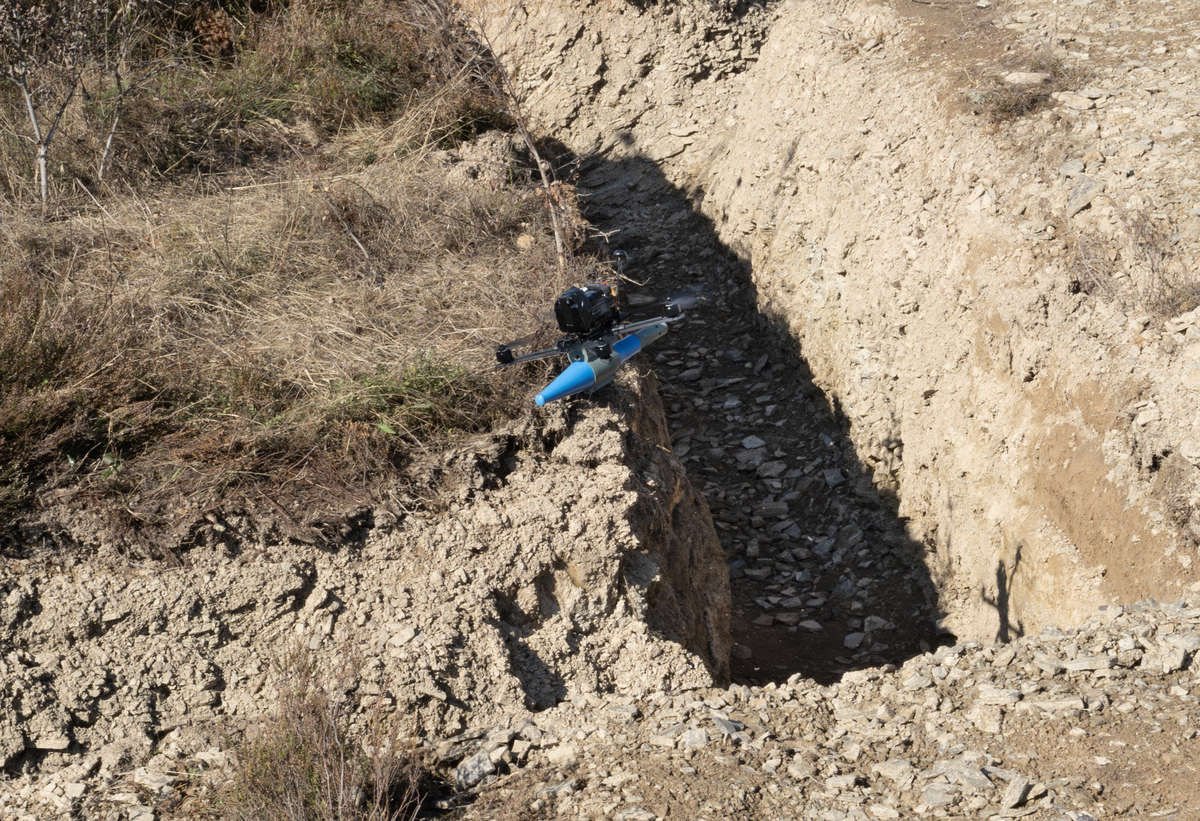
At the same time, unmanned technologies are a prime example of dual-use systems. Developments in the defense sector overlap with civilian applications, and vice versa. Karas points out that delivering goods via drones is no longer a futuristic vision. Similar services are already in operation in some parts of Europe, the United States, and Australia. “It’s not something you only see in AI-generated images. In Ireland, drones are already delivering goods ordered through a mobile app,” he says. In the Czech Republic, he expects the gradual emergence of the first corridors for regular unmanned transport. “I think that within five years, we could see the first corridors where goods will be transported or where more advanced technologies will be used,” says Karas. He also notes that as early as 2022, a legal drone delivery took place near Brno Airport over a distance of approximately ten kilometers. However, adequate testing facilities are a prerequisite for further development. According to Karas, the situation has been improving in recent years. He mentions the extensive area around Moravské Budějovice and the emerging testing environment in a former mine near Sokolov. The second location may also be significant for ground-based unmanned systems. According to Karas, the future lies not only in aerial drones but in the integration of various robotic platforms. “It’s not just about drones, but really about multi-robotic systems,” he emphasizes. Ground-based, airborne, and other robotic systems can work together to collect data from sensors, generate situational awareness, and help predict future developments. He cites the Czech Technical University (ČVUT) as one of the world-class Czech institutions in this field. However, the limitations of domestic testing remain, particularly regarding military applications. “For example, we still cannot test drones carrying explosives in the Czech Republic, which is quite critical when we’re talking about interceptors and other systems that are currently being used in large numbers in Ukraine,” says Karas. High-speed systems also pose a problem, as current testing facilities may simply be too small for them.
Autonomy and artificial intelligence are a separate topic. Karas rejects the simplistic equation that autonomy automatically means AI. “I certainly wouldn’t say that autonomy equals artificial intelligence. If we look at Ukraine, for example, we’re still largely talking about automation rather than true autonomy,” he explains. According to him, a fully autonomous vehicle would be able to assess a situation on its own, react to its surroundings, locate a target, and decide on the next course of action. It is precisely this last step, however, that raises fundamental ethical questions. “Humans should play the primary role as decision-makers who determine what to destroy – or not to destroy – and where,” Karas emphasizes. Nevertheless, artificial intelligence is becoming increasingly important, for example, in image analysis, the identification of predefined objects, or communication between individual vehicles. “Its role is growing every day and every month, but we’re still at a stage where we don’t let artificial intelligence define that final command on its own.”
Defenses against drones must evolve just as quickly as the drones themselves. According to Karas, the Czech Republic has very good technological foundations in this regard. “In my opinion, the Czech Republic, in particular, is among the leaders. We have radar technology here, and we have companies specializing in electronic warfare and other parts of this chain,” says Karas. Protecting critical infrastructure is particularly crucial. However, it is not enough simply to detect a drone. There must also be a clear procedure for identifying and, if necessary, neutralizing it. For standard civilian drones, the situation is simplified, for example, by the Remote ID system, which allows the drone to be identified. In the case of a targeted attack or hybrid operations, however, the situation is significantly more complicated. The pilot may be several or tens of kilometers away, and the drone may be designed to operate without satellite navigation. That is why, according to Karas, practical exercises and testing technologies in real-world environments are exceptionally important. “It’s important for both the military and industry to obtain results from real-world environments so that they are tangible and not just something on paper. A product sheet can say anything,” he notes. Furthermore, he believes that effective drone detection cannot rely on a single technology. “It’s not just about optical, acoustic, or RF identification. It’s about fusing various sources and striving to identify the threat as accurately as possible,” he explains. In addition to technical development, legislation will also need to be amended – for example, regarding the ability of critical infrastructure operators to take action against unidentified aircraft.
Technological development cannot happen without a sufficient number of qualified people. According to Karas, education is therefore essential – and it shouldn’t start only at the university level. “Technical fields and their integration with modern technologies must be as broad as possible,” he says. He notes that some Czech schools are already offering elective courses, after-school activities, or even programs specifically focused on the design and use of drones. He also finds inspiration in Asia. “In Korea, they have what’s called ‘drone soccer.’ Children as young as four or five play with drones, compete with them, and fly them without satellite navigation. When you see hundreds or thousands of children and their enthusiasm, it’s amazing,” Karas describes. Among Czech universities, he singles out the University of Defense, Brno University of Technology (VUT), and the Czech Technical University in Prague (ČVUT), which are dedicated to unmanned technologies and also collaborate with the military. However, he believes that this collaboration must be much more intensive than just a few formal meetings a year. The same principle applies to the relationship between the military and industry. The question of whether the military, as a customer, or industry, with its new technologies, should be the main initiator does not, according to Karas, have a one-sided answer. “It should essentially be an ongoing, two-way process. If a company offers something and doesn’t receive feedback, it will never improve it. Both sides are equal partners who need each other,” says Karas. The military can purchase foreign systems, but this does not strengthen the domestic industrial base or strategic self-sufficiency. Conversely, Czech companies can successfully export, but without a domestic customer, there is a weaker link between their development and the needs of the Czech Armed Forces. Jakub Karas therefore proposes very regular communication, for example through working groups that could respond to new trends, the results of university research, and experiences from Ukraine and other militaries. It is precisely the ability to quickly share information between the user, the developer, and the manufacturer that can determine whether the resulting technology will actually be usable.

One of the biggest obstacles in the Czech business environment ultimately remains the transition from a prototype to mass production. “Czech companies are at the forefront when it comes to individual units and prototypes. They are capable of developing very interesting technologies. However, when they don’t have a customer and have to go to great lengths to find one – often even abroad – they are unable to reach the hundreds or thousands of units required for mass production,” Karas points out. According to him, the industry needs, above all, predictable demand. If there were a long-term strategy at the national, alliance, or European level defining the main technological pillars and at least an indicative number of systems that countries will need in the coming years, companies could invest in people, development, and production capacity. “The industry must devote both human and financial resources to a specific type of product and cannot move into mass production without knowing that there is real demand and that it will receive feedback from the user,” concludes Jakub Karas. According to him, the current model – in which a company develops an interesting system, tests it repeatedly, and then waits several years for the outcome of the standard acquisition process – simply does not keep pace with the dynamics of unmanned technologies. In a field where technological superiority can shift within a matter of weeks, the speed of development, testing, production, and deployment becomes one of the decisive military capabilities in its own right, concludes Jakub Karas, president of the Alliance for the Unmanned Aerial Vehicle Industry, in the next episode of the CZ DEFENCE podcast.
Related