













Jan Jireš: Giving up leadership of the ammunition initiative would be very disadvantageous
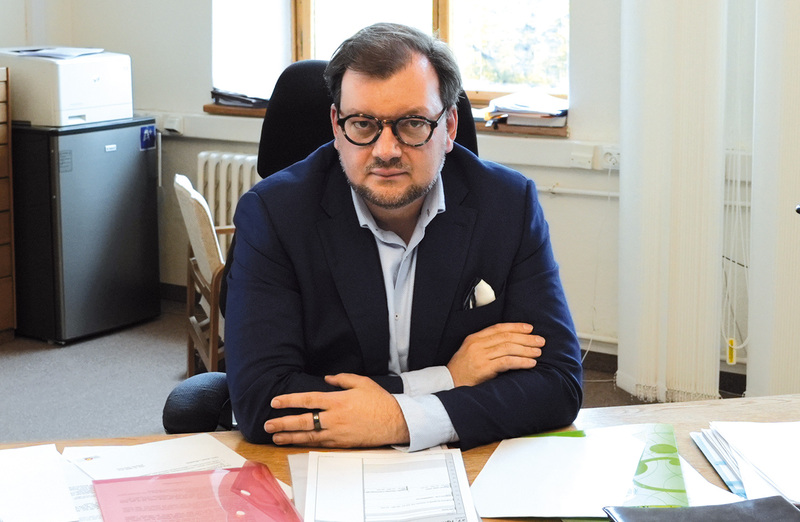
He was involved in the establishment of the Center for Transatlantic Relations (PCTR) and worked as a lecturer at what was then the CEVRO Institute. In 2014, he joined the Ministry of Defense, where he served as Director of the Defense Policy Department, then as Head of the Defense Department of the Permanent Delegation of the Czech Republic to NATO in Brussels (2017–2022). After returning from Brussels, he first served as Deputy Minister of Defense, later as Senior Director of the Defense Policy and Planning Section at the Ministry of Defense of the Czech Republic. At the end of the summer, after twelve years in government service, Jan Jireš returned to the Center for Transatlantic Relations at CEVRO University, enriched by his extensive experience and knowledge in the field of defense policy, as a senior analyst. He also works as a strategic advisor for the defense industry.
Until recently, you were part of the leadership of the Ministry of Defense under Petr Fiala's outgoing government. What would you highlight as its main achievements? And what, on the other hand, did it fail to achieve in the area of security and defense policy?
It was the first government to make defense a political priority. And it did so from the moment it took office, not after Russia's invasion of Ukraine began. In line with this, it invested ever-increasing budgetary resources in defense, until in 2024, for the first time in twenty years, we reached the level of two percent of GDP for defense.
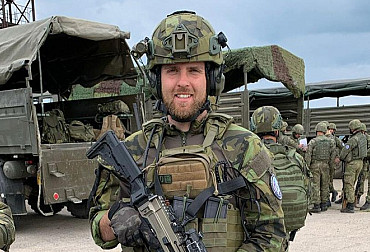
In this respect, this government was truly exceptional. However, it was not without its complications. I am thinking, for example, of limited industrial capacity, which has meant that deliveries of military equipment have been delayed for many years, the unreliability of some manufacturers, who clearly see failure to meet deadlines as part of their business model, the incredibly complicated formal rules associated with the spending of public funds, and the insufficient personnel capacity of the Ministry of Defense's procurement departments. Despite this, a number of major procurement projects have been launched that previous governments did not have the money, courage, or both for. CV90 combat vehicles, Leopard tanks, F-35 aircraft, and hundreds of other purchases that have received less media attention.
Another significant achievement I would mention is the improvement in the area of human resources. The shortage of soldiers – both professional and active reservists – is currently the biggest problem facing our defense. Czechia is far from alone in this; almost all of Europe faces the same problem, which is linked to demographics and social developments. Minister Černochová has pushed through a number of changes that address this issue to a certain extent. These include simplifying and streamlining recruitment and increasing salaries and benefits for soldiers to encourage them to remain in the army. But this is an area where the work will never be done; it will always be necessary to adapt the recruitment system and the set of motivational tools for retaining soldiers in the army to the changing situation in society and on the labor market.
Of course, many things remain unfinished. In four years, it is not possible to completely remedy at least twenty years of previous neglect of defense, and not only in the area of financing. We need to revise crisis legislation so that we can respond better and faster in a crisis. With the contribution of a number of ministries, it is necessary to prepare the population for crisis situations in the long term and to strengthen the resilience of society.
And as I have already indicated, one of the main priorities in the coming years must be to set up a functional system for creating army reserves. Other European countries, especially the Scandinavian and Baltic countries, are much further ahead in this regard, and we can draw inspiration from them. Even the political debate that took place in Germany this year opened up topics that have been taboo in our country until now, including the introduction of some form of compulsory military service. We will not be able to avoid such a debate in the near future either.
And if you had to sum it up briefly, what would you say were the main disappointments and main achievements of the outgoing government?
My assessment probably came as no surprise to anyone. However, I would like to add two things, one negative and one positive. Jana Černochová did manage to increase defense spending to two percent of GDP, and the outgoing government adopted decisions that were supposed to ensure a further increase to 3.5 percent of GDP, as agreed at the NATO summit in The Hague. However, she clearly failed to convince a sufficiently large part of society that this is really necessary and that these funds will be spent effectively. So, unfortunately, further increases in defense spending are very uncertain. However, this does not in any way absolve the new government of political responsibility if it decides to ignore our alliance commitments.
On the plus side, there has been a huge increase in respect for the Czech Republic from our allies in NATO and the EU. This has been really tangible at all levels. We have managed to establish a whole new quality of relations with key countries – the United States, Germany, and Britain – in the area of defense. This was achieved not only thanks to our support for Ukraine and the successful integration of Ukrainian refugees, but also thanks to our actions within NATO in connection with strengthening collective defense and our successful presidency of the EU Council.
Shortly after Petr Fiala's government took office, Russia launched its attack on Ukraine. Has the Czech Republic done enough to support Ukraine over the past three and a half years?
There is always more that can be done. Our role changed as the war itself evolved and our capabilities shifted. In the early stages of the war, we played a crucial role alongside the Poles and Slovaks, because by supplying tanks and helicopters, we were able to break the taboos that our Western European allies had imposed on themselves. It was us who set the direction and who were always a few steps ahead of countries like Germany and France.
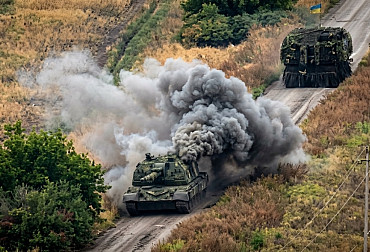
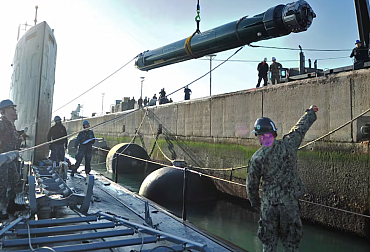
Later, our role changed because we had almost exhausted our capacity to supply unwanted older military equipment and materials. At that point, we came up with the ammunition initiative, which coincided with a crisis period when US military support was interrupted and Ukraine faced the overwhelming superiority of Russian artillery. Thanks to our ammunition initiative, by the end of 2024, we had managed to reduce Russia's superiority in artillery fire from a ratio of 10:1 to a ratio of 2:1.
At the same time, it is true that the Czech Republic has allocated relatively little money from its budget to support Ukraine. Our country has gradually begun to profit from the war. I am referring mainly to three sources. First, compensation for military equipment supplied by the US, Germany, and the EU. Secondly, tax revenues from Czech arms companies and their employees involved in commercial deliveries of military equipment to Ukraine financed by other countries. And thirdly, increasing tax payments from Ukrainian refugees, or perhaps more accurately female refugees, who have started working in Czechia.
The government then found itself in a trap of sorts. On the one hand, there were growing expectations from allies who are providing significantly more military support to Ukraine than Czechia and who are financing military supplies through Czech companies, thereby significantly increasing their profits and the Czech state's tax revenues. On the other hand, resistance to military support for Ukraine grew among a significant part of the Czech public, who believed rumors that it was costing us significant public funds. As a result, the government was in a bad position with everyone. Both at home and abroad, those who knew what the real situation was and that we were actually making money from supporting Ukraine and Ukrainians. The same was true for those who did not want to support Ukraine at all, or who mistakenly believed that it was costing us a lot of money.
The Czech ammunition initiative project was truly a fundamental step. Leading representatives of the ANO movement, which won the elections and will form the next government, have declared that they will subject it to an audit and increase its transparency. What would this mean from the perspective of this project?
It will be perfectly fine if the new government decides to examine the ammunition initiative and, if necessary, subject it to some kind of audit. Although I don't think they will find anything problematic, they have the right to familiarize themselves with all the facts. I assume that my colleagues at the Ministry of Defense who are in charge of the ammunition initiative are prepared to explain everything to the new leadership and provide details.
They also floated the idea of transferring the project to NATO.
That is not realistic, nor would it be useful. The ammunition initiative is a rather unique system, and no other country, let alone an international organization, has been able to put together anything similarly effective. It is based on three main elements: the organizational and diplomatic support of the Czech state, the logistical capacities and global business contacts of Czech arms companies, and the financial support of our Western European allies, the EU, and Canada. It cannot be replicated. Some allied countries have tried, but without success.
NATO has never done anything like this and does not have the necessary tools. The Alliance's NSPA agency only supplies non-lethal material to Ukraine, and the NSATU mechanism coordinates the activities of logistics hubs on the Alliance's eastern border and maintains an overview of deliveries to Ukraine. The PURL initiative, on the other hand, is exclusively for the purchase of military equipment for Ukraine from the US government. All programs and initiatives designed to supply Ukraine with military equipment and develop the capabilities of the Ukrainian armed forces are led by individual states, not by the Alliance.
Giving up leadership of the ammunition initiative would also be very disadvantageous for the Czech Republic itself. We would lose control of the initiative and damage the Czech defense industry, for which the ammunition initiative generates revenue and enables it to employ people and invest in expanding production capacity.
In your opinion, should the Czech Republic join the PURL initiative, i.e., the purchase of American weapons according to Ukraine's priority requirements?
On the one hand, I would say yes, mainly for political reasons. The purchase of military equipment for Ukraine from the United States would further deepen Czech-American defense cooperation and increase our share in Ukraine's defense. On the other hand, we have many other tools to support Ukraine, and in particular we have a strong domestic defense industry from which we can purchase military equipment and send it to Ukraine. This links the defense of Europe on the Ukrainian battlefield with support for our defense industry and economy.
Where do you see the greatest weaknesses in Europe's current approach to Russia's military aggression against Ukraine?
I would mention three things. First, Europeans have not yet completely cut themselves off from supplies of fossil fuels and other raw materials from Russia. In doing so, they are helping Russia to continue financing its war in Ukraine. Second, the development of the military capabilities of European countries needed to strengthen collective defense is progressing more slowly than we anticipated in February 2022. Only now is it really starting to take off, including funding from the European Union. It is clear that Donald Trump's arrival was the decisive factor in this regard, not the start of Russian aggression in Ukraine. And thirdly, we need to be more decisive and unambiguous. We need to supply Ukraine with even more military equipment and do so more quickly, not tie our hands with excessive restrictions, not be intimidated by the aggressive rhetoric of Russian officials, set clear red lines for Russian provocations and sabotage, and not be afraid to enforce them.
In this regard, it is essential to maintain the unity of the EU and NATO and to maintain a common approach between the United States and European countries. However, Europe is still waiting; in almost four years, it has been unable to present any vision or plan of its own on how to respond to Russia's aggression. Do you see any solution in this regard?
We will always need American leadership. That is why we have NATO, and why we base our defense on transatlantic cooperation. Europe does not exist in this sense. It is thirty countries with limited capabilities that need someone to organize and lead them. No one other than the United States can play this role.
At the same time, I recognize that a situation may arise in which the United States itself is no longer interested in playing a leading role in the Western defense alliance, and Europeans will have to manage both their own defense and support for Ukraine on their own. This is already happening to some extent. Europeans will gradually take on more responsibility for their own defense and for supporting Ukraine, and Americans will gradually reduce their military involvement in Europe.
Most European countries are significantly increasing their defense spending and trying to remedy the shortcomings in capabilities that have arisen over the past thirty years. This is particularly true of Germany, which has finally woken up under Chancellor Merz. The European Union is also prepared to invest unprecedented sums from the common coffers to support the development of military and non-military capabilities, including the key area of military mobility, and to increase the capacity of the European defense industry.
However, it will always be nation states that play the leading role in Europe. The European Union can contribute through targeted investments in joint defense projects, reducing the regulatory burden on European industry (not only defense, of course), coordinating defense against Russia's hybrid warfare, and increasing the competitiveness of the European economy.
In the spring, Europeans formed a "coalition of the willing" that is prepared to play a leading role in supporting Ukraine's defense capabilities. We will see whether the Czech Republic remains part of it.
Recently, there has been an increase in the frequency of Russian aircraft entering the airspace of European countries, uncontrolled movement of drones over military facilities and critical infrastructure, and the disruption of civilian airport operations by drones. How is this possible? Are European countries completely unable to defend themselves against hostile or unknown unmanned aerial vehicles?
Our options for defending against hostile or otherwise harmful drones are relatively limited. But that's logical, as we haven't needed it yet and haven't been confronted with such a situation. The vast majority of countries in the world are unable to do so. Not even Russia, which is at war – remember the brilliant Ukrainian drone attack on Russian air bases thousands of kilometers from the front line in early June this year.
It is clear that this must change as the nature of warfare and the possibilities for conducting sabotage operations deep within enemy territory change. We are fortunate to have Ukraine on our side, which is the best in the world in drone warfare and drone defense. Incidentally, this means that Ukraine is no longer a unilateral recipient of Western military support, but is capable of making a significant contribution to the common Western defense. That is why it must be integrated into our collective defense. And by that I mean mainly practical integration, which is not necessarily tied to formal NATO membership.
Does NATO even have a clearly defined procedure in place in case such actions lead to a real threat?
Yes. But of course, it depends on the specific nature of such attacks. If these are sabotage attacks by small drones on civilian infrastructure deep within allied territory, it is always primarily the responsibility of the allied countries concerned to prepare for and respond to them. This does not preclude cooperation on the development or procurement of defense systems within the framework of multinational projects coordinated by NATO or the EU.
In the case of such violations of allied airspace by Russian drones or manned aircraft, as has recently occurred in Poland, Estonia, and Romania, domestic air defense and airspace protection systems cooperate with alliance mechanisms through the integrated NATINAMDS system. The situation is even more complex when a country's airspace is patrolled by allied aircraft as part of the Air Policing mission.
But the Alliance has all its procedures in place and rehearsed. For example, the allied response to the recent incursion of Russian aircraft into Estonian airspace was fully functional. No one wants escalation, and there is no reason to respond disproportionately. On the other hand, it is clear that the situation may change and that the Alliance will have to change its procedures as a result, including a more aggressive response. But allied soldiers in Alliance headquarters know what they are doing.
And does NATO have a crisis communication system in place with the Russian Federation in case it responds?
Yes. There is a "hotline" between the Supreme Commander of Allied Forces in Europe and the Russian Army Command. This line can be used in times of crisis, both to signal the crossing of red lines and impending retaliation, and to de-escalate or explain any mistakes and misunderstandings, which of course can never be ruled out. In addition, individual major Allied countries, particularly the Americans, also have their own direct crisis communication lines to the Russian Ministry of Defense.
The NATO summit in The Hague was a turning point. Not only because of the commitment to gradually increase defense spending to 3.5 percent of GDP plus infrastructure investments to 1.5 percent by 2035, but also because of the setting of capability development goals for individual member countries. In terms of defense planning, what should be the priorities for the Czech Republic in the area of NATO Capability Development Goals?
The main building blocks of our new commitments to military capability development are clear and probably relatively well known. They involve the development of two ground force brigades – in addition to the traditional heavy brigade, i.e. our 7th Brigade, there will now also be a medium brigade, i.e. our 4th Brigade. This means that all maneuver elements of our ground forces will become part of the Alliance's capability development goals.
Another priority for the entire Alliance is air defense capabilities. This will be extremely expensive and demanding, but at the same time it has strong political and social support both in the Czech Republic and in other European countries. Incidentally, fifth-generation supersonic aircraft are also part of air defense, so these investments are not contradictory. But of course, it will depend on the specific design of the Alliance's air defense, which will certainly consist of different layers capable of responding to different types of threats.
And the last major priority is logistics, particularly in connection with the "passability" of alliance territory for allied armed forces, which must be able to move quickly across Europe so that they can be deployed exactly where they are needed. This is being done under the banner of "military mobility," and the European Union also plays an important role here, as it has the tools and financial resources to strengthen transport infrastructure, for example.
What should the new government do to speed up and simplify the acquisition process at the Ministry of Defense?
Some changes have already taken place, and today's acquisition process is certainly faster and more flexible than it was years ago. I am not referring solely to the Public Procurement Act, but in addition to further simplifying legislation, it is necessary to increase the number of staff in the Ministry of Defense's acquisition departments. The amount of funds in the Ministry's budget earmarked for acquisitions is now roughly ten times higher than it was after 2010. And it will continue to grow. It is therefore absurd to think that such a large amount of money can be managed effectively by the same or even fewer people than fifteen years ago. In addition, it is necessary to further reduce the administrative burden associated with acquisitions, in particular through digitization and better interconnection of electronic systems. The Ministry of Defense is working on all of this.
However, I would like to mention one more thing that concerns the overall approach to the procurement of new technologies in particular, such as unmanned vehicles of all kinds and the software used to control them. It is clear that a fundamental change is needed here, including a change in mentality. These weapon systems cannot be procured in the same way as traditional technology. We must learn to understand them more as a service that we subscribe to. We can see how this works today in Ukraine.
In addition to your work at PCTR, you also collaborate with the Czech Chamber of Commerce in the area of defense industry support. What do you see as the main obstacles to its development in this critical period for the country's defense?
We still lack a functioning system of cooperation between the state and the defense industry, including the involvement of industry in crisis management and exercises, securing crisis or wartime production capacities for the needs of the state, and introducing a full-fledged "government-to-government" regime for foreign trade in military equipment. And as our defense spending grows and the nature of warfare changes rapidly, we will need to significantly increase spending on research, development, and innovation, while completely changing the way it is done.
And at the European Union level?
There is a lot going on there, which is good. The EU has a key role to play in at least four areas related to defense. First, increasing investment in research and development of defense and dual-use technologies. Second, investing in infrastructure to strengthen resilience and support military mobility. Thirdly, it is about reducing the regulatory burden on the defense industry so that it can quickly build the necessary production capacity. And fourthly, it is about removing all barriers to the financing of the defense industry by public and private financial institutions.
The EU has been very active in all these areas in recent months. However, there are two traditional risks associated with this – one European and one Czech. The EU has a long history of ambitious strategies and plans. Sometimes, however, there are so many of them that confusion and uncertainty arise as to what the real priorities are. The expectations created are therefore subsequently disappointed. Admittedly, it is often the member states themselves that kill them in the final phase. And at our national level, there is a great risk that we will not be able to influence the instruments proposed by the EU to suit our needs and subsequently fail to use them correctly and in a timely manner. Whether due to insufficient human resources, the absence of a clear political mandate, or a reluctance to invest the necessary funds.