











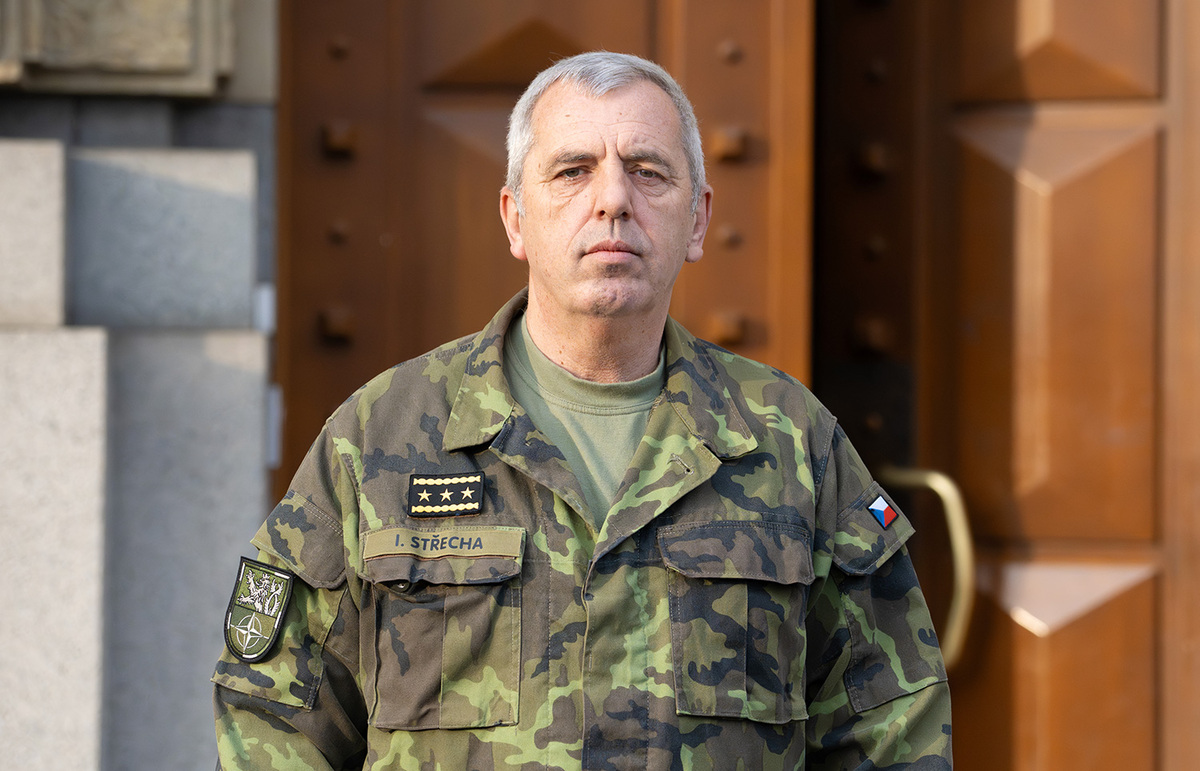
Lt. Gen. Ivo Střecha: We are entering an era of permanent strategic instability
The resurgence of high-intensity interstate conflicts, hybrid operations, and rapid technological advancements are reshaping the security environment. NATO is therefore strengthening collective defense, modernizing its forces, and streamlining decision-making processes. Lieutenant General Ivo Střecha, the Czech Republic’s military representative to NATO and the EU, explains which threats the Alliance currently considers the most serious and how the Czech Republic is preparing for them.
General, what security threats does the NATO Military Committee consider to be the most serious today, and how do they differ from the threats the Alliance faced just a few years ago?
Since the last two NATO summits, there has been essentially no change in the security threats facing the Alliance. All 32 members continue to unanimously define what threatens the Alliance directly or indirectly in military terms, as well as what threatens it directly or indirectly in non-military terms. As recently as 2010, the NATO-Russia Council made sense, but it became less relevant, particularly after 2014 (the occupation of Crimea), to the point where Russia is now one of the main military threats to the Alliance.
Nationally defined threats may then better reflect the geographical specifics of individual member states, which is entirely understandable and their right. Nevertheless, the Alliance as a whole remains united in this regard.
What will the Alliance need to focus on in the coming years?
In the coming years, the Alliance will have to navigate an increasingly complex environment. Geopolitical tensions will rise, and the lines between peace, crisis, and conflict will become increasingly blurred. The traditional perception of warfare will have to change, not only due to the current use of hybrid attacks (including cyberattacks), but also because of the rapid development of modern and groundbreaking technologies. It is highly likely that Russia and terrorism will remain the main military threats to the Alliance. As early as the beginning of 2026, there are increasing signs of a transition from the familiar, hitherto recognized international system into a phase of permanent strategic instability. The dominant features are the return of high-intensity interstate war, the proliferation of proxy conflicts, the erosion of the state’s monopoly on the use of force, and the weakening of multilateral crisis management. We face a convergence of threats such as conventional war in Ukraine, destabilization of the southern neighborhood, disruption of global maritime routes, and pressure on the defense-industrial base. Beyond that, we also face other threats that were not as common in the past. The collapsing rules-based international order, disregard for international law, and the return of thinking in terms of spheres of influence and dominance are just a few of them.
How has the war in Ukraine fundamentally changed the way NATO thinks about collective defense, deterrence, and the readiness of its armed forces?
Above all, the war in Ukraine has prompted NATO to reassess its stance on collective defense. For many years, assessments of the security situation had relegated the issue of collective defense to a lower priority. Of the Alliance’s three core missions – collective defense, crisis management, and cooperative security – we have, for several decades, focused primarily on the latter two. This led to military reorganizations, reductions in capabilities and personnel, and dwindling resources were allocated to building capabilities needed primarily for foreign missions and operations. And this was done at the expense of the priority task of collective defense.

A more serious problem, however, is that people – the citizens of these nations – have stopped thinking about a classic conventional war on European soil and have forgotten that national defense is not just about the military, but is a matter for society as a whole. The defense industry has been in decline for a long time; the necessary infrastructure was not maintained, and processes for mobilization, as well as the ability to transition to a wartime economy, have become obsolete. Crisis management developed only in the context of non-military crises, or was viewed solely through the lens of the Integrated Rescue System. In short, there was no reason to do so; we did not pay sufficient attention to developments in Russia, and the threat of terrorism was perceived more as a conflict outside Europe (far from us), while migration waves were often seen as the primary real threat.
On the other hand, the Alliance has already responded to the war in Ukraine in 2014, and all allies are increasingly aware of the possibility of a conflict with Russia. The Alliance has a new Deterrence and Defense Strategy and newly developed defense plans. A geographic approach is being taken into account more than in the past. The defense planning process has accelerated, defense budgets have been increased to up to 5 percent of GDP, and new technologies are being introduced – not just those developed during the conflict in Ukraine. New domains of warfare – “cyber and space” – have been defined, along with the capability requirements for operating within them. Command structures have changed, and the digitization of the command and control system continues so that we can operate effectively and in a synchronized manner across all operational domains – so-called multi-domain operations.
The war in Ukraine has led to the Alliance’s expansion to include two new and militarily strong members, Finland and Sweden, and partnerships with dozens of states and organizations such as the EU are deepening. The defense industry is growing, and research and development is focused on new technologies; in short, there is a lot going on, and everything is geared toward creating a sufficient “deterrent” effect and being able to defend ourselves effectively if necessary. NATO is in better shape than it was just a few years ago.
Can we say that NATO is more united today than it was before 2022, or are differences in the national approaches of individual member states becoming apparent?
I have already addressed this in general terms in my answer to the first question. We soldiers try to maintain a certain perspective and not succumb to widespread panic. This panic is often caused by the daily media barrage regarding current political or economic disputes, and not only among Alliance members. We know whom and what we represent, what our tasks are, and what is expected of us, and we all want to work together on that.
Within the Military Committee, we still have absolutely cordial, even exceptionally friendly relationships; after all, we’ve met throughout our careers in schools, during exercises, and also in operations – our families know each other. We don’t feel the need to analyze and react to every tweet.
However, politics is what decides, and that’s where differences in national approaches become apparent. In the context of the Alliance’s core mission – collective defense – there is, however, clear consensus.
On the other hand, we realize that unnecessary political squabbling does not strengthen the perception of the Alliance’s unity and homogeneity. The breakdown of the Alliance’s and the EU’s cohesion is the primary goal of our adversaries, who are trying to profit from it as much as possible.
How do differing political priorities and domestic debates in individual member states influence the military recommendations made to the Alliance within the Military Committee?
The committee’s main task is to provide an independent military assessment of proposed military solutions to problems. Unfortunately, political maneuvering sometimes plays a greater role in the deliberations over independent recommendations than I would like. The intensity of threat perception varies among members. This is related to many factors, such as history, geographic location, national interests, and so on. Consensus is our foundation, but sometimes it is achieved through complex compromises that undermine the quality or effectiveness of the final product – that is, the military recommendation. In all my time here, I have perhaps experienced only one instance where the military and political views of a single country were presented differently. But even in this regard, the Alliance is working hard to improve. In connection with the war in Ukraine, there is a so-called reduction of bureaucracy and acceleration of work and decision-making processes. At the working level, civil-military consultations are routine, aimed at minimizing potential friction points in the approval process while making every effort to preserve the independence of the military position.
To what extent do you think changes in governments in member states can affect the continuity and predictability of NATO decision-making from a military perspective?
Governments change constantly, and NATO has weathered all these changes throughout its existence without any major disruptions. From a military perspective, NATO is a defensive politico-military organization where decision-making takes place at the political level. Military personnel merely contribute to decision-making through their opinions, proposals, or recommendations. All inputs into such recommendations are submitted based on approval at the domestic political level.
In other words, political changes in individual member states can have a significant impact on the Alliance’s continuity and decision-making. Changes in governments, especially in the largest countries, naturally have a greater impact. The Alliance closely monitors pre-election developments, the rhetoric of potential election winners, and the likely impacts on the Alliance. In some cases, which I do not wish to name specifically, it is also able to take measures to help eliminate certain negative impacts.
How does the relationship between the Alliance’s political leadership and its military wing work in practice? Where do you think the line is drawn between political decisions and military recommendations?
I believe that relations between military personnel and politicians here at NATO Headquarters are professional. Both sides understand their roles and responsibilities and respect each other’s views. The Military Committee, in cooperation with the strategic commanders, makes proposals, and the North Atlantic Council – composed of politicians – makes the decisions.
Do you encounter pressure for "political directives" regarding military solutions during Military Committee meetings, or does military expertise still carry the most weight?
We are part of the political process; we cannot act outside the mandate given to us by our governments. We occasionally face pressure from politicians in certain countries regarding various issues, but so far I have not experienced anything so serious as to threaten the Alliance’s core missions. Rather, I encounter pressure from politicians to increase the involvement of domestic armies in supporting various activities and missions. These demands sometimes exceed currently available capacities. The pace at which military capabilities are being regenerated, while simultaneously providing support to Ukraine, is not as fast as some politicians would like.
How do you assess NATO’s long-term support for Ukraine? From a military perspective, is it appropriately structured and sustainable?
Support for Ukraine is an integral part of our strategies. This is not direct support on the battlefield, but rather assistance provided through the NSATU mission, which coordinates material and training support for the Ukrainian armed forces from within Alliance territory. Part of this support includes the creation of the so-called JATEC, a center for gathering insights from the war in Ukraine. There are many such activities, and in my opinion, NATO is doing everything possible today. We are aware that the outcome of the war in Ukraine will influence the future structure of the security architecture not only in Europe.
Is the role of smaller and medium-sized member states, such as the Czech Republic, changing in the context of NATO military planning?
Basically, no – we are preparing for a potential conflict; there is a stronger geographical focus, and there is a significant increase in the demand for defense spending and the deployment of additional units and forces. But I want to emphasize that this is not because we want war or because war is coming. We want to be strong and prepared enough that no one would even think of starting a conflict with us. Deterrence is the key word.
In your view, how can the Czech Republic offer added value to the Alliance, not only politically but above all militarily? Can we draw on, for example, our “historical memory” from the Soviet era?
The Czech Republic certainly brings added value to the Alliance. Our soldiers have always fulfilled their commitments and contributed to Alliance activities to the best of their ability. The Czech Republic’s geographical location itself is an added value, offering certain advantages that are factored into defense plans. The insights and experiences from the Warsaw Pact era and a certain understanding of the Russian mindset are definitely something we should not forget, and indeed, some things we should revisit. Setting aside the ideological baggage from the Warsaw Pact era, certain principles are universally applicable under any regime. For example, building a comprehensive security system, a society-wide approach, and others. It suffices, for instance, to compare what we had here during the Soviet era with Sweden’s Total Defense concept or Finland’s defense system. In some respects, they are quite similar or even identical.
How important is the speed of decision-making in NATO today, and is the Alliance’s system capable of responding with sufficient flexibility to dynamic crisis situations?
Just a few years ago, we took comfort in the fact that a large-scale conflict on European soil was highly unlikely, and that if it did occur, we would have ten to fifteen years’ warning. In other words, we misjudged the situation in 2014, and now the situation is completely different.
By its very nature, decision-making within an organization with 32 members, where consensus is the cornerstone, is less flexible. However, the Alliance has tools to prevent and respond to surprises. It has a newly developed crisis response system, and the Supreme Allied Commander Europe has the authority, forces, and resources to respond immediately. In this regard, we are shifting from a timeframe of 10–15 years to days and weeks. However, the idea that it will respond to every stray unmanned aerial vehicle is incorrect.
To what extent is NATO preparing for scenarios that do not fall under the category of conventional armed conflict, such as hybrid or cyber threats?
Hybrid threats are not purely military threats. They are activities that deliberately fall short of the level of a classic conventional military attack but can have a very similar effect over the long term. They involve deliberately testing the resilience of states and provoking society within the Alliance’s sovereign territory, in various forms. Propaganda, efforts to influence the attitudes of politicians and the population. Terrorism, sabotage, subversive actions, cyberattacks, attacks on critical infrastructure – these are just a few examples. And here, it is a matter of a society-wide approach to defense, a matter of state resilience, and the preparedness of individual government departments, regions, municipalities, and infrastructure.
In this regard, NATO is introducing the concept of cognitive warfare, enhanced protection of critical infrastructure, more intensive military exercises, better-coordinated strategic communication, the sharing of knowledge and experience, the review of existing practices and procedures, and so on. A concrete example is the activities to protect undersea infrastructure, the Baltic Sentry operations. The Alliance provides plenty of recommendations, but it is primarily up to us; it is our “homework” that no one else can do for us.
How do you view the future of Alliance cohesion over the next five to ten years, particularly in light of China’s growing global ambitions and uncertainties in world politics? Do statements by the U.S. regarding the occupation of Greenland, for example, affect this cohesion?
Any predictions in this regard are extremely difficult. Turbulence in international relations and uncertainties in global politics are increasing exponentially. Both the Alliance and the EU are under pressure, and their cohesion is being deliberately undermined. Both organizations are working to identify potential threats in the coming years and, above all, are taking measures to prepare themselves to confront those threats. Beyond existing direct threats, China and its ambitions, the development of China-Russia, China-U.S., and China-Europe relations, and, last but not least, the development and building of relations with our partners also represent potential strategic challenges.
I firmly believe that our alliance within NATO and the EU is an alliance built on sharing the values of the democratic world and a willingness to defend those values. The fact that we occasionally find ourselves at odds, as is currently the case with Greenland, has happened in the past as well. It is true that the manner of communication between allies and partners is not exactly exemplary, to put it mildly, but so far this has not had a fundamental impact on the Alliance’s cohesion, aside from media discussions.
And as I said, our communication within the Military Committee remains professional; we remain primarily focused on the tasks associated with transforming the Alliance into the form we would like it to take – an Alliance capable of facing both current and future threats.
From the perspective of the NATO Military Committee, how do you assess the pace of modernization of the Czech Armed Forces? Does it meet current Alliance requirements and reflect the security reality?
I must honestly say that the pace of modernization is not entirely adequate to current needs in any army, with the possible exception of Poland and the Baltic states. The reason lies in differing perceptions of threats and the sense of urgency to respond to them. I hear calls to accelerate the development and modernization of forces here every single day. It’s not just about money. Nor is it solely about the responsibility of military planners and ministry procurement officers. There are many in the world today who “want and need” these things, and the capacities of the defense industry – especially those in Europe – have their limits.
Moreover, de jure, we are still at peace, and procurement processes remain the same as they were ten years ago. That is to say, complicated, full of control mechanisms, bureaucracy, and unnecessary red tape. I am glad that the new defense minister is talking about systemic changes. They are absolutely essential.
Which capabilities of the Czech Armed Forces do you consider to be the Czech Republic’s most valuable contribution to NATO today, and where do you see room for the Czech Republic to make significant improvements?
First and foremost, given its current size, the military has more capabilities than it is able to build up, deploy, and – most importantly – sustain in real time during a conflict. In my opinion, even the anticipated increase in the number of professional soldiers and active reserves will not solve this. As I observe developments among many of our partners, some form of mandatory or voluntary military service is a serious topic for them. I don’t want to leave anyone out, but perhaps the most visible contribution is our mechanized brigades. Then there is the host nation’s ability to support deployed forces with everything that entails, including airspace protection. We need to improve essentially everywhere, but most of all in logistics. It wasn’t exactly top-notch even in the days of the Czechoslovak People’s Army, let alone after more than 30 years of building an expeditionary army.
Is the Czech Republic, in its current form, viewed within the Alliance more as a recipient of security or as a genuine provider of relevant military capabilities? What will determine how it is perceived in the coming years?
There are no explicit criteria by which to clearly assess how the Czech Republic is perceived within the Alliance or the EU, that is, aside from defense spending. We contribute to the operations and initiatives of both organizations. We have our units and soldiers on the Alliance’s eastern flank; we are in Iraq and Kosovo; last year, we contributed significantly to the EU ALTHEA operation by deploying a reserve unit of 150 soldiers; and our soldiers serve on the staffs of the EU IRINI and ASPIDES naval operations in the Mediterranean Sea and the northwestern Indian Ocean. We support Ukraine primarily through a highly appreciated ammunition initiative; we are part of the EUMAM-U mission, where we primarily train Ukrainian soldiers; and we are represented in the NSATU alliance activity. Another factor is defense spending. We have reached the required 2% of GDP in 2025, with a projected increase in the budget to 3% of GDP by 2030.
In terms of building up a long-underfunded army, we have succeeded in concluding contracts for the procurement of key weapon systems, such as infantry fighting vehicles, F-35s, Leopard 2A4 and 2A8 tanks, new 155 mm howitzers, the Spyder air defense system, and other, less visible projects. In support of NATO’s new force model, we have allocated a significant portion of our armed forces to collective defense. Therefore, even in light of the above, we should not view ourselves – nor should we be viewed – as mere consumers of security. On the other hand, further challenges lie ahead that will be far from simple. The structure of the army, troop numbers and personnel management in general, the command and control system, digitalization, sustainability, new Alliance capability-building goals, host nation support, and the implementation of new breakthrough technologies – these are just a fraction of what needs to be addressed. In short, the adaptation of society and the armed forces to the new security reality will be what determines the reputation not only of the army, but of the entire Czech Republic.
What do you consider to be the greatest professional challenge of your role on the NATO Military Committee, and what does this experience offer you both as a soldier and as a representative of the Czech Republic?
I never dreamed or even imagined that I would one day work in Brussels as the Czech Armed Forces’ senior military representative to NATO and the EU. I spent most of my career with the troops and later at the General Staff of the Czech Armed Forces, where I focused intensively on force development. I did not specifically prepare for this position; my priorities lay elsewhere. When the decision was made to send me there, I couldn’t even imagine – not even based on my previous experience abroad – how much I would be exposed to the ever-present political discourse. I quickly realized that I would have to learn in greater detail how both organizations function, their structures, processes, methods of planning and decision-making, and the always-important financial flows. I had to work on gaining a more detailed understanding of the individual member states, their historical development, and their mutual relations so that I could better understand their current positions. Once again, I had to reflect on the system of training and education for our soldiers in general. Their professional preparedness is relatively solid, but we lack general knowledge and context.
We are often too focused solely on our domestic stories and fail to see – or perhaps even realize – the broader, global context. As the saying goes, we can’t see the whole forest for the trees. Coexisting with the diplomatic corps – both our own and the foreign one – was a fantastic experience and a learning opportunity for me. Even at the end of my military career, I don’t think I’ve experienced everything or know everything. This experience helped me understand much better the complexity of the security environment and the roles of a large number of actors, including the armed forces, in shaping it.
Related