













Lt. Gen. Ivo Střecha: We Cannot Build the Capabilities We Need Without Funding
After nearly three years as the Czech Republic’s military representative to NATO and the European Union, Lieutenant General Ivo Střecha has concluded one of the most significant phases of his more than thirty-year military career. In Brussels, he represented the Czech Armed Forces during a period of fundamental change in the European security environment, NATO’s return to collective defense, and growing pressure on European nations to assume greater responsibility for their own security. In an interview with CZ DEFENCE, he assesses the Czech Republic’s standing among its allies, the functioning of NATO and the EU, the state of the Czech Army, defense spending, and personnel issues. He points out that the modernization of equipment is only part of a much broader task: rebuilding the state’s security system so that it is capable of withstanding the demands of collective defense.
Video: Lt. Gen. Ivo Střecha: We Cannot Build the Capabilities We Need Without Funding / CZ DEFENCE
Lt. Gen. Ivo Střecha served as the Czech Republic’s military representative to NATO and the European Union from October 2023 to July 2026. Throughout his career, he held command and staff positions ranging from the platoon and battalion levels up to the highest leadership of the Czech Army. He commanded the 71st Mechanized Battalion and the 7th Mechanized Brigade, served in Kosovo and Afghanistan, and at the NATO Joint Training Center in Bydgoszcz; he also served as Deputy Commander of the Land Forces and Director of the Force Development Section at the Ministry of Defense. Before leaving for Brussels, he was First Deputy Chief of the General Staff of the Czech Armed Forces. He took up his post in Brussels during an exceptionally complex period for security. Russia’s war against Ukraine had already fundamentally transformed the functioning of the Alliance and the European security debate, a situation further compounded by the crisis in the Middle East. “I started in 2023. The atmosphere had changed quite a bit; the crisis was omnipresent, and as a result, the work of both institutions changed as well,” says Střecha. According to him, the response to the war in Ukraine also helped strengthen the Czech Republic’s position. “The Czech Republic’s response to the situation in Ukraine was highly appreciated because we acted quickly, had a fairly clear view of what was right and what was wrong, and devoted significant effort and resources to supporting Ukraine,” adds General Střecha.
However, the role of a military representative does not mean that the NATO Military Committee makes decisions on the conduct of military operations on its own. Its role consists primarily of preparing military recommendations for the Alliance’s political leadership. It is here that the perspectives of all member countries converge and a consensus is sought. “The Military Committee’s role is to present politicians with a proposal for a military solution to a given crisis or problem,” explains Střecha. He describes finding common ground among the 32 member states when formulating specific military recommendations as one of the most challenging aspects of the job. Although the armed forces are apolitical, according to General Střecha, it would be a mistake to claim that politics does not concern them. “The military may be apolitical, but it is part of politics. To say that politics does not concern soldiers is, in my opinion, a bit off the mark,” he states. According to him, the political stances of individual countries are already evident during the preparation of military recommendations and, in some cases, significantly influence their final form.
One of the most notable shifts in recent years has been NATO’s return to its original mission – collective defense. After decades during which the Alliance focused primarily on crisis operations outside the Euro-Atlantic area, it must once again build the capabilities needed for high-intensity conflict. “It’s a sort of return to what used to be here during the bipolar world. And suddenly we realized that there are a lot of things we don’t know how to do,” Střecha points out. According to him, this isn’t just about weapons systems or military training. What’s crucial is the mindset of society as a whole and the understanding that the security system isn’t made up solely of the armed forces. “It’s not so much about the armed forces. We all know what’s needed. Of course, technology is a major factor. However, that mindset – not just among the military, but throughout society – that the security system isn’t built by the military alone, was missing,” says General Střecha. At the same time, he rejects simplistic criticism of NATO forces, which is sometimes based on the individual experiences of Ukrainian soldiers during joint training. “I remain convinced that NATO armies are well-trained, highly professional, and technologically advanced,” Střecha emphasizes. In his experience, NATO units train very realistically and rigorously, and their readiness cannot be assessed based on isolated incidents from specific exercises.
A distinctive feature of his tenure in Brussels was his simultaneous representation of the Czech Republic at both NATO and the European Union. Although the security agendas of both institutions overlap, their roles are different, according to Střecha. NATO remains the primary instrument of collective defense, while the European Union has at its disposal a wide range of economic, industrial, infrastructural, and other tools. “For a major war and for collective defense, we have the NATO Alliance, and the European Union will serve as a supporting element in building capabilities, resolving crises, and developing the infrastructure needed in the event of a conflict,” explains General Střecha. He believes that efforts to avoid unnecessary duplication between NATO and the EU have been relatively successful in recent years. However, he does not currently consider the idea of creating a joint European army to be realistic. In his view, the European Union first needs significantly deeper political integration. Member states still have their own foreign policies, which are not always synchronized with one another. “We are not a state, even though we have the attributes of a state. Consequently, our foreign policies are not entirely uniform either. We have 27 different foreign policies here,” Střecha points out. However, if Europe wants to act as a true global player in the long term, he believes it will be difficult to avoid the issue of further integration. At the same time, he considers it important to correct the perception that the United States is withdrawing its military presence from Europe. In his words, the experience of the last three years leads him to the opposite conclusion. “If I feel positive today after these three years, it’s primarily because of the conduct of the U.S. military leadership. Their approach and communication are absolutely professional, and they’re still with us,” says General Střecha. In his view, the possible withdrawal of a few units cannot automatically be interpreted as a U.S. withdrawal from Europe. “The Americans are still part of the Alliance and are still ready to fulfill their share of collective defense. I would just like others to do what the United States is doing,” he adds.
It is precisely the issue of shared responsibility that is reflected in how the Czech Republic is viewed among its allies. According to Střecha, the picture is more complex than it is sometimes portrayed in domestic debate. On the one hand, the Czech Republic is actively engaged, for example, in the Baltic states and the Balkans and is carrying out extensive modernization projects. On the other hand, defense spending remains problematic. “We’re making purchases and have achieved 80 percent of our force-building targets, which is a relatively good figure. But when it comes to spending – which is something of a mantra for assessing how effective or reliable a partner a country is – we’re not doing very well right now,” Střecha notes. He rejects the argument that the amount of spending itself is irrelevant and that only capabilities matter. “I hear this opinion quite often – that money isn’t essential, that capabilities are what matter. But in my view, this opinion is mistaken, because without money, we cannot build those capabilities,” says General Střecha. Moreover, the Czech Army is entering a period in which it will operate equipment that is technologically completely different from that of previous decades. The acquisition of modern weapon systems therefore represents only the first step. This must be followed by funding for their operation, maintenance, spare parts, ammunition, training, and gradual modernization. “For thirty years, we lived off the leftovers from the Warsaw Pact army. Today, new technologies and new weapons systems are coming into play, and there are no leftovers in the warehouses,” Střecha points out.
According to him, the tasks that the Czech Republic must carry out on its own territory are equally important. In addition to the units provided for Alliance operations, these include, for example, airspace protection and host nation support. This is one reason why General Střecha doubts that the planned increase in defense spending will, on its own, be sufficient to build all the necessary capabilities. “If we’re really serious about this, even 3.5 percent in 2035 won’t be enough to ensure that we have this 100 percent in place by 2035,” Střecha asserts. According to him, the Czech Republic has lost a number of capabilities, structures, and processes over the past decades that it must now rebuild. “And that will take time and resources,” adds the general.
In his view, NATO’s experience also influences the issue of unit structure. Today, the Alliance expects specific and comprehensive capabilities, not units that are pieced together from various components based on current needs. “The Alliance wants ready-made capabilities from us. That means, for example, the aforementioned heavy brigade or medium brigade. They don’t want us to piece them together from various possible components,” says Střecha. He notes that he has been a critic in the past of over-reliance on task forces. They have their place, but in his view, their use has been taken to extremes. “We were able to form a task force at the mechanized squad level, which I think was already a huge extreme,” adds Střecha.
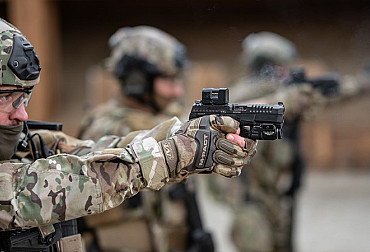
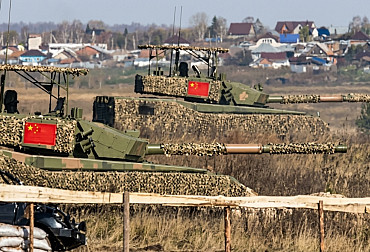
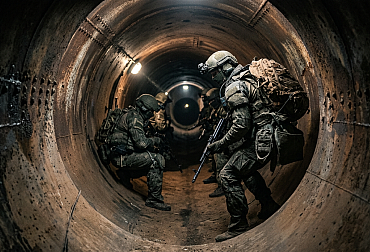
When it comes to the Czech initiatives that had the greatest impact during his tenure in Brussels, General Střecha cites, above all, the ammunition initiative and the growing importance of the Czech defense industry. “The ammunition initiative has greatly enhanced our reputation within the Alliance,” he notes. “And, of course, the second aspect is the growth of our defense industry. Our companies are visible and well-known even on such a large stage as NATO and the European Union. So, in my opinion, the industry is doing the Czech Republic a great service and bringing it prestige,” the general adds. It is precisely the industrial base that represents one of the areas where the European Union plays a significant role. According to Střecha, Europe significantly reduced its production capacity during decades of peace and is now realizing that rebuilding it won’t happen quickly. “The idea that we can rebuild, within five or ten years, the capacity and capabilities of things we’ve been phasing out over the past thirty or forty years is very naive,” he warns. However, he believes that through incentives, programs, and funds, the European Union can significantly stimulate the defense industry and help Europe become more self-reliant.
Moreover, the modernization of the Czech Army does not end with the signing of major procurement contracts. Střecha points to a massive backlog of investment needed to build an army capable of operating within a collective defense framework. And this is not just a matter for the Ministry of Defense. “It’s a matter of building this country’s security system. And there, I think there are major gaps even in other ministries that have something to contribute,” says Střecha. At the same time, the life-cycle costs of new equipment will increasingly factor into future budgets. “New technologies are very powerful and very capable, but their life cycle, maintenance, and replacement all require additional funding. It’s a never-ending cycle,” emphasizes General Střecha. According to him, the long-term costs of operating and maintaining capabilities are ultimately substantially higher than the amounts visible in the initial procurement contracts.
Personnel remains a separate issue. According to Střecha, the Czech Republic is certainly not the only NATO country grappling with a shortage of personnel. The difference, however, is that some countries are already taking significantly more aggressive measures. “When we discussed key issues, the top three items on the list were personnel, personnel, and personnel – and its sustainability,” Střecha recalls of his time in the General Staff leadership. At the same time, he points out that a potential large-scale conflict cannot be sustained in the long term by a professional army alone. The state must have a system in place that allows it to replenish wartime losses and keep the armed forces operational. “Conflicts of this type cannot be won with a professional army alone,” says Střecha. According to him, it is therefore necessary to address the broader personnel base of the armed forces and the state’s ability to mobilize and train additional personnel when needed. He also believes the Czech Republic should pay greater attention to former professional soldiers. A person who has spent twenty or thirty years in the military represents a significant investment by the state, one that should be utilized even after the end of active service. At the same time, however, it cannot be assumed that their military skills will automatically remain up to date without further training. “Technological progress is so rapid today that continuing education must be ensured. I’m not sure if we have a system in place for that,” General Střecha notes. “An investment in a soldier who has served twenty or thirty years is an investment that went toward national defense, and we should find a way to capitalize on that investment even after they leave active duty,” he adds. According to him, the state often closely monitors the effectiveness of individual acquisitions but pays significantly less attention to the financial value of experienced personnel leaving the military. “These resources may actually be greater than those wasted on a poorly written specification for an infantry fighting vehicle. These are funds that no one really sees or addresses. But they amount to an incredible sum of money,” says General Střecha.
Despite all the differences among allies, General Střecha views the functioning of NATO and EU military structures positively. He acknowledges that controversial moments do, of course, arise – particularly during joint meetings, where historical animosities between individual states can surface. He has even experienced situations where some participants walked out of the meeting room because of the rhetoric used. Nevertheless, he believes that a more open discussion would not hurt at times. “Sometimes I feel that we’re a little too nice and polite to one another, and we don’t talk much about our internal shortcomings in public. That makes the so-called ‘hallway discussions’ all the more interesting,” says Střecha. What matters most, however, is that despite their differing interests, the allies are still able to sit at the same table and seek consensus. “The 32 and 27 member states of NATO and the EU are still sitting around the table, still talking to one another, and still trying to find solutions and reach a consensus, which is the foundation of how the system works. That in itself is positive,” adds Lieutenant General Ivo Střecha.
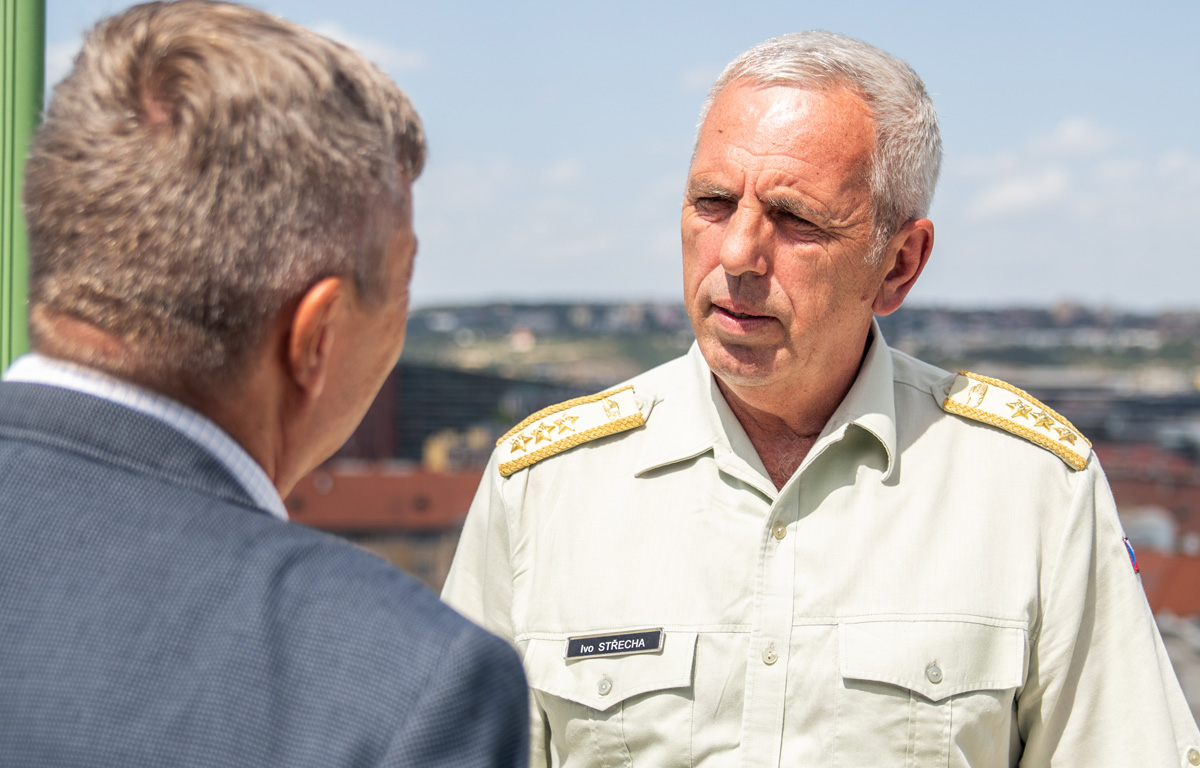
He passed on to his successor as the Czech Republic’s military representative to NATO and the EU, General Václav Vlček, above all the experience he himself had gained over three years in Brussels while working with diplomats. “For me, the opportunity to work with diplomats was a great learning experience, because we soldiers have a slightly different way of thinking about things,” Střecha admits. He particularly values the diplomats’ ability to see the bigger picture and understand the broader context. “I advised him to listen carefully, because I think that’s something we soldiers tend to lack a bit.” According to Střecha, General Vlček is well-prepared for much of the agenda thanks to his experience in operations management; however, he must come to understand the specific culture of both institutions and the complex network of relationships on his own.
It has not yet been decided what Lieutenant General Ivo Střecha will do after he definitively ends his active military career. However, after forty years spent in the military, he wants to continue putting his experience to good use. He is in talks with representatives of both the defense industry and educational institutions. Passing on his experience to the younger generation could be one possible path.
Related