















Maj. Gen. Petr Milčický: Legislative Changes Are Essential for the Rapid Adoption of New Technologies
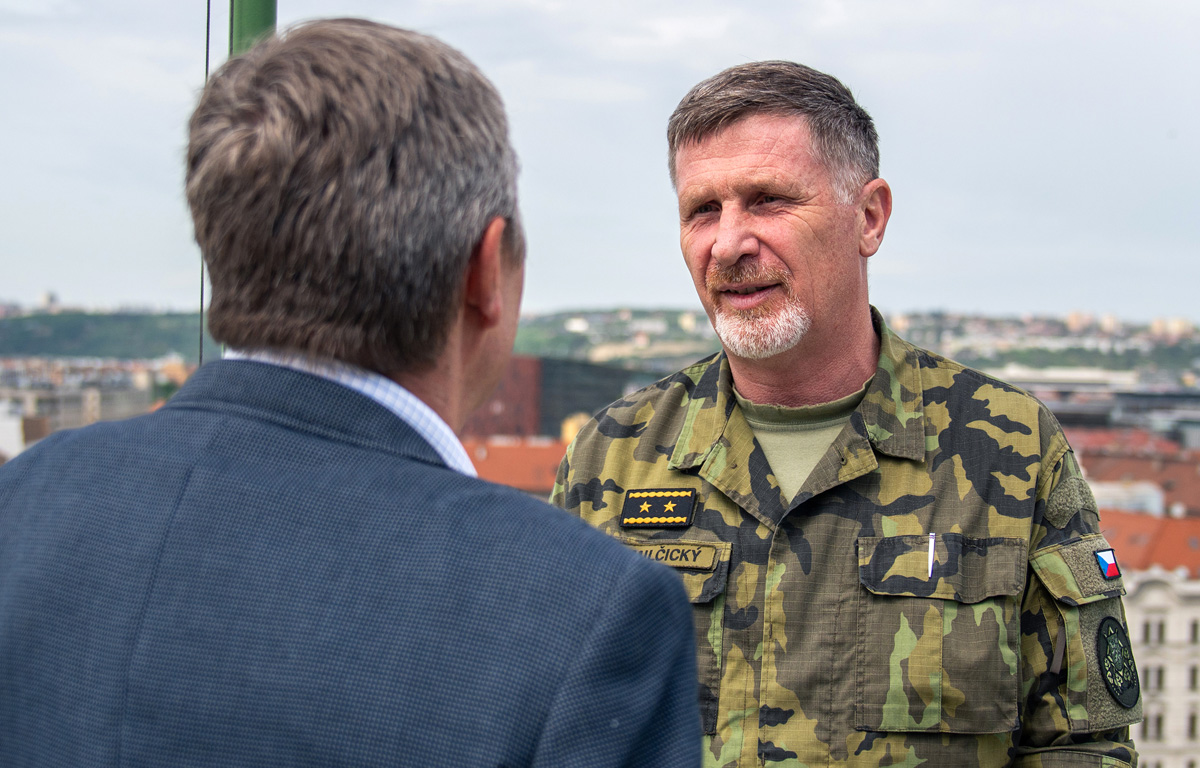
Major General Petr Milčický heads the Force Development Section of the Czech Ministry of Defense. In an interview with CZ DEFENCE, he discusses the priorities of the Czech Army, the development of air defense, the implementation of new technologies, and the limitations of current legislation. He discusses the need for integrated air and missile defense, lessons learned from the war in Ukraine, the role of artificial intelligence on the battlefield, and why the military cannot function without long-term planning. According to Milčický, the Czech Republic has an exceptionally capable defense industry whose technologies the army could utilize almost immediately, but it faces obstacles primarily in the form of funding and slow processes.
Video: Maj. Gen. Petr Milčický: Legislative Changes Are Essential for the Rapid Adoption of New Technologies / CZ DEFENCE
General, how has the definition of the Czech Army’s main priorities changed over the next 10 to 15 years?
In my view, the definition of priorities has not changed. The Czech Armed Forces exist to be prepared, combat-ready, capable of taking action, deployable for the defense of the Czech Republic, and able to participate in collective defense within the Alliance. And if there are any defined priorities for building up the military, they are precisely combat readiness and the specific capabilities of combat units and support units associated with it – without which it is impossible to survive on today’s battlefield.

So, in my opinion, the priorities have not changed, though I could perhaps cite one example. Although we began intensively changing the structure and nature of our air defense capabilities five or six years ago, the war in Ukraine has presented us with additional requirements for future capabilities, and we’ve had to address an area we hadn’t previously considered. That is protection and defense against drones – in other words, protection at the lowest layer. We began preparing the groundwork to build our air defense with greater capacity and on a broader scale than we had originally anticipated. That is where the priorities have probably changed somewhat.
Would it be fair to say that air defense is one of the military's top priorities right now?
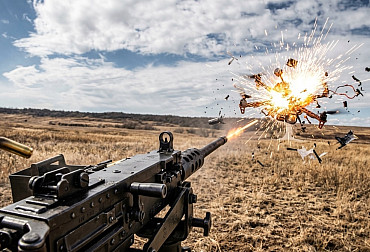
For our soldiers, there is absolutely no doubt about it. For more than a year, we have been working – based on our experience from the conflict in Ukraine – to determine what capabilities the military should have and to what extent these capabilities need to be expanded so that we can defend ourselves. Furthermore, the entire North Atlantic Alliance has defined for all member states the need to expand air defense capabilities into what is now known as Integrated Air and Missile Defense, as a comprehensive Alliance capability. Based on all these findings, we submitted a military recommendation to the Minister of Defense late last year on how to proceed with this capability. We presented three possible options, and we recommended one of them – the most feasible one – as the most suitable from our perspective.
How much time is needed to achieve this goal?
The time required always depends on the complexity of the request. The first factor involved is the speed at which we decide whether to procure something, what to procure, and in what form. This is followed by the preparation of a large amount of bureaucratic documentation, which can take up to two years. Then we have to react quickly to current market offerings, because virtually every country in the world wants air defense capabilities today. If you submit your request on time and – as is now standard practice – provide a financial deposit for the initial investment in the project, you’ll be placed on the production waiting list. If not, delivery can take as long as ten years.
If you act in a timely manner and have the necessary funds, the entire process can be shortened to as little as five years. We had some things already prepared because, when replacing the old Soviet KUB systems, we acquired the Israeli SPYDER short-range system. However, we had already included in the contract the option to expand the scope of the procurement by up to 50% and acquire an additional capability one tier higher – that is, medium-range capability. Unfortunately, this did not happen this year because the funds we had counted on were withdrawn.
There are high expectations surrounding the updated Concept for the Development of the Czech Armed Forces through 2035 (KVAČR 2035). Will it bring about a major turning point or a new direction? Will it focus specifically on the development of air and missile defense?
I cannot say whether the update to the Czech Republic Army Development Concept will bring about any major turning point, aside from the very reason why we proposed the amendment. We completed KVAČR 2035 a year ago, but new requirements subsequently emerged within the Alliance, including, among other things, the expansion of air defense and other capabilities. After two years of analysis and defining minimum future requirements, new target capabilities – known as Capability Targets 2025 – were established. That was the main reason we requested an update to the document. It includes a substantial increase in capability requirements, and this, of course, is linked to funding. I cannot say what the country’s political leadership will accept or to what extent it will be possible to draft the document in its entirety. From our perspective, the General Staff is striving to incorporate into the document everything that is absolutely necessary and that corresponds to the risks we have analyzed, as well as the Alliance’s requirements.
This raises the question of whether long-term strategies make any sense at all, given the current pace of development of new weapons systems and technologies.
Quite the opposite. Rapid technological development makes long-term planning absolutely essential. If we didn’t have a strategy outlining what capabilities we want to have in the future and how to build them, we wouldn’t be able to prepare the personnel, infrastructure, hangars, training facilities, simulators, or other technologies needed for training and operations.
The second aspect is that once we have a long-term strategy, we can adapt everything to the latest technological upgrades. The problem lies with so-called breakthrough technologies, where development is so rapid that almost nothing can be predicted. A typical example is artificial intelligence, which we are currently struggling with.
However, we have taken a number of measures. For example, we have signed an agreement with the Czech Technical University (ČVUT) to utilize the computing capacity of quantum technologies so that we can learn to input tasks into quantum computing systems and gradually evaluate the results. Artificial intelligence and working with big data on the modern battlefield present a huge challenge. It is something we simply must prepare for.
From what I’m hearing, one of the essential requirements is to stick to the timeline and sequence of tasks. Do you see any significant delays in the Czech Army’s ability to fulfill its capabilities?
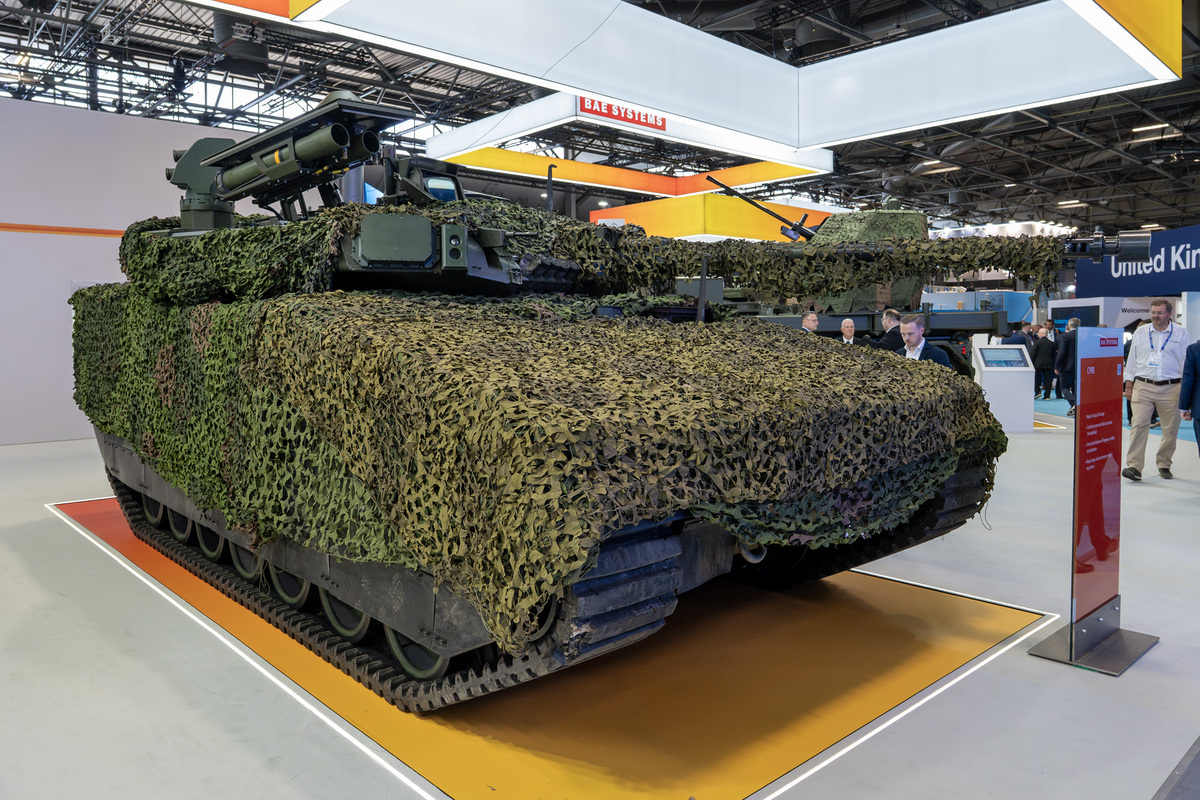
I don’t see any dramatic setbacks. Everything that was planned for this year has begun to be implemented. Many projects have already been contracted. We have contracts to procure a whole range of modern weapon systems that will replace outdated equipment. We are re-equipping the 7th Mechanized Brigade with new Leopard 2A8 tanks; we have a signed contract for CV90 tracked combat vehicles and a number of other projects. We are building individual capabilities in specific packages. For example, a heavy mechanized brigade does not consist solely of tanks and infantry fighting vehicles. It also needs artillery, mortars, engineering support, bridge systems, medical support, and other support capabilities. All of this must be synchronized so that, for example, by the end of 2030, the 7th Mechanized Brigade will be fully re-equipped and combat-ready in accordance with the requirements of the modern battlefield.
However, there was a delay this year. The new government announced that it is unable to provide the military with the planned level of funding this year. As a result, some projects have been postponed by a year. We are now waiting to see whether it will be possible to incorporate the planned capabilities into the new military development concept and whether we will receive sufficient funding to implement them starting next year.
At the end of last year, the military proposed three options for the further development of air defense, one of which it recommended be incorporated into the updated military development concept. Will the role of the SPYDER system within the overall air defense mix change in any way?
It won’t change – quite the opposite. But I must emphasize that we’re talking about ground-based air defense. The country’s original air defense system also relied on air force capabilities, but we don’t have those to their full extent today. Ground-based air defense, however, has undergone a significant overhaul in recent years. The first step was to build up capabilities for the shortest range – in air defense terminology, this is known as the “very short range,” meaning approximately 10 to 15 kilometers. We currently provide this capability with the RBS-70 system. The second step was the transition to the SPYDER system, which covers the next layer of air defense – the short-range layer. Furthermore, the SPYDER system can be expanded through the “all-in-one” variant, which allows it to cover the medium-range layer as well – another layer of air defense. It was precisely this variant that we had planned for this year. We had planned to begin contracting and subsequently build this capability so that it would be completed within four years. However, due to a lack of funding, there has been a delay.
When we last spoke after the “Resilient Czech Republic” exercise, we said that it had highlighted the need for faster implementation of innovations and legislative changes. Has any progress been made yet?
The previous Concept for the Development of the Czech Armed Forces report already addressed the need for legislative changes, and the updated version will do so as well. But if there’s one thing that’s a long-term process, it’s changing the law. The entire process is very complex and time-consuming. Yet it is precisely these legislative changes that are essential for the rapid implementation of new technologies. We’re not talking about large weapons systems here, but rather software applications, dual-use technologies, or rapid innovations to existing systems. Typically, this involves a situation where you commission a research and development project, a prototype is created, and that prototype should be quickly put into practice. But this is precisely where we run into the Public Procurement Act. Section 187 essentially prevents us from following up on development with rapid production and deployment within the military. Once development is complete, we have to issue a new public tender. This significantly slows down the entire innovation chain. We have submitted a proposal to amend the law. I cannot predict what will happen next. At the same time, however, we are exploring other avenues. We are collaborating very closely with CzechInvest, the Technology Agency of the Czech Republic, and other institutions. One such step, for example, is the establishment of the National Competence Center for Defense Research, which should significantly accelerate the entire process.
Were you surprised by how quickly the sector of companies focused on dual-use technologies has grown?
It didn’t surprise me. I’ve spent my whole life studying war and weapons development, and I know that every armed conflict radically accelerates innovation. What does surprise me is the sheer number of commonly available technologies that can be put to military use. When we communicate with the Ukrainian military, we see that from the moment someone discovers a way to modify a commercial drone or prints a new component on a 3D printer, it can take as little as three or four days for it to be deployed in combat. Many of these technologies are highly useful to us, and some are fundamentally changing the way war is waged.
And when we consider this in light of the capabilities of the Czech defense industry – how do you view the domestic market today?
We have an amazing defense industry. It’s almost unbelievable how quickly Czech companies have stepped up, adapted, and begun to rapidly develop and innovate. We’re monitoring this very closely, communicating regularly with the industry, and organizing industry days where companies showcase their capabilities and technologies – many of which have already been proven in combat. We’d be able to integrate virtually all of these products into the Czech Army immediately. The main issue right now is funding.
Artificial intelligence – just how big of a game-changer is it on the battlefield today?
In my opinion, this is an indescribable change. In a combat situation, a commander must process an enormous amount of data and information. They decide on the deployment of weapon systems and responses to air threats or enemy attacks. A human being is not capable of processing such a volume of data as quickly as current artificial intelligence systems. These systems are capable of performing rapid analyses, sorting data, and, in some cases, even making decisions in semi-autonomous or autonomous mode.
We often hear that the future of war will be digital and free of heavy weapons. How realistic do you think such a scenario is?
I don’t know where we stand as a global society, but humanity has made enormous technological progress. Technologies that we knew only from movies ten or twenty years ago actually exist today. But whether we’ll wage wars in the future without heavy weapons and without soldiers, I can’t say. It’s clear, however, that soldiers will increasingly operate modern technologies from greater distances. I don’t think, however, that within ten or fifteen years we’ll have reached the point of autonomous robotic brigades that can occupy enemy territory without human intervention. What has already been proven on the battlefield, though, is the ability of certain robotic systems to take over some tasks while significantly reducing the risk to soldiers.
How is the military doing in preparing new soldiers to work with such sophisticated systems?
We must distinguish between different groups of soldiers. Basic training in Vyškov teaches soldiers how to handle their personal weapons and basic military skills. They then proceed to specialized courses based on their field of specialization.
However, officers and specialists graduating from the University of Defense play a key role. They are engineers with a high-quality education, and today’s young generation has a tremendous interest in new technologies and new ways of waging war. It is precisely with these people that we are now seeking new approaches, new tactics, and new ways to utilize technology. That is also why we are now establishing an experimental unit at the Military Academy in Vyškov, which will test new technologies – particularly those with dual-use capabilities – and seek ways to rapidly implement them into the Czech Army’s operations.
We are collaborating very closely not only with the Czech defense industry but also with civilian scientific and research institutions and the University of Defense.
Related