







Matěj Benda: We Want Czech Companies to Move Beyond Subcontracting and Become Technology Leaders in European Projects
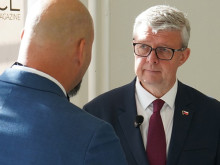
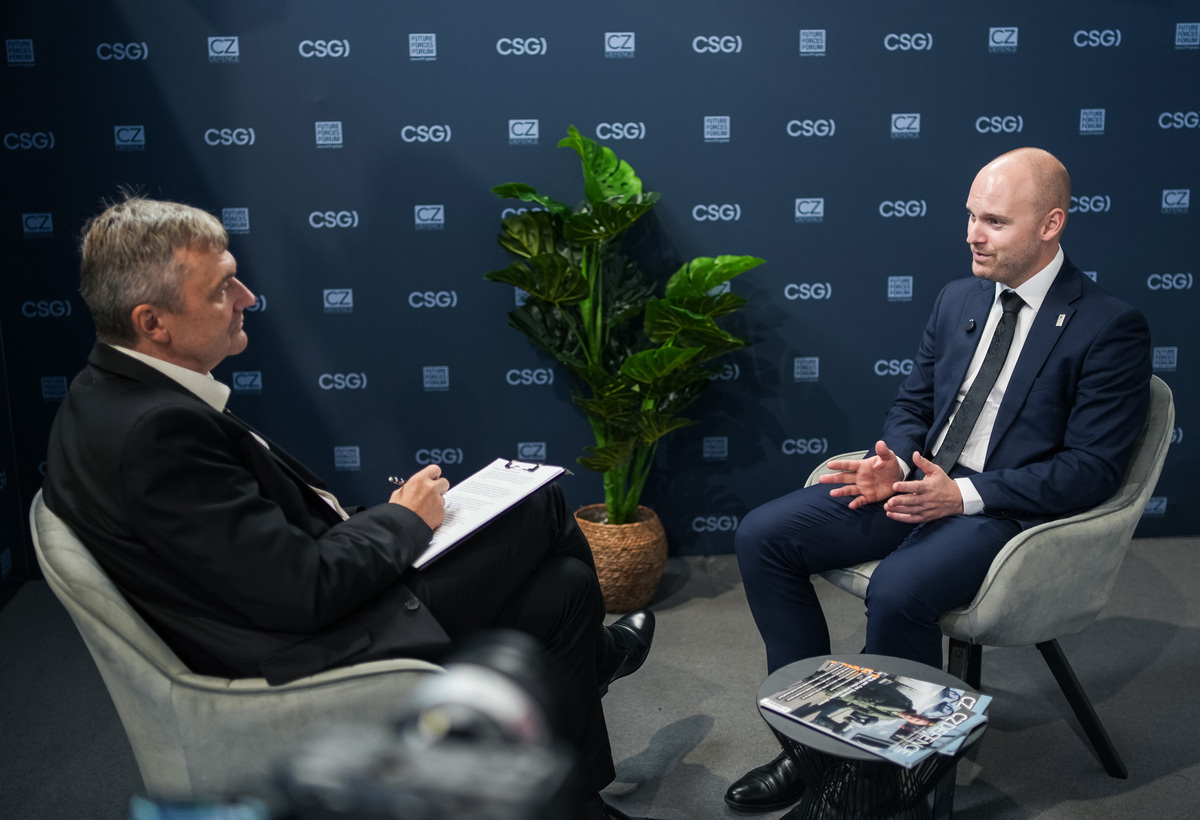
The transfer of responsibility for defense-industry cooperation from the Ministry of Defense to the Ministry of Industry and Trade is expected to result in more systematic support for Czech companies and their greater involvement in strategic military acquisitions and European defense programs. The emphasis is shifting from the sheer volume of contracts to technology transfer, the expansion of production capacity, and the strengthening of the long-term competitiveness of domestic industry. How is the new division of responsibilities between the two ministries working out? What opportunities do the European programs EDF, EDIP, and AGILE offer Czech companies? And what steps must the government and industry take ahead of the expected increase in European defense funding? We discussed these and other topics with Matěj Benda, director of the new Department of Defense-Industrial Cooperation at the Ministry of Industry and Trade.
You describe the transfer of the defense-industrial cooperation portfolio from the Ministry of Defense to the Ministry of Industry and Trade as a logical step. What changes have already been made, and based on what specific results will you evaluate the success of this decision?
The transfer of responsibilities, approved by the government on April 20, 2026, and the subsequent establishment of the Department of Defense-Industrial Cooperation at the Ministry of Industry and Trade (MPO) as of June 1 represent, on the one hand, the continuation of existing support for the defense industry, while at the same time broadening the state’s perspective toward the defense industry. Today, we view the defense industry not merely as a supplier of military equipment, but as a significant component of industrial policy, technological development, exports, and economic diplomacy. That is precisely why we consider it logical for support for the defense industry to be part of a ministry that has these tools at its disposal over the long term. However, this in no way means that the Ministry of Defense and the Czech Armed Forces no longer play an important role in supporting the defense industry – in fact, this actually broadens the range of partners, each with a slightly different role.
The first concrete result is the very creation of a functional department that is already providing contact and information services to companies. Our goal is for companies to have a single, natural point of contact at the Ministry of Industry and Trade where they can obtain information on opportunities for industrial cooperation, export support, innovation, European programs, and the development of production capacities. At the same time, we are expanding our information infrastructure through the new portal obrannyprumysl.mpo.gov.cz.
However, we will not evaluate the success of the transfer solely based on whether we managed to administratively shift the agenda. Above all, measurable economic and industrial results will be key. We want to track how many Czech companies participate in European defense programs, how much funding they secure from these programs, how their involvement in international supply chains increases, and whether we succeed in bringing new technologies, know-how, and production capacities to the Czech Republic.

Another important metric will be the actual benefit of major defense acquisitions for Czech industry – that is, not only the volume of contracts but, above all, technology transfer, the development of long-term manufacturing and service capabilities, and the involvement of Czech companies in other projects. Our goal is for Czech companies not to be merely subcontractors, but to gradually gain a greater share in development, production, and technological added value. I therefore view this shift as the beginning of a long-term change. Its true success will be reflected in whether defense investments, in addition to strengthening security, also bring about long-term growth for Czech industry and its competitiveness.
You emphasize the need for close cooperation with the Ministry of Defense and the Czech Armed Forces. How is the new division of responsibilities working out in practice, and where do you see the greatest room for improvement so far?
The fundamental principle of the new structure is a clear distinction between responsibility for the military’s needs and procurement and responsibility for supporting the defense industry. The Ministry of Defense remains responsible for acquisitions, military requirements, and government cooperation. The Ministry of Industry and Trade (MPO) has taken over support for the defense industry and industrial cooperation, including its application in the context of major military acquisitions, particularly the F-35, STL C-390 Millennium, and Leopard 2A8 main battle tank. The Ammunition Initiative and related government cooperation remain under the purview of the Ministry of Defense.
This division allows us to better align defense needs with industrial policy tools. The Ministry of Industry and Trade (MPO) brings expertise in export promotion, economic diplomacy, innovation, financing, and European programs. Conversely, the Ministry of Defense and the Czech Armed Forces possess irreplaceable knowledge of military needs, operational requirements, and planned acquisitions. The purpose of this cooperation is to combine these two perspectives so that industrial support is based on real defense needs while simultaneously creating long-term opportunities for Czech companies.
In practice, cooperation is already underway, but it is important to state openly that we are still finalizing certain processes. Together with the Ministry of Defense, we are preparing detailed process maps of responsibilities, finalizing the separation of records, and addressing the transfer of industrial cooperation agreements. We do not wish to claim that all mechanisms are already definitively in place.
I see the greatest room for improvement in three areas.
The first is providing the industry with timely and systematic information about the needs of the Czech Armed Forces and planned investments. Companies need predictability so they can invest in development, production capacity, and skilled workers.
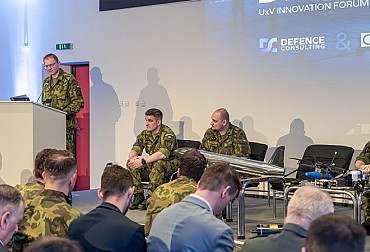
The second area is closer collaboration between the Czech Armed Forces, industry, and the research sector. We want to develop industry days and other platforms that will enable Czech companies to better understand the military’s specific requirements and offer solutions that will be truly usable.
The third area is more effective industrial cooperation on strategic acquisitions. We need clear rules that define what industrial benefits should be expected from strategic contracts, how commitments will be evaluated, and how we will ensure their long-term sustainability.
Our goal is not to create another layer of bureaucracy between the military and industry. On the contrary, we want to ensure that cooperation between the two sectors is understandable and predictable for companies and, above all, yields concrete results for the Czech Republic’s defense capabilities and its economy.
The Ministry of Industry and Trade is assuming responsibility for industrial cooperation on the F-35, C-390, and Leopard projects. Which specific commitments by foreign suppliers do you consider most important, and how will you monitor their actual fulfillment?
I consider it crucial that industrial cooperation not be merely a formal commitment by a foreign supplier, but that it bring real and long-term value to Czech industry. For the F-35, STL C-390 Millennium, and MBT Leopard 2A8 projects, it is particularly important to involve Czech companies in the supply chains, facilitate the transfer of technology and know-how, develop manufacturing and service capabilities, and acquire expertise that will also be useful in future projects.
We are not merely interested in one-time contracts, but in long-term partnerships that will enable Czech companies to participate in the production, maintenance, and lifecycle management of the procured equipment. The involvement of small and medium-sized enterprises and the development of their technological capabilities are also essential.
Monitoring of performance must be systematic and based on specific, measurable commitments set forth in contracts. We want to monitor not only the volume of contracts executed but also their actual benefits for Czech industry, the involvement of individual companies, technology transfer, and the long-term sustainability of the cooperation. In cooperation with the Ministry of Defense, we will strive for a clear definition of responsibilities, regular evaluations, and the timely resolution of any shortcomings.
At a recent seminar you organized, you stated that you do not want to support merely “painting a tank green,” but rather a genuine transfer of technology. What should the new methodology for industrial cooperation look like, and what must a foreign supplier offer for its project to meet your expectations?
I will refrain from disclosing details of the currently revised Principles for the Implementation of Defense Industrial Cooperation Programs at this time, as they must also be discussed with our partners, particularly the Ministry of Defense and representatives of the defense industry. However, as I mentioned, our goal is to support the long-term involvement of Czech industry in supply chains, technology transfer, the provision of services, the development of long-term manufacturing and service capabilities, and the involvement of Czech companies in future projects. What will be key for us is not just the percentage of Czech industry’s involvement – since we realize that this is subsequently reflected in the total acquisition cost – but the nature of the defense industry’s involvement, ensuring that it is not a one-time event but rather provides long-term benefits for Czech industry.
European defense programs offer billions of euros, but Czech companies are not yet sufficiently represented among the leaders of international consortia. What is the biggest obstacle to their success, and what specific support will the Ministry of Industry and Trade offer them?
Czech companies hold strong technological positions in the defense industry, but they often lack three things in international consortia: sufficient knowledge of the rules and opportunities, the ability to actively build international partnerships, and the capacity to develop a competitive project. The European Defense Fund (EDF) requires a consortium of at least three entities from three countries, so good technology on its own is not enough; what matters is the ability to integrate it into a European solution.
The Ministry of Industry and Trade (MPO) is therefore preparing systematic support for Czech applicants: informational seminars and consultations, assistance in finding foreign partners through foreign missions, methodological support in project preparation, and national co-financing instruments. In the case of the EDF, the state can contribute up to 50% of the co-financing for a Czech consortium participant through the PRODEF program.
Our goal is not only to increase the number of Czech participants but also to support companies that will be able to take on responsibility within consortia for key technologies, systems integration, or development. We want Czech companies to be more than just subcontractors; we want them to gradually become technological leaders in European projects.
The EDF and EDIP programs support not only research but also the expansion of production capacities and joint European procurement. In which areas do you see the greatest potential for Czech companies, and how do you intend to help them enter European supply chains?
I see the greatest potential where the Czech industrial and technological base meets real defense needs: ammunition and its components, ground vehicles and their systems, optics and sensors, radar and electronic warfare, cyber defense, unmanned systems, simulation and training, as well as logistics, maintenance, and equipment repairs.
EDIP is crucial for these areas because, unlike the EDF, it emphasizes strengthening production capacities, critical components and materials, interoperability, and joint procurement. The program has a total budget of 1.5 billion euros for the 2025–2027 period, with a significant portion earmarked specifically for strengthening the European industrial base.
The Ministry of Industry and Trade (MPO) aims to assist companies primarily by engaging in intensive communication with the European Commission, providing industry with a clear roadmap of European opportunities, and supporting projects that lead to long-term production or technological advancement in the Czech Republic. It is also important to link European projects with industrial cooperation on strategic acquisitions so that Czech companies gain not only contracts but, above all, technology, expertise, and a strong position in supply chains. I am pleased that in the latest call for proposals, the Czech contribution to successful projects funded by EDIP was significant. Of the eight projects selected across the EU, two are linked to the Czech defense industry.
Unmanned systems, artificial intelligence, electronic warfare, and other new technologies are becoming increasingly important. How do you plan to connect innovative companies, research institutions, and the military so that promising Czech solutions are actually put into military practice?
The key is to shorten the path from military need through research and development to validation and deployment. The Ministry of Industry and Trade will coordinate the industrial, export, European, and research agendas; the Ministry of Defense and the Czech Armed Forces are responsible for defining military requirements and act as the customer. This division of roles must be absolutely clear to companies.
In practice, we want to create a regular forum where the military articulates its needs, companies present solutions, and research institutions offer their expertise to validate them. We will support projects with clear military applications, opportunities for testing and certification, and a realistic path to inclusion in the arsenal or logistical support. The transfer of technology from prototype to practical application will also be supported by the new EU AGILE program, for which we are preparing an information campaign. Although, with 115 million euros, it will not be as robust as the programs mentioned earlier, it may represent another interesting initiative – particularly for small and medium-sized enterprises – that will provide them with financial support.
We are paying special attention to unmanned systems, autonomy and artificial intelligence, electronic warfare, air defense, cybersecurity, and resilient communication systems. However, this is not just about individual prototypes. We need to connect startups and small technology companies with experienced systems integrators, testing infrastructure, and military users. Only then can a good idea become a deployable military capability.
Starting in 2028, a significant increase in European funding for the defense industry is expected. What specific steps must the Czech government and domestic companies take in 2027 to ensure they do not miss this opportunity, and what results would you like to present a year from now?
The year 2027 must be a year of preparation for significantly stronger European defense funding after 2028. For the government, this means finalizing and raising awareness of the support system, ensuring sufficient capacity for expert assistance to companies, streamlining administrative processes, and linking European programs with national instruments, industrial cooperation, and the needs of the Czech Armed Forces.
For companies, this means not underestimating the need for preparation: building internal teams that work with European instruments, forming consortia, investing in development, production capacity, workforce qualifications, and the ability to respond to large joint contracts. European funding is not an automatic guarantee of success; what matters is the quality of the project, the reliability of the supply chain, and long-term partnerships.
Within a year, I would like to present, in particular, concrete results: a higher number of Czech companies involved in EDF, EDIP, and AGILE; the first Czech projects playing a significant role in international consortia; a fully operational partnership and advisory system; specific projects linking the military with innovative companies; and progress in preparing production capacities for European supply chains. The goal is not merely to report on supported projects, but to achieve a measurable strengthening of the Czech defense industrial base.