






Robotics in the Czech Armed Forces: The Concept Is in Place, but Can the Ministry of Defense Turn It into a Real Military Capability?
Military robotics is no longer just a technological vision of the distant future. Experience from current conflicts demonstrates the growing importance of unmanned systems, autonomy, artificial intelligence, and the ability to quickly adapt technology to the needs of the battlefield. The Czech Armed Forces recognized this trend early on. They have an approved concept, are building a testing environment, gaining experience, and in 2026 conducted extensive international testing of UGVs. The question, therefore, is no longer simply whether the Czech Armed Forces need robotics. The question is whether the Ministry of Defense can create the conditions necessary for the Czech Armed Forces’ efforts to translate into a genuine military capability.
In June 2026, the Concept for the Introduction of Unmanned Ground Systems into the Czech Armed Forces was approved. The Ministry of Defense’s Communications and Information Systems Section and the Communications and Information Systems Agency – particularly its Center for Deployable Systems and SVŘ Technology Development – have played a significant role in the development to date, in close cooperation with the University of Defense and the Ministry of Defense Council for AI and Robotics.
At the same time, the NATEP UGV National Testing and Evaluation Range is being established in Lipník nad Bečvou, creating an environment for the systematic testing of these technologies. The foundation, therefore, is in place. Now come the much more difficult questions.


What Comes Next After the Experiment?
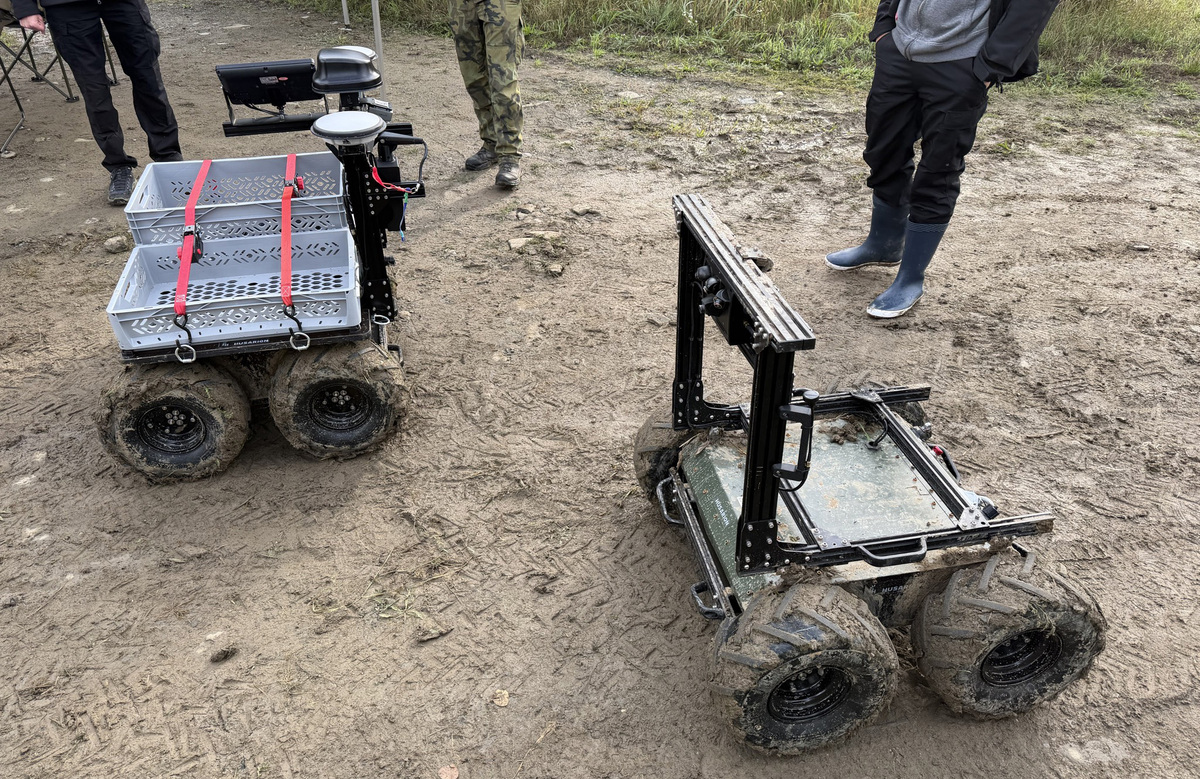
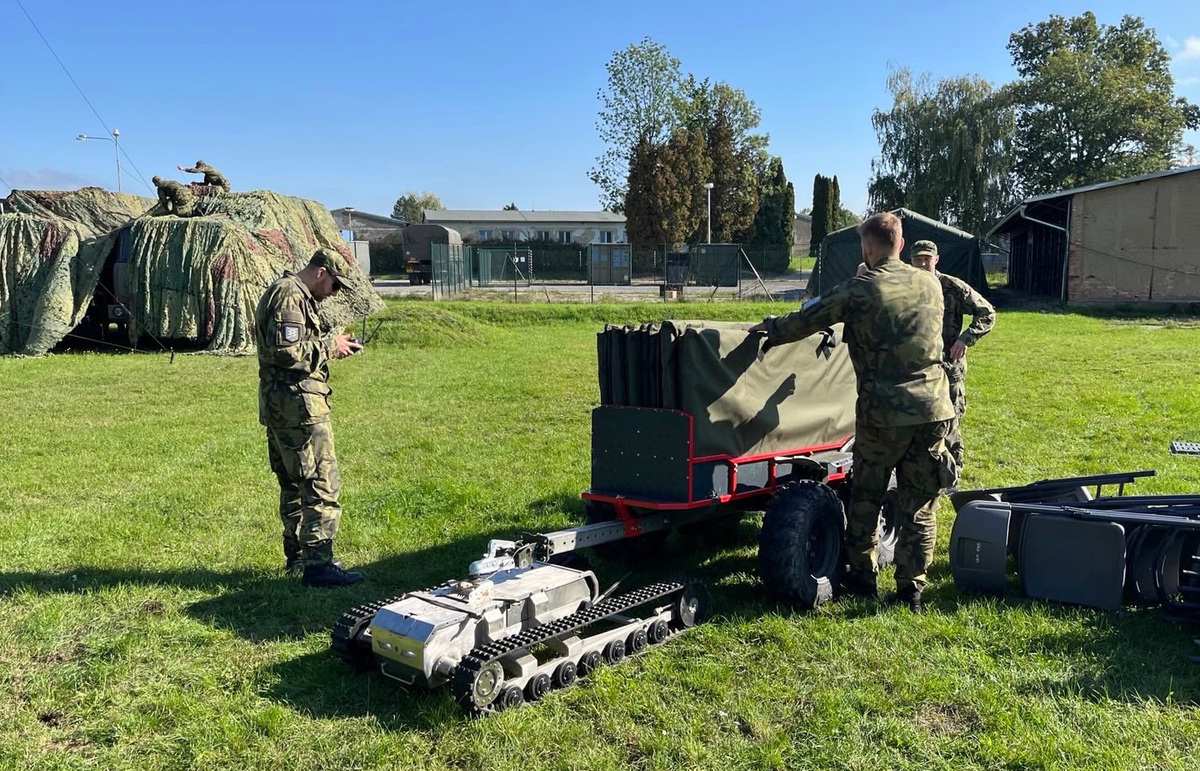
The Drone Shield 2026 exercise demonstrated that the Czech Armed Forces are capable of creating an environment for large-scale practical testing of UGVs. More than two dozen Czech and foreign companies gathered at NATEP UGV, where their vehicles underwent practical testing of mobility and autonomy.
It is precisely this kind of testing that is essential. UGVs cannot be evaluated solely based on catalog specifications or a brief demonstration by the manufacturer. The true value of the technology becomes apparent only when it is operated by soldiers—in the field, under various weather conditions, during communication outages, with degraded navigation, and in the event of malfunctions or power shortages.
But what comes next? Who will take charge of the test results? How will they be translated into requirements for the Czech Armed Forces? Who will decide which technologies move on to the next phase? And how long will the journey be from a successful experiment to the first real-world implementation? An experiment is not a capability. A concept is not a capability. And even the purchase of equipment alone does not create a capability.
Is There Funding Available for Robotics?
If the approved concept is to be implemented, it must have continued funding. What funds will be allocated for its implementation between 2027 and 2030? How much will be earmarked for experimentation, the purchase or lease of UGVs? How much for autonomy, AI, exoskeletons, infrastructure, and research and development? And above all: is there a long-term financial framework that will enable the transition from individual experiments to building capability?
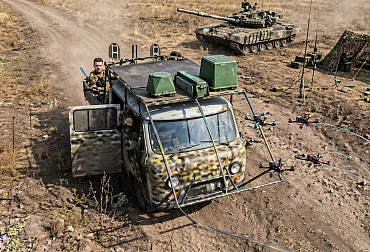
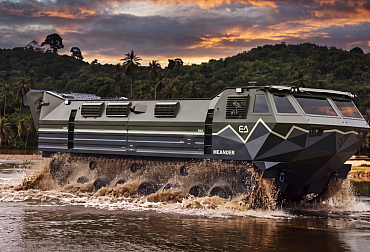

The sheer number of pieces of equipment does not, in and of itself, constitute military capability. Capability arises only through the integration of technology, people, training, doctrine, infrastructure, logistics, organization, and funding.
Can the Procurement System Keep Up?
Robotics also raises the issue of speed. A UGV that represents the cutting edge of technology in 2026 may be technologically obsolete in just three years. The traditional procurement cycle, which spans several years, may therefore not keep pace with the rapid development of these technologies. Do the Czech Armed Forces need to own every experimental system? One approach could be a Proof of Concept. A few UGVs could be leased for a year or two, operated intensively by units to gather experience and data, and only then would a decision be made on their future use.
However, this raises another question for the ministry: Does the Ministry of Defense have processes in place that will allow for the rapid procurement or leasing of small quantities of technology for experimentation? If not, we may find that we can test the technology faster than we can acquire it through administrative channels.
Where Should the Deployment of UGVs Begin?
Another question is not just how to deploy robotics, but also where. The first significant use of UGVs may not be in armed robotic systems. Great potential lies in logistics and support for command and control (C2) systems. Both areas directly affect a unit’s survival. Without ammunition, water, power, medical supplies, and spare parts, a unit cannot survive. Every resupply mission in a hazardous area that can be delegated to a UGV simultaneously reduces soldiers’ exposure to danger.
C2 is equally critical. Without communication, data, and situational awareness, a unit ceases to be a coordinated combat system. A UGV can carry relay equipment, communication nodes, sensors, electronic warfare equipment, or power sources. The first UGV in the Czech Armed Forces, therefore, does not need to fire. It can transport ammunition, carry a communication node, or perform other tasks that currently require a person to enter a hazardous area.
Who Will Be in Charge of Robotics in the Czech Armed Forces?
This raises an organizational question. Should the Czech Armed Forces establish separate robotic units? Or would it be better to start with small teams and “robotics ambassadors” within logistics, signal corps, engineers, chemical units, reconnaissance, and other specialties?
The second approach may allow for faster acquisition of practical experience directly within the units. At the same time, however, it must be clear who, across the entire AČR, will be responsible for standards, architecture, interoperability, testing, autonomy, and long-term development. And this is precisely where another question arises: Where, exactly, does robotics belong organizationally?
Robotics Is Not Cybernetics
Robotics and cybernetics are very closely related. However, they are not the same. Cybersecurity primarily addresses the protection of information and communication systems, networks, data, and digital processes. Military robotics connects the digital world with physical operations on the battlefield.
A UGV or UAV is not merely a computer connected to a network. It is a physical platform that combines mobility, mechanics, power systems, sensors, effectors, navigation, communication, software, and autonomy. This includes training, tactics, logistics, maintenance, and integration into command and control systems. Cybersecurity is therefore critical for robotic systems, but it represents only one of their layers, not their entirety. Robotics cannot be isolated from cybernetics, but neither can it be reduced to cybernetics alone.
The same applies to AI. It is a cross-cutting technology that will permeate robotics, C2, ISR, electronic warfare, logistics, planning, and other areas. Therefore, it will be necessary to decide who will own these capabilities and how the individual technological areas will be coordinated.
One long-term option could be the creation of a suitable organizational unit or mechanism that would bring together the necessary expertise for rapidly developing technologies and systematically coordinate their experimentation, validation, standardization, and implementation within the Czech Armed Forces. This would not involve merging robotics, cybernetics, AI, and other fields of expertise into a single discipline, but rather ensuring their coordinated technological development.
Only future developments will show whether robotics will one day lead to its own organizational unit or even a new type of military force. However, that is not a decision that must be made today. What must be clear above all today is who is responsible for developing this capability.
Is the Legislation Ready?
However, technology cannot be implemented without appropriate rules. Who bears responsibility for an autonomous UGV in the event of an accident? What conditions must a system moving autonomously in a military area meet? Where does the manufacturer’s responsibility end and the responsibility of the operator, user, or commander begin?
And is current legislation capable of responding to the rapid development of autonomy? If the Czech Armed Forces begin to introduce these technologies faster than the legal and regulatory environment can change, legislation itself may become one of the obstacles to their practical use.
Is Information Security in Place?
Another area is security. A UGV is not just a vehicle. It carries sensors, communication systems, computing power, and software, and can process navigation, imagery, sensor, operational, and tactical data. Is it economically and operationally sustainable to equip every UGV with sensitive and expensive cryptographic devices?
The UGV will be exposed to a high risk of damage, destruction, or capture by the enemy. For some systems, loss may even be an anticipated part of their use. An extreme example is low-cost, one-way UGVs, which are not expected to return at all. For some applications, therefore, non-CCI radios and data links, tactical 5G, Wi-Fi, or suitable forms of satellite communication may be relevant.
However, their use must be based on a risk analysis and an appropriate security framework. A logistics UGV will have a different security profile than a mobile C2 node, which in turn differs from that of a single-use asset. Security does not necessarily mean installing the most expensive solution on every platform. It must mean protection commensurate with the value of the information, the operational mission, and the assessed risk.
Do the Czech Armed Forces Have the Personnel for Robotics?
Technology cannot be developed without people. Czech universities are training experts in robotics, autonomous systems, AI, mechatronics, computer vision, and data analytics. But if such a graduate joins the Czech Armed Forces, where will they be assigned? Are there established positions for them? Does the military have the appropriate expertise? What will their career path look like? And how will the AČR prevent a situation where it trains a specialist for several years only to lose them because there is no suitable role for their specialization? Robotics and AI cannot function in the long term as “sideline projects” for units that tackle them alongside their primary tasks.
And Who Will Own the Data?
Autonomy brings with it another area that tends to be less visible – data. Who will own the data generated by UGVs and UAVs? Who will store, clean, label, and prepare it for further training? Where will the AČR’s reference datasets be created? Who will validate new algorithms?
And will the Czech Armed Forces have the capability to gradually train their systems using their own data, or will they remain dependent on manufacturers in this area in the long term? A robot without data is just a machine. An autonomous military system is, to a large extent, defined by its data capabilities.
The AČR Has Begun. What Will the Ministry Do?
This is where the various questions come together. The AČR has already taken concrete steps. There is a concept, NATEP UGV, experience from Drone Shield, expert teams, and collaboration between SKIS MO, AKIS/CNS, and RTSVŘ, the University of Defense, and the Ministry of Defense Council for AI and Robotics. This is an important start. But now answers to further questions must follow. How will robotics be funded? How will technologies be rapidly procured and experimentally validated? Who will be responsible for operational capability? How will organizational structures change? How will legislation be addressed? What about information security? Where will the experts come from? Who will manage the data? And how will the results of the experiments actually reach the units? These are no longer merely technological questions. They are questions for the entire Ministry of Defense. If the ministry considers robotics, autonomy, and AI to be a significant part of the future battlefield, this must be reflected between 2027 and 2030 not only in conceptual documents but also in the budget, organizational structures, legislation, personnel, and specific projects.
The Czech Armed Forces (AČR) have taken the first step. Now it remains to be seen whether the Ministry of Defense will create the conditions for the next steps. The greatest risk may not be that the AČR fails to keep pace with technological change. It could be a situation where the AČR catches up in time, develops a concept, builds a testing environment, and gains experience—but the ministry’s system is not fast enough to turn this head start into actual military capability.