






The Drone Didn't Explode, but the Threat Remains: EOD Experts Train to Dispose of Explosive FPV Drones
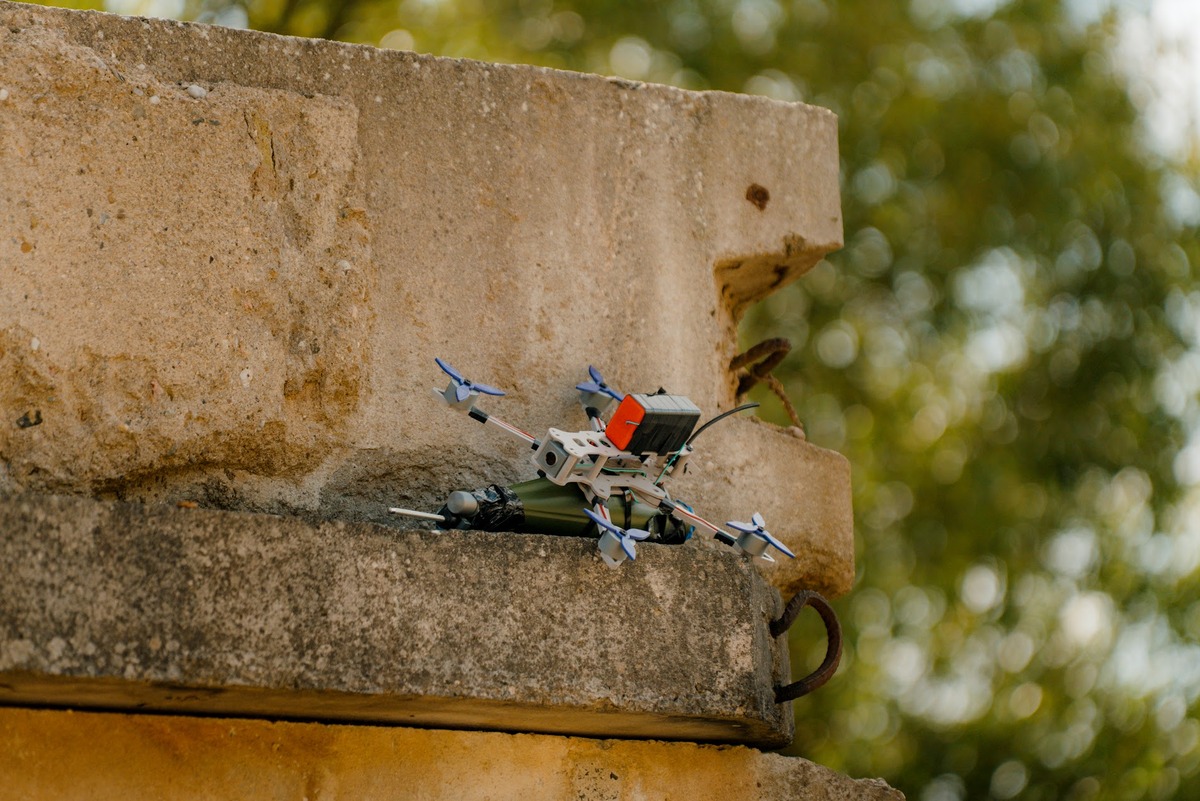
An FPV drone attacking a military position can be neutralized by electronic warfare, caught in a protective net, or crash-land without its explosive payload detonating. Even though it is no longer flying, it remains a danger to soldiers and equipment in the vicinity. Eliminating such a threat is the job of EOD specialists, who prepare for similar situations through specialized training. They also have access to remotely operated robotic devices, which allow them to handle dangerous objects from a safer distance.
The war in Ukraine has significantly changed the way small unmanned aerial vehicles are used. FPV drones equipped with explosive payloads are being used against armored vehicles, other vehicles, and individual military positions. Defenses against them include electronic warfare measures, physical destruction, or protective structures and nets designed to prevent direct hits. However, disabling a drone does not necessarily mean destroying the explosive payload it carries.
If a drone loses contact with its operator, becomes entangled in an obstacle, or lands without exploding, its payload may remain functional. Thus, even a seemingly undamaged drone lying on the ground can pose a danger. The situation is complicated by the fact that FPV drones can carry various types of explosive payloads, and their designs often differ. Without expert assessment, it is therefore impossible to determine the condition of the explosive system or the risk posed by handling it.

Military pyrotechnicians – EOD (Explosive Ordnance Disposal) specialists – are trained specifically for these situations; their task is to locate, identify, and neutralize explosive threats. In addition to traditional threats, such as artillery shells, mines, or improvised explosive devices, their training also focuses on unmanned aerial vehicles carrying explosives.
Robot Allows Bomb Disposal Experts to Work from a Safe Distance
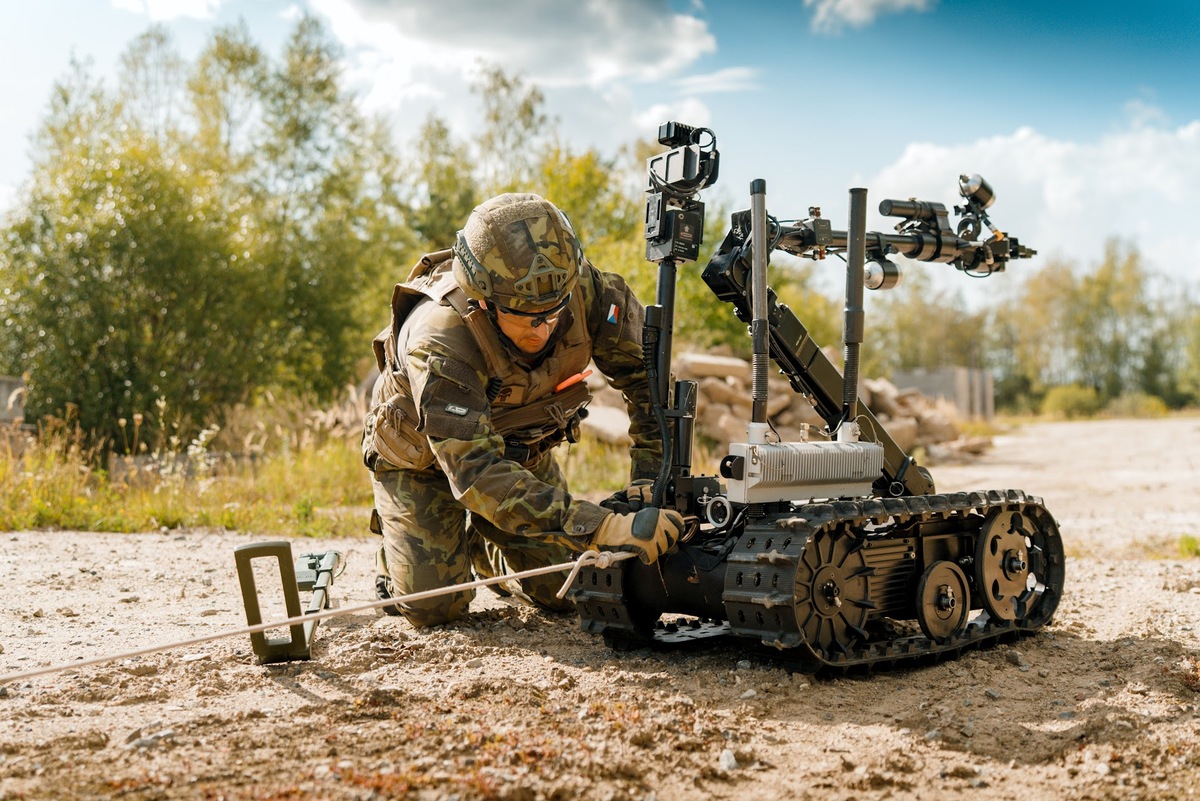
During training, specialists address situations where an FPV drone fails to detonate upon impact and its payload remains a potential hazard. The pyrotechnic team’s task is to assess the threat, secure the area, and select the appropriate method of disposal. Remote-controlled robotic devices play a key role in this process, as they allow for the inspection of a suspicious object and the performance of specific tasks from a safer distance.
A robot equipped with cameras and a manipulator arm can operate even in locations where direct intervention by a pyrotechnician would pose a significant risk. However, its use requires an experienced operator who must correctly interpret the camera footage, orient themselves within the space, and precisely control the equipment. It is not just a matter of operating the robot itself. The bomb disposal specialist must also understand the nature of the explosive threat and the limitations of the equipment being used.
The photos from the training session show the team working with a robotic device and a training FPV drone. Such scenarios allow specialists to practice the tasks they may encounter in combat operations. Each operation requires an individual assessment, as unexploded drones may be damaged in various ways, and their explosive components may not correspond to commonly used types of munitions.

Training Reflects Lessons Learned on the Battlefield
The proliferation of FPV drones presents military bomb disposal experts with new challenges. Unlike standardized munitions, they may encounter improvised devices and various combinations of unmanned aerial vehicles and explosive charges. Therefore, when neutralizing them, one cannot automatically rely on procedures designed for known types of munitions. Expert knowledge, available information, and a correct assessment of the specific situation are crucial.
The training of EOD specialists therefore focuses not only on mastering individual technical tasks but also on the coordination of the entire team. Explosive ordnance disposal technicians practice decision-making, communication, and the use of available equipment under conditions that simulate possible combat scenarios. Robotic systems help them minimize direct exposure to danger; however, the responsibility for assessing the threat and determining the course of action still rests with a qualified specialist.
Experience from current conflicts confirms that defense against unmanned aerial vehicles does not end with taking them out of the air. An unexploded FPV drone can block access to equipment, endanger the movement of units, or prevent the safe use of part of an area. The ability of explosive ordnance disposal technicians to professionally neutralize such a threat is therefore a crucial part of protecting soldiers and maintaining their ability to continue carrying out combat missions.