















Warsaw sets the pace for military modernization, and the rest of the region must respond
Poland is currently becoming the geopolitical champion of Central and Eastern Europe. It is responding to the Russian threat with a determination that other countries in the region cannot match. Rapid steps in armament, strengthening territorial defense, and pressure for a fundamental transformation of the European security architecture are creating an environment in which the Czech Republic must also position itself. At a time when the region is fragmenting and Visegrad is ceasing to be a functional platform, Warsaw is entering the international scene as an independent, self-confident power. This dynamic also has a fundamental impact on Prague. Domestic politics in the Czech Republic lacks the Polish social consensus on the perception of the Russian threat, which is so necessary for defining national strategic goals.
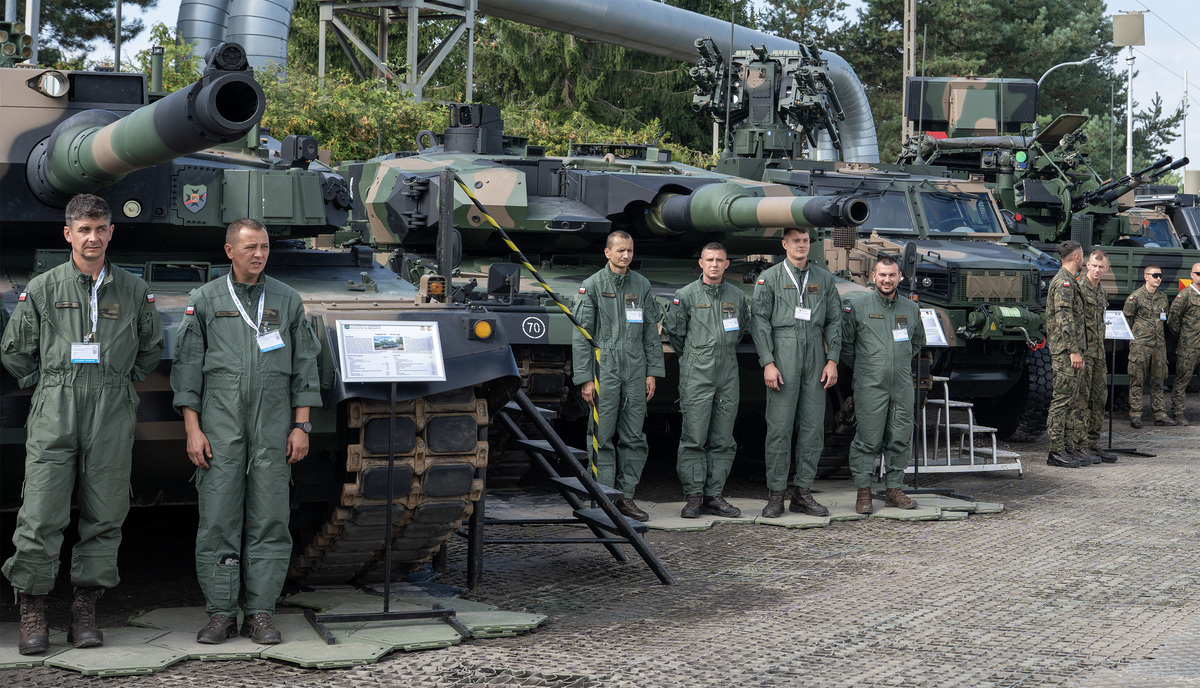
Polish security policy underwent a radical transformation after 2022. Russia's invasion of Ukraine created a feeling in Polish institutions that the Chief of the Polish General Staff, Wiesław Kukuła, described as a permanently "lit red warning light." Although long-term concepts for military reform existed in Warsaw, it was only the scale of Russian aggression that led to the full mobilization of national resources. The Polish Ministry of Defense began to conclude arms contracts on a scale unprecedented in Europe. Deliveries of South Korean K2 tanks, K9 howitzers, Homar-K rocket launchers, modernization of Krab howitzers, orders for hundreds of Borsuk combat vehicles, and a fundamental overhaul of artillery capabilities form the basis of a structure that is intended to make the Polish army the strongest conventional ground force in the European Union. Added to this is a medium-term plan to create additional divisions and increase the size of the armed forces to levels that many analysts initially considered unrealistic. Nevertheless, their gradual implementation is becoming a reality.
The modernization of the air force is expanding just as significantly. Warsaw is purchasing Apache helicopters, investing in the modernization of air defense systems, expanding pilot training capacities, and openly working with a vision that the Polish Air Force must be able to handle operations in an environment full of drones and autonomous systems. The Polish concept of "dronization" of the armed forces is based on Ukrainian experience, and in the future, countries with smaller budgets will also have to adapt to it. It is also supported by American aid, a long-term partnership with Korea, strategic financing through state banking institutions, and a huge flow of arms bonds, which enables the rapid implementation of programs. Total defense spending is among the highest in the North Atlantic Alliance, likely reaching 5% of GDP this year. The Polish army is thus becoming a shield for the eastern flank and, at the same time, a laboratory for testing a new European model of power politics.
The importance of Poland's approach to defense has also grown due to the de facto collapse of the Visegrad Four. Hungary and Slovakia are characterized by pro-Russian attitudes, which is causing tension throughout the region. Budapest is attempting to act as a mediator, yet its actions within the EU are drawing criticism and undermining the trust of its allies. The Slovak government, for its part, is increasing its dependence on Russian energy, refusing to give unequivocal support to Ukraine, and even threatening to disrupt energy supplies to its neighbors. Warsaw has had to respond harshly. Criticism of Hungary's stance, the refusal of Hungarian representatives to participate in ceremonial events in Poland, and reservations about Bratislava have created an atmosphere that reduces the possibility of a common strategic voice. Following the Czech parliamentary elections, the V4 is transforming into a loose V3 platform, yet even this version lacks a stable foreign policy foundation.
However, Polish diplomacy is taking advantage of this situation. Instead of the stagnating Visegrad Group, it is focusing on more effective regional formats. The admission of Finland and Sweden to NATO brought about a strong shift northward. The emerging North Baltic security bloc enabled Poland to become an observer in the Nord-Baltic 8 group. Donald Tusk's government is also developing a bilateral partnership with Sweden and building close ties with Lithuania, Latvia, and Estonia. These countries share a deep social consensus on the Russian threat, which strengthens Poland's position and brings shared experience with hybrid operations, cyber attacks, and military training.
At the same time, the Weimar Triangle is being revived, with Warsaw entering as an equal partner (the voice of the post-communist states?) in the Franco-German power duo. Both European powers are undergoing domestic political upheavals and are unable to provide strong, decisive leadership. The Poles are not sitting idly by in this situation and are positioning themselves as a regional leader capable of reconciling Central and Eastern European demands with the European core. Joint meetings with Paris and Berlin focus primarily on support for Ukraine and the need to increase European defense spending, which Donald Tusk is advocating most vocally in this format.
The Three Seas Initiative, the Bucharest Nine, and the Lublin Triangle are also part of Poland's strategic circle. These structures strengthen the ties between countries that share the experience of Russian pressure. Poland is strengthening its position in the EU and NATO by combining pragmatic diplomacy with rapid military modernization. Other countries in the region must respond, because if they do not, they will lose touch with security and diplomatic realities.
Developments in the Czech Republic show how deep the contrast between the two countries is. The change of government has opened the door to strongly nationalist discourse. The SPD is gaining space to push an agenda that avoids clearly naming the Russian threat and does not emphasize the need for military support for Ukraine. There is no social consensus on relations with Russia. Parts of the political spectrum are relativizing Russian aggression and spreading narratives that could weaken the state's resilience. This poses a risk that is gradually increasing, as security policy without clear social anchoring loses continuity and predictability with each change of government. In contrast, the Polish environment, where state strategy is in tune with public opinion, creates conditions for long-term investment in defense and civil resilience.
Pressure from Poland, whether direct or indirect, will accompany the Czech Republic in the coming years. The Polish army is rapidly transforming into a modern force. Warsaw is building everything on the conviction that the state must have sufficient power to deter Russia even without foreign assistance. The Czech army is also modernizing, but the pace of this process seems limited compared to Poland. Poland is beginning to serve as a model for the transformation of state defense, which other Central and Eastern European countries are following. If Czech politics becomes mired in disputes over domestic issues and leaves its defense to others, Prague's dependence on the will of its allies will increase. Although Poland's determination to combat Russian expansion sets the bar high, the northern states are immediately taking up the challenge, as are Romania and the Baltic states. This makes the situation in Central Europe all the more alarming, where political interests are fragmented and pro-Kremlin influences continue to undermine cohesion.
Poland is becoming a force that sets the tone for security between Estonia and Romania. The Czech Republic must evaluate this tone and then adjust (or maintain) its own defense strategy. Regardless of domestic political turbulence, Czech institutions cannot avoid the fact that security developments in the region are accelerating dramatically. Stability can only be achieved where the state invests in defense, supports its allies, defends the European space, and creates a strong social consensus. If this direction is not followed, Prague risks significant foreign policy weakening. Warsaw, on the other hand, is emerging as the leader of the Central European space at the expense of all indecisive actors.