












When car manufacturers become arms manufacturers: the quiet transformation of European industry
European industry is entering a phase that resembles a structural turning point comparable to the energy transition following 1973 or the onset of globalization after 1990. Capital flows, technological priorities, and policy agendas have shifted rapidly toward security and defence. This shift has taken on a concrete industrial form. Production lines that until recently were manufacturing passenger cars are now finding new applications in segments such as air defence, unmanned systems, or logistics vehicles for the military.
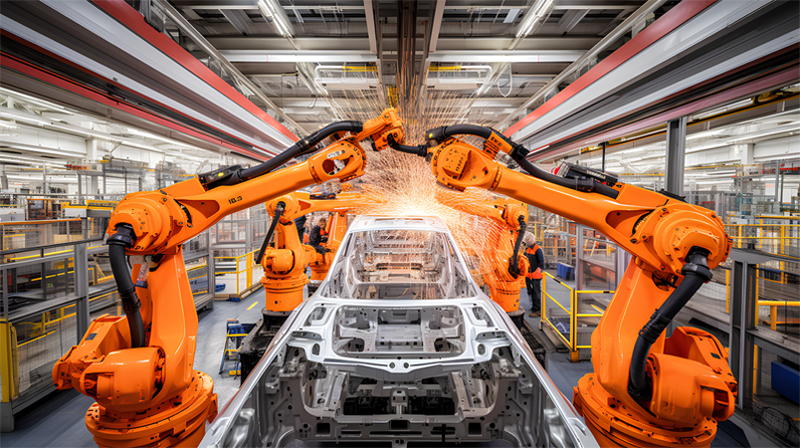
The German Volkswagen Group and its plant in Osnabrück serve as a symbolic example. The site, with a history dating back to Wilhelm Karmann GmbH and models such as the Golf Cabrio, will face a phase-out of automobile production after 2027. Current production of the T-Roc Cabrio will end, and according to the British newspaper Financial Times, management is seeking new uses for the capacity. In this situation, the possibility of cooperation with the Israeli company Rafael Advanced Defense Systems has emerged. Negotiations have reached an advanced stage and are moving toward the production of components for the Iron Dome air defence systems.
The essence of this move reveals a broader trend. Automakers possess extensive manufacturing capabilities, a skilled workforce, and logistics chains that can be adapted relatively quickly to a changing market environment. In the case of Osnabrück, this involves approximately 2,300 jobs and infrastructure capable of producing modern vehicles. According to information from the negotiations, the “goal is to save all jobs and, if possible, further expand production capacity.” This approach captures the new logic of European industrial policy, which links employment with security and defence priorities.
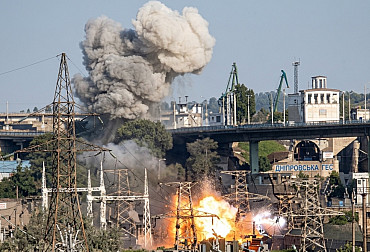
Plant conversion does not always mean the production of lethal weapons, but often involves components or other military equipment. Volkswagen’s plan in Osnabrück calls for the production of heavy transport vehicles, launchers, and power modules for the Iron Dome system. The interceptor missiles themselves are to be manufactured at a specialized facility elsewhere. This model of production division makes it possible to reduce the regulatory burden while leveraging civilian industrial know-how. “Proven defence technology is being combined with German industrial tradition,” one of the meeting participants summarized recent developments.
Publicly available data clearly illustrates the economic pressures driving this trend. Volkswagen Group’s operating profit fell by 53.5% to €8.9 billion in 2025. Net profit reached €6.9 billion, the lowest level since the Dieselgate scandal. At the same time, the company plans to lay off up to 35,000 employees by 2030. The combination of weaker demand, growing competition from China, and the costly transition to electric mobility is forcing automakers to seek alternative sources of revenue.
In parallel, the opposite process is underway in the defence sector. European nations plan to invest hundreds of billions of euros in defence by the end of the decade. Germany, France, and other countries are defining air defence as one of their top priorities. Programs like ReArm Europe are opening the door to rapid increases in production. The German defence industry is therefore seeking partners capable of manufacturing within a short-term horizon of 12–18 months, rather than a medium-term horizon of 3–5 years.
A similar development is underway in France, where automaker Renault has launched a collaboration with Turgis Gaillard to produce unmanned aerial vehicles. The plan calls for the production of up to 600 drones per month. This volume demonstrates how quickly the automotive sector can adapt to new requirements. The drones assembled by Renault fall into the long-range category used in current conflicts.
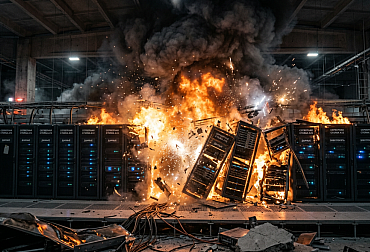

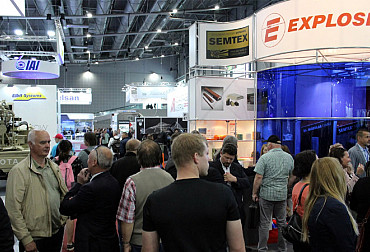
The defence industry in Germany is actively supporting this trend. The German Security and Defence Industry Association (Bundesverband der Deutschen Sicherheits- und Verteidigungsindustrie) proposed utilizing the automotive sector’s idle capacity as early as last year. Rheinmetall, for example, has adapted its own civilian automotive plants in Berlin and Neuss to meet the demand for military equipment from European armies. This is creating a hybrid industrial model where the line between civilian and military production is becoming blurred.
Political support plays a crucial role in this process. Berlin actively supports projects that link the civilian industry with defence contracts. The motivation includes preserving jobs, strengthening strategic autonomy, and rapidly increasing production capacity. In the case of Osnabrück, there is talk of minimal investment requirements for shifting production toward defence, which makes the entire project attractive in terms of return on investment.
This structural shift has direct implications for the Czech Republic. Local industry is deeply integrated into German supply chains, particularly in the automotive sector. Companies such as Škoda Auto, as well as dozens of subcontractors in regions like Mladá Boleslav, Plzeň, and Ostrava, face the same pressure to diversify production. If German conglomerates shift part of their capacity to defence, Czech companies will follow this trend.
However, the transition to the defence sector brings new requirements that go beyond standard industrial practices. Compliance expertise becomes of paramount importance. Companies must implement national export control systems as well as international ones in accordance with the EU Dual-Use Regulation or, in the case of U.S. components, the EAR and ITAR. Due diligence includes customer screening, end-user monitoring, and supply chain auditing, which must function flawlessly in the defence industry. Every contract may be subject to approval by government authorities and compliance with international obligations.
Technologically, the convergence of the automotive and defence sectors brings new synergies. The production of chassis, powertrains, electronics, and driver-assistance systems finds direct application in military applications. Modern military vehicles utilize advanced sensors, software, and power systems that often originate from civilian development. This convergence accelerates innovation and increases the efficiency of investments.
At the same time, the structure of demand is changing. European armies are seeking fast and scalable solutions. Air defence systems, logistics vehicles, and unmanned platforms constitute segments with high growth dynamics. The involvement of the automotive industry makes it possible to shorten production cycles and reduce costs. This factor could determine Europe’s ability to respond to security challenges within the next few years.
Developments in Germany and France thus point to the emergence of a new industrial paradigm. Automakers are gradually transforming from consumer goods manufacturers into key players in the security sector. This process is taking place without dramatic technological leaps, but rather through the adaptation of existing capabilities. It is precisely this continuity that makes the transformation rapid and relatively inexpensive.
For Czech industry, the strong ties to the German automotive sector represent both an advantage and a risk. The advantage lies in access to new contracts in the defence sector. The risk lies in the need to adapt quickly to regulatory and technological requirements. Success will depend on companies’ ability to invest in compliance, establish partnerships with defence firms, and navigate the complex landscape of export controls.
European industry is thus not entering a decline, but rather a phase of reorientation. Capacity, know-how, and the workforce remain; what is changing is how they are utilized. An automaker that was still optimizing the production of internal combustion engines as recently as 2020 is now analyzing the possibilities of producing air defence components. This shift reflects the reality of the geopolitical environment, where security is gaining the same priority as economic growth.