















Capt. Jan Heřmánek: Aid to Ukraine is not a sprint, but a marathon
These days, the world is commemorating the fourth anniversary of Russia's invasion of Ukraine. For Jan "Sully" Heřmánek from Team 4 Ukraine, this is another reminder that war is not a distant reality, but an everyday experience. In the next episode of our program CZ DIALOGUES, we talk to Captain Heřmánek about winter training in Finland, the true nature of aid to Ukraine, the mistakes of the West, and the new book he has written.
Video: Interview with Captain Jan Heřmánek / CZ DEFENCE
Jan "Sully" Heřmánek is one of those people for whom the war in Ukraine is not an abstract geopolitical event, but a concrete reality full of names, places, and personal experiences. As a member of the Active Reserve of the Czech Army, he participates in international exercises and is also one of the key figures in the Team 4 Ukraine organization, which has been providing material assistance directly in the affected areas for a long time. It is precisely this combination of military experience and repeated trips to Ukraine that, in his own words, gives him the distance and ability to name things without unnecessary abbreviations.
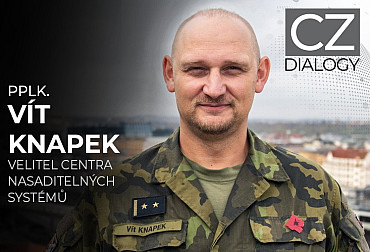
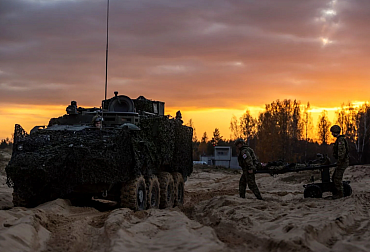
He considers the Arctic Blade exercise in Finland, in which he participated as a member of the active reserve, to be one of his most powerful experiences in recent times. "I generally like international cooperation, especially with our NATO partners," explains Sully. According to him, Finland belonged to the alliance family long before its formal entry. The purpose of the exercise is not only to test physical fitness, but also to learn how to function in an environment where frost, darkness, and fatigue significantly limit the abilities of individuals and the entire unit. "How to turn those restrictions, limitations, and hardships to your advantage, how to use them in a possible fight," he describes the philosophy of training. Temperatures dropping to minus 31.5 degrees Celsius, he says, show how crucial preparation, discipline, and the ability to improvise are.
It was in these extreme conditions that he realized the fundamental difference between training and the reality of war. "It's 'fun' in quotation marks, because there is always some medical care and the possibility of going somewhere warm. But civilians don't have that option," says Heřmánek. According to him, the parallel with Ukraine is chillingly accurate. People there face similar temperatures, but without facilities, without the certainty that they can retreat to safety, and often without electricity or heating. "They freeze in their apartments and survive on foreign aid or whatever they can get for themselves," adds Sully.
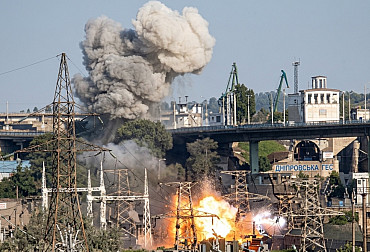
Jan Heřmánek does not consider Russian attacks on energy infrastructure to be anything new. "This is not a new tactic, it is a long-term strategy," he emphasizes. After years of systematic destruction, he believes that the infrastructure is on the brink of collapse. Repair workers are working under fire and often only provisionally. "They just can't cope anymore. Even in larger cities, electricity and heat are only available for a few hours a day." He also points out the long-term consequences. Even if energy supplies are restored, pipes burst in frozen apartments, equipment is destroyed, and a return to normal life is practically impossible.
According to its chairman, Heřmánek, Team 4 Ukraine is trying to respond precisely to these needs. The basis is a combination of targeted one-off projects and long-term continuous support. "In this war, everything is a consumable," he says bluntly. Equipment is destroyed, lost, or worn out, whether it's drones, power generators, or medical equipment. It is the so-called "evergreens," i.e., things that are needed all the time, that form the backbone of the aid. "Drones, battery systems, power generators—these are things that the front lines and the rear cannot do without," says Sully.
Heřmánek rejects the idea that a small delivery would have a small effect. "He who gives quickly gives twice," he reminds us. He cites specific examples where several ambulances delivered to the area shortly after the liberation of the city made it possible to provide the only available medical care for many months. Similarly, ammunition deliveries at a time when international aid was blocked had a direct impact on the ability of units to maintain their defensive positions. "At that moment, it wasn't just help for them, but the difference between holding their position or losing it," he explains.
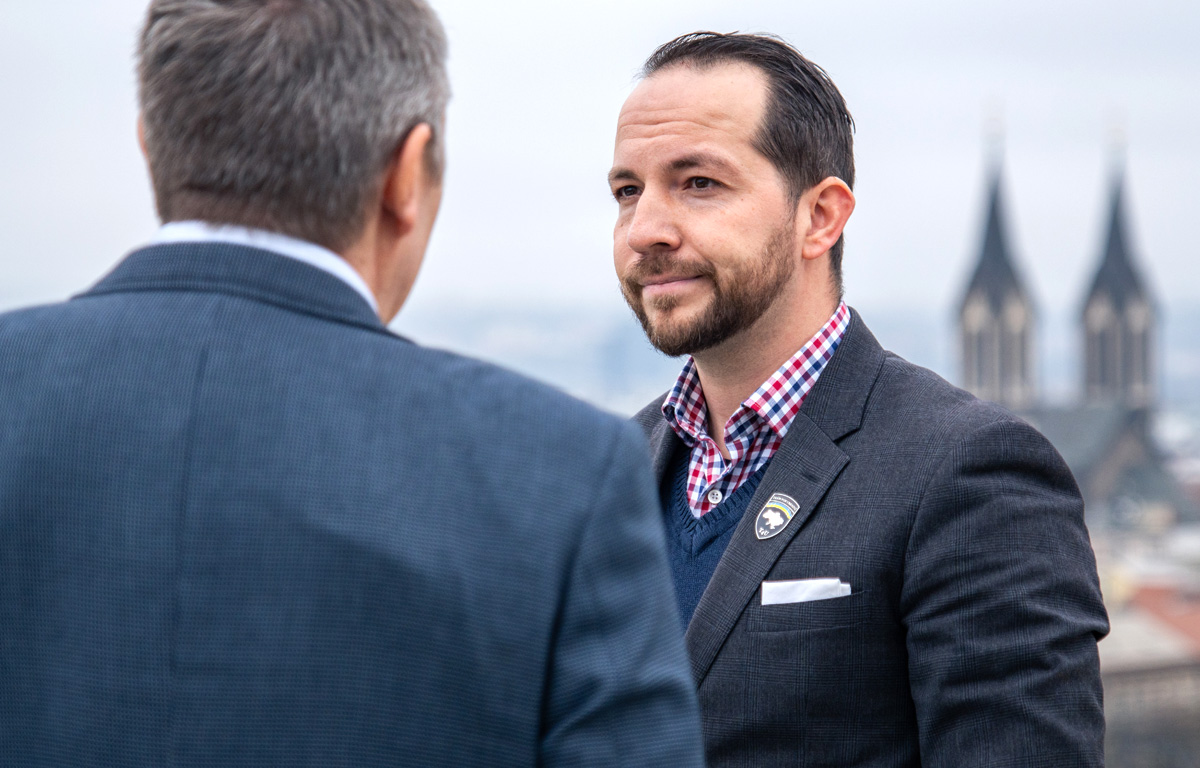
Another unique feature of Team 4 Ukraine is the way it operates. The organization is based on volunteerism and minimal overhead costs. "Ninety-eight to ninety-nine percent of the aid goes to end users," Heřmánek emphasizes. He considers speed, flexibility, and direct contact with units and civilian institutions to be the key differences compared to large state structures. According to him, these are irreplaceable, but often slower and less targeted.
He decided to capture his experiences from his repeated trips to Ukraine in a book. Together with David Miřejovský, he wrote the book Světlem proti temnotě (Light Against Darkness). "For me, it has three dimensions," explains Sully. The first is the historical dimension—an effort to record a crucial stage in European history as experienced by people directly in the field. The second is the informational level, i.e., an effort to show the war without idealization or trivialization. "There are a lot of things circulating on social media that are not true. Whether it's claims that there is no war there or, conversely, exaggerated praise for its effectiveness." The third level is personal. "It's also a confession. When you're going at that pace, you don't even have time to realize a lot of things." Heřmánek also admits in the interview that a number of things are deliberately missing from the book and that some names and places have been changed. "I don't want to endanger the people who are there. Some things just can't be revealed yet," Heřmánek says openly. He does not rule out continuing once the war in Ukraine is over.
According to him, serving in the Active Reserve significantly influences the way he perceives aid to Ukraine. Jan Heřmánek does not try to be just a humanitarian worker, but also a soldier who learns lessons for the Czech Republic's own defense capabilities from every trip. "A large part of Team 4 Ukraine's task is to help the Czech Republic," he explains. He passes on information from the field to the army and incorporates it into training at his unit. "Lessons learned are fed back. Not just from us, but systematically."
He is critical of the West's stance. According to him, the biggest mistake is the belief that the conflict will eventually die down on its own. "It won't end on its own," he says unequivocally. In his view, Russia is willing to suffer enormous losses and is playing a zero-sum game. "Someone has to lose for them to win." At the same time, he points out the differences between individual countries. While Finland, the Baltic states, and Poland take the threat for granted and are systematically preparing themselves, the Czech Republic, in his opinion, continues to underestimate its own potential. "We are not a small country. We have people, industry, and economy. All we lack is pace and courage."
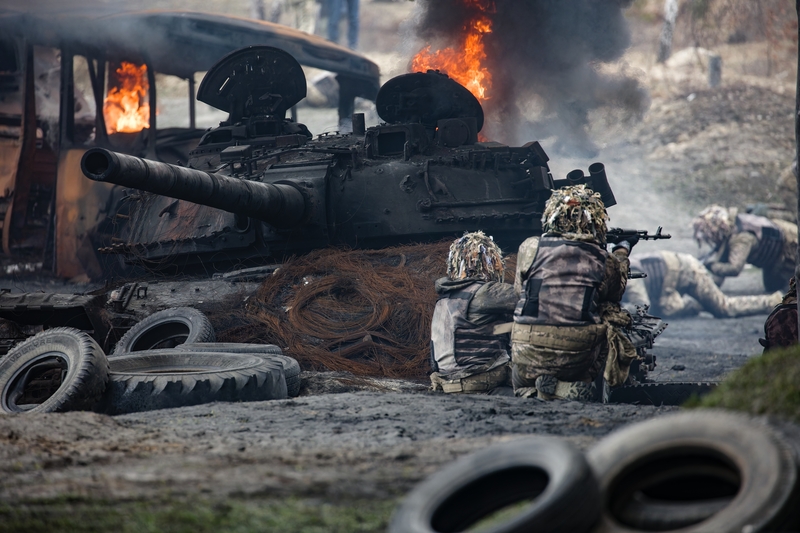
According to Heřmánek, aid to Ukraine is not a short-term project. "It's a marathon," he emphasizes. According to him, many people and organizations have burned out because the pace has been extreme for a long time. Nevertheless, he considers perseverance to be key. Not only for Ukraine itself, but also for the security of Central Europe. In his opinion, a bad end to the war would mean massive waves of migration, an economic burden, and a direct security threat.
Despite fatigue, frustration, and personal sacrifices, he remains convinced that the aid is worthwhile. Every generator, every ambulance, every drone can mean a life saved at a specific moment. And it is this certainty that is his reason for continuing four years after the start of the war.
If you want to learn more, listen to the entire interview at the beginning of this article.