
















Chinese technology as a systemic risk for Central Europe
In recent years, the Czech Republic has been shifting from the periphery of geopolitical interest to an area where superpowers are competing for the future shape of European security. Central Europe is turning into a testing ground where alliance commitments, technological dependence, and pressure from authoritarian powers seeking to weaken the Euro-Atlantic area from within are colliding. This article examines the systematic activities of the People's Republic of China in the so-called "frontline states," which are characterized by their strong ties to NATO and the European Union, technological sophistication, and communist past. Beijing exploits a combination of open markets, complex supply chains, and democratic constraints, in which security risks can be disguised as normal economic cooperation.
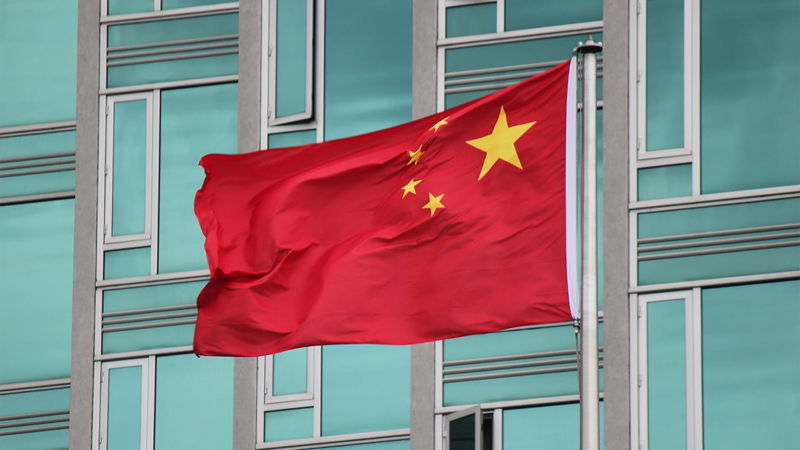
China's activities in post-communist Europe follow a long-term and coordinated strategy. Technological expansion, companies' legal obligations to the state, economic leverage, and hybrid operations form an interconnected whole with the aim of systematically penetrating critical parts of European infrastructure. Cyberspace and technological space provide ideal tools for such activities, as they enable data collection, system mapping, and the creation of future advantages without the need for open confrontation. The Czech Republic is responding to this reality with increasing openness, as evidenced by public warnings from security services and specific political decisions.
Poland's move last December was a significant signal of a change in European thinking. Warsaw announced at the time that it was addressing serious threats to national and European security associated with possible surveillance and sabotage through Chinese smart cars imported into the country. According to Polish sources, smart cars manufactured in the People's Republic of China (PRC) are equipped with technologies capable of collecting large amounts of personal and geolocation data. This fact is also confirmed by Chinese authorities (e.g., the National Standardization Commission). Data from smart cars can be used for "intelligence analysis, evaluation of military and civilian infrastructure, and analysis of activities in the defense and economic sectors," which the Poles perceive as a direct risk to national security.

The Polish case illustrates a fundamental shift in the nature of technological threats. Cars are no longer just a means of transport; they are becoming mobile sensor platforms. Cameras, radar systems, GPS modules, and connections to cloud services create a continuous flow of data on movement, infrastructure, and user behavior. In an environment where manufacturers are legally obliged to cooperate with state security agencies, this data takes on strategic importance. The debate thus shifts from technical parameters to the question of political loyalty and the legal framework in which the technology is developed.
The American think tank Jamestown Foundation emphasizes that similar cases are part of a broader, multi-layered Chinese strategy towards the aforementioned "frontline states." Technological penetration is intertwined with economic ties and hybrid operations. The traditional rivalry between Russia and the collective West in Central Europe is now significantly influenced by Beijing's emerging activities. The increasingly exhausted Kremlin regime, which has also become technologically and economically dependent on the Middle Kingdom, apparently welcomes any anti-Western activity. Even if the opposite were true, it now lacks the ability to prevent Chinese penetration. Chinese military analysts are also gaining valuable insights from the war in Ukraine into the functioning of autonomous systems, unmanned platforms, and the resilience of modern infrastructure. This knowledge is directly relevant to a potential conflict in the Indo-Pacific region. Beijing continues to present itself as a responsible global actor, while in practice it is systematically testing the weaknesses of the European security architecture.
An important role in China's efforts is played by the united front, through which the Chinese Communist Party builds networks of influence among entrepreneurs, academics, and political actors abroad. These efforts build on the creation of technological dependencies through stakes in civilian infrastructure, which can also be used for intelligence gathering. The economic dimension is complemented by the Belt and Road Initiative, presented as an investment opportunity, which in practice often generates long-term structural dependence.
Countries between Germany and Russia are responding by gradually tightening their defense measures. In September 2025, a group of countries, including the Czech Republic, Finland, Poland, and the US, issued a joint assessment of global espionage activities sponsored by the PRC. These activities focus on telecommunications, government administration, transportation, accommodation facilities, and military infrastructure. In March 2025, the Czech Republic blocked the Chinese company Emposat from operating a ground satellite station on its territory after a warning from the Security Information Service. This step reflects growing caution towards Chinese technology projects in sensitive sectors.


The legal framework of the Middle Kingdom remains a key factor. Chinese companies are subject to the State Intelligence Law and the Cybersecurity Law, which impose an obligation to support and cooperate with state intelligence agencies. Data collected through technology projects can be made available to security agencies upon request. This fact fundamentally changes the security calculations of European states and calls into question the assumption of technological neutrality.
Romania is an example of a more radical response. In 2020, it canceled an agreement with the Chinese state-owned company China General Nuclear Power Corporation to build new reactors at the Cernavodă nuclear power plant. This was followed in the same year by a ban on Huawei. A year later, the government issued a memorandum excluding companies from the PRC from tenders and investments in critical infrastructure. Bucharest justified this step by citing the low quality of work and the systemic advantage resulting from state support. The decision was part of an effort to maintain the confidence of partners in the EU and NATO at a time when the United States had placed a number of Chinese entities on its sanctions list.
The Czech experience confirms that China's activities go beyond economic cooperation. In May 2025, the Czech government accused Beijing of conducting a long-term cyber campaign against the Ministry of Foreign Affairs. The investigation identified a group called APT31, linked to the Ministry of State Security of the People's Republic of China, which had targeted an institution classified as critical infrastructure. This was followed by a general warning to critical infrastructure operators about the risks associated with data transmission and remote management from China, including smart sensors, phones, electronics, and some electric vehicles. The US Department of Justice identifies APT31 as a program run by the Hubei provincial security apparatus based in Wuhan, with a history of attacks against institutions in Finland and Norway.
Similar measures have been taken by the Baltic states. In 2021, Lithuania blocked deliveries of airport scanners from Nuctech, citing its legal obligation to cooperate with Chinese intelligence services. In the same year, the Lithuanian Ministry of Defense recommended that public institutions and consumers avoid Chinese smartphones after the discovery of censorship features and security vulnerabilities. Estonia rejected a Chinese-funded undersea tunnel project between Tallinn and Helsinki. Latvia has committed to building a border surveillance system entirely without Chinese components by 2025.
Security precautions have also been reflected in counterintelligence. In 2021, an Estonian court convicted a scientist working with NATO for collaborating with Chinese military intelligence. This case is one of the rare public disclosures of Chinese intelligence assets in an Alliance member state.
The coordination between China and Russia in the field of undersea infrastructure is particularly worrying. Both powers are involved in activities targeting gas pipelines and telecommunications cables in the Baltic and Arctic regions and around Taiwan. In the Baltic Sea, Chinese commercial ships have been involved in cases of damage to critical cables by dragging anchors in cooperation with the Russian shadow fleet. These cables provide the main energy and data flows for the military and civilian functioning of NATO countries.
The overall picture of China's activities in the "frontline states" remains clear. Beijing is systematically penetrating the security domains of the Euro-Atlantic area. The combination of technological expansion, data collection, legal coercion, and pragmatic cooperation with Russia creates a long-term structural challenge. The Czech Republic thus finds itself in a situation where the issue of technology, data, and supply chains poses a challenge to national security and tests the political resilience of the state in an environment of growing geopolitical confrontation.
Related