










The Czech arms industry is experiencing unprecedented growth
The Czech arms and defense industry has undergone exceptionally dynamic development in recent years. The growth in exports, investments, and the value of key companies is driven by a combination of the war in Ukraine, changes in the security policies of European countries, and long-standing industrial traditions. Although the sector is reaching its capacity and personnel limits, available data and analysts' opinions suggest that its importance for the Czech economy will continue to grow in the coming years.
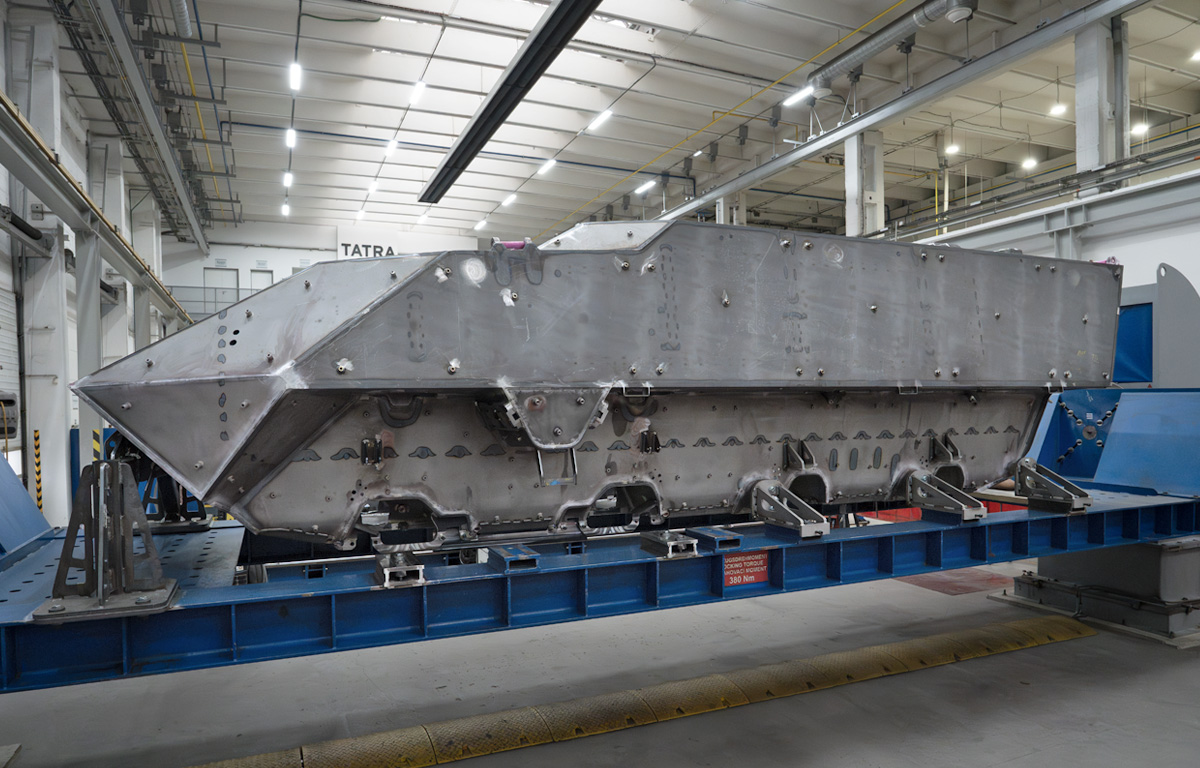
A combination of geopolitical upheavals, particularly Russia's aggression against Ukraine, a dramatic reassessment of European countries' defense policies, and a long-standing strong industrial tradition has created conditions for a sharp rise in production, exports, and the value of Czech arms companies. A sector that had been on the margins of economic interest for decades has become one of the key pillars of the Czech economy and an important factor in the country's foreign policy and security position.
Boom in production and exports
The most visible manifestation of the arms boom is the unprecedented growth in military equipment exports. While Czech military equipment exports reached CZK 15.2 billion in 2021, the pace of growth accelerated dramatically after the outbreak of the war in Ukraine. In 2022, exports rose to CZK 34 billion, in 2023 to CZK 50 billion, and in 2024 to a record CZK 94 billion. This represents a more than sixfold increase in just three years. Jiří Hynek, president and CEO of the Defense and Security Industry Association, said in the fall that exports could reach CZK 100 billion in 2025. One example is ammunition manufacturer Sellier & Bellot. The company achieved a profit of CZK 1.7 billion in 2024, which is approximately half a billion more than in the previous year.
The structure of exports clearly reflects current security needs. In financial terms, ammunition and substances important for the arms industry account for the largest share (approximately 44%), followed by land (22%) and aviation technology (18%). Territorially, exports have shifted significantly to Europe. While 42% of exports went to the European continent in 2021, this figure rose to more than 86% in 2024. Ukraine became the dominant destination, with Czech companies supplying military equipment worth more than CZK 46 billion.
Economic significance for the Czech Republic
The growth in exports is also reflected in the overall economic importance of the defense industry. According to a study by consulting firm EY, the Czech defense industry generated revenues of EUR 3 billion in 2023 and accounted for approximately 1% of gross domestic product.
Analyses by Česká spořitelna indicate that there are more than 400 companies operating in the defense, military, and security industries in the Czech Republic, with a total turnover exceeding CZK 140 billion. Although some of these companies combine military and civilian production, the trend in recent years clearly points to a strengthening of the defense segment. The Czech arms industry has thus become one of the fastest-growing sectors in the entire economy in terms of sales.
Growth in company value and investment boom
The arms boom has also had a significant impact on the growth in value of individual companies. In the Czech Elite 2025 ranking, the total value of the seven leading arms companies rose year-on-year from CZK 190 billion to CZK 469 billion, an increase of approximately 2.5 times. These companies thus account for more than 11.7% of the total value of the hundred most valuable Czech companies.

Michal Strnad's Czechoslovak Group (CSG) has a dominant position, reaching a value of CZK 256 billion and ranking among the five most valuable Czech companies overall. STV Group, a key manufacturer of large-caliber ammunition, Omnipol, focused on the aviation and radar industry, and Colt CZ Group, which significantly strengthened its vertical integration thanks to the acquisition of Sellier & Bellot, also grew significantly.
The common denominator is massive investment activity. Czech arms companies are investing in expanding production capacities at home and abroad, in modernizing technologies, and in strategic acquisitions. A symbolic example is CSG's purchase of the American group The Kinetic Group for approximately $2 billion, which significantly strengthened the position of Czech capital in the global ammunition market.
Growth limits and structural problems
Despite extremely favorable economic results, the Czech arms industry faces a number of limitations. Among the most significant are problems in supply chains, particularly the shortage of strategic raw materials such as gunpowder and nitrocellulose. Another barrier is the lack of production space, specialized machinery, and, above all, skilled labor.
According to the Czech Defense and Security Industry Association, the shortage of highly qualified technical experts, especially engineers, remains a critical problem. Although the employment of Ukrainian refugees has partially alleviated the situation, the long-term sustainability of growth will depend on the ability of the state and companies to invest in education and technical training.
Sustainable growth and the role of the state
The question of whether the current growth is sustainable even after the war in Ukraine ends is crucial. However, according to analysts, the main impetus lies not only in the current conflict, but in a profound reevaluation of the defense policies of European states. After three decades of relative underfunding, defense is becoming a political priority, with spending set to continue to grow in the coming years. According to data from the Ministry of Defense, contracts worth CZK 53 billion were signed in 2022, more than double that amount in 2023, and the volume reached almost CZK 244 billion in 2024.
Moreover, the Czech defense industry stands on relatively healthy foundations: it has a long tradition, a competitive cost structure, and active owners who recognized the change in the geopolitical paradigm in time. However, the state will play a key role, not only through the level of defense spending, but also through export support, faster army acquisition processes, economic diplomacy, and the involvement of domestic companies in international projects.
In a short period of time, our arms industry has transformed from a marginal sector into one of the most dynamic and strategically important sectors of the Czech economy. Record exports, rapid growth in company value, and massive investments confirm that this is not a short-term fluctuation but a structural change. However, future development will depend on the ability to manage capacity limits and labor shortages, as well as on long-term cooperation between the state and industry. Everything so far indicates that the importance of the defense industry for the Czech economy will continue to grow in the coming years.
Related