













Crowd Riot Control, or how the Military Police manages crowds and riots
In the current security environment, extraordinary situations or foreign operations to ensure stability may arise where normal police methods are insufficient and members of the military police and the Czech Republic's army may be deployed. As part of CRC (Crowd and Riot Control) activities, they can ensure the safety of larger gatherings, during demonstrations and riots, or when protecting military facilities and personnel.
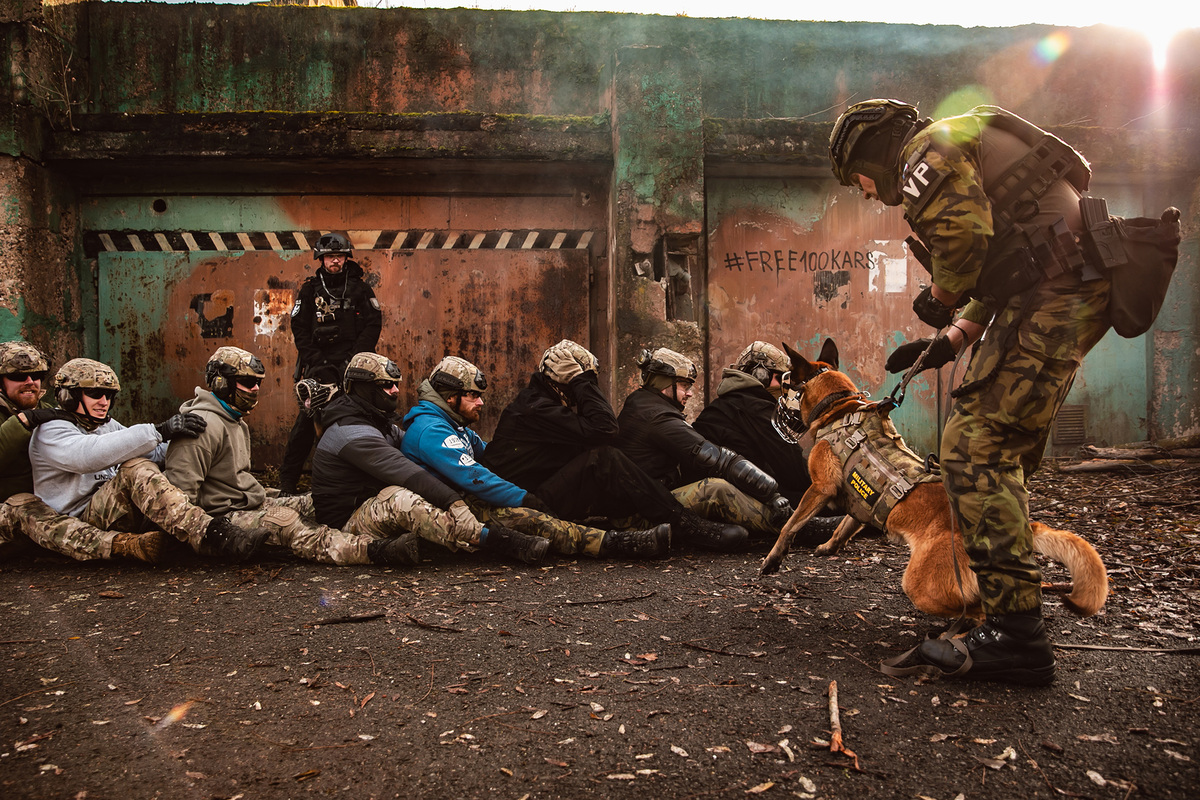
In order to ensure that such interventions are carried out appropriately, a CRC certification course was recently held for instructors specializing in crowd control training and units designated for this task. The course was led by experienced Military Police instructors and aimed not only to increase the expertise of the participants, but also to strengthen cooperation between the security forces of the Czech Republic and their foreign partners from Slovakia, where such international cooperation is crucial in strengthening joint exercises and missions.
The course was attended not only by representatives of the Military Police and the Czech Army, but also by members of the Czech Police, Municipal Police, Prison Service, and Military Police of the Slovak Republic, as well as the Active Reserves of the Military Police. Members of the 43rd Airborne Regiment from Chrudim participated not only as trainees, but also as opposing forces. This year, observers from the German Military Police and Italian Carabinieri also took part in the exercise for the first time.
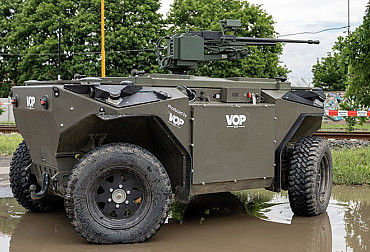
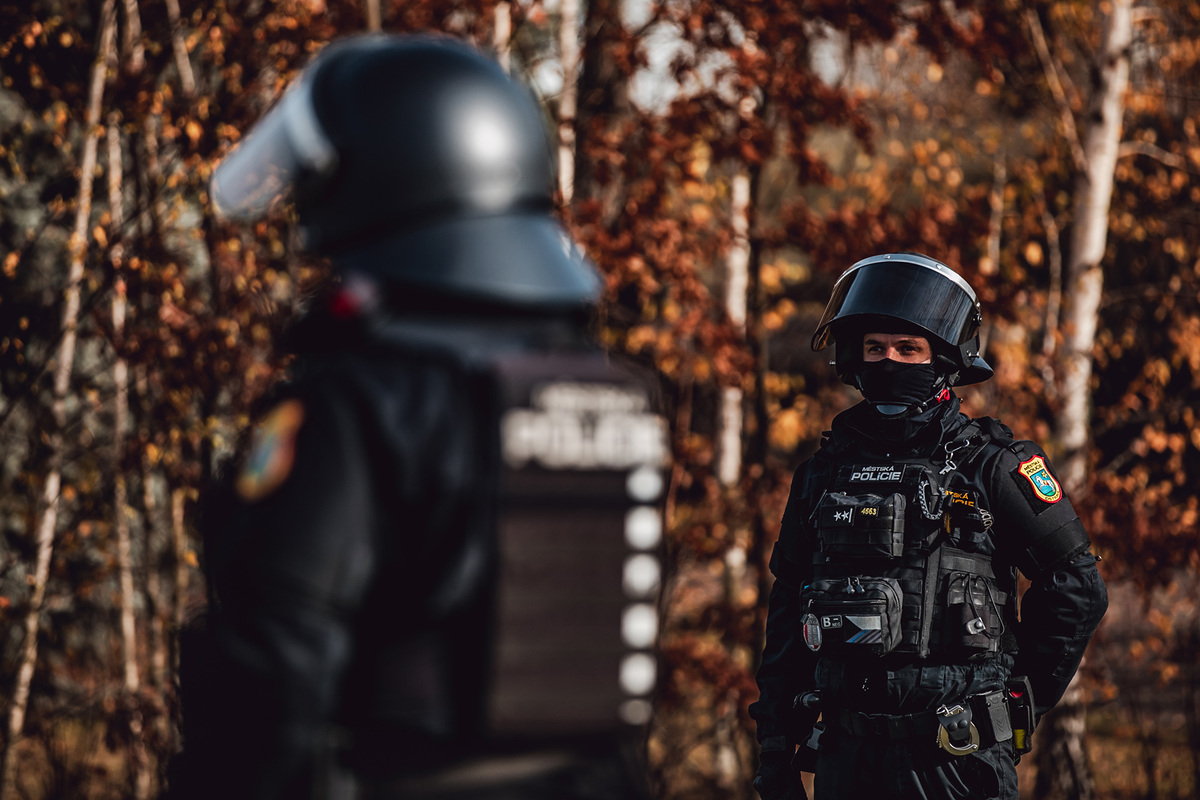
CRC members must possess a combination of several skills: physical fitness, mental resilience, tactical preparedness, and knowledge of the tools they use in their work (especially various non-lethal tools and weapons). Knowledge of legal frameworks, de-escalation techniques, communication with civilians, and rapid response to changing situations are also important.
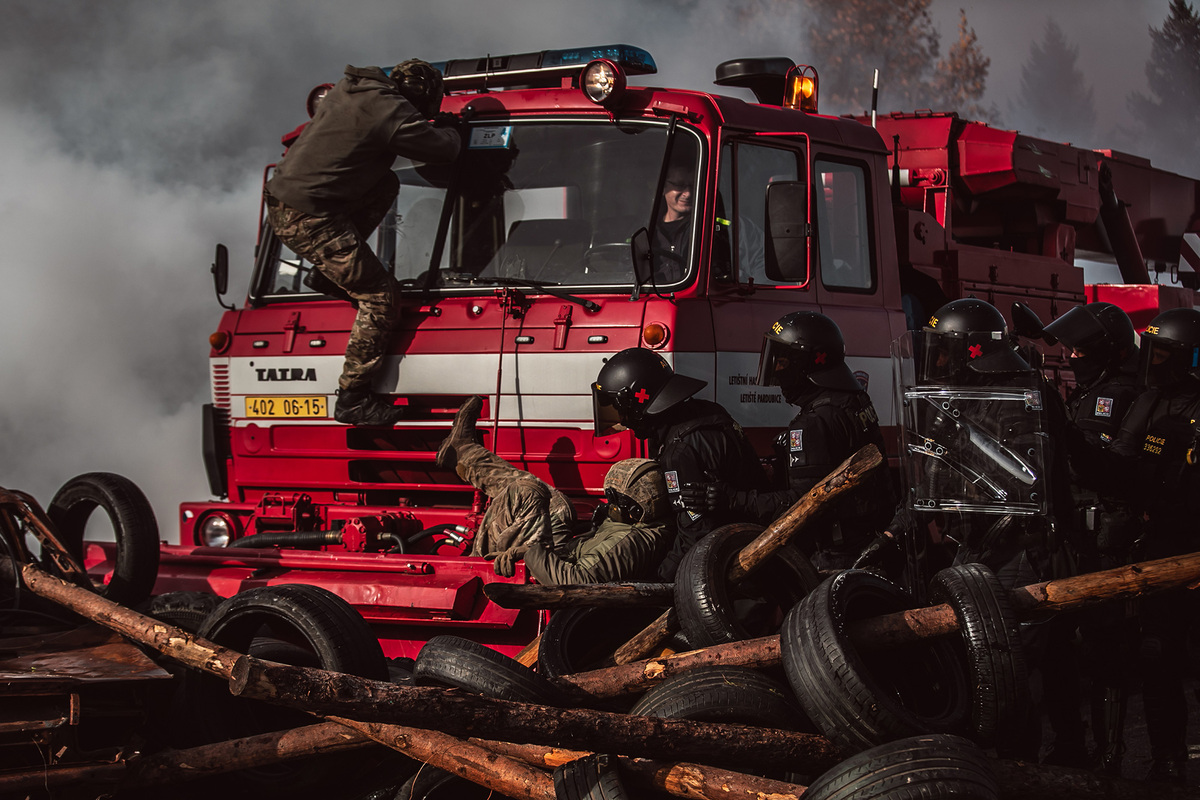
Crowd control tactics are changing in the new millennium: from simple lines with shields to sophisticated formations, the use of vehicles and communication devices such as LRADs, which are acoustic devices capable of transmitting very powerful sound over long distances (Long Range Acoustic Device). Formations with shields and the gradual deployment of greater force are of particular importance. However, it is necessary to realize that excessive or inappropriate use of force can lead to a worsening of the situation. Therefore, the intervention team must adequately assess the situation and the subsequent procedure.
Model situations
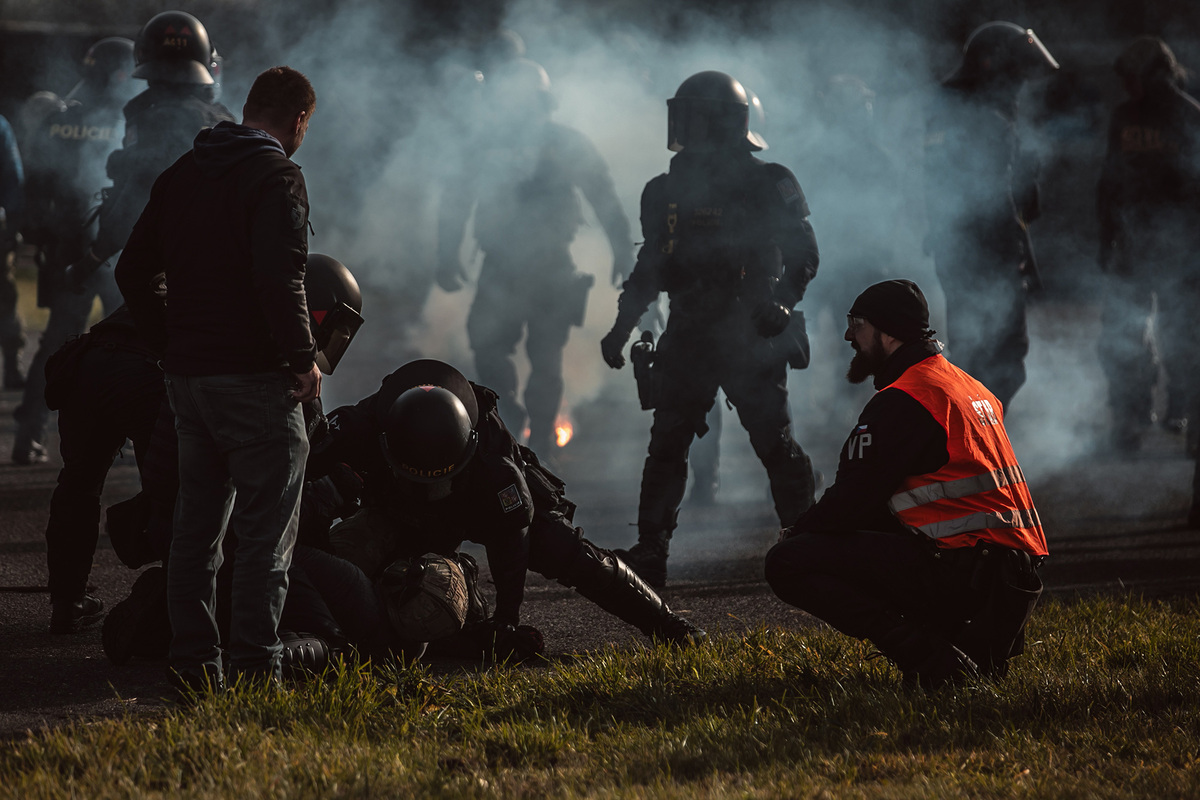
During the practical part of the course, participants had the opportunity to experience various model situations designed to mimic real combat conditions as closely as possible. The training focused on topics such as tactics in urban environments, working with service dogs, helicopter transfers, overcoming barricades, and interventions in buildings or buses. Another important model situation is crowd control (e.g., during approved protest marches or as part of sporting events) and responding to Molotov cocktails and fire.
One of the key model situations was also overcoming passive resistance, which is common, for example, during demonstrations. In these cases, demonstrators block buildings or roads by sitting or lying down without actively resisting. Resolving such a situation requires a completely different approach than when intervening against an aggressive crowd.

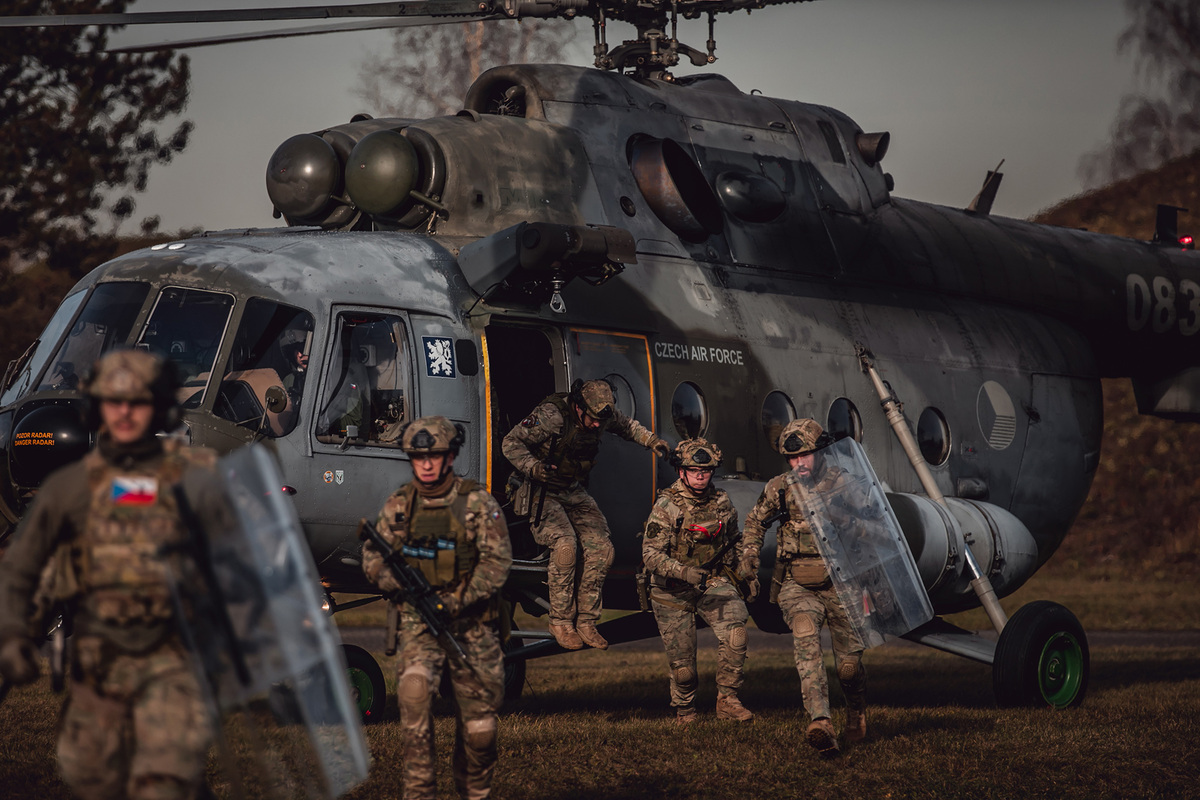
When dealing with passive resistance, it is necessary to comply with the legal framework and rules of escalation of force. At the same time, it is important to realize that passive resistance can turn into active resistance at any time and therefore use an adequate amount of one's own forces and resources. A Mi-17 helicopter from the 24th Transport Aviation Base in Kbely, which is also used in the KFOR foreign operation, played a role in this year's exercise and was used to practice deploying a CRC team by helicopter.
Final assessment and certification
Model situations provide valuable insights and serve as a comprehensive test of the extent to which trainees have mastered newly acquired knowledge, as well as testing their ability to make independent decisions. The scenarios are based on real-life experiences from the Czech Republic and abroad, and the Military Police continuously updates them to ensure adequate staff training and optimize procedures.
The course culminated in the certification of new CRC instructors and graduates of the basic CRC course. Instructors had to demonstrate not only their knowledge of procedures, but also their ability to pass on this knowledge. The final exam of the basic course consisted of model situations in which the unit had to demonstrate their training and mastery of basic crowd control procedures. The course thus contributed not only to the professional growth of individuals, but also to strengthening the preparedness and professionalism of the security forces as a whole.
"The CRC course helped deepen the knowledge of all participants in the field of crowd management. Thanks to international participation, it also served as a valuable exchange of experiences. It also helped to practice the ability to cooperate across departments, which is useful when deployed abroad, where it is necessary to quickly adapt to often very different procedures and equipment of units of different nationalities," said Chief CRC Instructor at the Military Police, Warrant Officer Vlastimil Šubrt.