














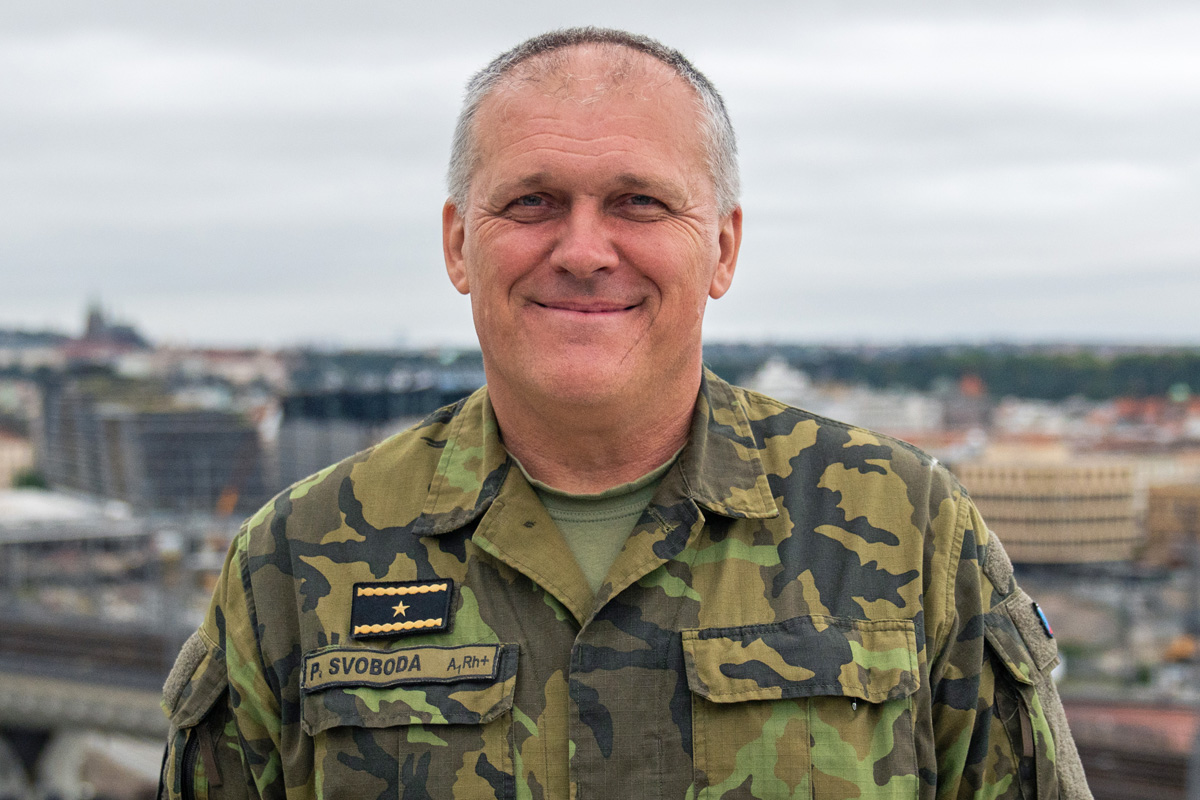
Territorial Forces strengthen: Brig. Gen. Petr Svoboda assumes command in Tábor
Yesterday, Tábor became the scene of an important milestone in the development of the Czech Army. A ceremonial parade at the Territorial Forces Command Headquarters in the Prokop Holý barracks in Tábor, combined with the appointment of a new commander, Brigadier General Petr Svoboda, who took over from Col. Antonín Genzer on February 1, 2026, confirmed the growing importance of territorial forces in the defense of the state. The ceremony also included the opening of a Community Center for War Veterans in Tábor, with the army operating similar centers in Prague, Brno, and Olomouc.
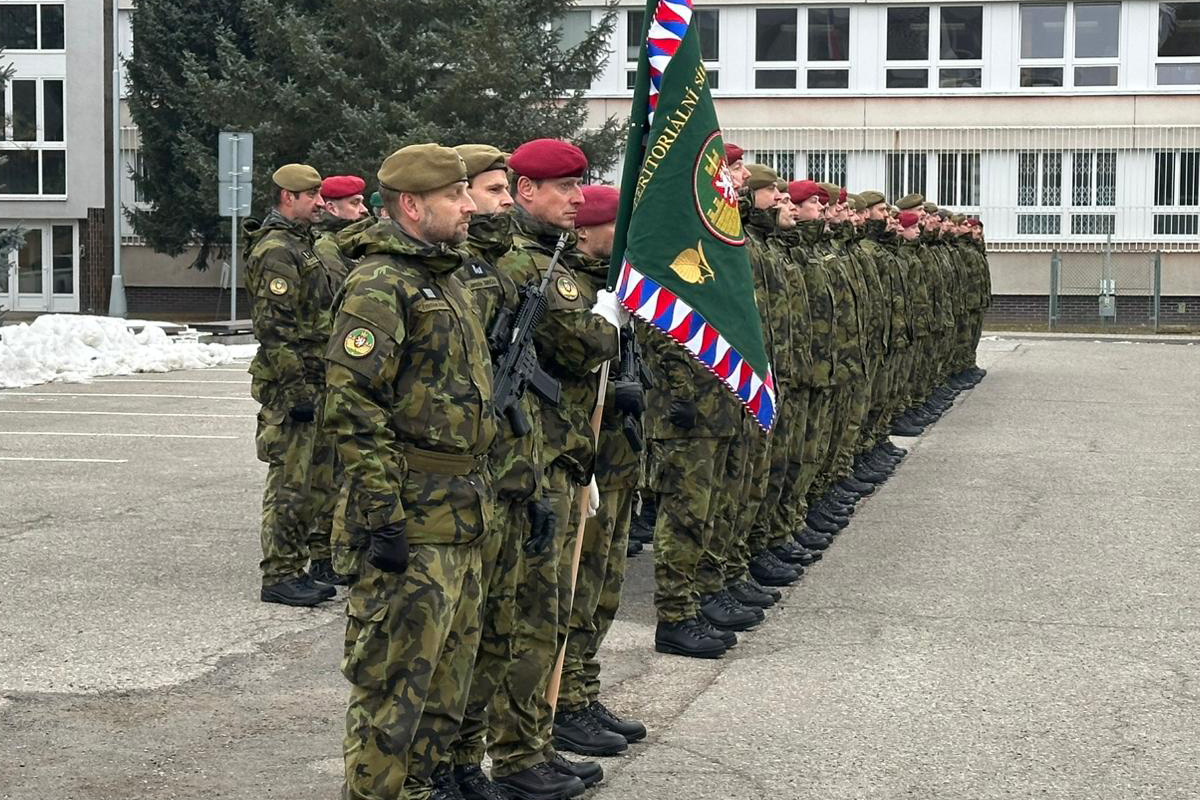
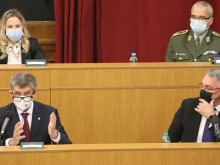
On Friday morning, January 23, 2026, a number of distinguished guests from the political sphere, the command of the Czech Armed Forces, and representatives of the Integrated Rescue System and local government gathered at the Territorial Forces Command in Tábor. The ceremonial parade was attended by Deputy Prime Minister and Minister of Defense Jaromír Zůna, Deputy Chairman of the Defense Committee of the Chamber of Deputies of the Parliament of the Czech Republic and Mayor of Bučovice Jiří Horák, First Deputy Chief of the General Staff of the Czech Armed Forces, Lieutenant General Miroslav Hlaváč, Commander of the Land Forces of the Czech Armed Forces, Major General Josef Trojánek, Commander of the Air Forces of the Czech Armed Forces, Major General Petr Čepelka, and other guests. Tábor was not chosen for this event by chance. This historic city has long been associated with military traditions and the symbolism of national defense, as the Minister of Defense emphasized in his speech.
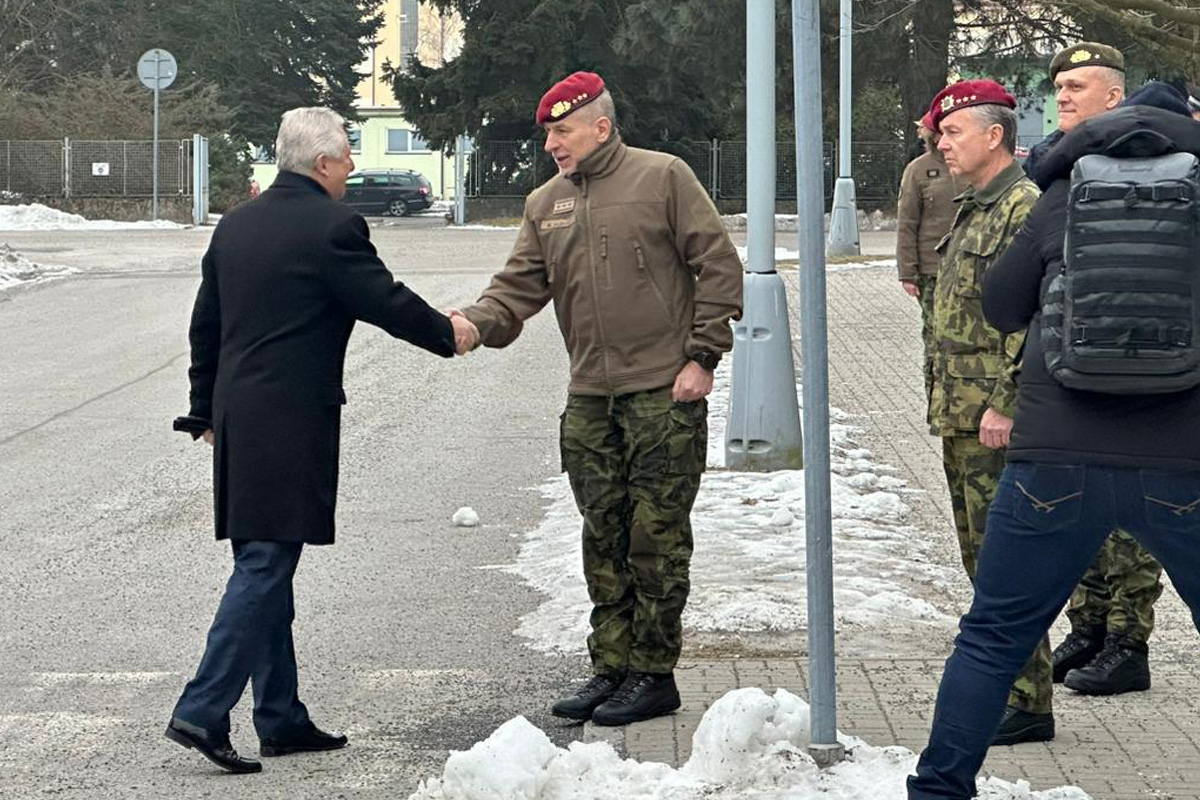
"The city of Tábor is inextricably linked to the armed forces and the defense of our national values. It is therefore symbolic that, even in modern times, units that are crucial for the defense of our country are based here," said Jaromír Zůna at the beginning of his speech. He also emphasized the role of the Czech Armed Forces' territorial forces and their development: "I consider today to be an important milestone in the development of the territorial forces. During my time in the army, I have always been convinced that strengthening the defense of our territory and increasing society's resilience to security threats cannot be achieved without the involvement of the public. Therefore, the active reserve, composed of citizens who live in a given region and have a strong emotional connection to it, has become the cornerstone of the territorial forces." According to him, the concept of territorial defense has come to the forefront within NATO since Russia's aggression against Ukraine. Territorial structures and their capabilities, including host nation support, are now seen as part of deterrence and rapid response capabilities. "And this concept has been promoted throughout the North Atlantic Alliance since the outbreak of the conflict in Ukraine. The Alliance now places great emphasis on developing the capabilities of territorial forces and on host nation support," said the minister. He also identified the organizational "reinforcement" of territorial forces as a key step, which was reflected in their inclusion at the level of other types of forces during the year.
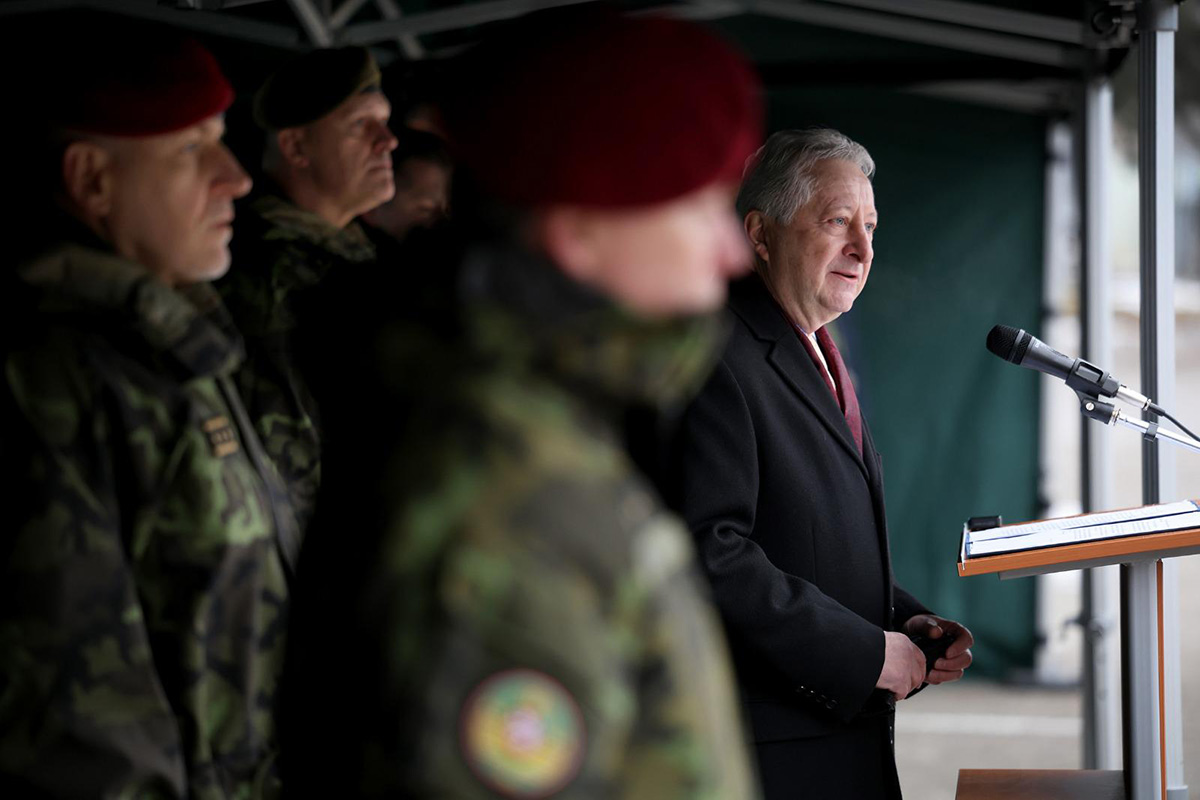
The Minister of Defense was followed by the First Deputy Chief of the General Staff of the Czech Armed Forces, Lieutenant General Miroslav Hlaváč. He emphasized that the decision to establish the headquarters was a wise one in view of developments in the security environment and that modern conflicts are changing traditional notions of the "front" and "rear." "The current way of conducting operations clearly shows that the depth of the operational space has increased significantly. Modern weapon systems and hybrid warfare are changing the nature of conflicts. The defense of our own territory therefore begins at home," said Hlaváč. According to him, this also gives rise to practical requirements for the development of territorial capabilities: the creation of territorial defense battalions, the provision of infrastructure, equipment, training, and the creation of an attractive framework for citizens to join the active reserve.
Brigadier General Petr Svoboda, who is taking command of the territorial forces, thanked the previous commander for building the structure "from scratch" and emphasized that elevating the territorial forces to the level of other types of forces is a commitment for the entire command. "What stands here today was not a given. We started with minimal capacities, and today we have a fully-fledged headquarters. It will be a great honor to command you all in this hard work," said General Svoboda.
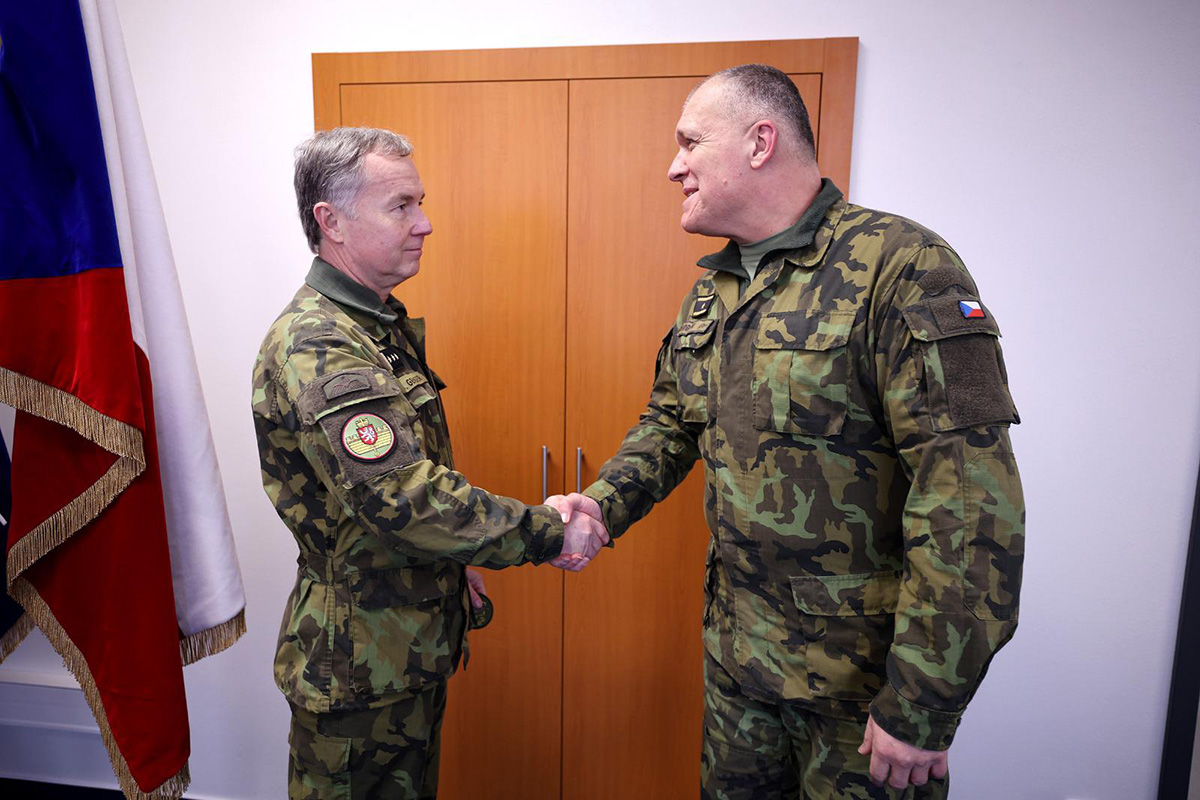
Minister Zůna confirmed the ambitions of the Czech Armed Forces Territorial Forces at a press conference, where he responded to a question from CZ DEFENCE about how the activities of the Territorial Forces would affect the work of regional military headquarters: "I think significantly, because regional military headquarters are subordinate to the Territorial Forces Command, i.e., the Territorial Forces Command will continue to build the entire system. It is not just about regional military headquarters, it is also about building territorial forces battalions. This year, the Territorial Forces Command of the Czech Armed Forces will also take on the task of supporting the host nation. This means that the HNS battalion, which is currently in Rakovník, will also be subordinate to this command. And from this brief summary alone, it is clear how the role of the territorial forces will grow."
We asked Brigadier General Petr Svoboda, the new commander of the Czech Army Territorial Forces, several questions in connection with his new position:
The Territorial Forces are a relatively new part of the Czech Army. What are your main priorities for your first term as commander of the Territorial Forces Command?
Everything we do must be aimed at changing the way people in the regions perceive defense and internal security.
The active reserve is considered an essential element of a fully professional army and a bridge between the army and civil society. How do you intend to further develop this potential and strengthen public confidence in the role of active reservists?
Active reserves are the alpha and omega of territorial forces and their connection to civilian life. AZ TS ensures the defense and security of important locations for the functioning of the country in their region, securing their streets and homes. In other words, in normal civilian life, they use the services of their region, and in case of need, in the event of a threat, they become servants of their region. To add to that, in the modern concept of combat, territorial forces and territorial defense battalions bring elements of MDO (Multi-Domain Operations, editor's note). It is these components that orchestrate, coordinate, and bring a whole-of-society approach to defense management. This is where the lines of other components of defense and state security, the Integrated Rescue System, various state and non-state organizations, associations, the economy, industry, and other citizens who believe in the defense of the state converge. Yes, the Operations Command is in charge of all this, but the "bread" is baked in the regions.
The Territorial Forces Command is currently responsible for more than 4,000 active reserve personnel and for all regional military commands. Where do you see the greatest challenges in managing such a large and geographically dispersed structure?
We must coordinate the fulfillment of defense and security tasks in individual territorial units with other armed forces of the Czech Republic, elements of the Integrated Rescue System, municipal police, and, last but not least, various associations in the regions, and adapt the structure and material support of territorial defense battalions accordingly. We must make greater use of the advantages of mission command, take advantage of their proactive approach, and entrust a higher degree of trust and independence to lower levels of command and control.
The security situation in Europe has changed significantly since the establishment of the Territorial Command in 2019. How do these changes affect the tasks of the territorial forces and their preparedness for possible crisis scenarios?
All the changes in Europe since 2012 — or since 2019, if we count, the very creation of the territorial forces, have only confirmed the correctness of the path taken in creating this type of force. Recently, the political leadership of the country and the Ministry of Defense have perceived it as one of their main priorities, which will clearly contribute to accelerating its development—something I am witnessing today, among other things. The experiences of the countries around us, especially in the Baltic region, show that we are on the right track.
One of the key tasks of the Territorial Forces Command is to mobilize reinforcements for the Czech Army. In your opinion, is the current system set up in such a way that it can withstand a long-term crisis or a state of emergency?
This area is being addressed by the ministry and army command. In my previous position, I was part of this and witnessed it firsthand. They are working hard to improve the overall system. We, the Territorial Forces, through our Regional Military Command, are the executive element of this system.
Regional military headquarters play a key role in crisis management and cooperation with civilian authorities. How do you intend to strengthen their capabilities and coordination with other components of the integrated rescue system and state administration?
I have already mentioned this, and I must add that we need to change our approach to filling important positions at the Regional Military Command very quickly. To complete my answer, I will respond with a question: How many generals have you seen emerge from the ranks of Regional Military Command directors who have continued in their work?
What role do you think territorial forces and active reserves should play in the future form of the Czech Army, for example in the context of NATO's collective defense and the protection of its own territory?
For the territory of the Czech Republic and the protection of its own territory, they are irreplaceable—and, as I have already mentioned, they bring the true flavor of MDO. And for the components of the armed forces supporting NATO's collective defense outside the territory, they have a supporting role.