













Civil-Military Cooperation as an Operational Element of National Defense
The current security environment in the Czech Republic increasingly demonstrates that crisis management and the potential conduct of military operations on national territory are not exclusively military tasks, but rather a complex process requiring close and long-term coordination among the armed forces, civilian institutions, other security actors, and the general public. The civilian environment here is not merely the context in which the armed forces operate, but an active co-creator of operational conditions, legitimacy, and the outcome of the state’s response to crises.
In this context, civil-military cooperation and coordination take on critical importance – not merely as a supporting mechanism for crisis management, but as an integral part of operational planning, decision-making, and the conduct of operations across the entire spectrum of situations, from peacetime through crisis to armed conflict. The conduct of operations on the territory of the Czech Republic is inevitably linked to the functioning of state administration, local government, critical infrastructure, the private sector, and the population’s ability to respond to emergencies. The effectiveness of military operations is therefore increasingly dependent on the quality of civil-military integration, not merely on the internal performance of the armed forces.
For this reason, this article is deliberately written from the operational perspective of the Czech Armed Forces, specifically from the level of command and control responsible for transforming political directives into executable operational solutions in an environment characterized by time pressure, uncertainty, and a high degree of civilian involvement. The focus is on those aspects of civil-military cooperation and coordination that have a direct impact on operational planning, decision-making processes, and the actual conduct of operations – that is, at the level where the state’s strategic objectives intersect with the practical realities of crisis and operational management.
Civil-Military Coordination Shaped by Decades of Non-Military Crises
The current form of civil-military coordination in the Czech Republic is largely the result of the types of crises the country has faced over the past three decades. In addition to the armed forces’ participation in overseas crisis operations led by NATO, the European Union, or the United Nations, the Czech Republic has primarily dealt with non-military crisis situations on its own territory. These were primarily associated with natural disasters (recurring floods, a tornado), industrial and technological accidents, large-scale traffic accidents, and, in recent years, acts of deliberate sabotage falling within the spectrum of hybrid activities.
This repeatedly experienced crisis context has fundamentally shaped the national crisis preparedness system, as well as the expectations, roles, and working procedures of civilian crisis management actors. Civil-military coordination has therefore historically developed primarily as a purpose-driven, situation-oriented tool, optimized for managing individual, time-limited, and predominantly civilian emergencies. The military and non-military environments have long developed in parallel rather than in an integrated manner.
From a doctrinal perspective, it is crucial to emphasize that the concept of civil-military cooperation (CIMIC), as defined in NATO doctrines, has been systematically developed and applied by the Czech Army, particularly in foreign operations. Its application on national territory – that is, in peacetime, during crises, and in the event of armed conflict – has not yet been fully developed and represents an area of ongoing conceptual and practical development.
In the national context, therefore, the Czech Armed Forces have long been perceived by civilian actors primarily as a provider of rapidly deployable personnel and technical capabilities, typically utilized at lower levels of crisis response. This model has proven effective in past decades, but it no longer fully corresponds to the nature of current and future security threats, which require a significantly deeper level of civil-military interaction and integration.
Adapting to Military Crises: Trust as a Decisive Factor
The most pressing challenge for the future is therefore to adapt the existing model of civil-military coordination to a qualitatively different category of crises, particularly those of a hybrid or military nature, which fall along a continuum ranging from peace through crisis to armed conflict. From an operational perspective, this is not merely a matter of expanding the scope of CIMIC tasks, but of systematic civil-military integration, which must be taken into account from the very beginning of operational planning and in decision-making processes.
A key prerequisite for this adaptation is the trust of civilian actors that the armed forces possess not only the appropriate legal mandate but also the professional competence, planning tools, doctrinal framework, and capabilities to conduct credible operations on the state’s own territory. Building this trust is a long-term process that requires open communication, the sharing of experiences, and a mutual understanding of the operational realities of all involved actors. This adaptation cannot be achieved solely through legal amendments or formal conceptual documents.
Building trust requires long-term commitment, open communication, and mutual learning. Strategic communication and systematic engagement with key actors play a crucial role here, as the main challenges are not technical issues but perception, legitimacy, and trust. The military and civilian sectors, which have historically developed separately, must make a targeted investment of time in understanding each other’s limitations, organizational cultures, decision-making processes, and operational realities. Only in this way can a robust and resilient civil-military system emerge that strengthens the security of the state as a whole.
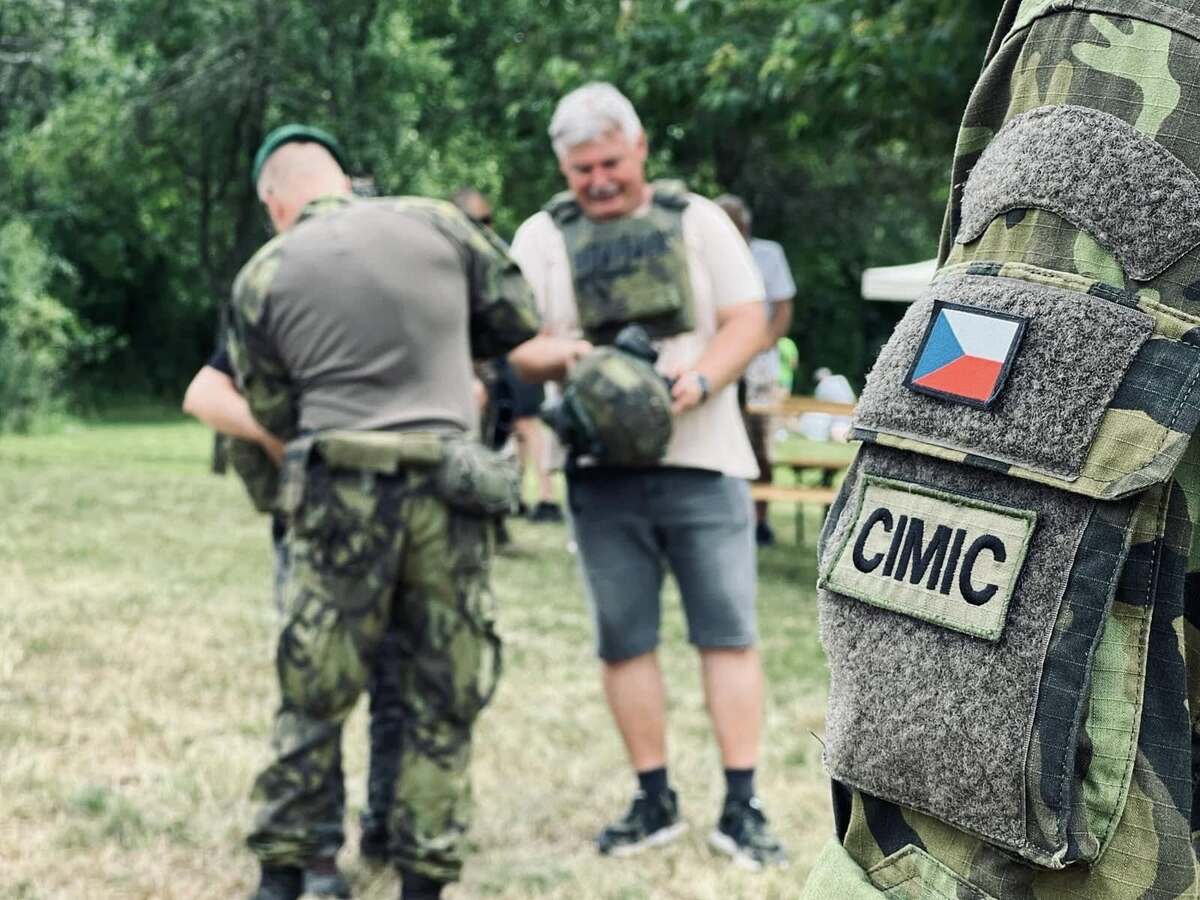
Building a Common Operational Understanding Through a Regional Framework
Once a basic level of trust has been established, the next crucial step is to develop a shared understanding of the mission and the operational environment in which it is to be carried out. From an operational planning perspective, this requires a joint assessment of the civil-military environment shared by both military and non-military actors, as well as the identification of a common civil-military framework of interdependencies and vulnerabilities.
From the perspective of practical implementation, it proves effective to approach the development of civil-military coordination from the regional level, which allows for maintaining the complexity of the problem while limiting the geographical scope. The regional approach enables the creation of solutions tailored to specific conditions and simultaneously supports the mutual sharing of experiences and best practices. The Czech Republic has suitable conditions for this approach through its structure of fourteen self-governing regions and a network of regional military commands, which create a platform for long-term and systematic civil-military interaction even before a crisis arises.
CIMIC as an Internal Integrator Within Operational Headquarters
In accordance with AJP 3.19 doctrine, CIMIC fulfills a dual role. It facilitates interaction with civilian actors externally while simultaneously integrating civilian aspects within the military into military planning, decision-making, and the conduct of operations. From the perspective of AJP 10 (Strategic Communications), CIMIC is one of the key capabilities contributing to maintaining situational awareness, shared understanding, and the legitimacy of military operations. Therefore, CIMIC cannot remain an isolated specialization but must be fully integrated into the operational rhythm of staffs, the flow of information, and the broader framework of information environment management. CIMIC should therefore not merely react to decisions already made, but actively contribute to the formulation of operational options and decision-making alternatives based on a deep understanding of the civilian environment. In this sense, the term “joint” encompasses not only the concept of inter-service cooperation but also deep civil-military integration.
Sustainability as the Foundation of Long-Term Operational Readiness
Once all transformation and integration steps have been completed, it is essential to focus on the sustainability of the entire system. Management practice has repeatedly shown that, during periods of transformation, temporary or incomplete solutions are often adopted in order to maintain the momentum of change. In the long term, however, unfinished tasks and partial solutions become a source of friction and reduce both the efficiency and operational value of the system.
From an operational perspective, sustainability is directly linked to immediate operational readiness. Operational readiness then includes:
- Maintaining situational awareness across civilian sectors that support national resilience;
- Coherent and integrated plans, ranging from framework and contingency plans to fully executable operational plans;
- Resilient infrastructure and information-sharing mechanisms;
- Ongoing commitment to peace aimed at strengthening national and social resilience.
Conclusion
Developments in the security environment clearly demonstrate that the traditional concept of civil-military coordination is no longer sufficient. Hybrid and military crises require systematic civil-military integration, which is an integral part of operational planning, command, and control. Within this framework, CIMIC is not a specialized function on the periphery of the system, but one of the key integrating elements of operational staffs, whose importance will continue to grow as crises become increasingly complex.