














CV90 MkIV and Leopard 2A8: Two Platforms Set to Transform the Czech Army’s Heavy Ground Forces
The introduction of the CV90 MkIV infantry fighting vehicles and Leopard 2A8 main battle tanks represents the largest modernization of the Czech Army’s heavy ground forces in several decades. This is not merely a matter of acquiring new equipment, but also of adopting a long-term approach to platform development, sharing the experiences of NATO users, and implementing a new training methodology. At the Eurosatory 2026 trade show, CZ DEFENCE spoke with representatives from BAE Systems Hägglunds and KNDS – the companies behind the development of both systems – who outlined the capabilities these systems will bring to the Czech Army in the coming years.
Video: CV90 MkIV and Leopard 2A8: Two platforms that will transform the capabilities of the Czech Army’s heavy ground forces / CZ DEFENCE
Both programs will shape the future of heavy ground forces over the coming decades, influencing training, logistics, and the way mechanized and tank units conduct combat operations. At the same time, they signify the Czech Republic’s involvement in extensive user communities that jointly develop individual platforms and respond to lessons learned from current armed conflicts. This aspect of modernization was one of the main themes at this year’s Eurosatory trade show in Paris. CZ DEFENCE therefore took the opportunity to speak directly with representatives from BAE Systems Hägglunds and KNDS, who have long been behind the development of both platforms. The interviews revealed that neither the current infantry fighting vehicle nor the main battle tank can be viewed as a finished product anymore. Both platforms are continuously evolving based on user experience, technological progress, and the changing nature of the battlefield.
BAE Systems Hägglunds: The CV90 MkIV as the Platform of the Future for the Czech Mechanized Brigade
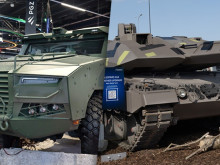
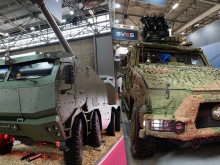
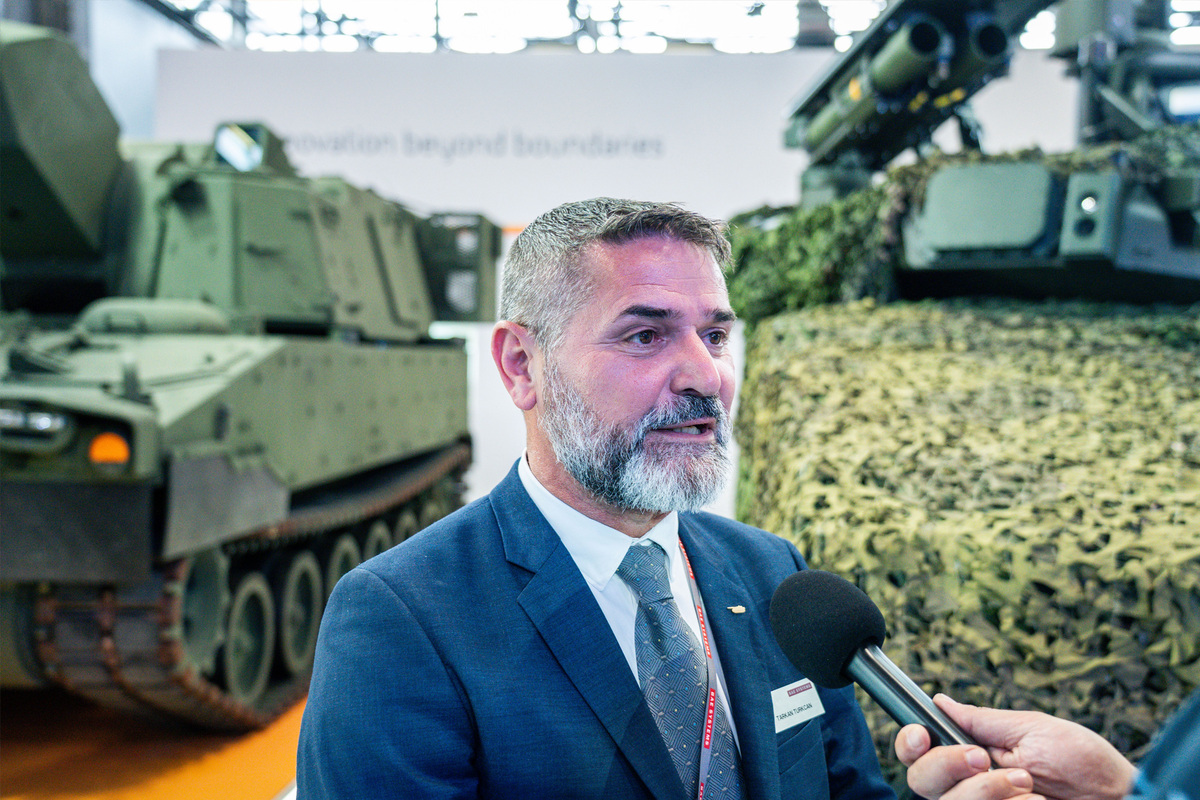
One of the most visited exhibits at this year’s Eurosatory was the BAE Systems Hägglunds booth. It was here that the CV90 platform was unveiled; in the coming years, it will become the primary infantry fighting vehicle of the Czech Army’s 7th Mechanized Brigade. Although the exhibit on display was the Dutch configuration of the CV90 MkIII, most of the technologies presented – as well as the interview with CV90 Program Director Tarkan Turkcan – focused on the latest MkIV generation, which is also intended for the Czech Army.
At first glance, it was clear that the vehicle on display was not merely a polished trade show exhibit. Minor dents and paint damage were visible on its armor. However, as Turkcan explains, these were not cosmetic flaws but evidence of extensive testing of the active protection system. “You can see scratches and minor dents on the vehicle. This is the result of testing the active protection system. We fired hundreds of RPG rounds and dozens of anti-tank guided missiles at it. When the system neutralizes a threat, shrapnel is generated that damages the vehicle’s surface. But that doesn’t matter. The crew survived and the vehicle remained combat-ready. That’s what’s most important,” the director revealed.
Crew protection is one of the areas developing most rapidly following the lessons learned from the war in Ukraine. Czech vehicles will be equipped with a combination of hard-kill and soft-kill systems capable of responding not only to incoming anti-tank missiles but also to laser illumination. The vehicle will alert the crew to a threat, automatically create a smoke screen, and, if necessary, recommend the optimal evasive maneuver to the driver. The new generation of the CV90 MkIV will also offer Czech soldiers significantly enhanced situational awareness. The vehicle is equipped with a network of cameras and sensors that provide a continuous overview of the area surrounding the entire platform. “There are a total of eighteen cameras on the vehicle. Both the crew and the troops have a 360-degree view of the situation around the vehicle. We combine the individual images into a single view, and soldiers can freely pan the view around the entire platform,” Turkcan explained.
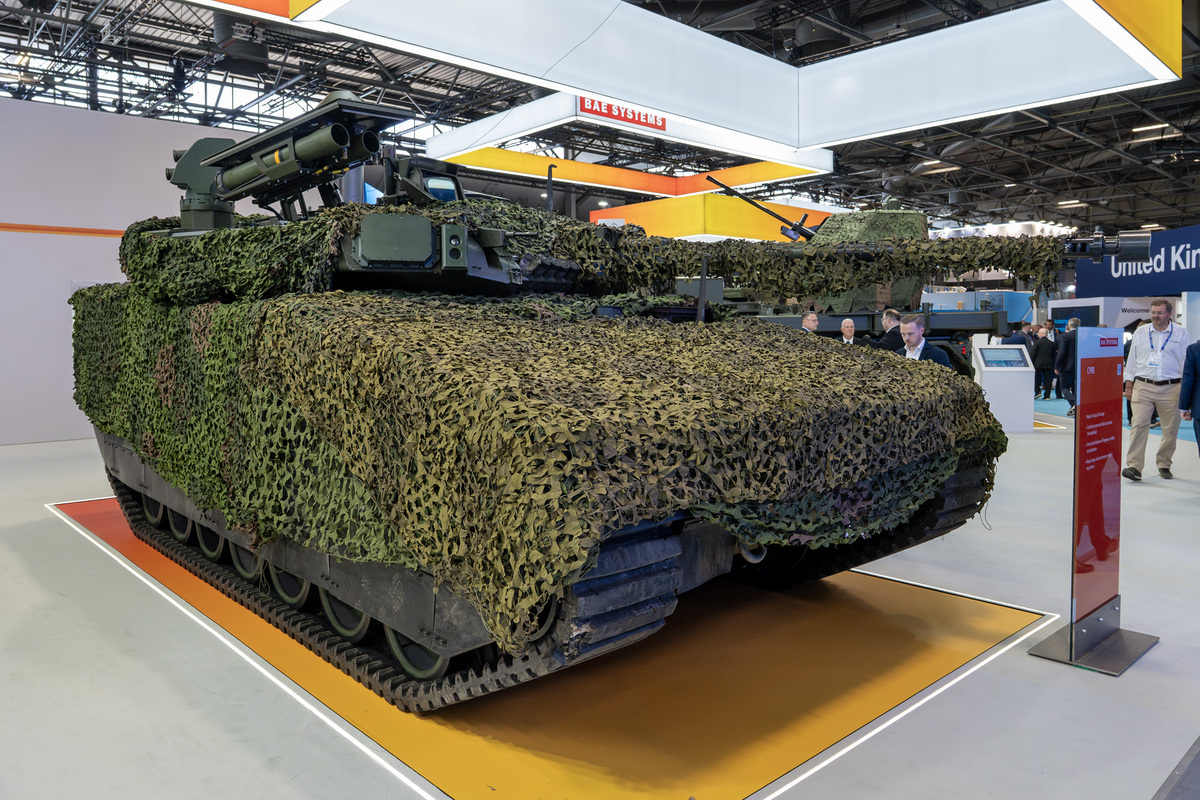
In addition to the 30mm cannon with programmable ammunition, a coaxial machine gun, and a pair of Spike LR2 anti-tank guided missiles, the sensors, digital architecture, and active protection systems represent the greatest generational leap forward compared to older versions of the vehicle. Nevertheless, during the interview, the technical specifications gradually took a back seat. Turkcan repeatedly emphasized that the technology itself does not guarantee a unit’s greater combat effectiveness. What will be decisive is the military’s ability to utilize all the capabilities that a modern platform offers. “All the technologies you’ve seen on the vehicle represent a huge amount of information that the human brain must process. That’s why training is absolutely essential today. It’s not enough just to acquire modern technology. You have to learn how to actually use it,” said Turkcan.
Tarkan Turkcan describes training as one of the greatest challenges in introducing a new generation of combat vehicles. At the same time, he points out that the Czech Republic will not be starting from scratch. The CV90 platform is currently used by ten European armies, which have long shared their experiences regarding operations, training, and deployment. “I am the chair of the CV90 System Development Committee. We regularly invite all user nations to Sweden, where we discuss the platform’s future direction together. We present the results of our research and development, and the individual armies tell us about their experiences with operations or training and the direction in which they believe development should proceed,” said Turkcan. In this context, he also highlighted the cooperation with the Czech Armed Forces. According to him, Czech soldiers are increasingly participating in joint activities with armies that already operate the CV90. “It wasn’t that long ago that the Dutch Army conducted exercises in the Czech Republic. Members of the 7th Brigade and Army Command had the opportunity to observe how the vehicles are used by an army with many years of experience with them. That is extremely valuable. There’s no need to reinvent the wheel. Draw on the experience of those who have been using the platform for many years and adapt it to the needs of your own army,” he added.

One of the most discussed topics at this year’s Eurosatory was the experience gained from the war in Ukraine, particularly the massive deployment of unmanned aerial vehicles. Although drones have significantly transformed the nature of the modern battlefield, Turkcan rejects simplistic conclusions about the end of heavy armored vehicles. “FPV drones represent a new threat, and that threat isn’t going away. We have to learn how to deal with it. We used to learn how to stop a bullet, then a missile, and today we have to learn how to stop a drone.” At the same time, however, he points out that armies must not forget the fundamental mission of an infantry fighting vehicle because of these new threats. “You must never lose sight of the vehicle’s primary mission. Its mission is to transport soldiers to where they are needed. You need mobility, protection, and firepower. If you don’t have soldiers on the ground, you haven’t won the war,” Turkcan warned. According to him, this accurately captures current developments in infantry fighting vehicles. Their role is not to become a universal solution against all threats, but to offer the crew the highest possible level of protection while maintaining the ability to perform basic combat tasks in an increasingly complex environment. Turkcan takes a similarly realistic view of the use of artificial intelligence. Although its importance is growing rapidly, he does not consider it a substitute for humans, but rather a tool that can significantly reduce their workload. “Cameras today are capable of detecting and classifying objects on their own. Instead of staring at a screen all day looking for a target, the system alerts you to a potential threat. Then it’s up to the human to decide what to do next,” he added. According to him, the same principle applies to the use of weapons. “When you have to pull the trigger, the human must remain in the decision-making loop. Technology is meant to assist, but the final decision must always rest with the human,” explained Tarkan Turkcan. The integration of advanced electronics, sensors, and decision support represents one of the main areas of further development for the CV90 MkIV platform. The manufacturer does not intend to change the vehicle’s fundamental philosophy but rather to gradually expand its capabilities based on the experiences of individual users.
The involvement of the domestic defense industry will also be a significant part of the Czech program. In addition to the production of individual components, a new medical variant, the Medevac, is being developed in collaboration with Czech companies – a variant that has not yet existed in this form within the CV90 vehicle family. “The Czech Republic will have a new variant that we have not built in this way before. If it proves successful, it may also be of interest to other users of the platform,” says Turkcan.
From the perspective of the Czech Army, this is not merely about expanding the capabilities of its own mechanized units. The successful introduction of this new specialized version could also open up further opportunities for the Czech defense industry within the CV90 program. The company’s booth also drew significant attention to its new-generation composite tracks, which are gradually replacing the traditional steel design. Turkcan explained that this is not merely a matter of reduced weight. “There are more advantages. First and foremost, significantly lower vibration, which is important not only for the crew but also for sensitive electronics. The tracks are quieter, reduce the load on the vehicle, and do not damage roads during movement. At the same time, they last at least as long as traditional steel tracks,” he added.
On the other hand, he acknowledges that replacing them requires a different approach than with conventional tracks and poses certain logistical challenges. However, he believes this is part of the natural evolution of modern armored platforms. Although the Czech Army is currently preparing to introduce the MkIV version, Turkcan says the platform’s development certainly does not end there. “The MkIV is the most advanced platform today. But we’re already working on other technologies that will be part of its future development. You have to be prepared not only for the present, but also for the more distant future,” concluded CV90 Program Director Tarkan Turkcan.
The ongoing development of the CV90 platform is one of the program’s greatest strengths. With the introduction of the CV90 MkIV, the Czech Army is not acquiring a finished product, but rather a platform that will adapt to new technologies and the experiences of NATO users throughout its entire life cycle.
KNDS: The Leopard 2A8 Marks a New Generation for the Czech Armored Forces
The Czech tank forces are also set to undergo an equally significant change in the coming years. The Leopard 2A8 represents a major step forward in modernization since the establishment of the Czech Armed Forces and, at the same time, paves the way for a new generation of main battle tanks that will form the backbone of tank units for several decades to come. At the KNDS exhibition, Kristof Hesse, Director of the MBT Turrets Division, presented the latest variant of the Leopard 2A8. Although at first glance the new tank appears to be a continuation of previous Leopard generations, according to Hesse, the platform has undergone extensive modernization in virtually all key areas. “The biggest change compared to previous versions is the integrated active protection system. At the same time, we have increased the level of protection, mobility, and effectiveness of the entire platform, and we have also significantly modernized its internal digital architecture,” Hesse told CZ DEFENCE. In addition to the new active protection system, the vehicle’s electronic architecture has also undergone significant modernization. The Leopard 2A8 has been equipped with new display systems, expanded sensor suite, and data infrastructure that enables easier integration of additional technologies throughout the tank’s entire life cycle. “The platform is ready for the future. In addition to new sensors, we have a new data interface that allows for easier integration of additional subsystems and technologies. The Leopard can thus continuously adapt to new user requirements and new threats,” the director explained.
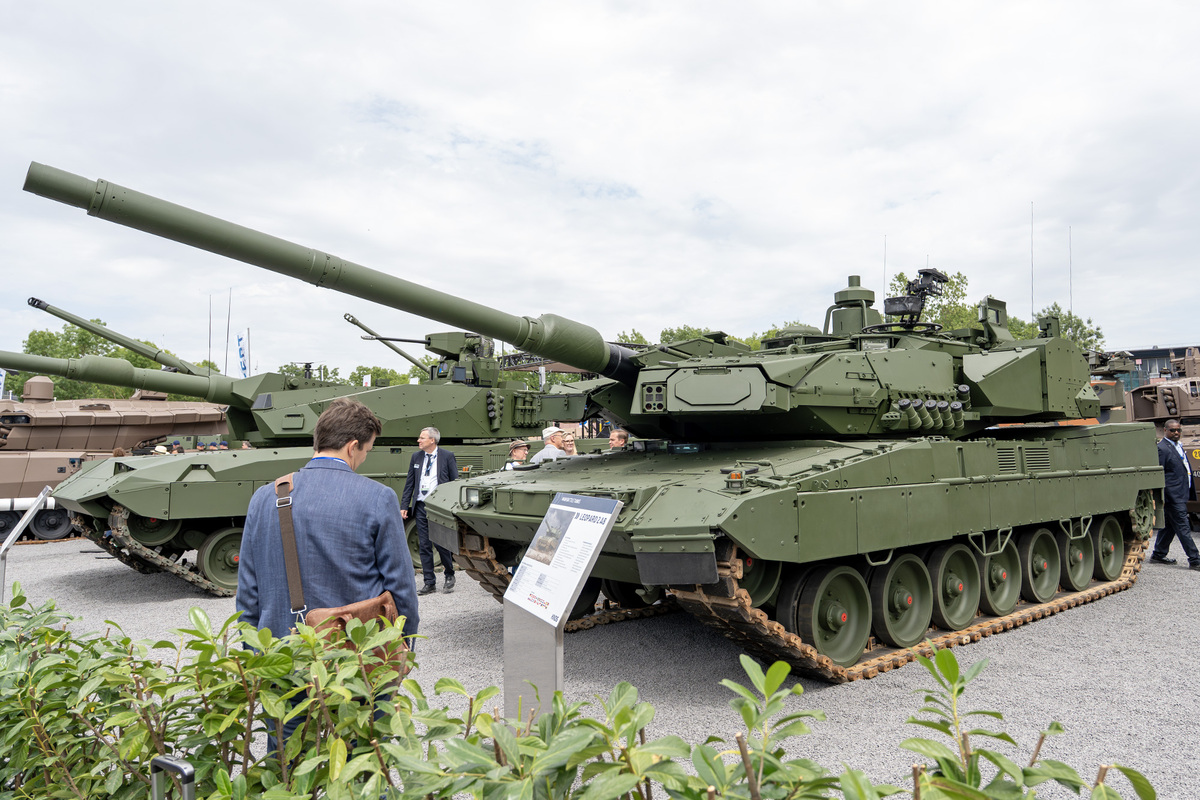
From the perspective of the Czech Armed Forces, this is an important feature. The life cycle of a main battle tank spans decades, and the ability to continuously modernize its electronic systems will play an increasingly significant role. As with infantry fighting vehicles, this confirms that it is not only the vehicle’s current configuration that is decisive, but also the scope for its future development. One of the main topics of the discussion was, once again, protection against new threats that have become fully apparent on the modern battlefield. In addition to conventional anti-tank weapons, manufacturers today are also paying extraordinary attention to attacks from the upper hemisphere and the ever-increasing use of unmanned aerial vehicles. “The integrated active protection system is also designed to respond to new types of threats. At the same time, we have significantly enhanced the protection of the tank’s upper sections, as attacks from above represent one of the greatest challenges on the modern battlefield,” added Hesse.
However, it is not just about the armor itself. Sensors that provide the crew with information about the surrounding environment play a significant role, as does the platform’s ability to receive additional modernization packages in line with evolving threats. This modularity is one of the fundamental principles of the current development of the Leopard 2A8. Hesse also points out that the new Leopard was not developed as an entirely new design. Rather, it builds on a long-proven platform, whose individual components are continuously modernized based on user experience. “The Leopard 2 represents a combination of new technologies and proven solutions. For example, the powertrain remains unchanged because it has long demonstrated its quality. On the other hand, we are continuously modernizing the armor, electronics, sensors, and other systems. This allows us to further develop the platform without having to start from scratch,” he added.

KNDS considers the evolutionary approach to be one of the main strengths of the entire platform. Instead of one-time revolutionary changes, the Leopard evolves gradually in line with technological progress and the requirements of individual armies. At the same time, this model allows for high logistical compatibility between the various versions of the tank. A significant change for the Czech Army will be not only the introduction of the Leopard 2A8 tanks themselves, but also joining the community of their users. The Czech Army will become part of the Leoben Community, which brings together more than twenty operators of Leopard 2 tanks and represents one of the most important platforms for exchanging experiences in the field of heavy armored vehicles. “Leoben is not just a platform for addressing spare parts or logistics. Of course, we address component availability and operational issues, but equally important are discussions about future threats, further tank development, and the experiences of individual armies,” added Director Hesse, who noted that this community generates numerous ideas for further modernization of the platform. In addition to technical issues, discussions are increasingly focusing on the use of artificial intelligence, new sensor systems, and countermeasures against unmanned aerial vehicles. “We’re not waiting for precise specifications of future requirements to be established. Development is ongoing, based on discussions with customers and on the experiences that individual armies gain during training or by observing current conflicts,” he added.
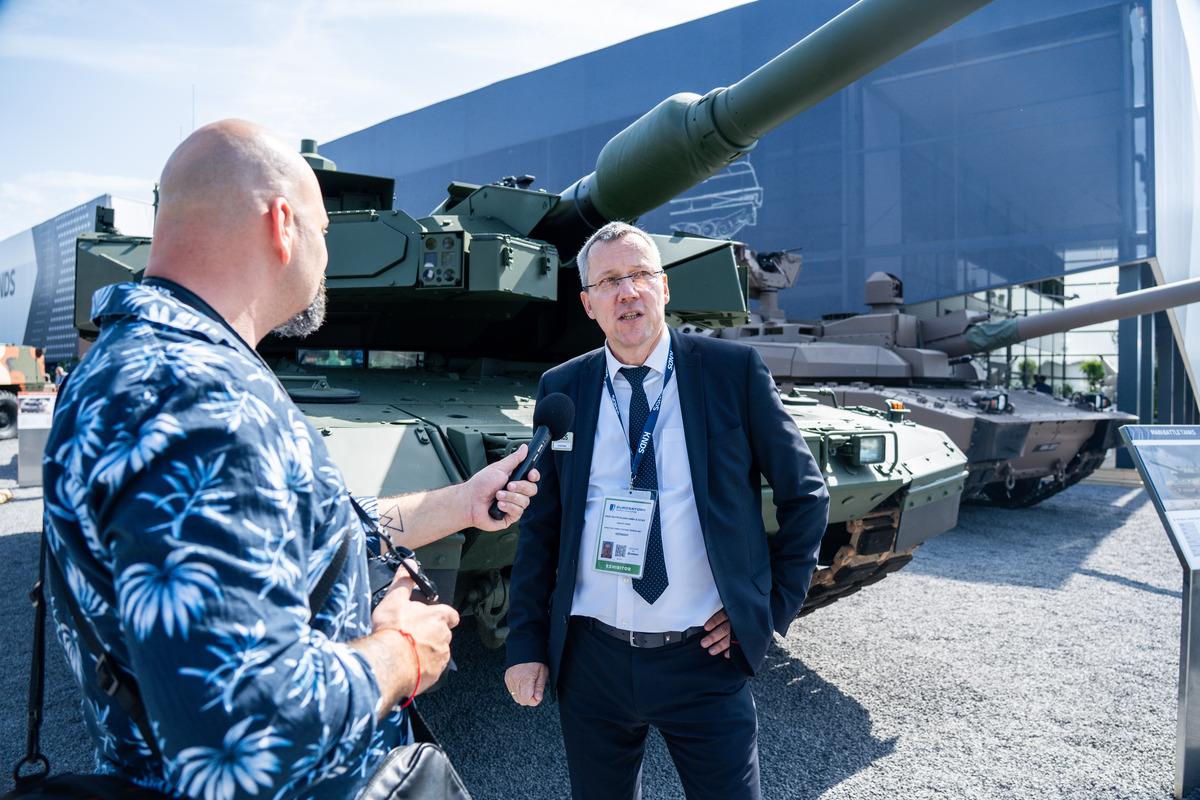
From this perspective as well, the Czech Republic’s entry into the Leopard user community represents significant added value for the entire acquisition. In addition to the new equipment, the Czech Army gains access to the expertise of armies that have been operating the platform for many years, as well as the opportunity to participate in its further development. Although projects for the next generation of main battle tanks are already underway in Europe, the Leopard 2A8 remains, according to KNDS, a platform with long-term prospects. “Our customers are currently planning to operate the Leopard until at least 2050. This is a clear commitment for us as well. We must ensure that the platform is capable of responding to technical changes and new security challenges throughout its entire life cycle,” concluded Kristof Hesse, Director of the MBT Turrets Division, in an interview with CZ DEFENCE.
The long-term outlook for both programs represents one of the most important takeaways from the discussions at this year’s Eurosatory. The Czech Army is not merely acquiring new infantry fighting vehicles and main battle tanks. It is introducing platforms whose capabilities will be continuously developed based on the experience of NATO armies, technological progress, and the evolving nature of armed conflicts. The success of both acquisition programs will therefore not be measured solely by the number of vehicles delivered. Equally important will be how quickly the new capabilities can be integrated into training, how effectively Czech units will draw on the experience of other users, and how both platforms will adapt to developments on the modern battlefield. This is precisely where their greatest contribution to the Czech Army lies. This is not merely about new equipment, but about capabilities developed over the long term that will form the foundation of the heavy ground forces in the coming decades.