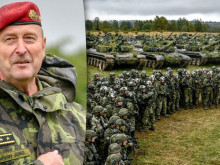












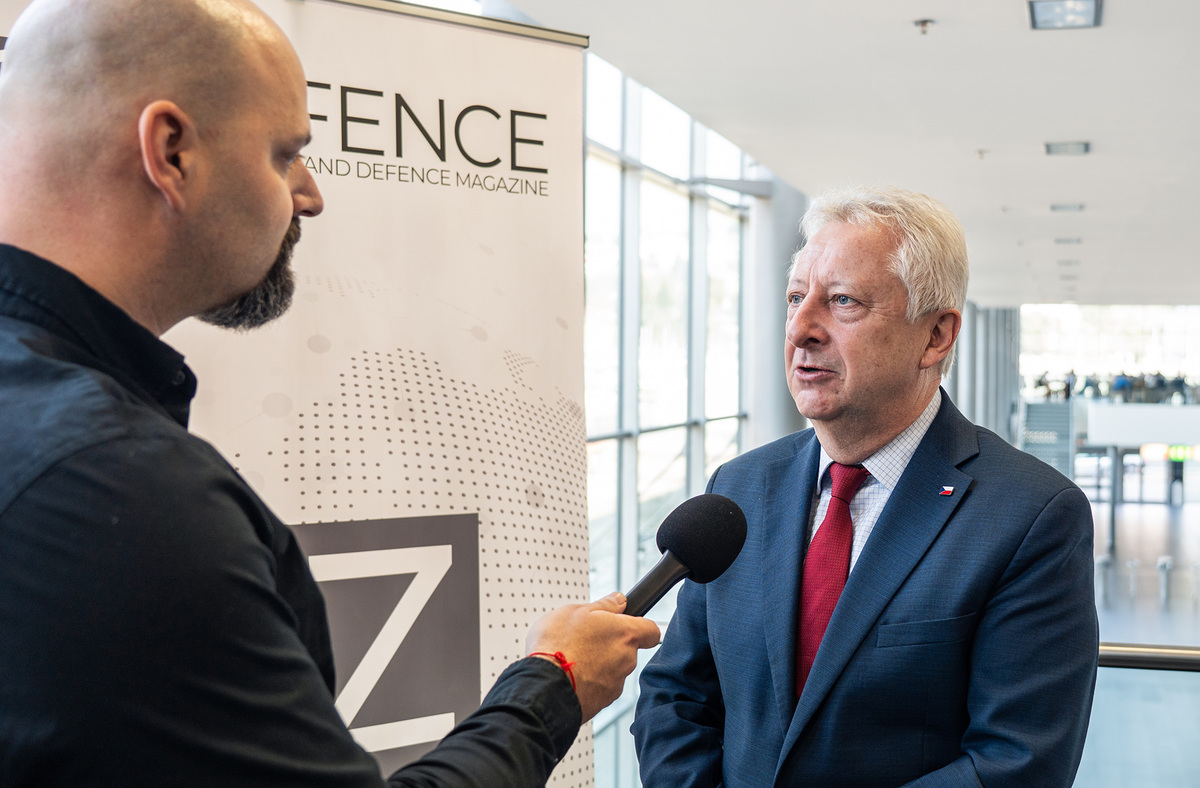
Defence Minister Jaromír Zůna: Without close cooperation with industry and a change in approach to procurement, we cannot keep pace with technological developments
At the recent DronyX conference, co-organized by CZ DEFENCE magazine and Defence Consulting, topics related to drones and layered anti-drone protection, artificial intelligence, and 3D printing and 3D scanning were discussed.
Video: Defence Minister Jaromír Zůna: Without close cooperation with industry and a change in approach to procurement, we cannot keep pace with technological developments / CZ DEFENCE
According to Defence Minister Jaromír Zůna, conferences focused on modern defence technologies, such as DronyX, represent a key tool for connecting the Czech Armed Forces with the defence and security industry. In an environment of rapidly evolving technologies, he believes it is essential to ensure continuous and open communication between the two sectors; otherwise, it is not possible to effectively build the required military capabilities.
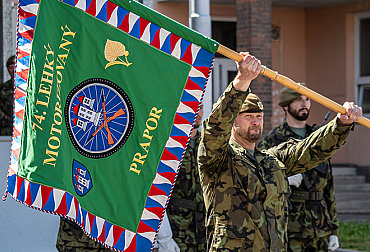
In this context, the minister emphasized that while in the past the relationship between the military and industry was rather formal and, to a certain extent, separate, the current security situation requires a fundamental shift. The defense industry should now be viewed as an integral part of the state’s security system, sharing responsibility for ensuring the Czech Republic’s defence capabilities.
Regarding the rapid emergence of new technologies, such as drones, autonomous systems, artificial intelligence, and additive manufacturing, and their highly dynamic development, the Minister of Defence notes that these areas are not new to the military—their significance has been recognized for several decades. However, current conflicts, including the war in Ukraine, have unequivocally confirmed their role and, at the same time, dramatically accelerated the pace of their deployment.
According to Zůna, the problem does not lie in a lack of knowledge or the absence of strategic thinking, but rather in historical developments. The Czech Armed Forces have long been oriented toward expeditionary operations, which corresponded to the political priorities of the time. Both the force structure and acquisition priorities were adapted to this. As a result, the military now faces the need to find a new balance in capability development and, to some extent, to catch up in areas that were neglected in the past.
The method of procuring modern technologies remains a fundamental challenge. In this context, the Minister of Defence noted that traditional acquisition processes, designed for the conditions of the industrial era, are unable to respond to the dynamics of current technological development. This development no longer takes place over a horizon of decades, but in some areas within a matter of years, or even faster.
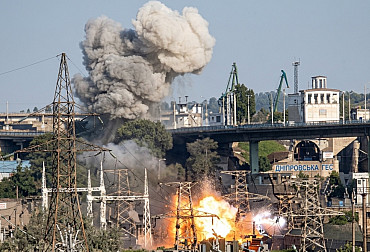
According to him, the key issue lies in the categorization of assets itself. According to the minister, it makes no sense to view technologies such as attack drones as long-term military assets. Instead, they should be understood as consumables, similar to ammunition. Such an approach would allow for more flexible procurement without the need to go through lengthy acquisition processes.
However, changing this approach requires an adjustment to the legislative framework, particularly a more precise definition of individual categories in the Public Procurement Act and related regulations. Only then will it be possible to systematically adjust the procurement process to reflect the realities of the current technological environment.
The Minister of Defence also emphasized that transformation in this area cannot be based on general statements about the need to speed up processes. It requires detailed expert work and the involvement of specialists with in-depth knowledge of the issues. According to him, the Czech Armed Forces have such experts at their disposal, a fact that was confirmed during the conference itself.
Related