








Soldier Tomáš Svoboda – bone marrow donor: The answer was clear. Yes, I'd be happy to help.
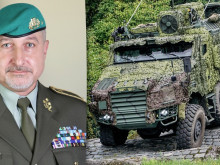
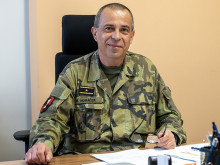
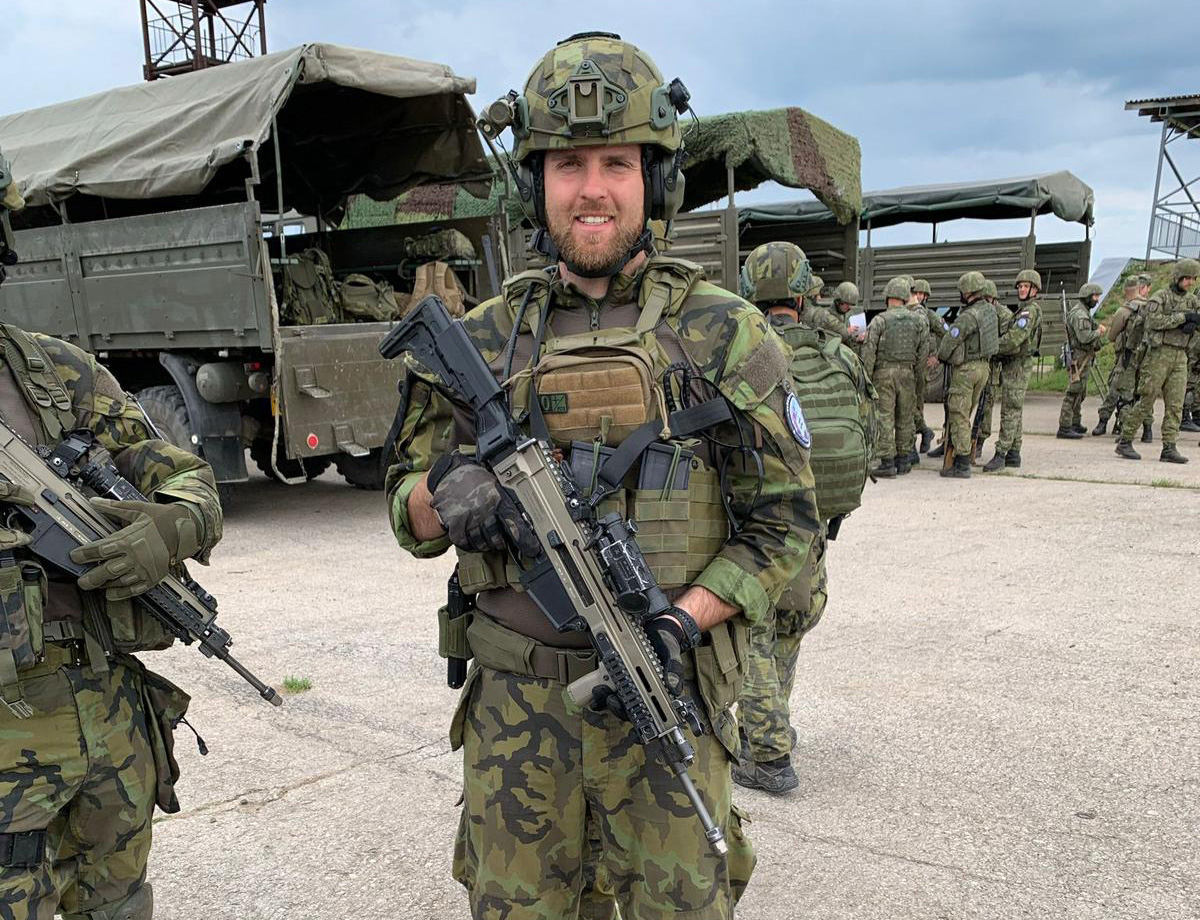
Professional soldier Tomáš Svoboda, who has served in the Czech Army for many years, became one of the few selected individuals who can be bone marrow donors. He now considers the decision he made rather impulsively at the time to be one of the most significant experiences of his life. His story shows that helping others does not have to be complicated or ostentatious – sometimes it is enough to say "yes." And it is precisely the values of service, responsibility, and solidarity, which are inherent to the army, that are naturally intertwined in his story.
What made you decide to register as a bone marrow donor? Was it an impulse or a long-term decision?
I was prompted to register during basic training; it was more of an impulse. Until then, I hadn't given much thought to bone marrow donation. I knew it existed, but I didn't attach much importance to it. It was only during basic training that I realized how meaningful it is.
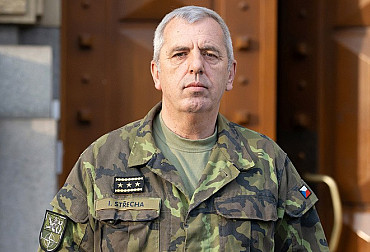
In the introduction, you mention that you didn't hesitate for a minute. What was it – personal experience, upbringing, or your profession as a soldier?
I wouldn't hesitate for a minute if the situation arose again. It wasn't based on any specific personal experience, but on the clear conviction that you shouldn't refuse the opportunity to help another person. What's more, during the lecture, they told us that even a small child could be a recipient and how few people are on the registry. The day before I was contacted by the registry, I was driving past the university hospital and my wife and I were talking about the bone marrow registry in the car. So, several factors played a role in my decision.
What was your first reaction when they told you that you had been selected as a suitable donor?
My first feeling was rather neutral. I didn't have any strong emotions – it was "just" another blood test, and I was told that there were several potential donors. Gradually, as I went through the tests, however, a sense of responsibility began to emerge. This weighed most heavily on me at the hospital in Pilsen during the examination about fourteen days before the actual collection. It was only there that I fully realized the gravity of the situation and that this could be the last chance for someone who had no other option.

What do you think is the real meaning of bone marrow donation—not only for the recipient, but also for the donor?
The purpose of bone marrow donation is not only to save lives, but also to strengthen human solidarity. Fortunately, I don't have anyone in my immediate or extended family who needs a bone marrow transplant, but everyone wants to live a normal life. Donors realize that even one person can fundamentally change the fate of another. A powerful moment for me was a letter—or rather a comic strip—from the recipient, in which he wrote that I had saved his life and that his whole family was grateful to me.
Has this experience changed you personally in any way? Do you now view the value of life or responsibility towards others differently?
It changed my approach to life. I appreciate it much more than before and try to take better care of my loved ones, because you never know when everything can change. I try to approach others in the same way. When someone comes to me with a problem, I listen to them first before jumping to conclusions. Many people don't know how to do that these days.
Do you think that willingness to help others is a natural part of the military mentality?
Yes, I think that willingness to help others is a natural part of the military mentality. Soldiers have always been here to help—whether in foreign operations or on our territory during COVID, migration waves, or floods. Service teaches us responsibility, solidarity, and that even small decisions can have a big impact on other people.
What originally led you to decide to put on a uniform and join the Czech Army?
I was led to this by a combination of personal values and the need to do work that has real meaning. I wanted to serve, be part of a team, and take responsibility not only for myself but also for others. The army gave me a great group of people I can rely on and whom I consider brothers and best friends. It is an environment where these values can be fulfilled every day.
What values did the army give you and how do they translate into civilian life—for example, in situations such as bone marrow donation?
The army gave me a clear set of values—responsibility, discipline, solidarity, the ability to make decisions in difficult situations, and also a huge amount of patience. These values carry over into civilian life, where people face different but no less important decisions. I see helping others as a natural part of my responsibility to society.
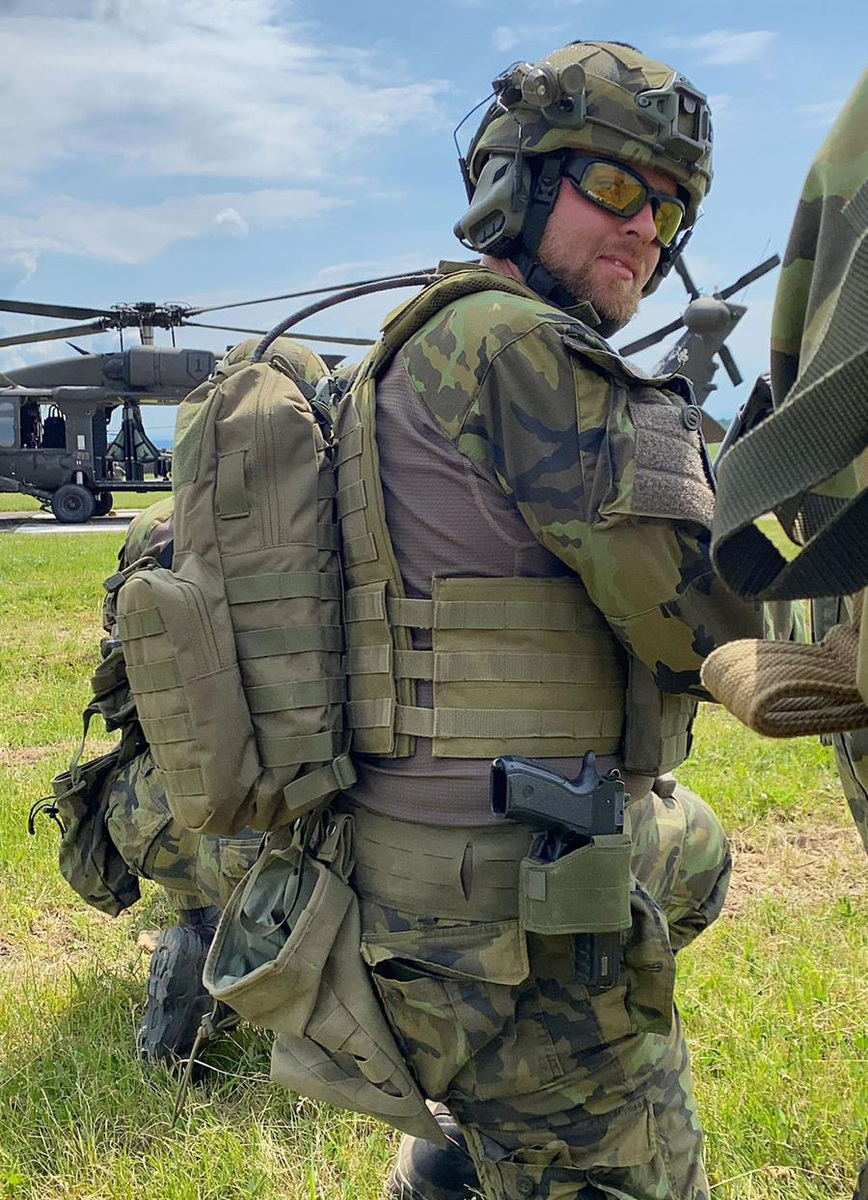
Could you briefly describe your career in the military to date and the key moments that have shaped you professionally?
My career is and remains with the 73rd Tank Battalion in Přáslavice, where I serve in a mechanized company. I was mainly shaped by the team – platoon commanders, their deputies, but above all VD Michal Buchta. He is the right man in the right place, fair, a good friend, and someone who really has something to pass on to people. I haven't been on a mission yet, but I have completed several international exercises in Poland and Slovakia, where I confirmed that Czech soldiers are very well trained.
What do you consider to be the most important experience you gained from your service?
The realization that I can do much more than I ever thought. Working with people is also a great learning experience—in the army, you have to learn to get along with different personalities.
You will soon become an instructor at a military academy. What are you most looking forward to in this role?
I am especially looking forward to seeing how people progress. Even though basic training does not give them much expertise, they will acquire the right habits. It is wonderful to see the difference between the first and third shots, or in tactics, when nervousness subsides.
What would you like to pass on to future soldiers—not only in terms of professional skills, but also on a human level?
I want to teach them what I know and what I can pass on. Practical survival skills, shooting skills, but above all, a human approach. It is crucial to remain human. It is not right to look down on someone just because of their rank. Fun is part of it—you just need to know when you can afford to have fun.
What message would you give to people who are hesitant to register as bone marrow donors?
Don't hesitate. It will only take a minute of your time. You can be in the registry your whole life and never get a call. But if you do, there's a chance you could save someone's life. And that feeling is priceless.
If you had to sum up in one sentence what service means to you—whether in uniform or as a donor—what would it be?
For me, service means being ready to help where help is needed, regardless of whether I am wearing a uniform or not.
Related