















Europe’s Technological Dependence: What Does It Mean for the Czech Republic?
Europe relies on American technology more than it has long acknowledged. Although there is increasing talk of digital sovereignty, a rapid breakaway is not realistic. Today, this dependence has a significant impact on economic performance, security architecture, and strategic decision-making in countries, including the Czech Republic.
The European debate on technological sovereignty has shifted from political declarations to the realm of strategic planning. However, it is becoming clear that the European digital ecosystem is deeply integrated with American technologies—across all key layers, from infrastructure to applications.
The dominance of American companies is no accident; it stems from a long-term investment lead, a robust capital environment, and the ability to rapidly commercialize innovations. Europe, by contrast, has primarily developed a regulatory framework rather than its own technological champions. The result is an asymmetry that is becoming strategically significant in the current geopolitical landscape.
A fundamental shift in recent years is that digital infrastructure is no longer viewed as a neutral economic tool. It is becoming a critical component of power, much like the energy sector or the defense industry.
First is infrastructure. The vast majority of European cloud services are operated by American companies, which control approximately two-thirds to three-quarters of the market. Meanwhile, the cloud has become the foundational layer of both the digital economy and public administration. This means that a significant portion of European data and processes run on systems outside of direct European control.

The second area is the economy. Digital services generate high added value, which is concentrated outside Europe. European companies use these technologies to boost productivity, but at the same time they increase their dependence on external suppliers. As a result, Europe is losing economic value in the long term to global technology hubs.
The third dimension is security. Digital infrastructure is now part of critical systems—from energy and banking to defense. Dependence on a limited number of foreign providers increases systemic risk, particularly in the event of geopolitical tensions or technical failures. In recent years, it has already become clear that failures of major cloud platforms can paralyze services across countries within hours.
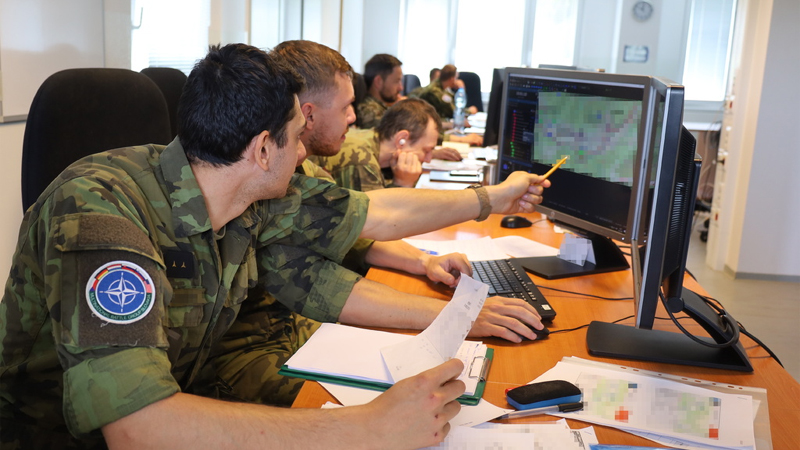
This aspect is directly linked to the functioning of NATO. The Alliance relies on technological interoperability, and a significant portion of its digital capabilities is integrated with the U.S. technology ecosystem. While this ensures high efficiency, it also creates a structural dependency that could prove limiting in extreme scenarios.
This situation is particularly relevant for the Czech Republic. The Czech economy is strongly export-oriented and deeply integrated into both European and global value chains. The digital infrastructure of the state, the banking sector, and industry is largely built on standardized foreign solutions. This enables rapid technology adoption but simultaneously limits the capacity for strategic autonomy.
In the area of security, the Czech Republic relies on NATO, which provides stability and access to advanced technologies. At the same time, however, this means that the technological dimension of defense is largely shared and dependent on the transatlantic sphere.
The concept of digital sovereignty is often interpreted as a quest for technological self-sufficiency. In reality, however, it is more accurate to understand it as the ability to manage dependencies and mitigate critical risks.
A complete separation from American technology is neither realistic nor economically rational. Rather, the key is to create an environment where alternatives exist and where Europe has its own capabilities in critical areas. The current situation is not just a matter of efficiency, but also of control.
European initiatives in semiconductors, cloud computing, and artificial intelligence point the way forward, but their impact will be long-term. Market fragmentation, limited capital, and a slower ability to scale innovation remain challenges.
In the context of future conflicts, technology is becoming a key instrument of power. Control over data, infrastructure, and digital platforms can determine the stability of states and the outcome of crises. Technological dependence is thus not merely an economic issue, but one of the defining factors of security. Europe will not be technologically independent in the foreseeable future—and likely does not need to be. The real challenge lies in the ability to actively manage this dependence and complement it with its own strategic capabilities.

The future will not be about replacing American technologies, but about balance. It will be about the ability to combine openness with control, and cooperation with self-reliance.
For the Czech Republic, this means the need to shift from the role of a user to that of an active player. Investments in cybersecurity, data infrastructure, and innovation are not merely a matter of the economy, but also of long-term security and sovereignty.
Today, technology determines not only the pace of growth but also a state’s ability to withstand crises. And it is precisely in this context that the issue of digital dependence is becoming one of the key topics of the coming decade.
Related