








How to effectively build or develop military capabilities
A Chinese proverb says: "When we seek a path, something precedes it and something follows it." In the military sphere, this means that we must take into account our past and the efforts we are inevitably building on, and plan steps to acquire the required capabilities with regard to the new reality and needs. Effective military capability building and development should be an adequate response to current or potential future threats and, at the same time, should be in line with the economic capabilities of the state and limited human resource capacities.
How to build military capabilities?
Generally speaking, the armed forces must be capable of countering an attack on the Czech Republic or its NATO allies. Given the situation in the world, particularly in Eastern Europe, we define our requirements for possible future deployments, i.e., operations that we would conduct in cooperation with other NATO member states, and in this context, the capabilities of the armed forces.
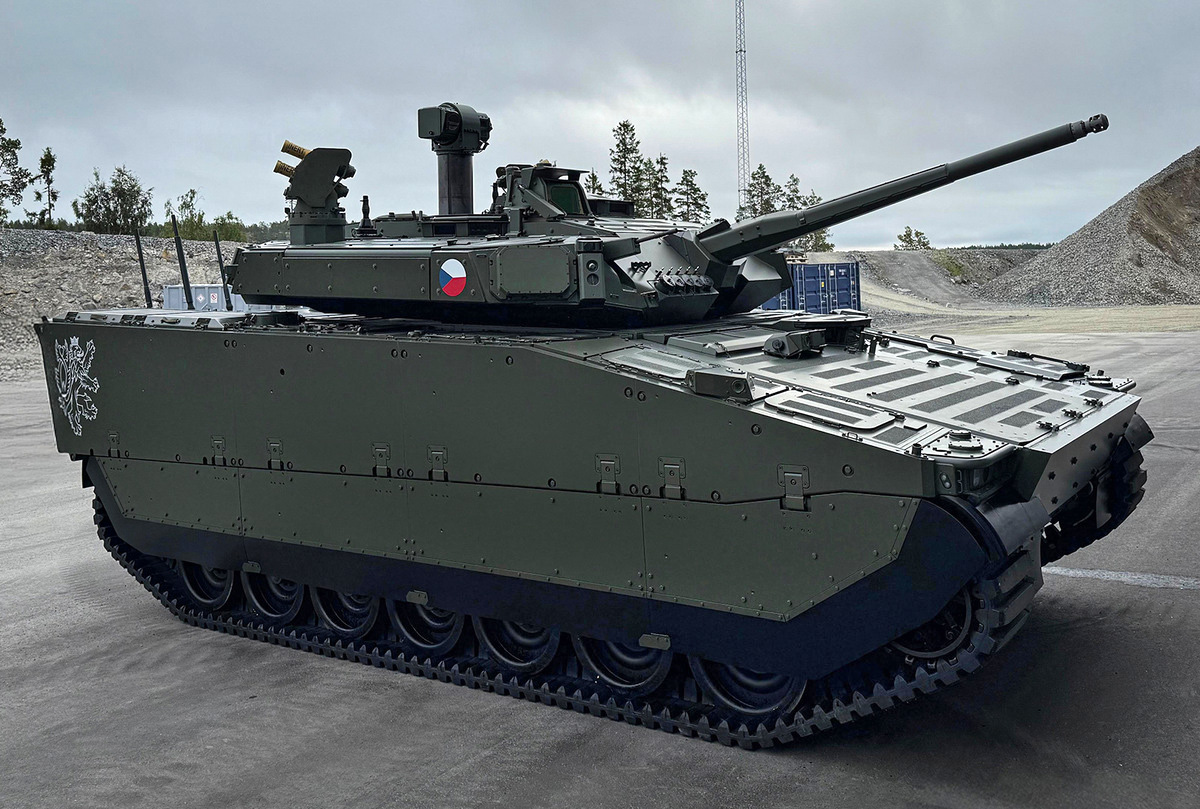
The individual components of the armed forces must be purposefully "assembled" so that they support each other and form an optimally effective whole that responds to the latest developments, i.e., experience from military conflicts or the development of technologies and weapon systems. It should not be the case that military equipment is procured and does not fully ensure the required capabilities. For example, when purchasing new tanks, a whole range of related acquisitions should be made in parallel in the areas of logistics (securing trailers for transporting tanks, etc.), ammunition, demining equipment, and the construction of the relevant immovable infrastructure.
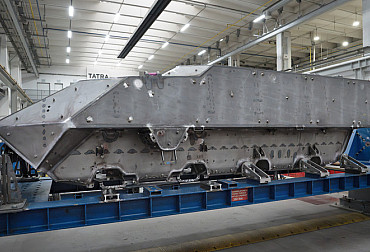
As stated in the defense strategy: "As a result of Russia's growing aggression, the main task of Czech defense policy is to prepare comprehensively for a long-term, high-intensity defensive war with a technologically advanced adversary equipped with nuclear weapons. The first priority is therefore to build well-armed, well-equipped, well-trained, and combat-sustainable armed forces that can be deployed in collective defense operations. The second is comprehensive operational preparation of the Czech Republic's territory, ensuring the reception, movement, and support of large numbers of allied forces."
Procurement of military equipment
One of the key prerequisites for achieving the desired capabilities is the procurement of military equipment (weapons, ammunition, and other equipment specially designed, constructed, or adapted for military purposes). This also requires ever-increasing financial costs. The cost of building the capabilities of the armed forces is higher when the process of procuring military equipment is subject to political interests or influenced by military equipment suppliers. In order to achieve maximum effectiveness in the development of armed forces capabilities, it is therefore important to plan in all contexts and, if possible, to compete for the most suitable offers, which should contribute to the optimal selection so that the result of the acquisition process meets the principles of effectiveness, economy, and efficiency, which are referred to by the acronym 3E (Effectiveness, Economy, Efficiency). Despite all efforts, it appears that the influence of the arms industry is so strong that, despite various declared goals and priorities, it is not possible to achieve the desired interoperability, let alone a situation where we are equipped with the same technology in most key areas. Yet this unification would not only solve the issue of interoperability, including reducing the burden on logistics, but also lead to significant savings in the financial costs of procuring military equipment. The situation is further complicated by the requirements of individual states for self-sufficiency in production or security of supply. National interests are therefore often at odds with the unification of military equipment. However, given the current constellation within NATO, the EU, and the security situation, it is necessary to strengthen cooperation with domestic industry, which must be part of the state's defense capabilities, while taking national interests into account. Cooperation with foreign industry is also important, but we should implement it on the basis of mutual benefit and with an emphasis on acquiring know-how.
Award for effective defense
The cheapest way has always been good politics, based on mutual respect and understanding, including compliance with agreements and international law. However, this does not mean that we should not have well-prepared armed forces, including modern equipment. This is certainly an important argument for deterring potential enemies. It is much more responsible to have armed forces ready than to talk about deterrence without having credible means and determination to do so. Are we making sufficient efforts to create the conditions for a peaceful and secure future? Why has it long been impossible to clearly prioritize the security interests of NATO and EU member states over the profits of military equipment manufacturers? Although member states send large numbers of representatives to NATO and EU structures, there is a shortage of qualified personnel, particularly in the case of procurement processes, which often leads to unprofessional performance that has a negative impact on the achievement of the required capabilities, but also on the management of the defense budget. Another question is whether we are able to respond appropriately to the experiences of recent conflicts and how successful we are in applying new technologies (AI, communication technologies, sensors, biotechnology, 3D printing, etc.) and introducing modern technology (drones, autonomous systems, robotic devices, etc.) into the armed forces. However, it is important not only to respond to recent developments, but also to take a proactive approach to developing our own new capabilities.
A possible path
One of the prerequisites for achieving the declared goals in the area of interoperability, implementation of standards, and increasing the efficiency of military procurement is the centralization of the defense industry, i.e., the consolidation of production capacities, including technological sophistication, and the introduction of a system for efficient production. However, this would require greater determination to agree with representatives of the arms industry on common interests, including the necessary compromises. However, there are also tools available to motivate military equipment manufacturers. These could include, for example, guarantees of long-term regular purchases of production, which would streamline and stabilize the production process. On the other hand, one of the obstacles to mutual cooperation on the part of industry, but also of some states, is the unwillingness to share the results of development associated with efforts to secure an advantage or lead in the field of technology and its use.
Another prerequisite is having enough qualified and motivated people involved in the procurement processes. They should ensure that we implement the procurement process in line with the proclaimed 3E principles. There are already tools and qualified teams in place that are capable of selecting effective solutions in accordance with the tender conditions. However, so far, this has generally only involved a specific group of countries that share a common interest. One such organization is the NATO Support and Procurement Agency (NSPO), based in Capellen, Luxembourg. This is a special NATO agency that provides its customers with support in the procurement of military equipment and services. It also provides support for integrated multinational capabilities, including complete life cycle management and the provision of operational and logistical support. Another, this time European, agency is the European Defense Agency (EDA). This is an intergovernmental agency of the European Council based in Brussels. It comprises 26 member states, i.e. all EU states except Denmark. The main mission of the EDA is to develop European military capabilities through cooperative programs of the member states associated with the EDA. The third example is the European armaments agency OCCAR (Organisation Conjointe de Coopération en matière d'Armement / Organisation for Joint Armament Cooperation), which is an international organization that focuses on managing complex, cooperative programs for the procurement of military equipment, including managing its life cycle. OCCAR can participate in the work of the EDA during the preparatory phase of armament programs. Program preparation at the EDA involves harmonizing user requirements and implementing all necessary steps.
Of course, it's also about money
With the modernization and acquisition of increasingly complex weapon systems, ammunition, and other military equipment, financial costs are rising significantly. If we had spent as much money on defense in the long term as we committed to providing when we joined NATO, and if lobbyists and certain politicians had not interfered in the procurement processes, we would probably not now have to deal with the fact that we lack key equipment for a whole range of military capabilities. There are also other reasons for "expensive" purchases. One is the fact that users within the Czech Armed Forces define a number of additional requirements for the military equipment they purchase that go beyond what is offered. Another consequence may be a disruption of compatibility, including logistical support (spare parts, repairs, etc.). Shouldn't we think more carefully and evaluate the added value of military equipment procured in this way, or rather the capabilities thus acquired? Compared to other countries, states with centralized production achieve a "different" level of efficiency in the procurement of military equipment and capabilities, and therefore it is largely misleading to compare the actual state of their armed forces with their declared defense budget.