










Hynek Kmoníček: The farther Russia is from us geographically, the greater our security
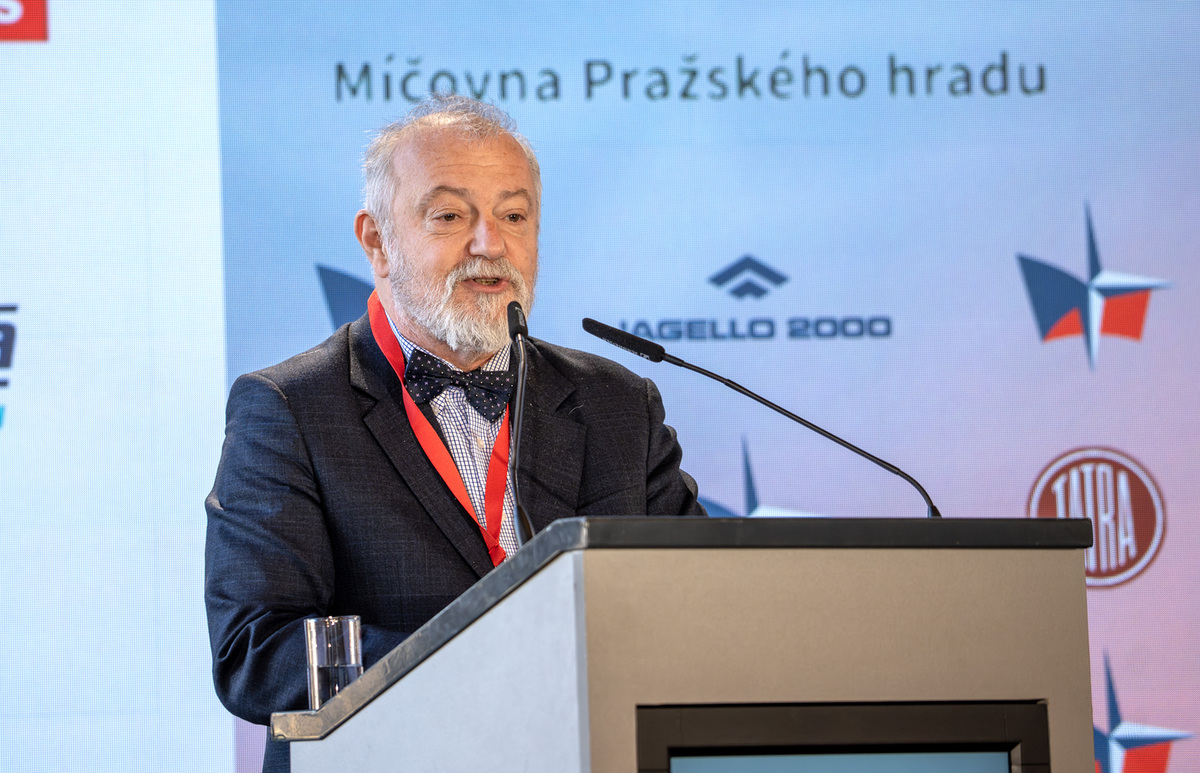
At the recent 13th annual security conference Our Security Cannot Be Taken for Granted, the new government advisor for national security, Hynek Kmoníček, also spoke. In his speech, he stated, among other things, that the strategic priorities of Czech national security must be assessed primarily through the lens of reality—not through political interpretation. According to him, the ability to realistically assess the geopolitical situation forms the basis of any security strategy.
"The main strategic priority in any national security policy is to learn to live in reality and not in its political interpretation, because that is always influenced by who is looking at it and from what perspective," said Kmoníček at a conference on security policy. He also pointed out that the security policy of any state is primarily a reflection of its geographical location. "The reality of every state, including the Czech Republic, is simply determined by our geopolitical position. Since the days of the Czech Kingdom, we have been living in Central Europe, in an environment of smaller states that compete with each other for influence and are simultaneously exposed to their large competitors in the east and west," said the government's national security advisor.
According to Kmoníček, Central Europe is now an integral part of the West, and it is this orientation that determines the Czech Republic's strategic priorities, from military security to energy and social stability. "It is clear that our most significant threat today is, logically, the Russian Federation, and this was also the case before the open conflict in Ukraine began," he said. He believes that historical experience shows that the security of a state is closely related to its geographical distance from Russia. "Whether our relations with Russia have been at their peak or at their lowest point historically, it has always been true that the further away Russia is from us geographically, the greater our own security," Kmoníček said. According to him, this is also the basis for support for Ukraine, which is facing Russian aggression. "This must also necessarily be the basis for support for Ukraine, which is fighting and which is in the interest of our state's security priorities," he added.
In addition to military security, he also pointed out the complexity of the issue of energy security. According to him, after the shift away from Russian gas and oil, it became apparent that the situation was more complicated than it initially seemed. "After breaking away from Russian gas and oil, these commodities do not flow directly to us, but reach our territory indirectly," he said, noting that part of the supplies are processed in refineries in Poland, for example. "Paradoxically, payments to the Russian Federation have often increased," he added. According to him, an important priority for economic security should therefore be the pursuit of a European consensus on climate policy. "Green environmental policies must not mean economic suicide for Europe at a time when its share of global economic output has fallen to around 16 percent," he said.
According to him, economic strength is also a necessary condition for building national defense. "If we are to be safe from threats from the East and the Far East, we must have a strong army. And the state must have the financial resources to support it, which it can earn through our economy," he said. According to him, internal stability of society is also an integral part of security. "An integral part of Czech national security must also be a functional social contract, i.e., a consensus on what people expect from the state in terms of security and how much they are willing to give in return," he said. According to him, it is precisely in this area that Czech society is significantly divided. "Our society is often internally divided on these issues into two almost symmetrical halves. Building such a consensus should then be as much of a priority for us as, for example, the defense budget," he added.
Kmoníček also identified the Czech Republic's international visibility as an underestimated element of security. He drew on his own experience in the diplomatic service, including his time in the United States. "One of the most important and perhaps most underestimated elements of our security is our own visibility, or invisibility," he said. According to him, there is often a misconception that the world pays much more attention to Czech affairs than it actually does. "The Czech feeling that the world wakes up every morning and opens the Czech internet to find out the latest statements by Czech political leaders is a profound mistake," he said. If no one shows interest in a country, this can have serious consequences in crisis situations, he said. "If you don't know someone, if you don't care about them, then you don't really mourn their demise," Hynek Kmoníček noted.
According to the government's national security advisor, the Czech Republic should therefore invest more in its international presence. "As a country with a population of ten million, the Czech Republic must strive to invest in its visibility to such an extent that we are always missed by someone," he said. According to him, this visibility includes not only culture and sports, but also active diplomacy. He pointed out that the Czech diplomacy budget has long been one of the lowest items in the state budget. "If you look at the smallest item in the state budget, it is regularly the Ministry of Foreign Affairs. For many years, the functional budget of Czech diplomacy has been smaller than the usual amount allocated to project documentation for future construction projects at the Ministry of Transport," said Kmoníček. After the conference, we asked national security advisor Hynek Kmoníček the following questions:
You have attended all 13 editions of the conference Our Security Cannot Be Taken for Granted. How do you think the narrative in the title has changed over the years?
It has changed in that what was once a marginal issue is now part of a society-wide discussion on this topic, which has been necessitated by the changed security situation.
The Czech security strategy has long emphasized collective defense within NATO. How do you think the role of national security structures is changing at a time when more and more threats in the form of hybrid operations and cyber attacks are occurring below the threshold of conventional armed conflict?
The new nature of security threats naturally dictates a significantly broader role for national security structures. Traditional armed conflict is usually the last stage in a whole complex of sub-threshold security threats that partners can exchange with each other. At the same time, however, this brings national security structures to the boundaries of areas that they have never influenced in the past and which will naturally be resistant to any security restrictions. It is therefore crucial to have an open democratic discussion about what we actually perceive as a threat and how serious that threat is, so that the response of national security structures is adequate and not perceived as a poorly disguised form of censorship.
In recent years, there has been increasing talk in Europe about strategic autonomy and strengthening the European pillar of NATO. How do you think the Czech Republic should balance its transatlantic ties with the growing ambitions of European defense cooperation?
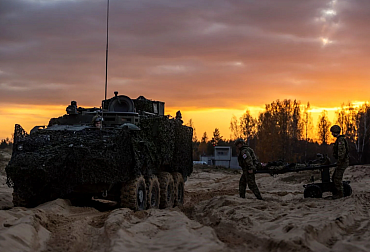
The Czech Republic will have to respond to the growing strategic autonomy and strengthening of the European pillar of the North Atlantic Alliance, which we simply cannot avoid due to changing US priorities. Whether we like it or not, the US will continue to strengthen its presence in the Pacific, which will necessarily limit the size of its presence in the Atlantic. European capabilities will have to replace it there. The Czech Republic will have to be part of these capabilities without at the same time seeking to weaken the overall strength of NATO, including the key US pillar.
The security environment is becoming increasingly technology-driven. From artificial intelligence to space systems to quantum technologies. What role do you think Czech science, research, and the defense industry should play in building the long-term security resilience of the state?
Czech science and research will likely become increasingly involved in our defense industry, not only because of the need to build long-term security and overall resilience for the state, but also because of the need to find the large financial resources that this type of research usually requires at a time when weapons technology and its manufacturers are becoming the backbone of the Czech economy, just as the automotive industry did in the past. It is quite clear that spending on science and research will go where the most important grants for their field of research are. In the future, these will most likely be in the defense industry and dual-use applied technologies.
The Czech Republic is one of the countries that has been providing significant support to Ukraine since 2022. How do you think this experience has changed the Czech Republic's strategic thinking on deterrence, preparedness, and long-term defense capabilities?
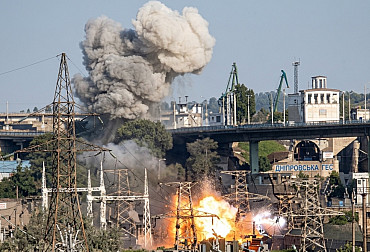
The war in Ukraine is the closest open conflict to the Czech border since the end of World War II. It has also fully demonstrated the change in the nature of combat operations, with drone battles replacing the tank battles of the last world conflict. It shows what works and what does not work as a deterrent, and how preparedness needs to be redefined. This war has fully exposed the gaps that the Czech Republic, like most of our allies, has in the area of modern warfare.
The role of National Security Advisor is often seen as a bridge between political decision-making, the intelligence community, and the armed forces. How do you intend to approach this role, and what priorities have you set for your first term in office?
My first two months in this position have been marked by the ongoing war in Ukraine and the renewed conflict in Iran. The daily agenda that these conflicts bring with them naturally takes up most of my office's time. So far, there has been no time for longer philosophical strategic considerations, and in a situation where another open war breaks out every month, it is quite difficult to propose any long-term priorities. Time will tell.