













Modernization in progress – remaining projects of the Czech Army in times of uncertain funding
In 2014, due to the Russian invasion of Crimea and eastern Ukraine, the budget of the Czech Ministry of Defense began to increase gradually in small steps. Another significant increase occurred due to Russia's total aggression in 2022, but as a result of the army's enormous internal debt, these increases in defense funding have not yet been able to cover the needs of technical modernization, infrastructure development, personnel development, and the state of the army, as well as the overall increase in the combat value and readiness of our forces.
The financial deficit in the defense budget as a skeleton from the past
The period of the great financial crisis left a significant hole in the Czech Armed Forces' construction plans. A reduction in the number of Pandur vehicles purchased, leasing instead of purchasing Gripen aircraft (a solution that was supposed to be only "temporary," yet the leased aircraft will apparently still be in active service in 2030), minimal personnel growth, the sale of infrastructure, the postponement of projects, the cancellation of rocket artillery, and significant or complete stagnation of heavy mechanized forces, air defense, artillery, and engineering troops.
These problems and many others represented obstacles after the "wake-up call" in 2014 that had to be removed on the way to restoring the Czech Armed Forces as a combat-ready force for high-intensity conventional peer-to-peer conflicts. Unfortunately, this wake-up call was not taken very seriously and, as elsewhere in the West and in the Alliance, was largely ignored. This was also evident in the very gradual increase in the budget of the Czech Ministry of Defense. The Czech Republic did not actually meet the Alliance's commitment of 2% of GDP for defense until 2024, for the first time since 2004, after two long decades. However, there is one caveat to this "real" achievement, namely the inclusion of associated defense expenditures in this 2%, which resulted in a slight exceedance of this threshold. Now, on the contrary, it is entirely possible that after only two years, the defense budget will again fall below 2% of GDP, at a time when the vast majority of our allies in the eastern wing of the European part of NATO have already significantly increased their defense spending and continue to increase it above values such as 3% or, in some cases, even 4% of GDP.
As a result, despite the number of important ongoing, new, and completed acquisitions, there is still a long list of necessary projects for building capabilities that are essential for fulfilling both Alliance commitments and the much-needed increase in the capabilities of the Czech Armed Forces as such. These projects will become increasingly expensive over time due to inflation and rising prices of military equipment, meaning that the costs of their successful completion will also rise.
Building units and capabilities as a long-term and complex process, not just a shopping list
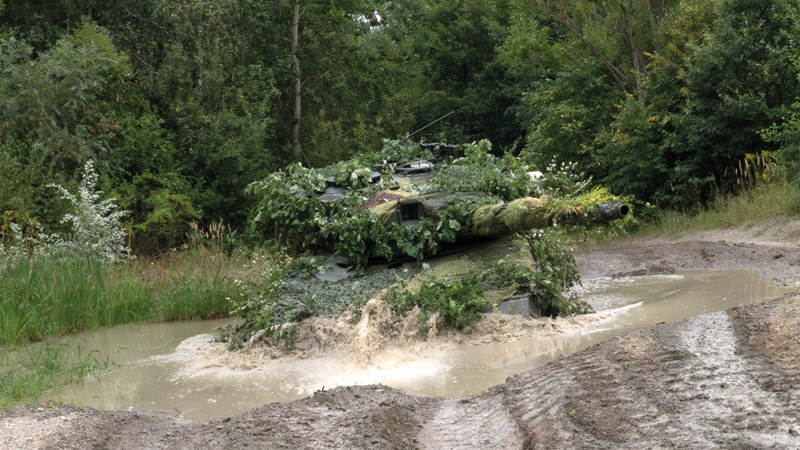
In general, combat equipment alone is not sufficient to ensure the operational capability of forces. Leopard 2A4 tanks or the recently acquired Leopard 2A8 tanks do not in themselves constitute the capability of a tank battalion. Investments include service facilities, infrastructure such as garages, communications within and around the garrison, modernization of training facilities, as well as logistics and support vehicles, ammunition, fuel, and spare parts. This is a process that requires time and adequate funding to successfully acquire and maintain the ability to deploy such a unit in the field. The same principle applies to all types of forces. The example of the 73rd Tank Battalion and, in a broader context, the entire 7th Mechanized Brigade (which is one of our key alliance commitments – to have such a unit at our disposal and be able to actively deploy it) shows that, despite the positive steps taken in recent years, due to the long-term neglect of heavy forces, it will take even longer for the entire brigade to be truly modernized, converted to a new standard, and fully operational (FOC – full operational capability). The acquisition of 42 Leopard 2A4s, 44 Leopard 2A8s (with an option for another 14) and 2 BpZ3 Buffel recovery tanks is only one of the necessary steps, not the entire process. What is striking, for example, is the current lack of modern support tanks such as Leguan bridge tanks or recovery and engineering tanks in larger numbers.
The acquisition of equipment will be followed by delivery times, deliveries, the implementation process, staff training, the acquisition of initial operational capabilities (IOC) up to the aforementioned FOC, and the need for the unit to train and obtain certification for alliance deployment. The original concept envisaged full readiness of the 7th Brigade Task Force by 2025. Due to significant delays and setbacks in the procurement of new tracked IFVs and other projects, the timeframe has now been set for 2030. However, there is a risk that even in 2030, this key element of the Czech Army's ground forces will still have a number of "blind spots" and will have to rely on outdated systems or improvisation in some areas.
Pending "blind spots" of the Czech Armed Forces – key modernization projects necessary for the rearmament and development of current Czech Armed Forces units
The Czech Republic's army, or rather its ground forces, now have three combat maneuver units in the form of the aforementioned 7th Mechanized Brigade, the 4th Rapid Deployment Brigade, and the 43rd Airborne Regiment. It is perhaps no surprise that none of these units are fully modernized and all have "blind spots."
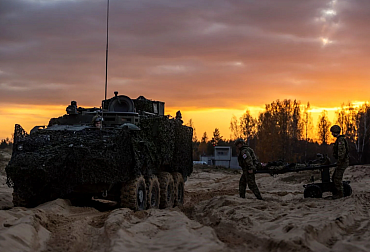
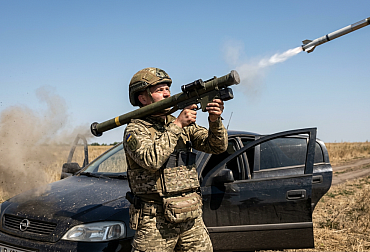
Paradoxically, in terms of completed acquisitions that individual ground forces units can look forward to, the long-neglected 7th Mechanized Brigade from Hranice comes out on top. Unlike the "Brnka," i.e., the 4th Brigade, which at least at the turn of the first and second decades acquired the then-modern KBVP Pandur II, vehicles already compatible with the Alliance in terms of caliber and other solutions, the (and in the case of BVP still is) the "heavy brigade" was (and still is) reliant on outdated BVP-2s and, in the first half of the first decade, modernized T-72M4CZ tanks, a temporary solution that has long been inadequate.
The 7th Mechanized Brigade has been waiting a long time for its rearmament, and in recent years it has finally come to fruition with the signing of a contract for 246 BVP and POV CV90 Mk.IV vehicles and 44 Leopard 2A8 main battle tanks, with the first CV90 already being tested in Sweden in the presence of our soldiers. According to published information, the first Leopard 2A8 tanks will not arrive until 2028, but thanks to a German donation for aid to Ukraine and the subsequent purchase of another 14 Leopard 2A4 tanks, the 73rd Tank Battalion will most likely have 42 of these older types at its disposal by the end of this year, intended for training and transition to Western-designed tanks. The 7th Mechanized Brigade will thus receive machines that are among the best of the current Western design school. Even so, the acquisition of the aforementioned support tanks is still lacking.
In contrast, the 4th Rapid Deployment Brigade has aging Pandurs, which are about 15 years old, in the 41st and 42nd Mechanized Battalions, as well as similarly old IVECO 4x4 light armored vehicles with Protector weapon stations. All three battalions are awaiting the selection and acquisition of new wheeled IFVs, which would move Brnka further towards the level of a modern medium brigade. According to a statement by the Czech Ministry of Defense, this expectation has now been postponed by at least a year. Both the 7th and 4th Brigades are also troubled by the state of indirect fire support at the battalion level, i.e., self-propelled mortars, currently represented in most units of both brigades in the form of old Vz.82 PRAM-L towed mortars carried on Tatra 8x8 FORCE truck beds – a solution that can be considered provisional and with limited capabilities, especially in modern battlefield conditions.
The last maneuvering element is the 43rd Airborne Regiment, which still uses modified Land Rover Defender 130 Kajman vehicles. These vehicles are past their prime, both in terms of technical obsolescence and technology. Here, too, the LÚV (light attack vehicle) project is eagerly awaited (along with the 102nd Reconnaissance Battalion, which also continues to use Kajmans), which would provide both the 43rd Regiment and the 102nd Battalion with adequate new technology to perform demanding tasks.
Let's stay with the ground forces for a moment. Combat support and combat security units, which are key components of the task forces built on the basis of the 7th and 4th Brigades, are also awaiting new hardware. In the case of the 13th Artillery Regiment from Jince, the situation in terms of acquisitions is arguably the best, but at the same time complicated. In addition to the Titus vehicles (which, as liaison and command versions, are already in use across the Czech Armed Forces and have significantly improved the level of command and control of forces) in the "fire support coordination" version and other new reconnaissance, command, and support vehicles, whether current or ordered, the main project is, of course, the "155 mm NATO caliber gun" in the form of ShH Caesar CZ 8x8 howitzers, which are to replace the completely obsolete ShKH vz.77 DANA howitzers. However, this project, which envisages the delivery of 62 of these modern French artillery systems, has suffered significant delays, and although the plan is for deliveries to begin this half-year, it is unclear whether this schedule will be met. This is slowing down the modernization of this unit, which, as the Ukrainian battlefield shows, remains critically important for modern warfare. Unfortunately, there is no news yet about the introduction of MLRS systems, i.e., the renewal of rocket artillery, which is currently experiencing a renaissance in European armies, and given not only financial but also personnel restrictions, it is likely that such a project will not even be on the agenda in the coming years.
The 14th Logistics Support Regiment benefits from new technology in the form of Scania and Tatra vehicles and new Liebherr and Grove cranes. However, more modern logistics, repair, evacuation, and transport vehicles will be needed in the context of building heavy mechanized forces that use tracks.
The 15th Engineer Regiment, another key component of both brigade task forces, continues to use outdated AM-50 escort bridges, still carried by Tatra 813, and outdated PMS pontoon bridges. Here, too, new technology is expected to replace both of these systems designed to cross watercourses and terrain obstacles. This is in conjunction with the UKPŽ (universal wheeled platform for engineering troops) project, which aims to provide engineers with 4x4 armored vehicles for increased protection. In addition, the military police and military medics are also expected to join this project. In terms of new technology, engineers can currently only rejoice in the new cranes and Volvo vehicles mentioned above. Here, too, there are significant gaps that will affect the overall readiness and capabilities of both combat brigades and the entire Czech Armed Forces.
The 31st Regiment in Liberec is the headquarters of our CBRN units. These have been gradually modernized over the years, and several other projects are currently underway, yet even here there is room for hardware replacement and further development.
The last of the main components of the ground forces is the 53rd Reconnaissance and Electronic Warfare Regiment. As already mentioned, the 102nd Reconnaissance Battalion is awaiting replacement of the LR 130 Kajman. The situation is better for the 532nd Electronic Warfare Battalion, which has received considerable attention. New systems such as STARKOM, DPET, and newly acquired ES-RA and SRTP sets and PLESS long-range passive detection systems guarantee the comprehensive modernization and development of this unit's capabilities. The 533rd Unmanned Systems Battalion, which is moving to the Přerov airport, has received additional new technology in recent years. However, it is clear that, given the rapid development of unmanned systems due to the conflict in Ukraine, there is great potential for developing not only this unit but the entire Czech Armed Forces.
The situation in the air force is somewhat more positive than in the ground forces, but appearances can be deceiving. The largest project is the long-discussed purchase of 24 fifth-generation F-35A Block 4 aircraft to rearm both tactical squadrons from the 21st Air Base in Čáslav. This (together with the necessary infrastructure) will enable the Czech Air Force to reach the highest possible standard of NATO air forces. At the same time, the 22nd Helicopter Base in Náměšť is enjoying new Viper and Venom H-1 helicopters, and thanks to aid from Ukraine, the number will increase to 20 aircraft. Meanwhile, Mi-171š transport helicopters continue to be modernized to meet NATO standards and serve beyond 2030. The 24th Base in Kbely is eagerly awaiting two C-390 medium transport aircraft as a further development of the Czech Armed Forces' air transport capabilities. However, it should be noted that the number of aircraft being procured is less than the ideal minimum in terms of continuous deployability and is likely to increase over time. At the same time, the uncertain fate of the 243rd Helicopter Squadron, whose backbone consists of the retiring W-3A Sokol helicopters, casts a certain shadow over the development of the 24th Base.
In terms of ground-based air defense, the 25th Regiment from Strakonice will soon undergo significant modernization in the form of four modern SPYDER CZ air defense systems to replace the outdated Soviet-made KUB systems. Development has also been secured for the RBS-70NG systems, which will be expanded in number and mounted on 4x4 armored vehicles to increase mobility. Although these steps are welcome, it must also be acknowledged that the ammunition currently being procured is very limited and that these air defense capabilities will be rather basic. There will continue to be a lack of both greater coverage of the country and the ability to counter threats flying along a ballistic curve or developed capabilities to counter strikes by inexpensive unmanned aerial vehicles. Some new projects are intended to address these shortcomings, and it is also possible that the Czech Armed Forces will see the development of the SPYDER system in an AIO (All-in-One) configuration, but all these steps will require considerable financial resources. In the case of the 26th Command and Control Regiment, which provides an overview of the air situation over our territory and can also be deployed for the benefit of our allies, there has been a breakthrough in the form of the introduction of eight Israeli EL/M-2084S radars. Nevertheless, further investment will be needed for defense against ballistic missiles.
Modernization as a guarantee of prosperity and national security
The above list clearly shows that although the increase in funding helped to launch a number of necessary projects that had been postponed for years, marking the start of the largest modernization of the Czech army in history, yet, after many years of underfunding and the resulting accumulation of internal debt, it is not possible to solve everything at once (and even less so with less than 2% of GDP—which is not just an unclear percentage, but in effect almost fixed—ideally a minimum that would gradually increase over time – the amount of money spent on building the country's defense capabilities, depending on its economic performance) and there is still a very long list of absolutely essential projects necessary for the comprehensive modernization and finalization of force building for the benefit of the defense of our country and our allies in the Alliance. We are already behind schedule in relation to our declared plans in support of NATO, and in addition, the largest conflict on the European continent since World War II has been raging nearby for four years now. Let's be completely honest: the long process of modernizing our forces will still "only" result in the Czech ground forces having two brigades and one regiment in terms of combat units, which is not exactly a breathtaking number in the context of, for example, or – given the size of the population – the Swedish armed forces. The development of forces – also in terms of numbers – is a process that is taking place in many European countries, and our neighbors, such as Poland, Germany, and allies such as the Scandinavian and Baltic countries, are working on both qualitative and quantitative strengthening of their armies.
It is therefore necessary to seriously discuss defense funding, and it is not only the resulting amount on an annual basis that is important, but especially the medium-term or even long-term outlook, which will enable adequate and sophisticated planning of force development. At the same time, it should be remembered that the Czech Armed Forces have a huge internal debt and the projects listed here are only the tip of the iceberg. As mentioned above, a tank without a trained crew (and other personnel), fuel, ammunition, support, and service and repair infrastructure does not function very well, which is true of any piece of equipment. Infrastructure, ammunition purchases, development, training, retention, and recruitment are not cheap, yet they are crucial to the operational capability of the army as a whole. In addition, we have other types of forces, such as Information and Cyber Forces, as well as Territorial Forces, which now have 14 battalions, but for the time being with a lower combat value due to the state of their equipment and the types of vehicles they have at their disposal. There is also great room for development here. Not to mention the logistics agency, healthcare, military police, and special forces. The issue of personal armament and equipment is also a sensitive topic. Although there has been a significant shift (see new backpacks, ballistic protection equipment, radio stations, and long-awaited winter equipment), which follows on from the modernization of recent years, there are still aspects, such as more modern night vision equipment and new field uniforms, footwear, and helmets, which would further enhance the overall capabilities of the Czech Army.
We can only hope that the trend of recent years leading to the gradual acceleration of the modernization of the Czech Armed Forces will continue. Because the army is a pillar of security, and security and stability are important pillars of the prosperity of the state and its inhabitants in the face of threats.