







MSPO 2026: Drones, Artificial Intelligence, and New Technologies Are Transforming the Modern Battlefield
The 34th annual MSPO International Defense Industry Fair in Kielce, Poland, demonstrated just how fundamentally the military is changing. Key topics included autonomous systems, unmanned vehicles, artificial intelligence, and secure data processing technologies. It is precisely in these areas that lessons learned from the war in Ukraine – which has become one of the main drivers of technological development in the defense industry – are being applied at an exceptionally rapid pace.
Video: MSPO 2026: Drones, artificial intelligence, and new technologies are changing the face of the modern battlefield / CZ DEFENCE
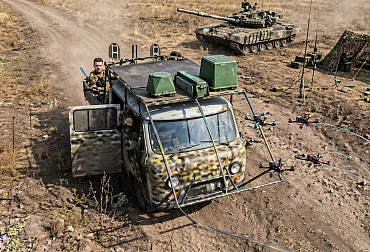
One of the most striking areas of this transformation is drones. Their development has accelerated dramatically in recent years, and today, various categories of drones are performing tasks that until recently were reserved for traditional weapons systems. FPV drones were among the first categories to see widespread use in Ukraine. They provided Ukrainian defenders with a relatively inexpensive and effective means of destroying enemy equipment and personnel. Their advantages include simple design, low production costs, and the ability to respond quickly to changing battlefield requirements.

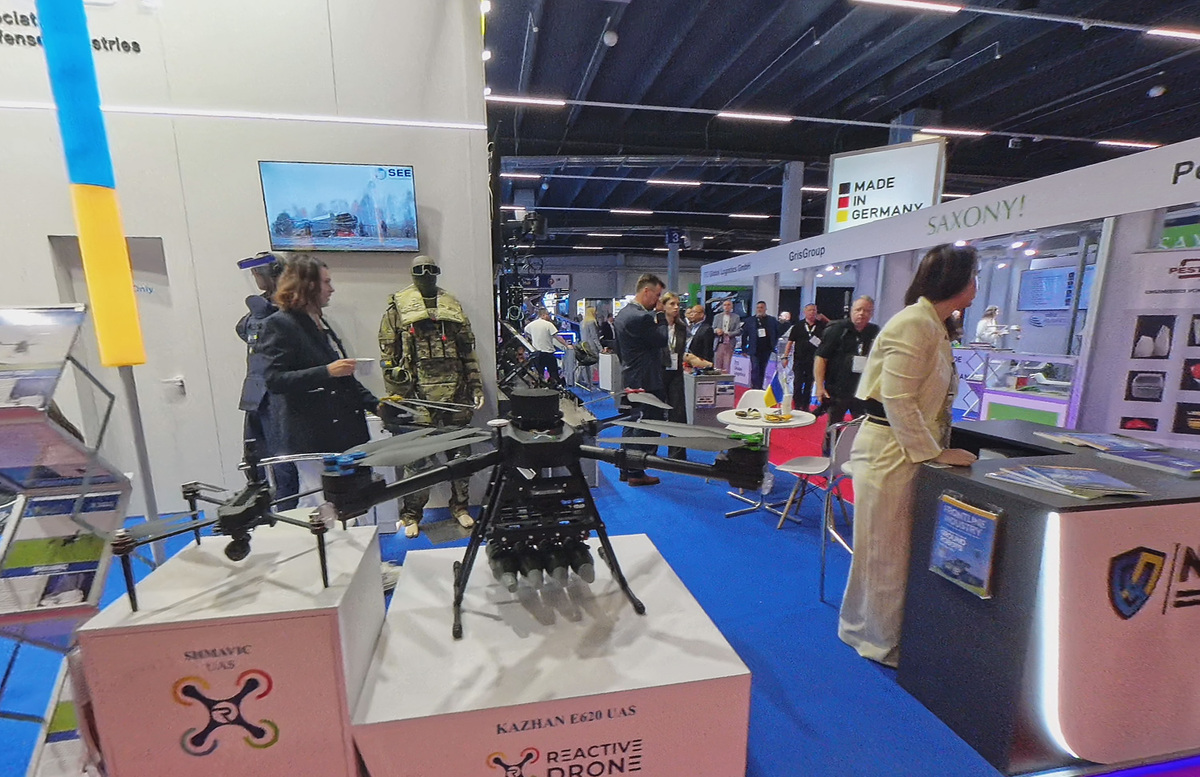
A significant technological advance is the use of optical fiber, which increases resistance to electronic interference, and the integration of autonomous guidance using artificial intelligence. What began as improvised equipment is thus gradually becoming standardized weaponry manufactured on an industrial scale.
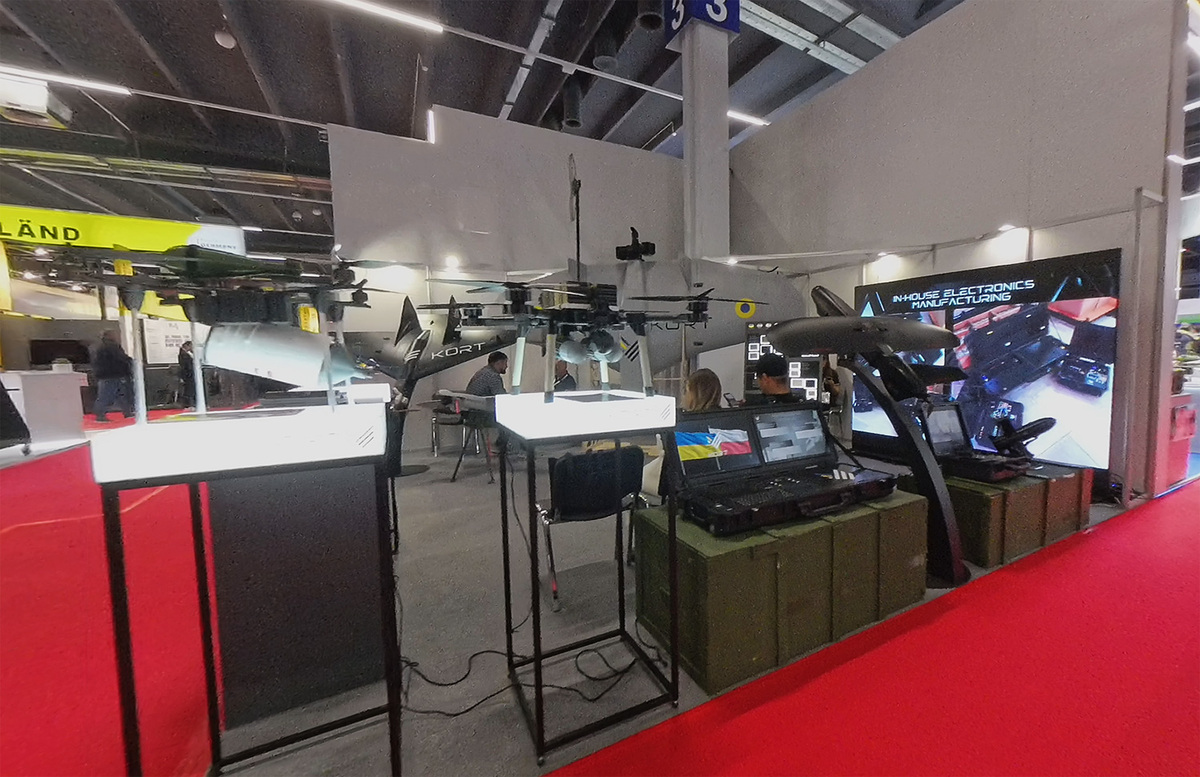
Traditional ammunition manufacturers, such as the Czech company STV GROUP, are therefore also entering this segment. This is because FPV drones complement or partially replace conventional ammunition in certain missions. Put simply, they can be compared to flying anti-tank missiles, whose operator can actively search for a target and change the direction of the attack during flight.
The CSG Group arrived in Kielce with a presentation of advanced systems, such as a small jet engine, which is currently very popular for use in various long-range drones or cruise missiles.
In addition to small attack drones, large multi-rotor platforms designed primarily for logistical support are also gaining ground. They are capable of transporting ammunition, medical supplies, and other provisions to locations where moving ground vehicles would be too risky. Some can carry payloads exceeding 100 kilograms, and thanks to computer vision, they can fly autonomously even in environments with limited satellite navigation coverage. They are also finding applications with fire and rescue services.
Another rapidly developing category is anti-drone interceptors. Their mission is to catch up with and destroy an enemy unmanned aerial vehicle, such as a reconnaissance drone or an attack system like the Shahed or Geran.
Unlike conventional quadcopters, they often feature a slender, aerodynamic fuselage and exceptionally powerful engines. Some of the latest designs reach speeds approaching 400 km/h. However, as speed increases, energy requirements and design limitations grow significantly. This is precisely where the opportunity for small jet engines arises.
The Czech company PBS GROUP holds a prominent position in the field of small jet engines. Its propulsion units are used in unmanned aerial vehicles and guided missiles, where performance, manufacturing precision, and operational reliability are paramount.
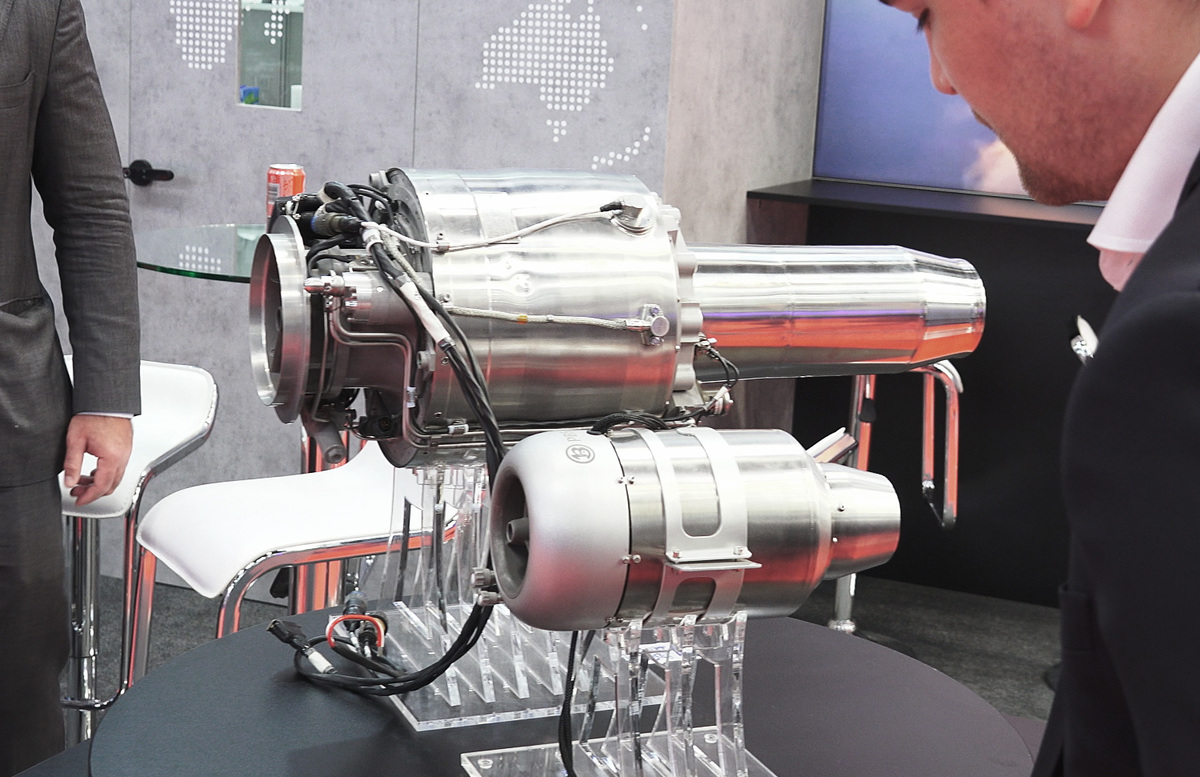
Alongside these advanced propulsion systems, however, a different approach based on rapid and cost-effective production is also gaining ground. One example is the use of 3D printing of metal components in the manufacture of small jet engines for single-use interceptors. For such a system, a long engine lifespan may not be the decisive factor; rather, it is the ability to complete a single mission at an acceptable cost. The economics of anti-drone defense are thus becoming just as important an issue as the technical parameters themselves.
Another key trend is the integration of artificial intelligence directly into drone onboard systems. Specialized processors and computer vision algorithms can analyze camera footage, compare it with map data, and determine the vehicle’s position even without an available GPS signal.
Such capabilities are particularly important in Ukraine, where electronic warfare and satellite navigation jamming are a daily reality. However, the accuracy of autonomous navigation also depends on the timeliness of the available data. This is precisely where reconnaissance drones play a key role, as they continuously monitor the battlefield, search for targets, and provide information to other weapon systems.
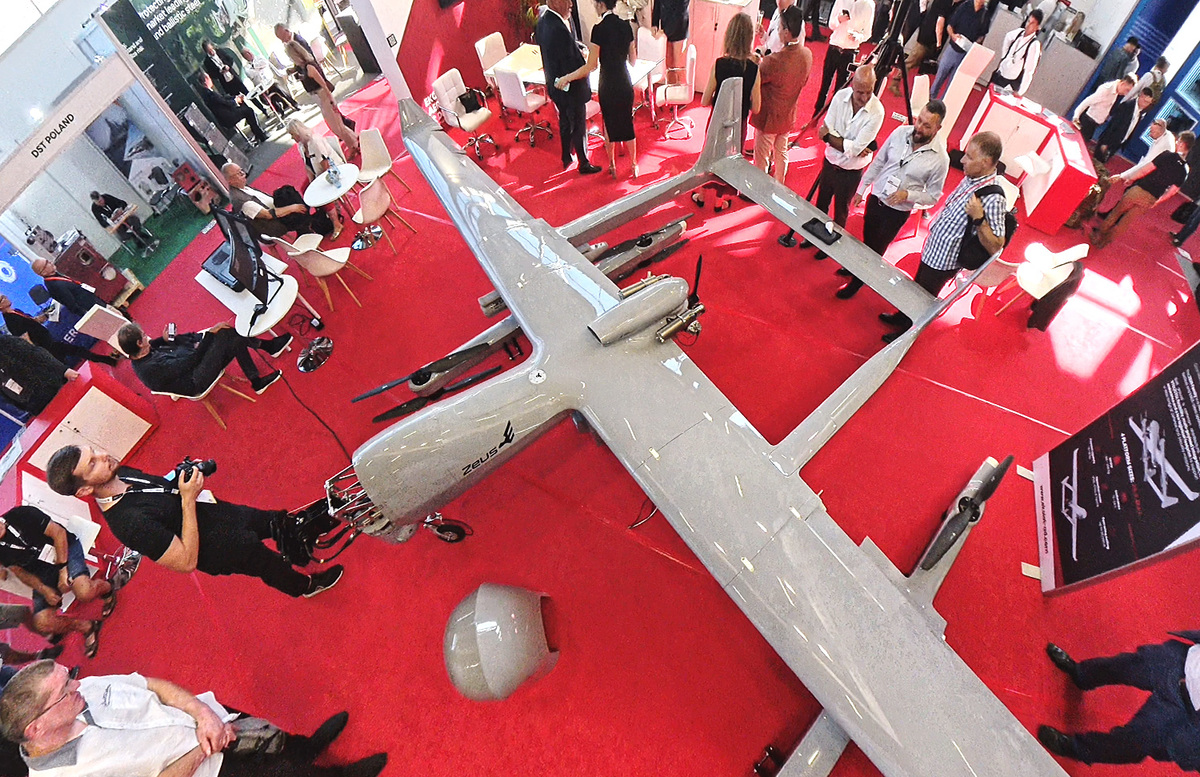
Fixed-wing aircraft capable of vertical takeoff and landing (VTOL) also represent a significant category of reconnaissance assets. Their main advantage is the combination of a longer range with independence from conventional airfields.
It is precisely the ability to take off from small, improvised sites that significantly increases operational flexibility and operator safety. Although the auxiliary engines required for vertical takeoff represent an aerodynamic and weight compromise, independence from airport infrastructure can be decisive in combat conditions.
Examples of modern unmanned reconnaissance systems include the Polish ZEUS, the German Vector, the Ukrainian Shark, and the American JUMP 20. Their common goal is to provide units with up-to-date information from the battlefield while placing as few demands as possible on ground support facilities.
At the opposite end of the spectrum are long-range attack drones, whose capabilities approach those of certain categories of guided missiles. The development of these systems is no longer the exclusive domain of large defense contractors such as Lockheed Martin or Boeing.
Smaller technology companies, such as the Czech firm LPP from Pardubice, are also playing an increasingly significant role. LPP is dedicated to the development of advanced unmanned technologies and related systems. Its competitive advantage lies not only in the flight platform itself but also in its ability to integrate navigation, electronics, communications, and other components into a functional whole.
To conclude our report, we return to the place where the technological development of unmanned systems has accelerated significantly in recent years – Ukraine. The war has forced the local defense industry to undergo an exceptionally rapid transformation. Ukraine has gradually built up extensive domestic capabilities for the development and production of its own drones and long-range weapon systems. Notable examples include the Flamingo FP-5 and Palianytsia projects.
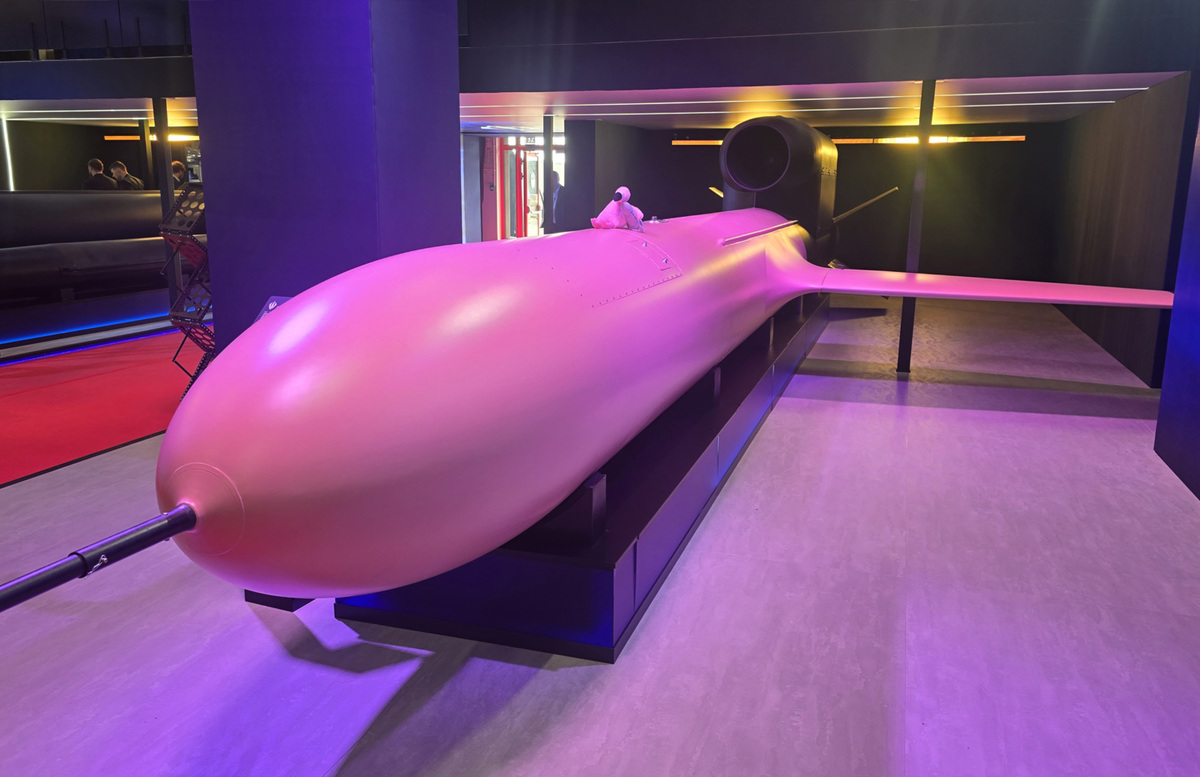
At the exhibition booth of the Ukrainian company Fire Point, however, one thing caught our attention in addition to the technologies themselves – the surprisingly young age of many of its designers and engineers. It is precisely these young developers who are taking on responsibility for technologically demanding projects here, projects that under normal circumstances would often take significantly longer to complete. Ukraine thus clearly demonstrates that the success of the defense industry is determined not only by the size of companies, financial resources, or years of experience, but also by the ability to innovate quickly and apply battlefield insights in practice.
This year’s MSPO trade fair in Kielce, Poland, served as a striking showcase of the speed at which unmanned technologies are developing today. More than 1,200 exhibitors from around the world presented not only new weapon systems but also directions for further technological development.
The future of drones, however, will not depend solely on their speed, range, or payload capacity. Increasingly important will be the ability to integrate individual systems, utilize artificial intelligence, withstand electronic warfare, and produce the necessary equipment quickly and in an economically sustainable manner. And that is precisely one of the main messages of this year’s MSPO: the modern battlefield is changing at an extraordinary pace, and the limits of what unmanned systems can do are constantly shifting.