









Pavel Švagr: In a Crisis, You Only Have What You Produce at Home
For many years, the State Material Reserves (SSHR) were viewed primarily as an inconspicuous part of the government. It was an institution that was rarely discussed, and the public usually only became aware of its importance during times of crisis. However, the COVID-19 pandemic, energy crises, the war in Ukraine, and recurring natural disasters have shown that the state’s ability to manage emergencies does not rely solely on the military or emergency services. Equally important is the readiness to secure fuel, food, equipment, medical supplies, and logistical support. Pavel Švagr, Chairman of the State Material Reserves Administration, describes in the next episode of the CZ DEFENCE podcast how the role of the institution is changing as it increasingly becomes involved in the area of the Czech Republic’s defense capabilities.
Video: Interview with SSHR Chairman Pavel Švagr / CZ DEFENCE
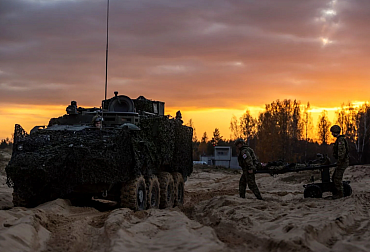
When Pavel Švagr talks about the transformation of the state’s material reserves, he doesn’t start with statistics or budgets. He begins with the changing security environment. In his view, the Czech Republic is living in a time when the number of risks is growing and their nature is changing faster than ever before. “The world is changing. We are living in a time that is more dangerous than it was three years ago,” Švagr says candidly. In addition to traditional security threats, he also highlights civilian crisis situations, ranging from floods to droughts or supply chain disruptions. It is precisely this, he says, that is also changing the role of the State Material Reserves Administration. Although historically it has been a very conservative system based on the requirements of individual ministries and their contingency plans, the change is already evident. “We place far greater emphasis on cooperation with the military. We place far greater emphasis on items that could serve the military, primarily within the framework of Host Nation Support,” explains Švagr. In other words, the state must be prepared not only to secure its own population but also to provide logistical support for allied units operating on Czech territory.
But the changes are not limited to the defense sector. The State Material Reserves Administration is also responding to experiences from recent years. Floods have led to a greater emphasis on crisis preparedness in this area, while the situation surrounding foot-and-mouth disease has brought about the need to modernize decontamination equipment or strengthen capacities for crisis response in agriculture. According to Pavel Švagr, it is characteristic that the state often reacts only under pressure from events. “It is true that state material reserves change more effectively under pressure,” notes the SSHR chairman. In doing so, he acknowledges an unpleasant reality: the political will to invest in reserves tends to be strongest only when a specific threat arises. The result is a growing budget. According to him, this year’s budget is approximately 29 percent higher than last year’s. But this is no coincidence. “It is precisely because the ministries have greater demands on us and the military has become significantly involved,” he explains. Higher investments are intended to help the state respond more quickly and effectively. At the same time, he points out a paradox: institutions that deal with ongoing crisis situations often have limited scope for strategic planning. “We are crisis managers through and through. Unfortunately, we are unable to pause and take any strategic steps,” he admits.
One of the areas where the changes are most visible is oil and petroleum products. Just a few years ago, few would have expected that the Czech Republic would have to address a fundamental reduction in its dependence on Russian supplies in such a short time. “We have replaced nearly 60 percent of our Russian oil reserves with non-Russian oil,” says Švagr. The reason was the need to react quickly to changes surrounding the Druzhba pipeline. Today, the state holds reserves for both Czech refineries. According to Švagr, this represents a significant boost to flexibility and security. Moreover, oil reserves are not used only during crises. In recent years, the SSHR has repeatedly loaned out reserves due to technical problems or planned shutdowns.
“If we hadn’t lent that oil, there would have been a fuel shortage on the market,” he points out. According to him, this is precisely where the state demonstrates its resilience. While commercial fuel reserves typically cover only a few days of consumption, the state holds significantly higher reserves. “Commercial reserves are typically around five to seven days’ worth of consumption. The state’s reserves are for 90 days. This is where you see that resilience; this is where you see the scale,” he says. However, he notes that the question of long-term preparedness does not have a simple answer. “It’s actually a question of what constitutes a short-term crisis and what constitutes a long-term crisis,” notes Švagr. If supplies or domestic production are functioning simultaneously, the actual ability to manage problems can be significantly extended. The same logic applies to food. In addition to state reserves, there are commercial stocks and domestic agricultural production. “I wouldn’t talk about long-term or short-term, but about being better prepared,” he summarizes his view.
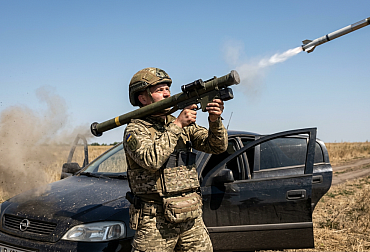
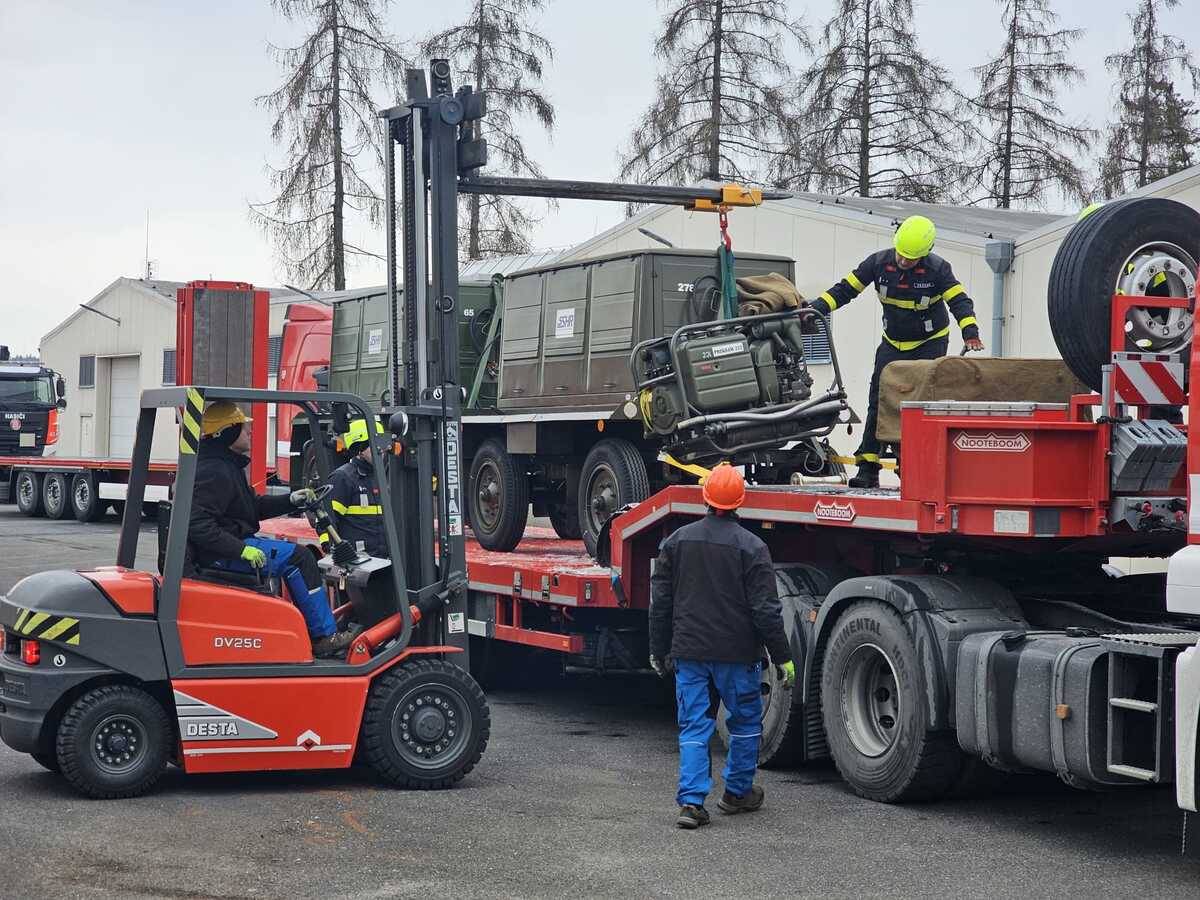
Another key topic of the interview is the integration of state reserves with the defense system. Švagr explains that most of the equipment being procured today can have dual use. “We’re acquiring flood response equipment, water tankers. This is equipment that can be used to supply water, for example, to the Czech Army. We’re acquiring power generators; in the event of a problem, they can serve the army,” he explains. In his view, this is the right direction. “We actually have dual-use capabilities today. I think that’s a good thing,” says the SSHR chairman. At the same time, he openly admits that in the event of a genuine threat to the state, the rules would change. “If a state of war were to be declared, then the rules would be completely different, and the army would have access to our supplies. That’s also the right thing to do,” he adds.
Another major issue is globalization. Švagr points out that over the past few decades, European economies have grown accustomed to relying on cheap supplies from other parts of the world. Today, however, it is becoming clear that this model also carries significant risks. “We can clearly see that globalization is becoming an increasingly serious problem,” he states. In his view, the Czech Republic should do more to support domestic production. “If we want to overcome this, we must unequivocally decide that we want to produce more things at home, so that Czech industry can manufacture them,” he says. This isn’t just about economic patriotism. It’s primarily about resilience. “What you produce at home is simply what you have in a crisis,” he sums up simply. Nevertheless, he admits that some products cannot be manufactured in the Czech Republic. “Medical gloves, for example. That’s something we’ll probably never produce in the Czech Republic,” Švagr cites as an example of dependence on Asian markets.
According to him, cooperation with the Czech Army has also changed. “I’d say the army has become significantly wiser,” he says without mincing words. According to him, the processes are simpler, and the army is setting significantly higher requirements for reserves than in the past. Concrete figures serve as proof. “The Ministry of Defense’s requirements exceed two billion crowns. That’s never happened before,” the chairman points out. But readiness isn’t just about supplies. It’s also about the ability to use and test systems.
When asked whether reserves can be trained in a similar way to the army, he responds realistically. “I can’t really imagine training for food distribution,” admits Švagr. However, there are areas where practical testing works very well. For example, temporary bridges during floods. “The Czech Army managed to build over twenty temporary bridges within 30 days. A magnificent achievement,” he assesses. In addition to practical exercises, the importance of joint planning, information systems, and coordination between the army and the SSHR is growing.
Looking ahead, Švagr also sees an opportunity in European cooperation. “A unified European strategy is certainly a good idea, but it must be developed based on discussions among member states,” he says. According to him, the point is not for the European Union to dictate specific stockpiles to member states, but for them to share experiences. “We’re looking for the best model. We’re looking for the best practices on how to secure reserves economically and practically,” he explains.
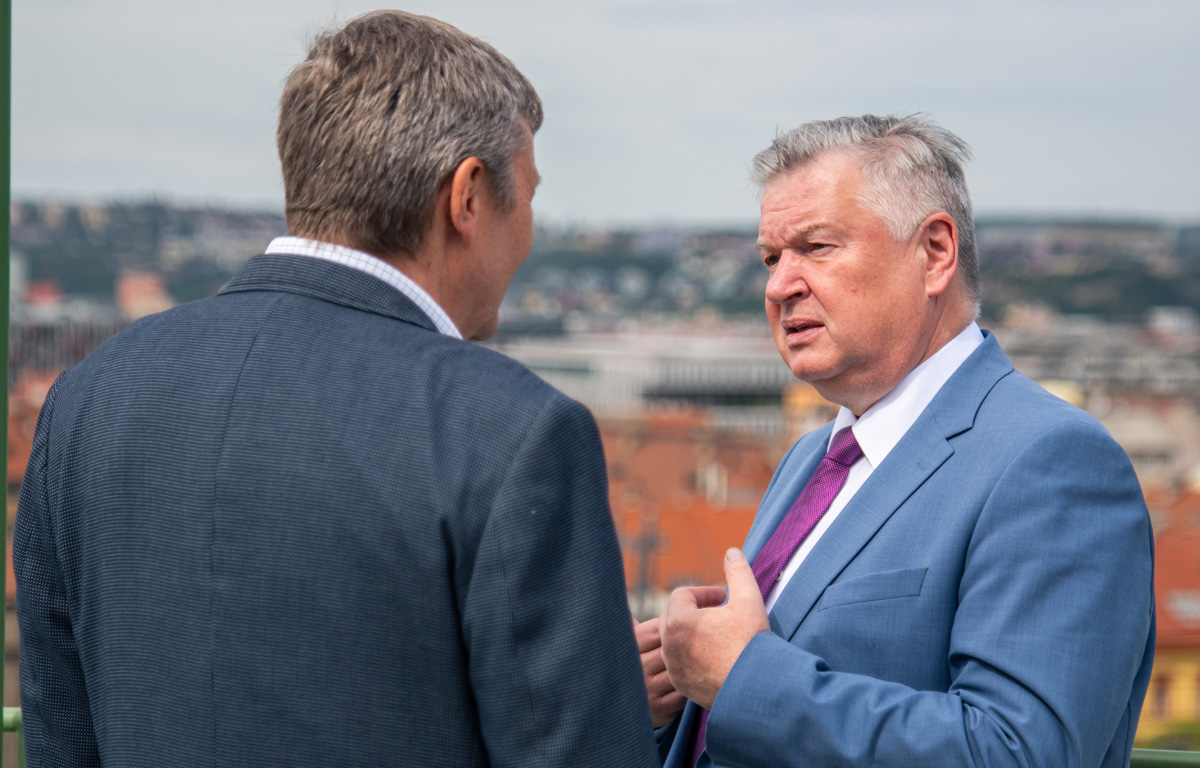
At the end of the interview, the SSHR chairman answers the question of what three steps the Czech Republic should take over the next few years to strengthen its preparedness. He sees the first problem in legislation. “The relatively complicated Public Procurement Act,” he replies. In his view, overly lengthy processes hinder the rapid acquisition of necessary capabilities. The second area is people. “We need to strengthen our expertise in terms of personnel,” he notes. And the third? Modern warehouses. “We need modern warehouses that are fit for the 21st century,” he says. When looking at Poland or Germany, he says he sees a significant gap. “In this regard, we’re Cinderella,” the chairman states.
An interview with SSHR Chairman Pavel Švagr in the latest episode of the CZ DEFENCE podcast shows that state material reserves are no longer just about warehouses and emergency stockpiles. They are becoming part of a broader debate on national resilience, defense capabilities, and economic security. And although most citizens do not perceive their importance in everyday life, it is precisely the state’s ability to ensure basic functioning during a crisis that can determine how quickly society returns to normal. “Defense and defense capabilities come at a cost. Material reserves are part of the security system. As a citizen, I want material reserves to be perfect and to function perfectly,” concludes Pavel Švagr.