














Rocket Artillery: Advantages and options for its (re)introduction into the Czech Army
2010 was the last year that RM vz.70 rocket launchers were used as part of the Czech armed forces. This last "roar" marked the symbolic end of rocket artillery and its relatively long history in the Czech military. The RM vz.70 ere removed from active service without replacement, and the Czech Armed Forces have not had this capability for 15 years, which amounts to its systemic loss. Between 1993 and 2000, there were still over 100 rocket launchers in the Czech Armed Forces, but their numbers declined dramatically after 2000. Some of the RM vz.70s were sold to Finland (where they are still in service today), and the last ones were, as mentioned, decommissioned in 2010. But could rocket artillery return to the Czech countryside? The time is ripe for it.
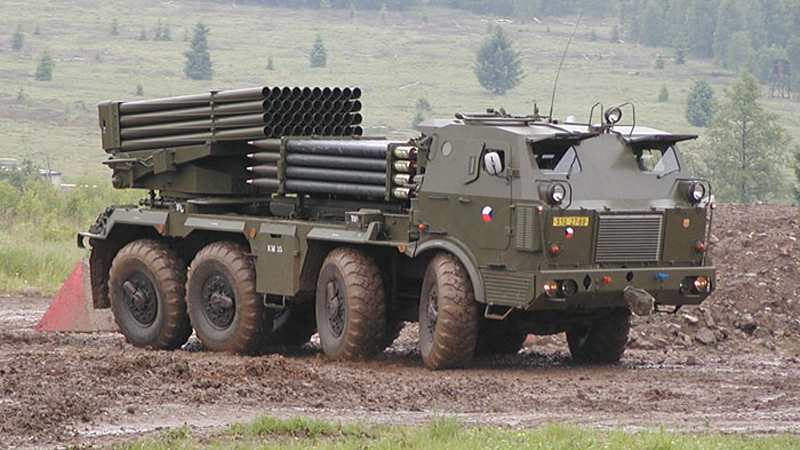
It must be said at the outset that the scrapping of the missile forces was not a random whim of the army command at the time, but a step forced by massive cuts in the Defense Department's budget, supported by (almost) Europe-wide downgrading of forces for near-peer conventional conflict with a technologically advanced adversary, and a new focus on foreign counterinsurgency and stabilization operations. This conditioned the structure and direction of force development. But times have changed – significantly.
The new reality
On February 24, 2022, our world changed (some might say it simply returned to its historical roots). Conventional conflict and preparation for it once again became the primary focus of European forces, and the initial shock was replaced by new ambitions, increased political and social interest, and new requirements from NATO (Capability Targets). Among other things, this resulted in increased funding and new plans that are far beyond the imagination and possibilities of the period before February 24.

Even countries smaller than the Czech Republic have purchased or even introduced new rocket artillery systems into service over the past four years, while larger countries have significantly increased or are increasing their numbers in service. An example of this is the Baltic states, where Lithuania and Estonia purchased M142 HIMARS systems shortly before the start of the Russian invasion of Ukraine, with Latvia joining in 2023. All three Baltic countries already have or will have this type of military equipment at their disposal. Together, they will operate 20 of these modern American systems. Another example is Denmark and the Netherlands, which have opted for Israeli PULS systems.
Germany and France are also planning to renew and increase this capability. And then, of course, there is Poland, which has embarked on a course that can be described as impressive. It is acquiring dozens to hundreds of M142 HIMARS and South Korean K239 Chunmoo systems on the domestic Jelcz chassis platform. The new K239s have already been seen in Finland during a recent exercise. Finally, Hungary is also interested in acquiring MLRS (Multiple Launch Rocket System) equipment; see Efforts to acquire M142 HIMARS as early as 2022, and the Armed Forces of the Slovak Republic still have rocket artillery at their disposal today, thanks to the modernization of the RM-70 into the MODULAR.
This list is not a weak argument, and as some pieces and fragments in interviews with representatives of the domestic army and artillery command suggest, the Czech Armed Forces are also slowly beginning to address the reintroduction and development of this capability. Increased public interest, growth in terms of numbers, overall modernization and the development of new capabilities, together with an increase in the defense budget, do indeed represent ideal conditions for the return of this capability to the Czech Army's arsenal.
Possibilities and advantages of rocket artillery
Building this capability from scratch will, of course, be a time-consuming, personnel-intensive, and financially demanding task. It is not just a matter of purchasing MLRS launchers, but also the entire chain of command and control, reconnaissance and fire coordination, support, service, and repair facilities, and ammunition supplies. This "invisible but essential" package will cost many times more than the MLRS itself. This may raise questions as to whether this is really necessary at a time when the Czech Armed Forces have many weaknesses in their existing capabilities that need to be modernized/completed and strengthened.
The conflict in Ukraine is not the only example showing that rocket artillery is worth having. The ability to accurately hit a target with high destructive power at a distance of hundreds of kilometers is in itself a significant deterrent and a certain lever in international relations, thus increasing the country's weight in the alliance. At the same time, in the event of a conflict, it allows the opponent to "ruffle" its command posts, warehouses, important transport hubs, critical infrastructure, industry, and other high-priority targets. Without the need to deploy (and endanger) air assets directly as carriers of all ammunition, which in the case of the Czech Republic, will not have the capacity to match ground launchers such as the K239 Chunmoo.
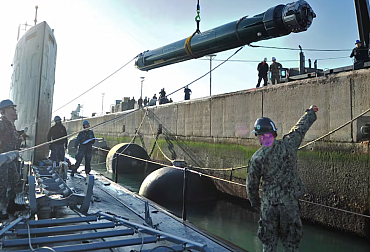
Another aspect is that modern barrel artillery, even with the most advanced (and expensive) ammunition, has a range of over 60 km (which is still significantly less than the more powerful ammunition for MLRS), but due to the pressures required in the barrel, its service life decreases more quickly. This situation already occurs when using "dumb" ammunition with a range of "only" 40 km. The question is therefore whether, for some targets and situations at shorter ranges, it is not more appropriate to use weaker MLRS ammunition or strike drones (when the situation and environment allow) than to constantly push the technical capabilities of howitzers to the limit.
MLRS systems, i.e., rocket artillery, are gaining a second wind in Europe (like many other types of weapons). The Czech Republic and its armed forces should not stand aside from this transformation. On the Ukrainian battlefield, this type of force demonstrates that even a smaller number of resources can significantly influence the situation on the battlefield, not only at the tactical but also at the operational level. When we consider the necessary inputs and personnel requirements, the price/performance ratio is positive and potentially attractive for a smaller army such as the Czech Armed Forces.
The future will show in which direction, and whether, Czech rocket artillery will experience a renaissance. There are signs of this, and the recent mention by Chief of Staff Gen. Karel Řehka of the possible future creation of a divisional structure in the Czech Armed Forces gives some hope. However, it seems that, like other projects, the possible acquisition of MLRS will be a thing of the future, realistic only after 2030. The Czech Army's internal debt is relentless, and the development of financing is unclear for now.