














Security Is Not Just a Military Issue: Pilsen Conference Opens Crucial Debate on Societal Resilience
Early May is traditionally associated in Pilsen with celebrations marking the city’s liberation by the U.S. Army. This year, however, the West Bohemian metropolis also became a major hub for expert security discussions. The second annual Pilsen Security Conference (BKP), organized by the Department of Political Science and International Relations at the Faculty of Philosophy of the University of West Bohemia, offered the general public and experts alike two days of discussion on current security threats, societal resilience, and the future of Czech defense.
Video: Security isn't just a military issue: A conference in Pilsen launched a crucial debate on societal resilience / CZ DEFENCE
The conference was subtitled “The Citizen: The Foundation of National Security,” which perfectly captured the main theme of the event. Building on the success of the first edition, the organizers significantly expanded this year’s program. The new two-day format allowed for discussions on internal security, the functioning of the integrated emergency response system, societal resilience, hybrid threats, and cybersecurity. Over the course of both days, a number of prominent figures from the fields of defense, security, academia, and government spoke. Speakers included Army General Karel Řehka, Lieutenant General Miroslav Hlaváč, Major General Petr Čepelka, Tomáš Pojar, RNDr. Jan Kofroň, Ph.D., PhDr. David Šanc, Ph.D., State Secretary of the Ministry of Education, Youth and Sports – PhDr. Ondřej Andrys, Col. Jiří Ignác Laňka, senior representatives of the Czech Police – Brig. Gen. Jakub Frydrych and Col. Jaroslav Ibehej, the Fire and Rescue Service, as well as Dr. Alena Šebková and experts from the academic community. On the second day of the conference, Minister of Defense Jaromír Zůna, who also served as the conference’s patron, delivered a speech.

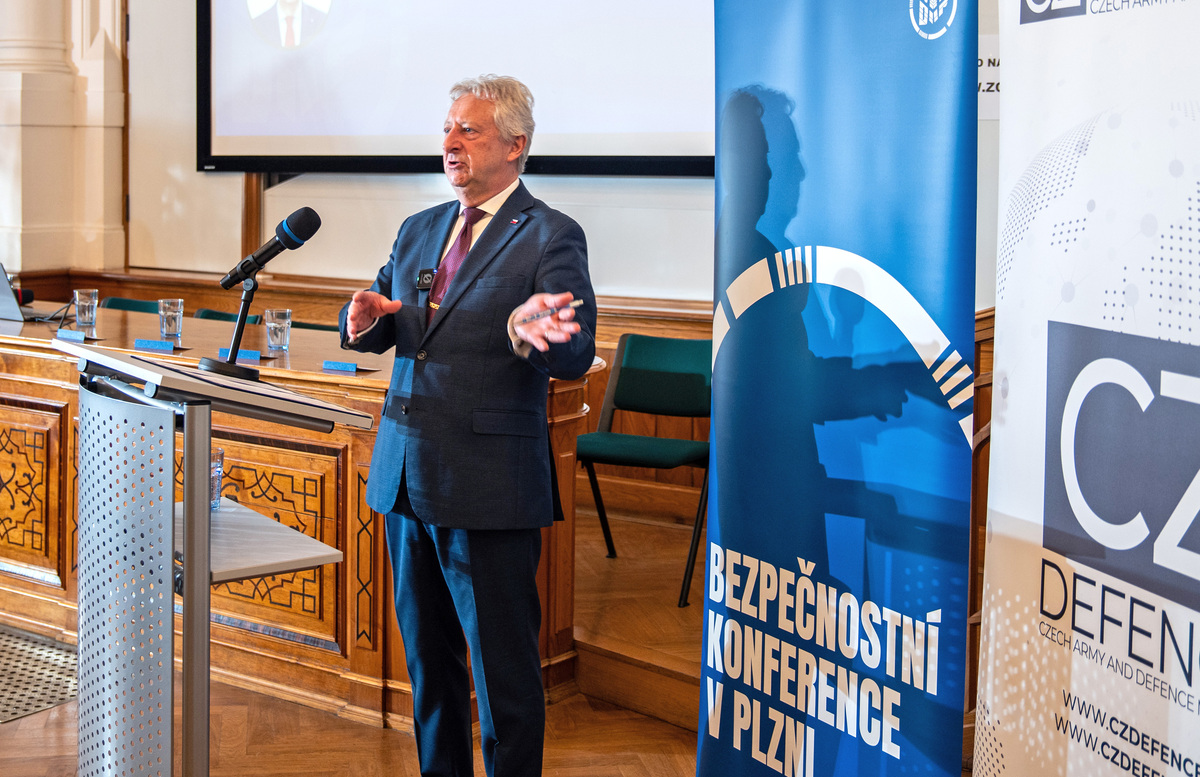
“Citizens are the foundation of national security – that is our motto, which we have been upholding for the second year in a row and upon which we have built the entire concept of our conference,” said the conference’s founder and head of the organizing team, Miroslav Plundrich, Ph.D.
The conference took place in the prestigious premises of the West Bohemian Museum in Pilsen and was open to the general public free of charge upon prior registration. It is precisely this emphasis on connecting experts with citizens that represents one of the main attributes of the entire event. The organizers have long emphasized that national security cannot be viewed solely as the domain of the military or security forces, but as a shared responsibility of society as a whole.
A strong lineup of speakers
This year’s event was bolstered by inter-ministerial support, which confirms the conference’s appropriate focus. Not only did the Czech Ministry of Defense and Ministry of the Interior express their support and patronage, but so did the Ministry of Education, Youth, and Sports. Representatives from the Czech Police, the Fire and Rescue Service, the military, and the academic community participated in the expert panels. Discussions focused, for example, on the coordination of security forces, the functioning of crisis management, and society’s preparedness for emergencies. The theme of societal resilience resonated throughout the entire conference. For instance, Major General Petr Čepelka emphasized during his speech that societal resilience is one of the fundamental prerequisites for a functioning national defense capability. “A resilient society is extremely important for the entire Czech Republic, because it is the final line of defense, whether in times of crisis, war, or emergencies. Not only the military, but our entire society must be resilient. We must work on this and strive to educate ourselves,” said Major General Čepelka.
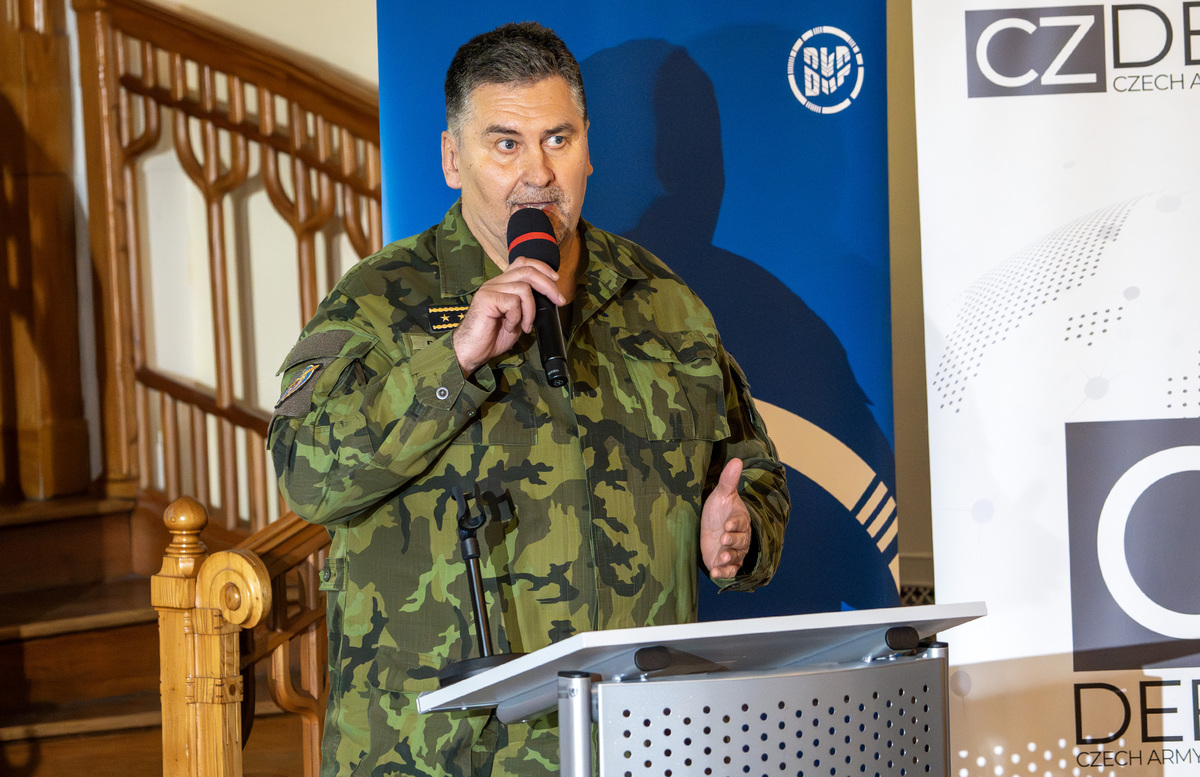
One of the most prominent themes of this year’s event was the issue of societal resilience. Both the organizers and individual panelists emphasized that the current security environment requires much broader public engagement than in the past. After all, hybrid operations, disinformation, cyberattacks, and crisis situations affect society as a whole, not just the state’s security apparatus.
Day One: Security, Resilience, and Societal Preparedness
The first day of the conference focused primarily on issues of internal security, crisis preparedness, and building a resilient society. The opening remarks were delivered by the conference organizers, representatives of the University of West Bohemia, and the city of Pilsen, who emphasized the importance of collaboration between the academic community, security institutions, and the public.
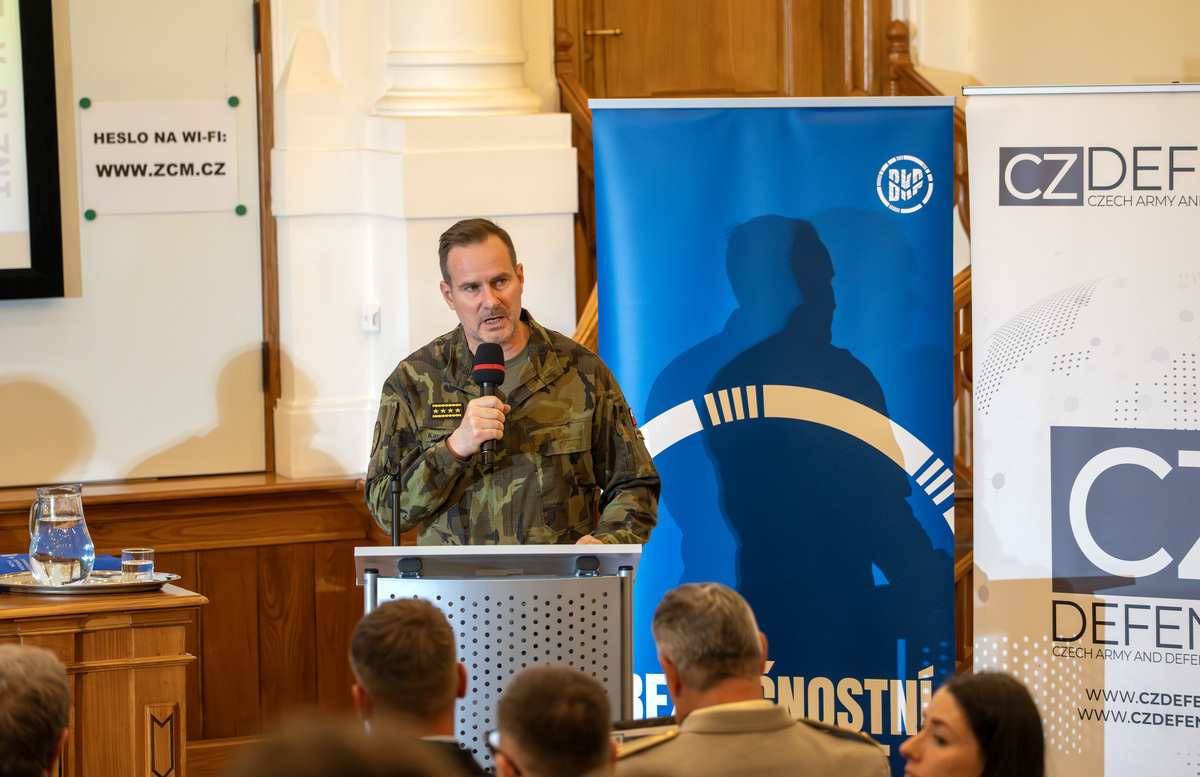
A highlight of the first day was the opening address by the Chief of the General Staff of the Czech Armed Forces, Army General Karel Řehka, who spoke openly about the transformation of the current security environment and the growing risks facing Europe and the Czech Republic. “We no longer live in an era of the end of history. We are living in an era when large-scale conventional warfare is once again being waged in Europe and the Middle East,” Řehka stated during his address. According to him, the current security environment is characterized by a high degree of unpredictability, the return of great-power rivalry, and intensifying hybrid activities, including disinformation campaigns, cyberattacks, and sabotage. Řehka noted that the war in Ukraine has fundamentally changed the perspective on European security and, at the same time, revealed the limits of Western nations’ current approach to defense. “Quality without quantity is not enough. Any state’s capacity to defend itself is always a combination of quality and quantity – technology, people, and the economy,” emphasized the Chief of the General Staff. He also devoted a significant portion of his speech to societal resilience and the state’s preparedness for crisis situations. According to Řehka, there is no longer a “safe rear” today, and any potential conflict would immediately affect the entire society, including civilian infrastructure. “War is not a matter for a single army. It is a matter for the whole of society,” he said. At the same time, he pointed out the Czech Republic’s insufficient preparedness in the areas of crisis management and defense planning. “It is sad that, after four years of war in Ukraine, we still do not have a high-quality central national defense plan that would encompass all branches of the state,” Řehka stated. According to him, the Czech Republic must significantly accelerate the modernization of the military, strengthen the protection of critical infrastructure, and at the same time build greater resilience throughout society. “There is no more time for illusions. It is time for action. And it really is five past midnight,” warned General Řehka.
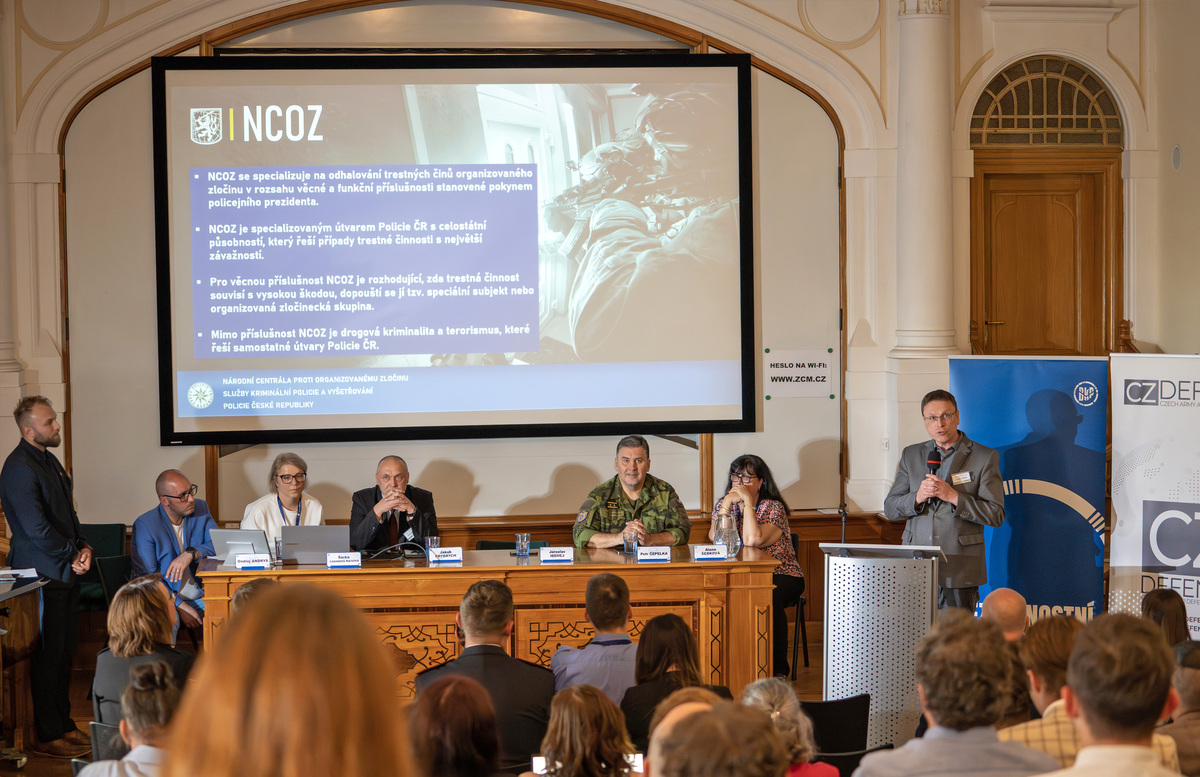
His presentation was followed by the first expert panel discussion, which focused on current challenges in ensuring internal security and building a resilient society. The discussion covered the readiness of the integrated emergency response system, coordination among security agencies, and society’s ability to respond to crisis situations. Participants in the debate included Major General Miroslav Lafek of the Czech Armed Forces, Colonel Petr Sobota from the Municipal Directorate of the Czech Police, Brigadier General František Pavlas, Director of the Fire and Rescue Service of the Plzeň Region, and representatives from the academic community. Another key topic was the issue of societal resilience and the ability of democratic institutions to respond to new types of security threats.
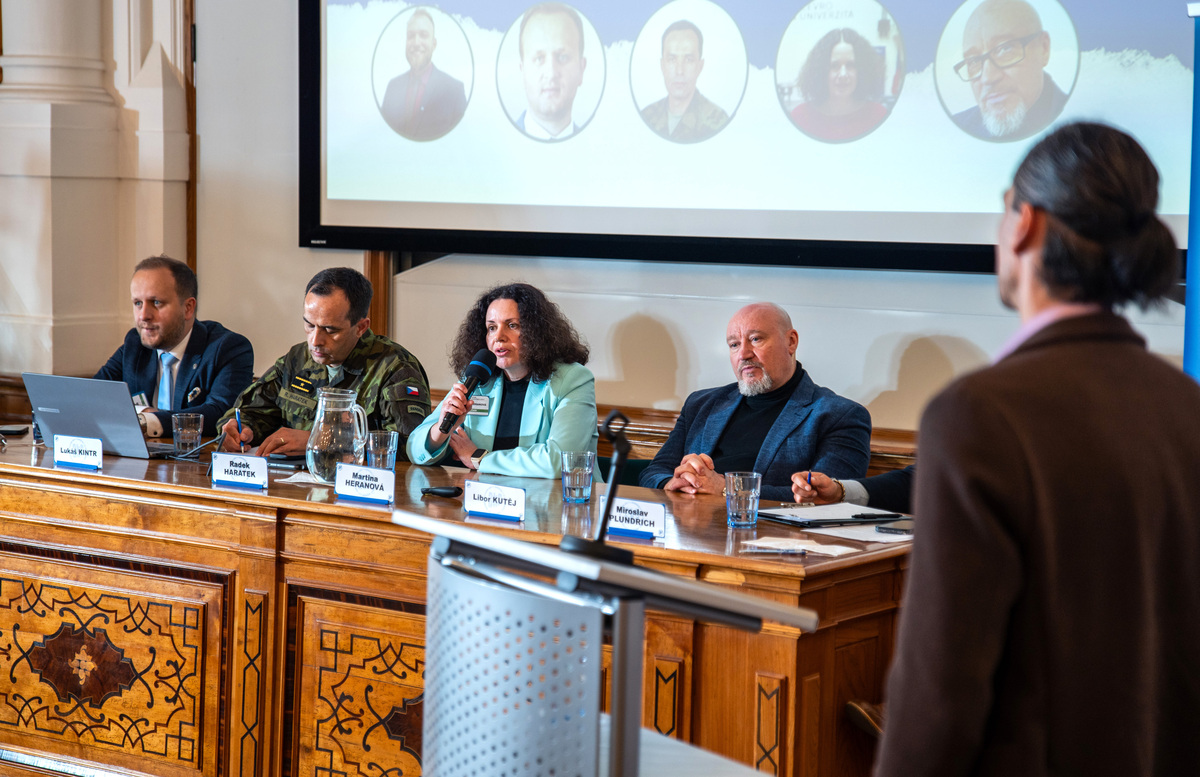
Discussions also focused on the role of local governments, educational institutions, and the private sector in building a resilient state. A key topic of the second panel on the first day was the role of prevention, public awareness, and communication between the state and citizens. The debate between Maj. Gen. Petr Čepelka, Brig. Gen. Jakub Frydrych, Col. Jaroslav Ibehej, Assoc. Prof. Šárka Waisová, and Dr. Alena Šebková clearly demonstrated that security does not begin at the moment of crisis. It begins much earlier – in schools, in work with young people or seniors, in the field of mental health, and also in individuals’ everyday ability to navigate the information environment.
Day Two: Changes in Security Policy and Military Modernization
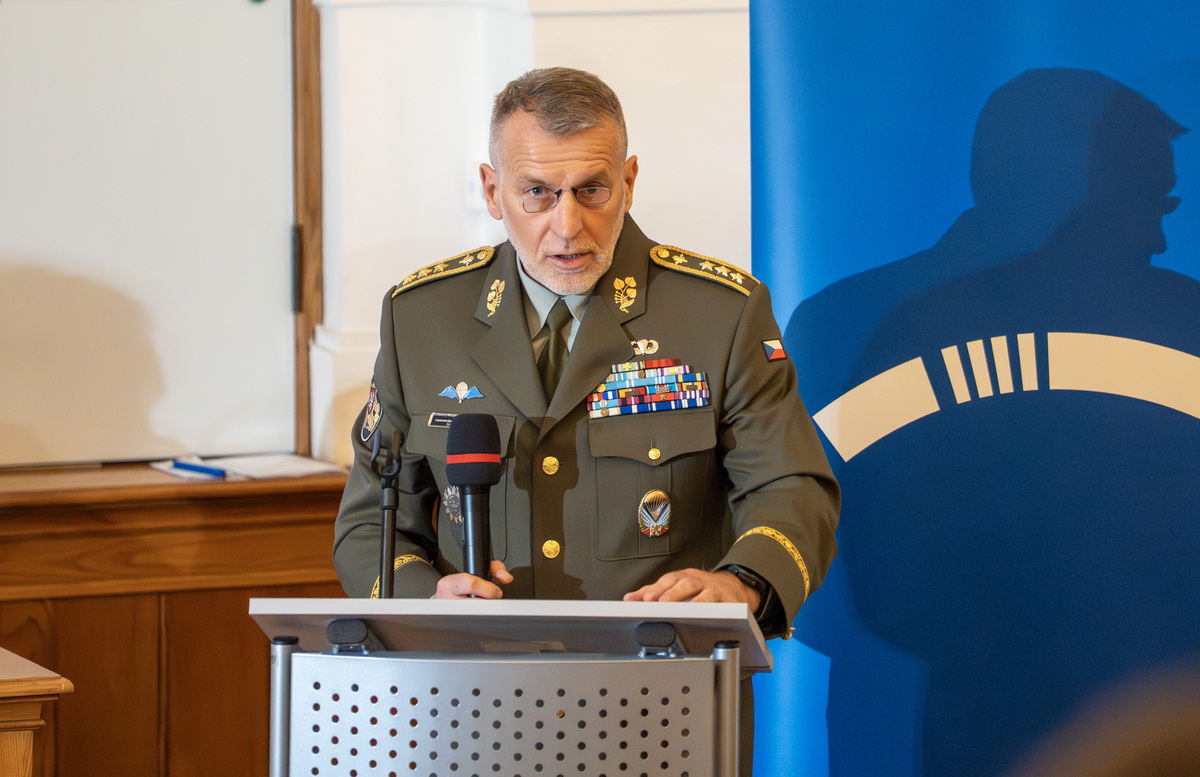
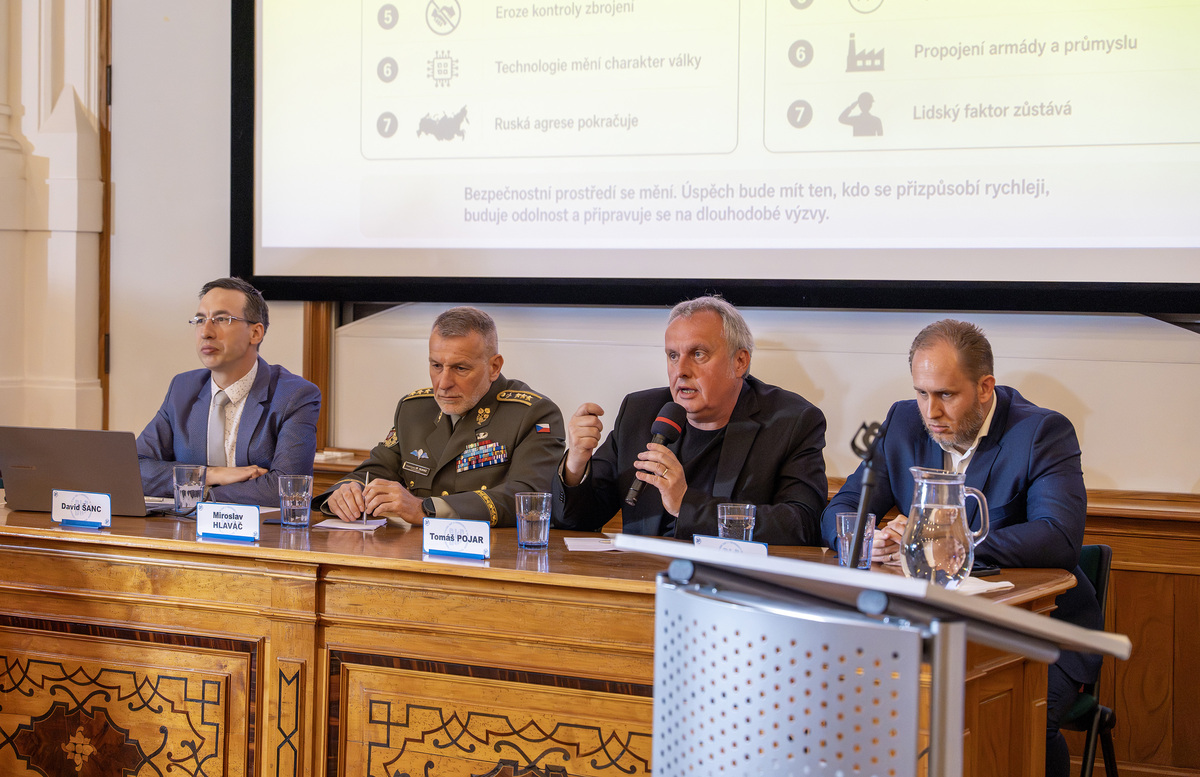
The second day of the conference took a more strategic turn. Speakers analyzed developments in the security situation in Europe, the modernization of the Czech Armed Forces, changes in Czech defense policy, and the Czech Republic’s preparedness to confront hybrid and cyber threats. Significant attention was also given to the issues of information warfare and critical infrastructure protection. The second day of the conference opened with a session dedicated to the transformations in Czech security policy and the challenges associated with the modernization of the Czech Armed Forces. Speakers included PhDr. David Šanc, Lieutenant General Miroslav Hlaváč, RNDr. Jan Kofroň, and Tomáš Pojar. In his presentation, David Šanc placed Czech security policy within a broader geopolitical context. He noted that, in addition to the war in Ukraine and the situation in the Middle East, Europe must not overlook other regions with destabilizing potential. “We shouldn’t forget about them. We should keep them constantly in mind, because sooner or later, I fear we will have to deal with them,” Šanc said in reference to the Sahel, North Africa, the South Caucasus, and the Western Balkans.
Lieutenant General Miroslav Hlaváč emphasized that the security environment has fundamentally changed and the military must prepare not for short-term operations, but for long-term conflict. “Modernizing the military today is not primarily about being the best technologically, but about being the most adaptable, sustainable in the long term, and capable of integrating military, industrial, and societal capabilities,” said Hlaváč. According to him, the very nature of conflicts is also undergoing a fundamental transformation. “The battlefield today is highly transparent. It is impossible to hide on it, and any maneuver is visible to the enemy,” General Hlaváč noted. At the same time, he noted that national defense is not merely the task of the military, but of society as a whole: “Even if we have the best and most modern military, without state support, a resilient society, and a prepared industrial sector, we will not be able to ensure national defense in the long term.”
In his remarks, Jan Kofroň focused on the debate regarding the potential role of compulsory military service in Europe. He cautioned against a one-size-fits-all solution for all countries and emphasized that each model must be tailored to a country’s geography, role within the alliance, size, and political will. “One model does not fit all. The question is what task the state and its military must fulfill and whether conscripts will actually be usable for fulfilling that task,” Kofroň summarized. At the same time, he noted that European states must address not only the modernization of their militaries but also the ability to replenish personnel over the long term and build up reserves. “We need to significantly increase the size of our reserves so that, in the event of a conflict, we can sustain the conflict not for days or weeks, but for at least months,” he said.
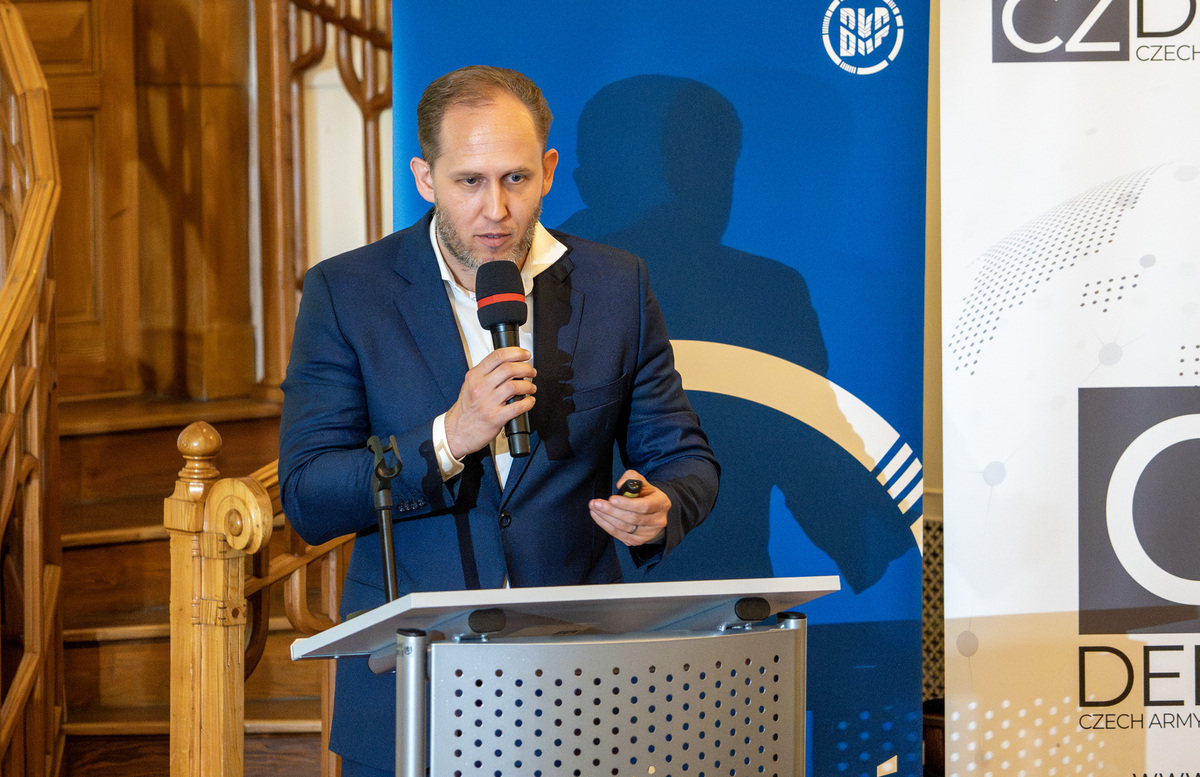
Tomáš Pojar then emphasized the need for adaptation, strengthening Europe’s responsibility for its own security, and closer cooperation between the military, industry, and research institutions. “The world and human societies are highly adaptable. Those who adapt more quickly to the turbulence and unusual nature of the present day will have an easier and simpler time,” said Pojar. Regarding European security, he also emphasized that we cannot rely solely on international institutions or legal frameworks. “International institutions are important, but international institutions never guarantee us anything,” he noted.
Crisis Preparedness
Another key topic was society’s practical preparedness for crisis situations. The discussions touched not only on military conflicts, but also on natural disasters and emergencies that can significantly impact the functioning of the state and the daily lives of its citizens. “I am definitely in favor of society becoming more involved in drills and preparations for crisis situations. If we look back, we’ve had floods, a tornado, and COVID. We need to acknowledge that while we cannot completely prevent these crises, we can be better prepared,” said Major General Petr Čepelka in his remarks. It was precisely this emphasis on the practical preparedness of citizens that became one of the key takeaways of the entire conference. The organizers pointed out that national security does not begin solely at the level of security institutions, but primarily with the individual and their ability to respond to emergency situations.
Safety Starts with the Individual
One of the organizers’ main goals is to foster public security awareness over the long term. According to the organizers, educating citizens and strengthening their resilience are key prerequisites for a functioning state in an era of growing security risks. “We want to stay connected with citizens; we want to educate them and offer them an interdisciplinary perspective. We continue to promote the motto that security begins with the citizen and in their home,” emphasized Miroslav Plundrich.
According to Major General Čepelka, education plays an important role in this process, not only in the military but across society as a whole. “Without education, we will lack perspective; we will lack information and critical thinking. Education is important for every soldier, and I am glad that within the Czech Army, we can speak of lifelong learning,” stated Major General Čepelka.
It is precisely this emphasis on practical security, prevention, and connecting the professional sphere with the public that gives the Pilsen conference its unique character. It is not merely a professional forum for a narrow circle of specialists, but a platform that seeks to convey security topics to society as a whole.
A Regional Format with National Significance
One of the most interesting aspects of the Pilsen Security Conference remains the fact that such a large-scale expert debate did not take place in Prague, but in the region. According to the organizers, decentralizing the security debate represents an important step toward greater public engagement with defense and security issues. This is also why the Pilsen conference received the patronage of representatives from the Ministries of Defense and the Interior, the General Staff of the Czech Armed Forces, and the City of Pilsen. CZ DEFENCE magazine served as the media partner for this significant event.
The second edition of BKP demonstrated that public debate on security has a firm place in Czech society. At the same time, it confirmed the growing importance of regional professional events that can bring together the military, security experts, the academic community, and ordinary citizens. In a time of growing uncertainty and a changing security environment, this is a trend whose significance will continue to grow in the coming years.